Pi Network [PI], a mobile-first cryptocurrency project, has been at the center of a growing debate about its decentralization.
While the project aims to provide a more accessible mining experience, recent reports reveal that the core team controls 82.8 billion coins.
This revelation has sparked concerns about the true nature of Pi Network’s decentralization and the network’s long-term sustainability.
Coupled with concerns over validator distribution and transparency, the project now faces mounting skepticism from its community and crypto analysts.

Pi network’s tokenomics and centralization concerns
Pi Network’s total supply is capped at 100 billion, structured to balance mining rewards, ecosystem growth, and developer incentives.
While 65 billion coins are allocated for community mining, 20 billion are reserved for ecosystem development, and 15 billion are set aside for developer incentives.
However, data shows that a significant portion, 82.8 billion voins, remains under the control of the core team.
Further examination revealed that 62.8 billion PI coins are directly held in six wallets tied to the core team, while another 20 billion are dispersed across approximately 10,000 wallets associated with Pi’s development.
This level of control has raised concerns about the network’s decentralization.
Unlike Bitcoin [BTC] or Ethereum [ETH], which distribute control among thousands of validators, Pi Network’s token concentration presents a risk of centralization.
Validator distribution and transparency issues
Adding to these concerns is the limited validator distribution within the Pi Network. Currently, the network operates with just 43 nodes and three active validators globally.
In contrast, Ethereum and Bitcoin operate with thousands of independent nodes, ensuring decentralized security and decision-making.
The limited number of validators raises doubts about whether Pi Network can genuinely function as a decentralized blockchain.
Transparency has also been a lingering issue. The project’s source code and on-chain data remain largely inaccessible, making it difficult for external analysts to assess the integrity of the network.
Additionally, the Know Your Customer [KYC] process is reportedly automated using AI, raising privacy concerns among users who question how their data is being stored and protected.
Pi coin price analysis: Market volatility and future trends
Since Pi Network launched its mainnet in February 2025, Pi Coin’s price has experienced considerable volatility. It surged to an all-time high of $2.99 on the 26th of February 2025 before experiencing a sharp correction.
As of this writing, Pi Coin was trading at $1.71, reflecting a 45% decline from its peak. Despite this downturn, Pi Coin’s market capitalization has reached $12.26 billion, making it the 11th largest cryptocurrency at press time.
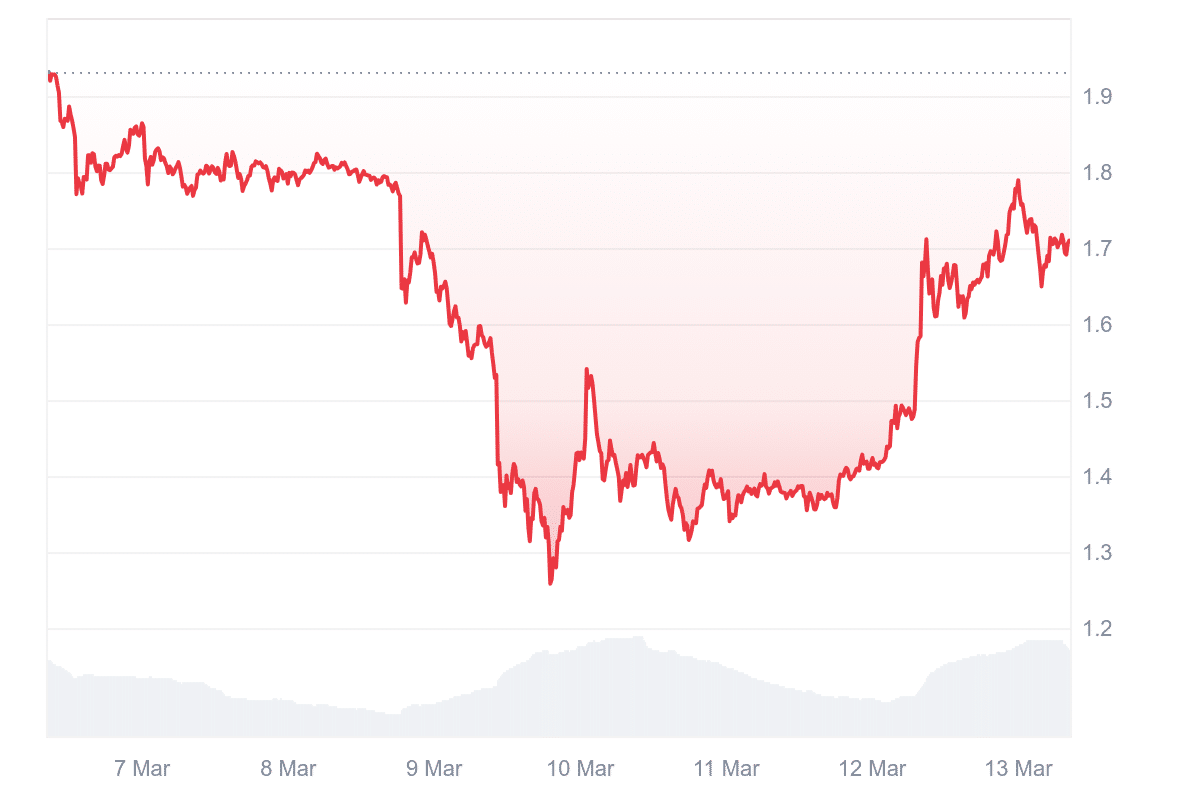
Market movements suggest that investor sentiment is mixed. While Pi Network enjoys a large user base, its price remains heavily influenced by speculation.
Analysts point out that unless the project addresses its decentralization concerns and enhances transparency, long-term price stability could remain elusive.
Community sentiment and future outlook
Frustration is growing within the Pi Network community, particularly regarding delays in token migration to the mainnet.
Many users have reported difficulties in transferring their mined Pi coins, with some alleging extended lockup periods.
These unresolved issues, combined with skepticism over the project’s governance, have led some to question whether Pi Network is truly committed to decentralization.
Some users have even labeled the project as overly centralized, citing inconsistencies in token distribution and governance.
Additionally, concerns have emerged regarding erased transactions and unfulfilled promises, further adding to the uncertainty surrounding Pi Network’s future.
Conclusion
Pi Network set out to revolutionize cryptocurrency mining by making it accessible to everyday users.
However, the concentration of 82.8 billion coins under the core team, combined with limited validator distribution and transparency issues, casts doubt on its claim of decentralization.
While the project continues to grow in terms of adoption, the unresolved concerns surrounding governance and coin distribution could hinder its long-term success.
Unless the Pi Network team takes steps to address these challenges, skepticism within the community is likely to persist.