FTX Co-Founder SBF Faces Consequences For Unauthorized Media Activities In Prison – Report

bitcoinistОпубліковано о 2025-03-13Востаннє оновлено о 2025-03-13

Анотація

Sam Bankman-Fried (SBF), the co-founder and former CEO of the collapsed cryptocurrency exchange FTX, has recently reemerged in the public...

Trusted Editorial content, reviewed by leading industry experts and seasoned editors. Ad Disclosure

Sam Bankman-Fried (SBF), the co-founder and former CEO of the collapsed cryptocurrency exchange FTX, has recently reemerged in the public eye, despite his incarceration at the Brooklyn Metropolitan Detention Center. 

Raising Legal And Ethical Concerns

As reported by Fortune, FTX’s co-founder has conducted a series of media engagements, including interviews and social media posts, all while serving time for fraud.

In February, he spoke with the New York Sun, began posting frequently on X (formerly Twitter), and participated in a video interview with Tucker Carlson in early March. 

These activities have raised eyebrows, especially given his current status as a convicted fraudster seeking a pardon from President Trump with the support of his family and friends, as Bitcoinist previously reported.

Bankman-Fried is currently housed in a high-security section of the detention center, sharing space with notable inmates like Sean “Diddy” Combs. Experts familiar with the conditions of federal confinement note that the environment is “restrictive.” 

Larry Levine, a federal prison consultant, emphasized the severity of the setting, stating, “This isn’t a f–king camp. You’re in a very, very confined space.” Typically, the Bureau of Prisons (BOP) requires authorization for any media interviews conducted by inmates. 

However, Bankman-Fried seems to have circumvented this rule by presenting his interview with Carlson as a “legal consultation.” Levine speculated that Bankman-Fried likely labeled the video call as a legal visit, which would allow him to use the prison’s video conferencing system unmonitored.

FTX Co-Founder Faces Sanctions For Unapproved Media Appearance

This unauthorized media appearance did not go unnoticed by prison authorities. Following the Carlson interview, the former FTX CEO faced repercussions, reportedly spending a day in solitary confinement due to the unapproved nature of the interaction. 

Kyle Sandler, another prison consultant, noted that while many inmates can now have in-person legal visits, video meetings remain common for high-profile cases like Bankman-Fried’s. 

The BOP is known to impose sanctions on inmates who violate prison policies, which can range from minor penalties—such as loss of phone privileges—to more severe consequences, including extended prison time.

Bankman-Fried’s attorney, Kory Langhofer, declined to comment on whether the BOP is investigating his client for this incident. However, Fortune reports that the BOP will likely take action against the former FTX CEO for the unauthorized media appearance. Levine expressed a dire outlook, stating plainly, “He’s screwed.”

As of now, approximately 2,700 federal prisoners are under investigation for various infractions, often leading to placement in “special housing units,” a term the BOP uses for solitary confinement. 

This practice is typically employed for inmates facing sanctions, which likely explains FTX’s co-founder recent isolation from the general prison population.

FTX
The daily chart shows FTT’s price attempt to recover previously lost levels. Source: FTTUSDT on TradingView.com

Amid the broader market’s slight recovery, FTT has gained 5%, trading at $1.27. Nevertheless, the token has seen a massive drop of 37% over the month. 

Featured image from NBC, chart from TradingView.com 

Editorial Process for bitcoinist is centered on delivering thoroughly researched, accurate, and unbiased content. We uphold strict sourcing standards, and each page undergoes diligent review by our team of top technology experts and seasoned editors. This process ensures the integrity, relevance, and value of our content for our readers.

Ronaldo is a seasoned crypto enthusiast with over four years of experience in the field. He is passionate about exploring the vast and dynamic world of decentralized finance (DeFi) and its practical applications for achieving economic sovereignty. Ronaldo is constantly seeking to expand his knowledge and expertise in the DeFi space, as he believes it holds tremendous potential for transforming the traditional financial landscape.

Пов'язані матеріали

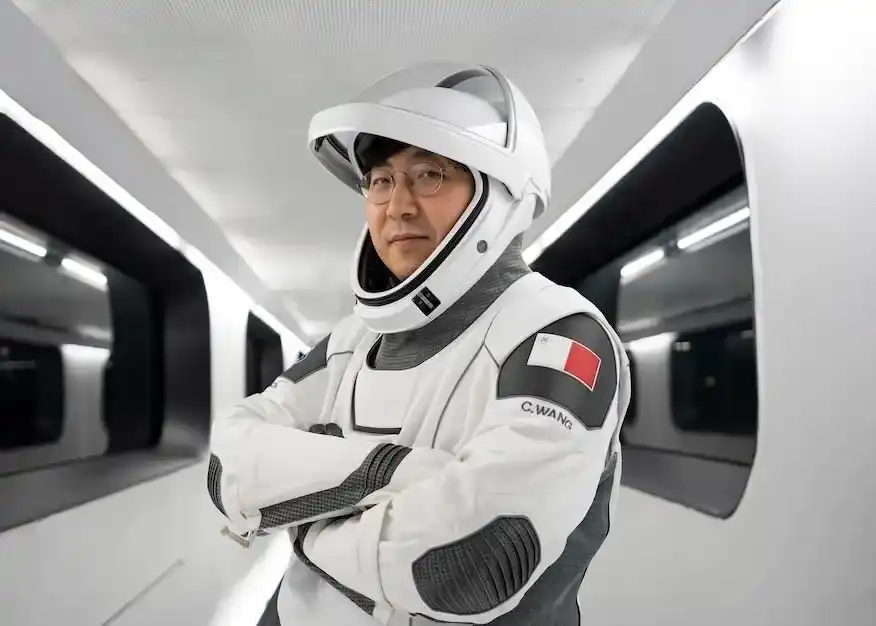
From Mining Pool to Mars: Why Is Wang Chun in the SpaceX Cockpit?

Title: From Mining Pool to Mars: Why Wang Chun is in the SpaceX Cockpit? When SpaceX announced that Wang Chun, co-founder of F2Pool, would command the first commercial crewed interplanetary mission, many were shocked. Why would a Bitcoin mining pool founder be on a Mars mission roster? However, understanding Wang Chun's journey over the past decade and the deepening ties between the crypto industry and SpaceX reveals this is not accidental, but an inevitable result of a new era taking shape. Today's Mars plan is no longer just a space engineering project; it is evolving into a civilization-upgrading experiment driven by global tech capital, AI, computing power, energy, and the crypto economy. Wang Chun stands precisely at the intersection of these forces. Part 1: From F2Pool to SpaceX – Wang Chun's Leap F2Pool, founded when Bitcoin was still niche, is one of the earliest large-scale mining pools and once held a significant share of global Bitcoin hash rate. Wang Chun belongs to the first generation of Chinese Bitcoin advocates and infrastructure builders—idealists and engineers who believed in a new value network independent of traditional finance. Miners like him built the hardware, energy, and computing power foundational to decentralized networks. This aligns with the long-term, high-engineering, future-oriented vision required for space civilization. Elon Musk’s space endeavors value such long-term builders over mere capital players, which explains Wang Chun's entry into the SpaceX ecosystem. Part 2: Why Crypto and SpaceX Are Growing Closer The core of global tech competition is shifting from internet applications to next-generation infrastructure. Both crypto and SpaceX are part of this. SpaceX's goal is to drastically reduce space access costs. If successful, it could enable orbital servers, space-based energy, global satellite internet, and Martian bases. These new frontiers will require new payment systems, value networks, and global financial architectures. Cryptocurrencies, inherently global and trustless, are poised to become key to off-planet economies. Moreover, crypto and SpaceX share a high-risk, long-termist ethos—believing in ambitious, world-changing goals despite early skepticism. Part 3: Human Spaceflight Enters the Commercial Era Space exploration, long dominated by state actors, is now being transformed by commercial entities like SpaceX. Wang Chun's involvement signifies that future deep-space participants may include not just career astronauts, but also entrepreneurs, engineers, and AI researchers. This mirrors the Age of Exploration, where commercial capital eventually drove global expansion. Wang Chun has emphasized that Mars colonization must not be delayed for future generations, countering a potential over-focus on nearer-term, commercial lunar projects. His presence symbolizes how new capital, technical communities, and idealists from the crypto world are now entering the interstellar age. In summary, the true significance is not an individual's journey to Mars, but the shift in the driving force of human civilization expansion from state machinery to tech companies, AI systems, and global technology capital. Wang Chun's path—from mining pool to Mars, from the Bitcoin network to starships—may be a preview of technological civilization's evolution in the coming decades.

marsbit2 год тому

From Mining Pool to Mars: Why Is Wang Chun in the SpaceX Cockpit?

marsbit2 год тому

Торгівля

Спот
Ф'ючерси
活动图片