Компания по токенизации Securitize использует RedStone в качестве первого оракула для ончейн-фондов от Apollo, BlackRock и других

cryptonews.ruОпубліковано о 2023-06-12Востаннє оновлено о 2025-03-12

Институциональная токенизационная компания Securitize выбрала RedStone в качестве основного поставщика данных для своих текущих и будущих продуктов, выпускаемых такими компаниями, как Apollo, BlackRock, Hamilton Lane и KKR.

Оракулы предоставляют ценовые потоки и другие данные для систем на основе смарт-контрактов, которые полагаются на информацию вне блокчейна.

Этот шаг представляет собой серьезный шаг вперед для сектора «реальных активов». Миллиарды долларов были инвестированы в RWA, в основном на основе идеи, что токенизированные финансовые продукты — представляющие что угодно, от индивидуальных акций до хедж-фондов на блокчейне — будут иметь большую полезность. Однако большая часть инфраструктуры, необходимой для поддержки этого, все еще находится в стадии разработки.

«Раньше Securitize не использовала оракулы, поскольку токенизированные фонды, такие как BlackRock BUIDL, не использовались в DeFi», — рассказал главный операционный директор RedStone Марцин Казмерчак. «Это было просто токенизированное представление фонда в цепочке без какой-либо функциональности».

Другими словами, интеграция RedStone упрощает привлечение onchain-финансированию. Казмерчак, в частности, отметил, что каналы Oracle предоставят возможность подключения выпущенных Securitize средств к протоколам DeFi, таким как Compound, Morpho и Spark.

В частности, RedStone станет глазами и ушами для Apollo Diversified Credit Securitize Fund (ACRED), BlackRock USD Institutional Digital Liquidity Fund (BUIDL) и Hamilton Lane’s Senior Credit Opportunities Fund (SCOPE), а также для других институциональных предложений.

Представитель Securitize отметил, что функционал sToken компании, запущенный в ноябре, уже дал этим продуктам определенную степень компоновки. Например, были «интегрированы в DeFi, например, Elixir», — сказал он.

Созданы с использованием Ethereum, стандарт токенов ERC-4626 для хранилищ, sTokens предоставляет аккредитованным инвесторам возможность получать доход от таких активов, как BUIDL и SCOPE, поддерживая ликвидность за счет синтетического доллара deUSD от Elixir.

Однако внедрение оракула «значительно расширит потенциальные варианты использования этих активов, включая применение на площадках обмена на денежном рынке или в качестве обеспечения на платформах децентрализованного финансирования (DeFi)».

Казмерчак отметил, что Securitze провела «кропотливое многомесячное исследование оракулов», прежде чем выбрать RedStone в качестве своего первого поставщика оракулов. Система использует «модульную конструкцию», которая «может масштабироваться до тысяч цепочек и поддерживать новые реализации в течение нескольких дней безопасным образом». В настоящее время инструмент поддерживает приложения на Ethereum и совместимых с EVM цепочках, таких как Avalanche и Polygon, а также TON, Sui и Fuel.

«RedStone был разработан с модульной архитектурой, которая по умолчанию является омничейном, в отличие от монолитного подхода оракулов первого поколения, которые были разработаны, когда только Ethereum был цепочкой с активным использованием смарт-контрактов», — сказал Securitize. «Для RedStone просто и экономически эффективно добавлять новые модули доставки цен для поддержки любого блокчейна. Для конкурентов поддержка кроссчейна требует интеграции решений по обеспечению совместимости, добавления дополнительных потенциальных точек отказа или даже целых сетевых передислокаций, которые должны быть синхронизированы друг с другом».

RedStone имеет и другие преимущества, включая использование Arweave для постоянного хранения данных. Система Oracle также пока не столкнулась с простоем или событием неправильной оценки.

Arrington Capital возглавил финансирование RedStone серии A на сумму 15 миллионов долларов в июле 2024 года. На прошлой неделе протокол запустил свой токен RED.
Пов'язані матеріали

Apple and the Power Rebalancing with 'The Microns': Dissecting the Profit Ledger Behind the iPhone

The article analyzes the shifting profit dynamics and power balance between Apple and memory suppliers like Micron within the iPhone supply chain. It highlights a social media post criticizing Apple for raising iPhone prices while blaming memory chip cost increases, despite historically paying suppliers like Micron very little. An estimated iPhone 18 cost breakdown is referenced. Historically, memory was a minor cost component. In 2017's iPhone X, memory accounted for only about 1.6-2.3% of the price, with Apple capturing nearly 50% net profit. Over time, memory's share of the Bill-of-Materials (BOM) cost has grown significantly, reaching an estimated 12-15% for the iPhone 17 series. The core driver of this change is soaring demand for memory from the AI industry, particularly for High Bandwidth Memory (HBM) and AI servers, which is diverting production capacity and squeezing supply for consumer electronics. Memory manufacturers, after enduring periods of low profits, now hold greater pricing power. This is reflected in their recent strong financials, like Micron's 84.6% gross margin. Apple CEO Tim Cook initially described the memory price pressure as unprecedented in his 40-year career, later calling it a "once-in-a-century flood," before Apple announced price hikes across several product lines, causing a significant stock drop. Elon Musk echoed Cook's sentiment about the dramatic cost surge. The article concludes that the era of memory suppliers being at the mercy of Apple's pricing power has temporarily reversed, thanks to AI-driven demand. It notes Apple is reportedly seeking to diversify its supply chain, including exploring chips from China's CXMT.

Odaily星球日报1 год тому

Apple and the Power Rebalancing with 'The Microns': Dissecting the Profit Ledger Behind the iPhone

Odaily星球日报1 год тому

Conversation with the Founder of 42 Macro: The Fed's 'Boiling the Frog Slowly' and the K-Shaped Economy

In a conversation with Anthony Pompliano, Darius Dale, founder of 42 Macro, discusses the Federal Reserve's monetary policy and the K-shaped U.S. economy. Dale characterizes new Fed Chair Kevin Warsh as a "dove in hawk's clothing," expecting the Fed to signal or enact policy tightening in the coming quarters to create room for later easing. He argues current economic signals, including high deficit spending, debt monetization, and credit growth, strongly indicate inflation is not on a credible path back to 2%, forcing the Fed to act. The discussion highlights the stark "K-shaped" economic reality. While top earners, buoyed by massive cash savings (up ~$8 trillion since pre-pandemic), continue robust spending, those at the bottom face severe financial strain, with delinquency rates on consumer loans reaching crisis-era highs. Dale attributes much of the current social and political anxiety to this divergence, driven by the "Cantillon effects" of monetary expansion, which disproportionately benefits asset owners. He emphasizes that in this environment of "financial repression," individuals must participate in asset markets to avoid being left behind. On equities, Dale notes a rotation from the "Magnificent Seven" tech giants into broader AI-exposed companies, while warning that the tech giants' massive capital expenditure cycles could eventually puncture over-optimistic cash flow projections. Dale concludes by stressing that the core desire across all economic strata is simply the dignity to provide for one's family, a goal currently undermined by systemic policies that act as a "wealth siphon" from the bottom to the top.

marsbit1 год тому

Conversation with the Founder of 42 Macro: The Fed's 'Boiling the Frog Slowly' and the K-Shaped Economy

marsbit1 год тому

The Eight Fathers of Transformer: Where Are They Now?

The founding authors of the seminal 2017 paper "Attention Is All You Need," which introduced the Transformer architecture, have all departed from Google and are now pioneering diverse ventures across the AI landscape. Their current paths highlight the field's evolution and fragmentation. Ashish Vaswani co-founded Essential AI after a stint at Adept, but recent reports suggest he and his team are being recruited by Nvidia. Noam Shazeer left Google twice, first to found Character.AI—later acquired by Google—before recently joining OpenAI. Niki Parmar, after co-founding both Adept and Essential AI with Vaswani, is now at Anthropic. Jakob Uszkoreit is the CEO of Inceptive, applying AI to RNA and drug design. Llion Jones co-founded Sakana AI in Tokyo, exploring collective intelligence from smaller models. Aidan N. Gomez is the CEO of Cohere, focusing on enterprise AI solutions. Łukasz Kaiser remains in research at OpenAI, contributing to models like GPT-4 and o1. Illia Polosukhin co-founded the NEAR Protocol blockchain, positioning it for an AI-agent economy. Despite their divergent paths—spanning biotech, enterprise software, blockchain, and foundational research—a shared sentiment persists: the Transformer is not the final answer. Each founder continues to seek the next significant architectural breakthrough, driven by the same innovative spirit that created the modern AI era.

marsbit1 год тому

The Eight Fathers of Transformer: Where Are They Now?

marsbit1 год тому

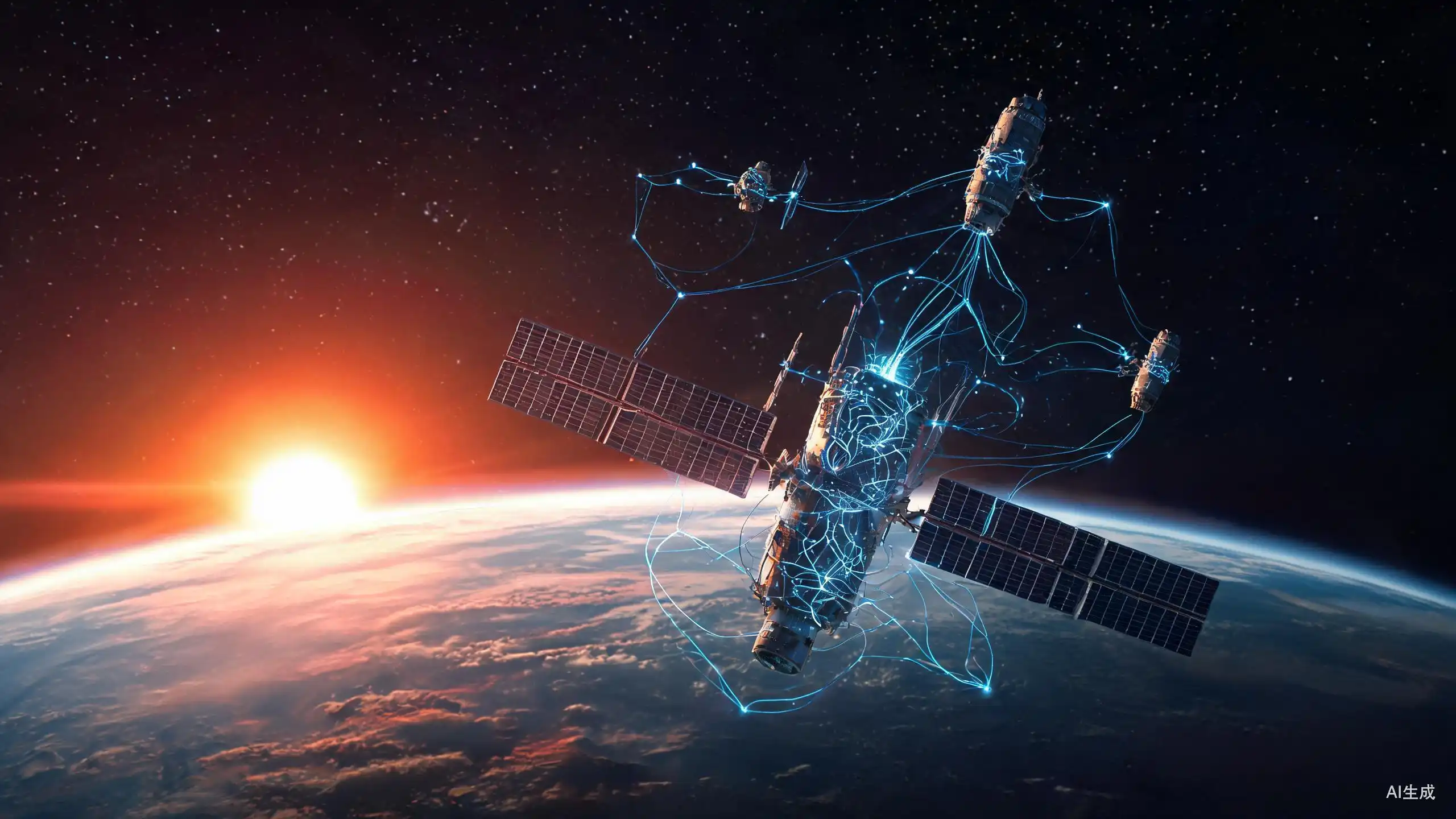
The Domestic Answer to Space Computing Power: Photonics Are More Efficient, Musk and Huang's Approaches Are Too Roundabout

The Space Computing Race: A Photonic Advantage The competition for space-based computing has intensified, with figures like Elon Musk and NVIDIA's Jensen Huang highlighting its potential. Musk predicts solar-powered AI satellites could offer the most cost-effective computing by 2032. However, space presents extreme challenges for traditional electronic chips: radiation from cosmic particles can cause errors, the vacuum environment hinders heat dissipation, and limited solar power constrains energy-hungry systems. Photonic computing, using light instead of electrons, offers a promising solution. Its core advantages for space are threefold: 1) **Radiation Resistance**: Photons are charge-neutral, making them inherently immune to particle interference. 2) **Low Heat Generation**: Light propagation in waveguides generates minimal heat, bypassing critical thermal management issues. 3) **Low Power Consumption**: Photonic chips have near-zero static power draw, aligning perfectly with the energy constraints of satellites. Furthermore, for a given payload weight and volume, photonic systems can potentially deliver higher total compute density. Since they require less bulky cooling and power infrastructure, more space can be allocated to the compute units themselves. While photonic computing holds great promise, current industry approaches face hurdles like the memory-compute bottleneck (separate storage and processing) and challenges in large-scale integration. Engineering for space—withstanding launch vibrations and validating full system operation in orbit—remains a critical step. The path forward resembles the evolution from single GPUs to computing clusters, but via a photonic route. As electronic chips approach physical limits in miniaturization, photonic computing and optical interconnects (光算光联) may provide a key alternative to bypass these constraints and define the next generation of space-based computing capabilities.

marsbit2 год тому

The Domestic Answer to Space Computing Power: Photonics Are More Efficient, Musk and Huang's Approaches Are Too Roundabout

marsbit2 год тому

Торгівля

Спот
活动图片