Ripple Co-Founder Suffers $150 Million XRP Loss In LastPass Hack, Crypto Sleuth Finds

bitcoinistОпубліковано о 2025-03-08Востаннє оновлено о 2025-03-09

Анотація

In an interesting turn of events, the January 2024 theft of 283 million XRP (worth approximately $150 million at current...

Trusted Editorial content, reviewed by leading industry experts and seasoned editors. Ad Disclosure

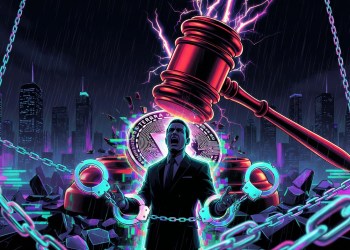
In an interesting turn of events, the January 2024 theft of 283 million XRP (worth approximately $150 million at current market price) from the wallet of Ripple co-founder Chris Larsen has been linked to the security breach of password manager LastPass. This discovery was recently made public by prominent blockchain investigator ZachXBT.

How Did The Ripple Co-Founder Lose His Assets?

On Friday, March 7, ZachXBT took to their Telegram channel to share a screenshot of a forfeiture complaint submitted on Thursday by US law enforcement. According to the crypto sleuth, Larsen’s wallet lost roughly $150 million worth of XRP tokens because the co-founder stored his private keys in a password manager named LastPass.

For context, LastPass suffered significant security incidents and data breaches in late 2022, which led to customer data leaks and password vault exploits. By September 2023, a potential link was established between this security breach and more than $35 million in cryptocurrency stolen from several victims since December 2022. As reported by Bitcoinist, approximately $4.4 million in digital assets were stolen from 85 distinct wallets belonging to 25 LastPass users on October 25, 2023 alone.

In late January 2024, ZachXBT revealed in an online post that Ripple had been exploited for about 213 million XRP (worth roughly $112.5 million at the time). The co-founder later confirmed that there had indeed been “unauthorized access” to his personal XRP wallets — but not Ripple’s.

Ripple

Source: ZachXBT/Telegram

As highlighted in the forfeiture complaint, it seems Larsen’s private wallet keys were compromised in the two major data security breaches that affected a commercial online password manager in 2022. The United States Federal Bureau of Investigation (FBI) discovered that the passwords stolen in these breaches were used to illegally obtain customer data and assets.

The court document read:

From those conversations, law enforcement agents in this case learned that the stolen data and passwords that were stored in several victims’ online password manager accounts were used to illegally, and without authorization, access the victims’ electronic accounts and steal information, cryptocurrency, and other data.

It is worth noting that the forfeiture complaint does not cite LastPass as the online password manager. However, it did mention that one of the victims is a San Francisco resident (Larsen’s LinkedIn location shows that he is based in San Francisco city).

In the message on their Telegram channel, ZachXBT clarified that “up to this point Chris Larsen had not publicly disclosed the cause of the theft.” Recently, the blockchain investigator linked to the Ripple co-founder a series of dormant XRP wallets, with over 2.7 billion XRP (worth around $7.18 billion).

XRP Price Quick Look

As of this writing, the price of XRP stands at around $2.37, reflecting an over 5% in the past 24 hours.

Ripple

The price of XRP on the daily timeframe | Source: XRPUSDT chart on TradingView
Featured image from Medium, chart from TradingView
Editorial Process for bitcoinist is centered on delivering thoroughly researched, accurate, and unbiased content. We uphold strict sourcing standards, and each page undergoes diligent review by our team of top technology experts and seasoned editors. This process ensures the integrity, relevance, and value of our content for our readers.

Opeyemi Sule is a passionate crypto enthusiast, a proficient content writer, and a journalist at Bitcoinist. Opeyemi creates unique pieces unraveling the complexities of blockchain technology and sharing insights on the latest trends in the world of cryptocurrencies. Opeyemi enjoys reading poetry, chatting about politics, and listening to music, in addition to his strong interest in cryptocurrency.

Пов'язані матеріали

From Mining Pool to Mars: Why Is Wang Chun in the SpaceX Cockpit?

Title: From Mining Pool to Mars: Why Wang Chun is in the SpaceX Cockpit? When SpaceX announced that Wang Chun, co-founder of F2Pool, would command the first commercial crewed interplanetary mission, many were shocked. Why would a Bitcoin mining pool founder be on a Mars mission roster? However, understanding Wang Chun's journey over the past decade and the deepening ties between the crypto industry and SpaceX reveals this is not accidental, but an inevitable result of a new era taking shape. Today's Mars plan is no longer just a space engineering project; it is evolving into a civilization-upgrading experiment driven by global tech capital, AI, computing power, energy, and the crypto economy. Wang Chun stands precisely at the intersection of these forces. Part 1: From F2Pool to SpaceX – Wang Chun's Leap F2Pool, founded when Bitcoin was still niche, is one of the earliest large-scale mining pools and once held a significant share of global Bitcoin hash rate. Wang Chun belongs to the first generation of Chinese Bitcoin advocates and infrastructure builders—idealists and engineers who believed in a new value network independent of traditional finance. Miners like him built the hardware, energy, and computing power foundational to decentralized networks. This aligns with the long-term, high-engineering, future-oriented vision required for space civilization. Elon Musk’s space endeavors value such long-term builders over mere capital players, which explains Wang Chun's entry into the SpaceX ecosystem. Part 2: Why Crypto and SpaceX Are Growing Closer The core of global tech competition is shifting from internet applications to next-generation infrastructure. Both crypto and SpaceX are part of this. SpaceX's goal is to drastically reduce space access costs. If successful, it could enable orbital servers, space-based energy, global satellite internet, and Martian bases. These new frontiers will require new payment systems, value networks, and global financial architectures. Cryptocurrencies, inherently global and trustless, are poised to become key to off-planet economies. Moreover, crypto and SpaceX share a high-risk, long-termist ethos—believing in ambitious, world-changing goals despite early skepticism. Part 3: Human Spaceflight Enters the Commercial Era Space exploration, long dominated by state actors, is now being transformed by commercial entities like SpaceX. Wang Chun's involvement signifies that future deep-space participants may include not just career astronauts, but also entrepreneurs, engineers, and AI researchers. This mirrors the Age of Exploration, where commercial capital eventually drove global expansion. Wang Chun has emphasized that Mars colonization must not be delayed for future generations, countering a potential over-focus on nearer-term, commercial lunar projects. His presence symbolizes how new capital, technical communities, and idealists from the crypto world are now entering the interstellar age. In summary, the true significance is not an individual's journey to Mars, but the shift in the driving force of human civilization expansion from state machinery to tech companies, AI systems, and global technology capital. Wang Chun's path—from mining pool to Mars, from the Bitcoin network to starships—may be a preview of technological civilization's evolution in the coming decades.

marsbit25 хв тому

From Mining Pool to Mars: Why Is Wang Chun in the SpaceX Cockpit?

marsbit25 хв тому

Торгівля

Спот
Ф'ючерси
活动图片