一文详述分布式物联网络:Helium

巴比特Опубліковано о 2022-06-16Востаннє оновлено о 2022-06-16

Анотація

当前物联网始终未迎来大爆发的主要原因是缺乏一个统一标准的广域网的支撑。

站在世界前沿的物联网,也成为中国下一个5年将要大力发展的基础设施建设战略。但是,未来真正意义上的物联网,并不是在互联网基础上的物物相连。也不是建立在通讯运营网络上的互联,而是实现真正意义上的物物相连。物物到底怎么相连?或许Helium具备我们创新研究的技术类雏形。
物联网行业的几大痛点

当前物联网始终未迎来大爆发的主要原因是缺乏一个统一标准的广域网的支撑。目前,全世界共有100多亿活跃的物联网设备,分别绑定在Wi-Fi、Zigbee、低功耗蓝牙、LoraWAN和Sigfox等不同的无线网络中,互操作性很低。

极需一种类似WiFi或蓝牙等价物,代表一种基于开放硬件的标准。使各种设备间具有可编程和可配置性,实现相互连接和协作。
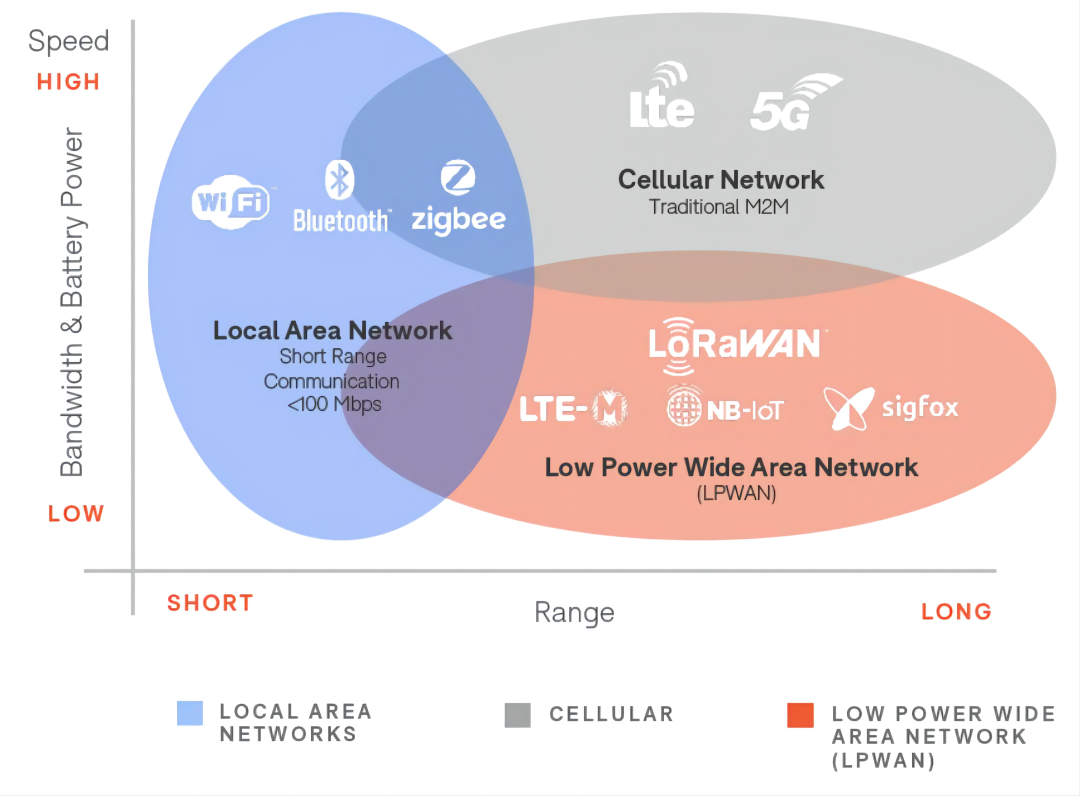
Figure1:分散的物联网协议/技术现状

图源:https://web3caff.com/zh/archives/3845

Helium的前景展望

作为区块链生态中目前唯一一个提供低功耗、广覆盖无线网络接入的产品,在2021年4月,Helium与开源的5G服务提供商FreedomFi相合作,将HNT热点服务器和5G技术相结合,推出了Helium第一代兼容5G热点。这意味着Helium开始进军2C市场。在开通预订通道的几天内,FreedomFi售出了4万台5G网关,和Verizon的销量不相上下。

与此同时,更多的网络运营商希望通过漫游的方式和Helium进行合作,例如GagSky就推出了首个基于Helium5G的蜂窝移动计划。而在去年10月底,DishNetwork成为了电信行业中首个加入Helium生态的头部运营商。

但我们不得不警惕与PoC共识下的一个硬伤,即马太效应的出现。HeliumHotSpots主要集中在见证人众多的地区,因此更容易挣取HNT,这就造成了大城市出现的热点冗余现象。但在人烟稀少的地区,由于缺少见证人,因此几乎不会有Helium热点的布设。由此可见,在当前,摆在Helium团队的一个重大任务即是如何调控各个区域的HeliumHotspots密度,借以解决马太效应的隐忧是至关重要的。

No.

01

Helium:“人人供网”的分布式网络经济体

Helium是一个建立在“人人供网”思想中的分布式物联网网络经济体。其通过用户设置由Helium官方授权的硬件设施(类似于路由器)形成的热点集群来构成无线网络以供任何物联网设备的探寻和造访,借此形成完整的分布式物联网生态系统。

Helium网络在当前全球已经有近50万个热点,覆盖了将近4万座城市。与此同时,它还在以平均每月9万个新热点的速度在不断地扩张。

Helium的网络服务商则只需要向官方认可的HeliumHotspot购买热点服务器即可,入场门槛低。

随着3G网络技术的退出市场,物联网设备除了转往成本更高的4G网络和私用网之外,基于区块链技术的分布式网络系统Helium毫无疑问是一个成本更低廉、通信更加畅通的选择。

No.

02

HNT的投资回报测算

在当前,Helium的投资正在面临着一些利好。首先是Helium的节点正处在一种爆发式的增长中。根据白皮书,今年(2022年),分配给服务提供商的HNT通证数量将进一步上升。

但我们要同时看到另外一个风险,即当前Helium热点的反常高价格。毫无疑问,高热点硬件价格意味着高成本和更长的回本周期。

除此之外的一个风险是在近三个月中,尽管HNT价格不断震荡,但总体趋势是一路走弱。而低通证价格所换来的必然是回本周期的延长。当我们假设Helium均价为850USD,Helium的服务商日均获得大约0.26HNT,则我们测算的在近一周内的几个特定价格点中的回本情况如下:
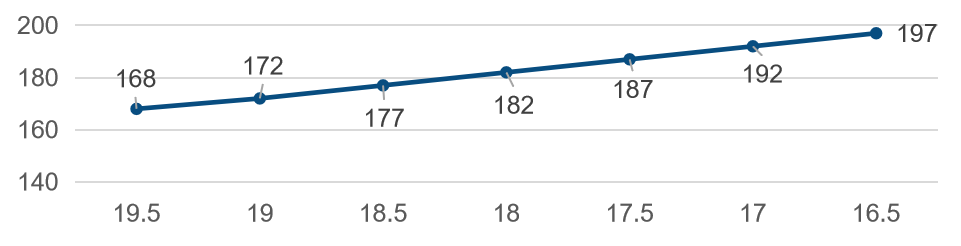
Figure2:HNT在不同价位点上的回本周期比较(横坐标单位:USD,纵坐标单位:天)


Пов'язані матеріали

Podcast Notes: Hyperliquid Has Become the Top Interest Point for Traditional Hedge Funds

Empire Podcast hosts Jason Yanowitz and Santiago Santos discuss the surging institutional interest in Hyperliquid, a decentralized perpetual exchange, marking the highest level of engagement from traditional hedge fund managers since Paul Tudor Jones endorsed Bitcoin in 2020. The primary driver is the demand for weekend trading of commodities like oil, especially during geopolitical tensions such as the Iran conflict, as Hyperliquid provides the only active price discovery venue when traditional markets are closed. Trade XYZ, a front-end on Hyperliquid, has seen significant growth, with weekend oil price predictions having a median error of only 50 basis points. Santos predicts commodity trading volume on Hyperliquid will surpass Bitcoin within the year and that its market cap could rise from $25 billion to $100 billion. Other key points include Kraken raising $200 million at a reduced valuation of $13.3 billion, and the SEC clarifying that self-custodied DeFi frontends like MetaMask are not subject to broker-dealer rules, resolving a major regulatory uncertainty. The hosts also note the strong correlation between crypto and macro markets, with the S&P 500 posting one of its best 10-day rallies since 1950. They highlight MicroStrategy's continued Bitcoin acquisitions and the potential of real-world asset (RWA) tokenization as a key trend. The discussion concludes with skepticism towards many L2 projects, predicting a wave of protocols truly going to zero as capital concentrates in proven assets like Bitcoin and Hyperliquid.

marsbit4 год тому

Podcast Notes: Hyperliquid Has Become the Top Interest Point for Traditional Hedge Funds

marsbit4 год тому

a16z: The Next Frontier of AI, The Triple Flywheel of Robotics, Autonomous Science, and Brain-Computer Interfaces

a16z presents a comprehensive investment thesis for the next frontier of AI: Physical AI, centered on a synergistic flywheel of robotics, autonomous science, and novel human-computer interfaces (HCIs) like brain-computers. While the current AI paradigm scales on language and code, the most disruptive future capabilities will emerge from three adjacent fields leveraging five core technical primitives: 1) learned representations of physical dynamics (via models like VLA, WAM, and native embodied models), 2) embodied action architectures (e.g., dual-system designs, diffusion-based motion generation, and RL fine-tuning like RECAP), 3) simulation and synthetic data as scaling infrastructure, 4) expanded sensory channels (touch, neural signals, silent speech, olfaction), and 5) closed-loop agent systems for long-horizon tasks. These primitives converge to power three key domains: * **Robotics:** The literal embodiment of AI, requiring all primitives for real-world physical interaction and manipulation. * **Autonomous Science:** Self-driving labs that conduct hypothesis-experiment-analysis loops, generating structured, causally-grounded data to improve physical AI models. * **Novel HCIs:** Devices (AR glasses, EMG wearables, BCIs) that expand human-AI bandwidth and act as massive data-collection networks for real-world human experience. These domains form a mutually reinforcing flywheel: Robotics enable autonomous labs, which in turn generate valuable data for robotics and materials science. New interfaces provide rich human-physical interaction data to train better robots and scientists. Together, they represent a new scaling axis for AI, moving beyond the digital realm to interact with and learn from physical reality, promising significant emergent capabilities and value.

marsbit5 год тому

a16z: The Next Frontier of AI, The Triple Flywheel of Robotics, Autonomous Science, and Brain-Computer Interfaces

marsbit5 год тому

Торгівля

Спот
Ф'ючерси
活动图片