Биткойн против планов 529: Почему некоторые родители делают ставку на криптовалюту для накопления средств на колледж

cryptonews.ruОпубліковано о 2023-04-03Востаннє оновлено о 2025-02-03

  • Некоторые родители предпочитают биткойн планам 529, делая ставку на более высокую долгосрочную доходность, несмотря на волатильность.
  • Хотя планы 529 предлагают налоговые льготы, гибкость и потенциал роста биткоина привлекают криптовалютные семьи.

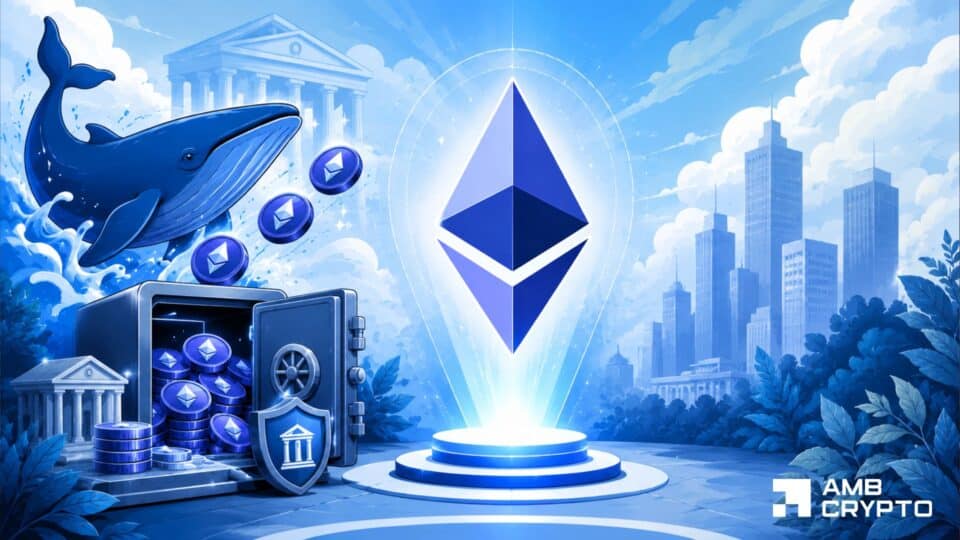
Несмотря на известную волатильность биткоина, некоторые родители обращаются к криптовалюте вместо традиционных сберегательных планов 529 для колледжей, надеясь на более высокую долгосрочную прибыль. Согласно предыдущим отчетам Crypto News Flash, все больше американских родителей переходят от традиционных сберегательных планов 529 к биткоину, считая, что это обеспечивает лучшую долгосрочную финансовую безопасность для их детей.

Аналогичная тенденция также была отмечена в отчете Bloomberg, где отмечалось, что семьи рассматривают биткоин как средство защиты от инфляции, которая ускорилась в декабре, поскольку потребительские цены выросли на 2,6 % по сравнению с годом ранее. Отмечается, что,

Большинство родителей обычно беспокоятся о финансировании 529 накопительных планов для колледжей, брокерских счетов или высокодоходных сберегательных механизмов для своих детей. Однако некоторые родители отказываются от этих традиционных методов, предпочитая накапливать биткойны для обеспечения будущих финансовых потребностей своих детей.

Почему родители делают ставку на биткойн

Во-первых, они считают, что потенциал роста биткоина перевешивает риски, предлагая альтернативу традиционным методам накопления. Сторонники криптоинвестиций утверждают, что дефляционная природа биткоина делает его сильным соперником для долгосрочных накоплений, в отличие от планов 529, которые требуют использования средств исключительно на расходы, связанные с образованием.

Если студент вместо этого решит открыть свой бизнес или отправиться в путешествие, на снятие средств из 529-плана налагается 10-процентный штраф и налоги. Кроме того, планы 529 могут повлиять на право получения финансовой помощи, особенно если они принадлежат бабушкам и дедушкам. Несмотря на то что существуют налоговые льготы, зависящие от конкретного штата, высокие комиссии по-прежнему вызывают беспокойство.

Финансовые компромиссы

Во-вторых, еще одним фактором, который следует учитывать, является отношение к криптовалюте в соответствии с правилами получения финансовой помощи. Владельцы биткоинов должны указываться в форме FAFSA как активы, что потенциально может повлиять на право получения помощи. В случае продажи с прибылью прибыль добавляется к скорректированному валовому доходу, что еще больше снижает размер помощи.

Между тем, только несколько американских учебных заведений, таких как Королевский колледж и Уортон, принимают биткоин для оплаты обучения, а студенческие кредиты не могут быть выплачены напрямую в криптовалюте, поскольку сначала требуется конвертация, подлежащая налогообложению.

Может ли биткоин присоединиться к 529 планам?

В настоящее время не существует законного способа включить криптовалюту в план 529. Однако бывший президент Дональд Трамп, который ранее расширил льготы по 529-планам, чтобы покрыть обучение в школах K-12 в соответствии с налоговым законодательством 2017 года, позиционирует себя как сторонника криптовалют.

Могут ли будущие изменения в политике позволить использовать биткоин в образовательных сберегательных планах, остается неясным, но пока криптовалютные родители готовы рискнуть.

На момент написания статьи биткоин (BTC) торгуется на уровне $95 200, снизившись на 3,93 % за последний день и на3,97 % за последнюю неделю. Смотрите график цены BTC ниже.
Пов'язані матеріали

Just now, DeepSeek V4 updates with DSpark, improving inference speed by 80%

DeepSeek has updated its DeepSeek V4 model with the DSpark speculative decoding framework, achieving a significant 60-85% speedup in generation for Flash models and 57-78% for Pro models while maintaining the same overall throughput. This engineering-focused update, rather than a core architectural change, introduces DSpark to address latency and throughput bottlenecks in high-concurrency production environments. DSpark combines high-throughput parallel generation with adaptive load-aware verification. Its key innovations include a semi-autoregressive generation architecture to model dependencies within token blocks and a hardware-aware confidence-scheduled verification system. This system uses a confidence head to predict token acceptance probabilities, allowing it to dynamically optimize verification length per request and allocate compute only to tokens with the highest expected payoff. The asynchronous scheduler is designed for real-world deployment, ensuring zero-overhead scheduling and continuous CUDA graph replay while preserving the target model's output distribution. In tests across mathematical reasoning, code generation, and daily dialogue, DSpark outperformed state-of-the-art models like Eagle3 and DFlash, increasing average acceptance length by 26.7%-30.9% and 16.3%-18.4% respectively on Qwen3 target models. DeepSeek also open-sourced DeepSpec, a full-stack codebase for training and evaluating speculative decoding draft models, providing a standardized toolkit that includes data preparation tools, model implementations, training code, and evaluation scripts.

marsbit1 год тому

Just now, DeepSeek V4 updates with DSpark, improving inference speed by 80%

marsbit1 год тому

BIT Research: The 2028 Halving Is Not the End, the Real Shake-Up of the Bitcoin Mining Industry Is Just Beginning

The Bitcoin mining industry is undergoing its most complex structural adjustment since inception. Despite Bitcoin's price holding near $61,000 and the network hash rate approaching a record 1 ZH/s, miner profitability is deteriorating. The industry is operating close to its breakeven point, with the 2028 halving expected to accelerate consolidation. The challenges extend beyond the halving's subsidy reduction; the industry's revenue model has yet to successfully transition towards a fee-driven structure. Increasingly, mining companies are evolving from simple Bitcoin producers into infrastructure and energy operators, including providers of AI/HPC computing power. Competition is shifting from pure hash rate expansion to business model upgrades. Economic pressure is evident. The theoretical daily mining revenue at current prices is around $78 million, yet the actual figure is only about $33 million—a 136% gap. Transaction fees remain low at roughly $220k daily, far below historical implied levels. With a current estimated industry-wide breakeven price near $65,000, mining alone is struggling to generate ideal profits. The 2028 halving is projected to push the fundamental production cost floor to approximately $93,289. This will likely accelerate a shift towards consolidation among larger, well-capitalized miners with diversified revenue streams. Competitive advantage will belong to institutionalized players with access to low-cost energy, AI/HPC hosting operations, and stronger balance sheets. In essence, Bitcoin mining is transitioning from a "mining business" to an "infrastructure business." Future profitability and resilience will depend less on block rewards and more on diversified income sources like energy management and computational infrastructure services. For investors, the key question is not the halving itself, but which miners can successfully navigate this business model transformation.

marsbit3 год тому

BIT Research: The 2028 Halving Is Not the End, the Real Shake-Up of the Bitcoin Mining Industry Is Just Beginning

marsbit3 год тому

This is How God Karpathy Uses Claude?

Andrej Karpathy, a prominent figure in AI, has reportedly joined Anthropic, leading to a noticeable decrease in his open-source contributions and social media activity. A document claiming to be his personal "CLAUDE.md" file—a set of instructions for the Claude AI to follow within a specific codebase—has been circulating online. While its authenticity is unverified, the content aligns closely with Karpathy's publicly shared principles on effective AI-assisted programming. The document outlines key rules for AI coding assistants, emphasizing the importance of reading existing code thoroughly before writing new code to maintain consistency. It advises against over-engineering, advocating for simple, surgical modifications that match the project's existing style. Other guidelines include clarifying assumptions upfront, writing meaningful tests, thoughtful debugging, and carefully considering dependencies. The core message is that these principles help prevent common AI coding failures, such as introducing unnecessary abstractions, style drift, or making invisible architectural decisions. The community has noted that even experts like Karpathy require detailed instructions to guide AI effectively, akin to managing a junior developer. A related GitHub repository, "andrej-karpathy-skills," which encapsulates these ideas, is reported to significantly reduce Claude's code error rate. Ultimately, the advice stresses that the best CLAUDE.md is tailored to one's own tech stack and coding practices.

marsbit3 год тому

This is How God Karpathy Uses Claude?

marsbit3 год тому

Торгівля

Спот
活动图片