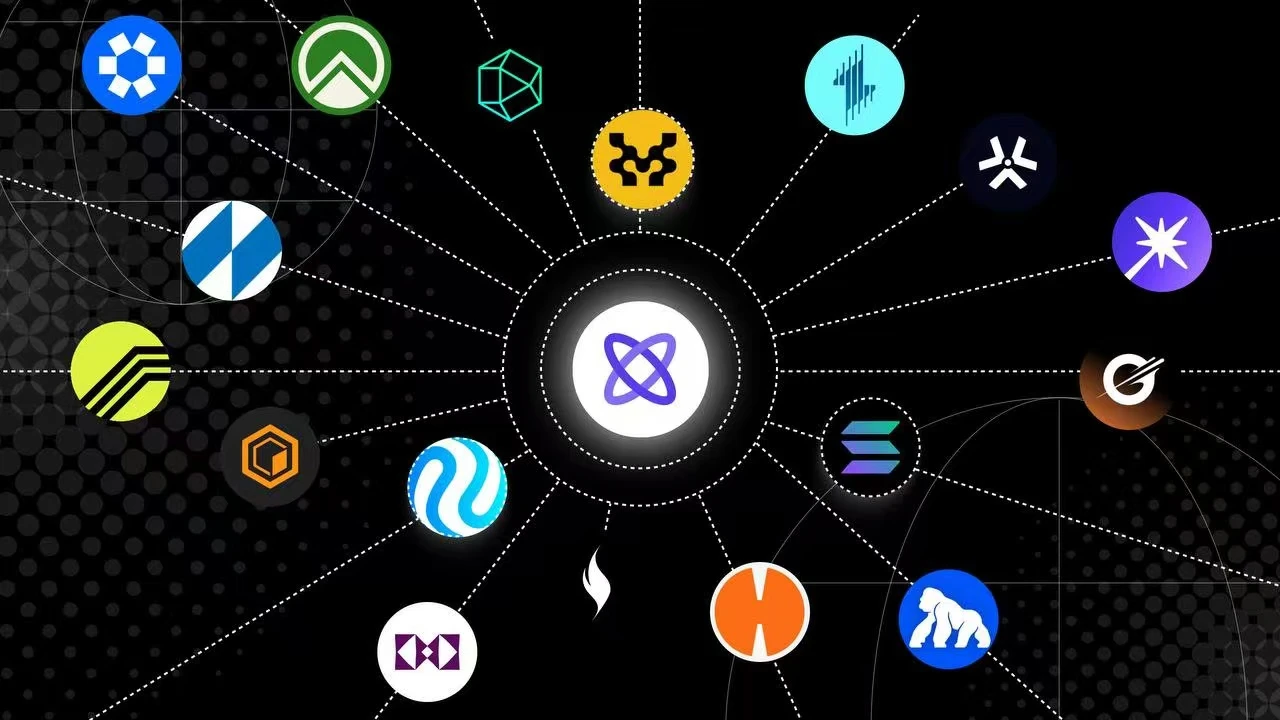
Plume Network整合16个网络,解锁跨链RWA收益

Odaily星球日报Опубліковано о 2025-01-24Востаннє оновлено о 2025-01-24

Анотація

通过Plume旗下的SkyLink,使用户可在多个链上无需许可地享受机构级RWA收益。

Plume Network整合16个网络,解锁跨链RWA收益

Plume Network 通过 SkyLink 在 16 个网络(包括 Solana、Movement 和 Injective 等)上为用户解锁跨链 RWA 收益。

首个全栈 L1 RWA 公链 Plume Network 今天宣布对其跨链生态系统进行重大扩展,计划在 16 个区块链网络上部署 SkyLink。Plume Network 的这一“动作”正是时候,现实世界资产 (RWA) 的链上总价值在过去一年中翻了一番,达到近 170 亿美元,成为 Web3 中增长最快的行业之一。

Plume Network 的 SkyLink 是一种用于安全、跨链 RWA 收益分配的互操作性解决方案,将在首批 16 个区块链网络中推出,包括 Solana、Movement、Injective、Omni Network、Zircuit、Ape Chain、Core、Polyhedra、Gavity by Galxe、Merlin、Xion、Rome、Echelon、D3、Hemi 和 Memento。

这些网络上的用户现在可以无需许可地享受机构级 RWA 收益,这些收益将通过 SkyLink 的镜像收益型代币直接流到他们的钱包中,该解决方案利用了 LayerZero 的 SyncPools 实现无缝的全链功能。

同时,值得注意的是,由 SkyLink 引入的镜像代币(mirrored tokens)可确保总锁定价值 (TVL) 安全地保留在原始链上,既保持了流动性,又增强了每个网络的价值。

“RWA 行业的发展取决于不同区块链生态系统的协作努力,每个生态系统都为构建强大的跨链基础设施贡献了自己独特的优势,”Plume Network 联合创始人 Teddy Pornprinya 表示。“通过与这些网络合作,我们正在为可互操作的 RWA 环境奠定基础,在该环境中,任何链或 rollup 都可以轻松获得机构级收益。”

传统市场的商品、债券和股票总值超过 100 万亿美元,代表着巨大的代币化机会,Plume Network 的此次扩展解决了一个关键的市场需求:虽然 RWA 代币化已显著增长,但在不同的区块链生态系统中分配收益的能力仍然很分散。

SkyLink 与 LayerZero 的集成实现了具有统一跨链铸币和销毁功能的流动性池,允许在多个链上无缝发行和赎回收益型代币,同时保持 Plume 的资产托管和合规基础设施。

此次集成实现了:

  • 在任何受支持的区块链网络上实现持续收益流;

  • 无需许可即可享受机构级 RWA 收益;

  • 跨 DeFi 应用的收益型代币的原生可组合性;

  • 跨所有链的统一合规性和安全标准。

“展望 2025 年,我们相信多链互操作性对于开启下一阶段的 RWA 采用至关重要,”Plume Network 业务发展主管 Jason Meng 补充道。 “我们的目标是让 Plume 成为跨链 RWAfi 收益分配的枢纽,支持 DeFi 对现实世界资产敞口日益增长的需求。我们正在积极寻求整合新网络,以进一步扩大这一生态系统。”

关于 Plume

Plume Network 是专为现实世界资产金融 (RWAfi) 构建的全栈 L1 RWA 链和生态系统,可实现现实世界资产的快速采用和需求驱动的整合。凭借 180 多个在链上构建的项目,Plume 提供了一个可组合的、与 EVM 兼容的环境,用于载入和管理各种现实世界资产。结合端到端代币化引擎和金融基础设施合作伙伴网络,Plume 简化了资产注册并实现了 RWA 的无缝 DeFi 集成,因此任何人都可以使用 Plume 代币化现实世界资产,在全球范围内分发,并使它们对原生加密用户有用。

Трендові криптовалюти

Пов'язані матеріали

Claude Accused of Becoming Dumber by the Entire Internet, Anthropic Steps In to Reveal: It’s Not the Model That’s Tricking You

When users complained that Claude was "getting dumber," the root cause wasn't the AI model itself. In an official blog post, Anthropic clarified the critical difference between two key settings in Claude Code: Model and Effort. Model refers to the core "brain"—the fixed, trained weights of a specific AI (like Sonnet, Opus, or Fable). Changing the Model addresses *capability* ("can it do this?"), but its knowledge is static post-training. Effort, however, controls the AI's *approach and thoroughness* for a specific task. A higher Effort level instructs Claude to read more files, run tests, perform verification, and complete multi-step reasoning before responding, significantly increasing its "work output" for that job. Conversely, low Effort leads to quicker, less thorough replies. This distinction explains the March 2024 uproar where users experienced a sudden drop in Claude's performance. The cause was not a model change but Anthropic quietly lowering the *default* Effort setting from "high" to "medium" to reduce latency, which was later reverted. The key insight is that a smaller, capable model (like Sonnet) on high Effort can often outperform a larger, more powerful model (like Opus) on low Effort for many tasks. The article provides a practical troubleshooting framework: if Claude makes an error, first check the context and instructions. If it seems to skip necessary steps or validations, increase Effort. If it diligently attempts the task but fails conceptually or makes consistent factual errors despite good context, then consider switching to a more capable Model. The takeaway is a shift in focus: effective AI programming is less about always choosing the "strongest" model and more about intelligently *orchestrating* models and effort levels—acting like a project manager to assign the right "brain" with the right level of diligence for each job, optimizing both results and cost.

marsbit34 хв тому

Claude Accused of Becoming Dumber by the Entire Internet, Anthropic Steps In to Reveal: It’s Not the Model That’s Tricking You

marsbit34 хв тому

Will the Ethereum Foundation Evolve into a 'Mascot'? Diversified Organizations Are Fragmenting Its Functions

The Ethereum Foundation (EF) is undergoing significant internal turmoil and functional erosion. Following its largest-ever layoff of 54 staff (20% of its workforce) and a major organizational restructuring announced in June, its Protocol Support Team has been officially dissolved. This comes alongside the high-profile resignation of key figures like co-executive director Xiaowei Wang, bringing senior departures this year to at least eight. Criticism of EF's rigid structure, opaque decision-making, and perceived lack of a clear value narrative for ETH has intensified within the community. The layoffs have catalyzed the emergence of independent, non-profit organizations like Ethlabs and Ethereum Institutional, founded by former EF researchers and members. These entities are now taking on core functions such as protocol research/development and institutional adoption, effectively fragmenting the EF's traditional leadership role. Concurrently, EF's security team is adapting to technological change, deploying specialized AI agents to audit Ethereum's codebase, which successfully discovered a critical vulnerability (CVE-2026-34219). While EF states AI complements rather than replaces researchers, it signals a potential future shift in its operational model. Faced with these challenges—internal restructuring, talent drain, the rise of competing organizations, and AI integration—the Ethereum Foundation appears to be stepping back from a central commanding role. Analysts and community observers speculate it may increasingly transition towards a symbolic "ecosystem mascot" function, while decentralized initiatives drive Ethereum's future growth and institutional adoption.

marsbit1 год тому

Will the Ethereum Foundation Evolve into a 'Mascot'? Diversified Organizations Are Fragmenting Its Functions

marsbit1 год тому

Nearly a Hundred Players Rush into Embodied Data: With 4.47 Billion Yuan in Financing in One Year, Who Can Really Make Money by 'Selling Data'?

The domestic embodied AI data industry has attracted nearly 100 players, with 70 focused on data collection and 27 on data infrastructure. In the past year, 15 independent embodied data service providers raised approximately 4.47 billion yuan. Despite this growth, the sector remains early-stage, fragmented, and faces significant challenges. Data collection methods are diverse, categorized into four main routes: teleoperation of real robots, human demonstration without a robot (using motion capture, exoskeletons, etc.), simulation synthesis, and distillation from internet videos. Most companies (43%) adopt hybrid approaches, combining multiple routes, as no single method can meet all training needs. Teleoperation alone is pursued by 31% of players, often by state-owned platforms and robot companies, while newer firms favor asset-light, no-hardware human demonstration. Independent data service providers now form the largest player group (40%), indicating the emergence of a distinct industry segment rather than just a subsidiary function for robot makers. Two-thirds of all players are "embodied-native" startups, while one-third are companies that pivoted from fields like AI data annotation, which are more prevalent in the data infrastructure layer. Current annual industry capacity is estimated at 1.6-1.8 million hours plus 70-80 million data points, with a short-term goal to increase this 15-20 fold within 1-3 years. Data collection factories are spread across 20 provinces in China, concentrated in the Yangtze River Delta, Beijing-Tianjin-Hebei, and Pearl River Delta regions. Financially, the 4.47 billion yuan raised in the past year pales compared to the 43.8 billion yuan raised by the broader embodied intelligence sector in just the first half of 2026, highlighting that data remains a less "sexy" bet for investors. The 15 funded independent providers show clear stratification: a top tier led by a unicorn (Lightwheel Intelligence, 3.1 billion yuan), a middle tier of 11 firms raising tens to hundreds of millions, and an early-stage tier of 3 companies. Sixty-nine investment institutions have participated, but none have made concentrated bets, reflecting uncertainty about viable business models. Over half of these funded companies are less than a year old, most are at pre-A or A rounds, and profitability remains largely unproven. In summary, the embodied data industry has become an independent track creating jobs and local economic activity. However, it is still nascent, with unformed consensus, unsolved problems, and unproven business models. The coming 1-2 years will be a critical validation window to see if companies can build sustainable, profitable businesses purely by "selling data."

marsbit4 год тому

Nearly a Hundred Players Rush into Embodied Data: With 4.47 Billion Yuan in Financing in One Year, Who Can Really Make Money by 'Selling Data'?

marsbit4 год тому

Торгівля

Спот

Популярні статті

Як купити PLUME

Ласкаво просимо до HTX.com! Ми зробили покупку Plume Network (PLUME) простою та зручною. Дотримуйтесь нашої покрокової інструкції, щоб розпочати свою криптовалютну подорож.Крок 1: Створіть обліковий запис на HTXВикористовуйте свою електронну пошту або номер телефону, щоб зареєструвати обліковий запис на HTX безплатно. Пройдіть безпроблемну реєстрацію й отримайте доступ до всіх функцій.ЗареєструватисьКрок 2: Перейдіть до розділу Купити крипту і виберіть спосіб оплатиКредитна/дебетова картка: використовуйте вашу картку Visa або Mastercard, щоб миттєво купити Plume Network (PLUME).Баланс: використовуйте кошти з балансу вашого рахунку HTX для безперешкодної торгівлі.Треті особи: ми додали популярні способи оплати, такі як Google Pay та Apple Pay, щоб підвищити зручність.P2P: Торгуйте безпосередньо з іншими користувачами на HTX.Позабіржова торгівля (OTC): ми пропонуємо індивідуальні послуги та конкурентні обмінні курси для трейдерів.Крок 3: Зберігайте свої Plume Network (PLUME)Після придбання Plume Network (PLUME) збережіть його у своєму обліковому записі на HTX. Крім того, ви можете відправити його в інше місце за допомогою блокчейн-переказу або використовувати його для торгівлі іншими криптовалютами.Крок 4: Торгівля Plume Network (PLUME)Легко торгуйте Plume Network (PLUME) на спотовому ринку HTX. Просто увійдіть до свого облікового запису, виберіть торгову пару, укладайте угоди та спостерігайте за ними в режимі реального часу. Ми пропонуємо зручний досвід як для початківців, так і для досвідчених трейдерів.

249 переглядів усьогоОпубліковано 2025.01.21Оновлено 2026.06.02

Як купити PLUME

Обговорення

Ласкаво просимо до спільноти HTX. Тут ви можете бути в курсі останніх подій розвитку платформи та отримати доступ до професійної ринкової інформації. Нижче представлені думки користувачів щодо ціни PLUME (PLUME).

活动图片