面对特朗普上台造成的暴力愉悦,如何在动荡中寻找自己的优势?

Odaily星球日报Опубліковано о 2025-01-21Востаннє оновлено о 2025-01-21

Анотація

每一次重大社会经济变革的背后,都源于“熵的收割”

原文标题:The Violent Delight

原文作者:DoveyWan,primitivecrypto 创始人

原文编译:zhouzhou,BlockBeats

编者按:本文探讨了金融民粹主义政治化的影响,将其比作双黑洞系统,展示了社会的扭曲与混乱。通过以加密交易者为例,强调成功来源于持续的努力与自我认知。指出技术和社会变革正在推动新秩序的形成,未来的领袖将是能够跨越东西方界限、玩转全球思维与民粹主义游戏的创新者。

以下为原文内容(为便于阅读理解,原内容有所整编):

在过去的 24 小时里,我们见证了两个历史性时刻。TikTok 成为了美中持续新冷战中的附带损害,而美国总统推出了自己的 meme 币,这种货币曾被认为是一个边缘化的领域,并且是诈骗的温床。

这是地缘政治紧张局势与金融民粹主义巧合地在同一天碰撞的缩影。我对我们行业的未来充满信心,认为它是最具元主权和全球无许可实验的领域,但我想提醒大家在这一周期的这个阶段保持谨慎,因为许多暴力愉悦的迹象在回响着过去周期中暴力结局的发生。

政治化的金融民粹主义

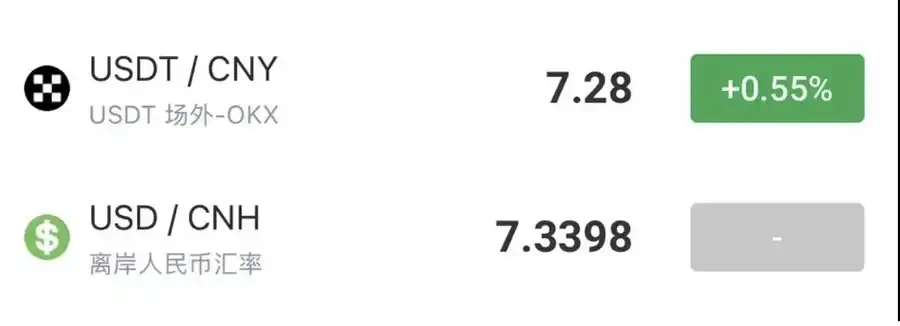
我们所看到的,除了 TRUMP 的暴力愉悦之外,在东方,USDT 与人民币的汇率(在岸人民币)达到了历史最高溢价,反映了大陆对场外交易的强烈需求。这也是这一周期中,首次出现大量中国零售投资者 FOMO,比之前的炒作如比特币、NFT、Ordinal 等还要多。

上个周期中,Defi 和 Gamefi 吸引了全球的流动性,而 NFT 则更多是西方流动性,随后才是东方流动性;在这一周期,链上 meme 币最初主要在 Base 和 Solana 上发行,属于以美国零售为主的资产,但随着 TRUMP 的出现,全球流动性开始趋同。
面对特朗普上台造成的暴力愉悦,如何在动荡中寻找自己的优势?

本地 P2P 场外交易 USDT/CNY 价格

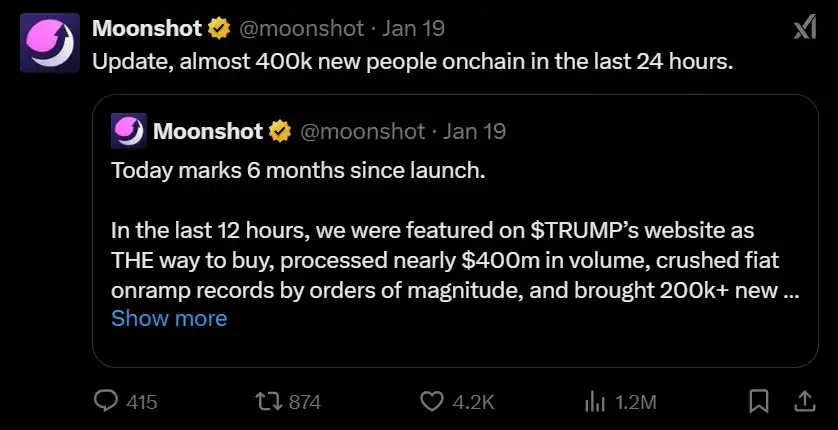
在西方:Moonshot 被大量用户涌入 Solana 所淹没,登上了应用排行榜的顶部,这一模式让人想起上个周期,当时 Moonpay 看到了大量美元法币存款通过 ETH 的入口直接流入 OpenSea。
面对特朗普上台造成的暴力愉悦,如何在动荡中寻找自己的优势?

Coinbase 退出 SOL 导致提款严重延迟,这正如我早前预料的那样,中心化交易所在长期内将充当链上经济的 ATM。同时,类似于上个周期 DeFi 爆发和 NFT 狂潮加速了 ETH 扩容解决方案,Phantom 钱包经历了每分钟超过 8, 000, 000 次的请求激增,一个市值 30 亿的钱包基础设施没能预见到这一波激增。

我们无可否认地处于一个牛市,但只有少数几种山寨币达到了新的历史最高点,这既是行业成熟的标志,也是上游市场疲软的体现,正如我去年所指出的。新的特朗普统治无疑会创造机会,但当市场过度依赖少数领军人物的操控时,持续性将面临风险。

面对特朗普上台造成的暴力愉悦,如何在动荡中寻找自己的优势?

双黑洞系统背后的扭曲星空

当金融民粹主义被政治化时,它就像一个双黑洞系统——两个巨大的引力源在强大力量的舞蹈中相互作用。正如这一宇宙现象通过极端的引力透镜扭曲周围的星空,甚至将时空本身拉入混乱,我们也正在目睹着这个世界的不安定扭曲。社会的不满情绪在激增,紧张局势触手可及,熵值也达到了历史新高。历史证明,暴力的愉悦往往会以暴力的结局收场,但这一次,我们有机会有意识地选择一条替代的货币轨道/资源分配路径,或许能够提供一种更和平的解决方案。

错失 100 倍机会

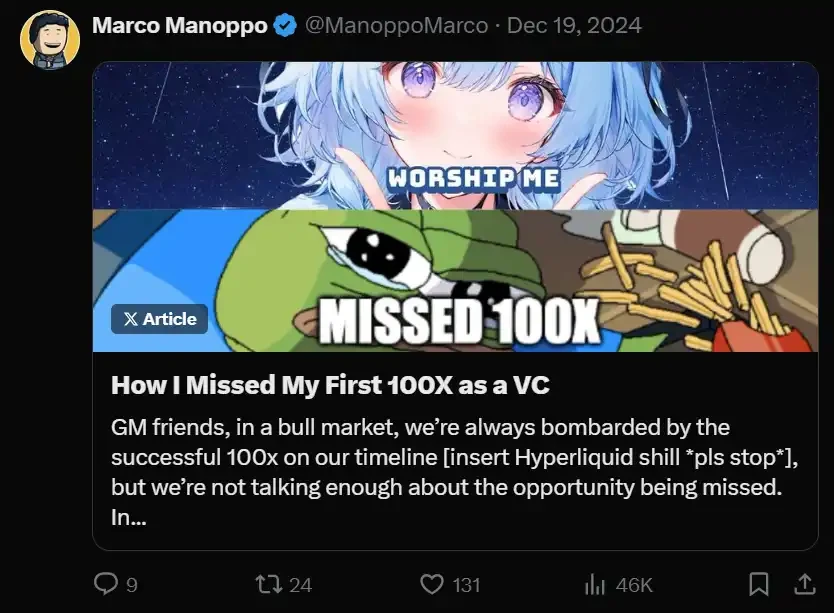
在我进入这个行业的 10 年里,我从未经历过「一夜暴富」,我错过了无数次 100 倍的机会,但这没关系,快速、大额回报的诱惑无可否认,但可持续的成功源于自我意识和了解自己的游戏规则。

从长远来看,市场将会提供下一个 100 倍的机会,迎合你的优势,只要你不断积累。这也是我在面对 ManoppoMarco 作为加密投资者的第一次 100 倍错失时,给出的建议。
面对特朗普上台造成的暴力愉悦,如何在动荡中寻找自己的优势?

如果你的自然优势在于作为 meme 币 PvP 玩家或拥有敏捷反应的动量交易者,拥抱它并不断精进你的优势。以 0x Wangarian Darryl 和他的 Pigeon 账号为例。尽管一些人把他当作「富二代的虚拟角色扮演者」,认为他只是在「抛售别人」,但那些了解他背景和过往记录的人知道,他对系统化交易执行和市场分析有着极大的热情,和任何专注的地下交易者一样。

对于那些将 meme 币转化为「轻松八位数」胜利的战壕战士们,我们不应忽视他们背后付出的巨大努力。无数个在链上的不眠之夜,不断的侦察,以及对自己技艺的坚定执着,才是这些改变人生结果的真正推动力。

我对这些战壕战士怀有深深的敬意。加密依然是最后一个领域,在这里,只需一台电脑、坚韧不拔的毅力和深刻的洞察力,任何人都能实现财务转型。它是一个功绩导向的战场,努力和技能依然能够重写个人的成长轨迹。

但如果这不是你的优势,追逐暴力的愉悦可能就是一场自我毁灭的游戏。财富不会「轻易而得」,除非它与你的优势相符。理解你是谁,玩什么游戏,属于哪个战壕,是个人成长的基础。市场有它的节奏,但成功来自于找到自己的旋律,并自信地跟随它舞动。

不以暴力结局

从 19 世纪的「笔比剑更强」到 21 世纪初的「软件正在吞噬世界」,我们现在正处于变革性趋势的交汇点:

  • 二进制代码演变为货币代码

  • 机器程序重塑社会契约

  • 人类语言成为编程语言

每一次重大社会经济变革的背后,都源于「熵的收割」——创造新秩序,通常以新的价值供应链形式出现,从根本上改变了人类的协调方式(无论是经济还是政治)。

工业革命通过机械化程序重新定义了社会契约;互联网的兴起以及密码学保护的私人财产(即原生互联网货币)将二进制代码转变为货币代码。如今,我们正步入一个以人类语言本身为编程语言的时代,这赋予个体力量,让他们不仅成为「 10 倍人」,甚至成为「 100 倍人」。

未来已经开始显现,尽管其分布并不均匀。那些敢于踏上炒作曲线左侧的人,能够整合东西方的全球化思维,参与超主权的民粹博弈,他们将崛起为那个时代的主角,定义属于自己的传奇篇章。

原文链接

Пов'язані матеріали

Dialogue with Multicoin Partner: The Crypto Market Has Bottomed Out, Favoring Three Cryptocurrencies in This Cycle

In a recent interview, Multicoin Capital managing partner Tushar Jain shared his views on the crypto market. He believes the market has bottomed and is at an inflection point, citing that negative news no longer causes significant price declines and application adoption continues to grow. Jain remains highly bullish on Solana, viewing it as the correct architectural choice for internet capital markets, particularly for spot and tokenized security trading. He is also positive on Hyperliquid, noting its leadership in decentralized derivatives trading. His investment approach focuses on concentrating capital in top convictions rather than equal allocation. A distinct opportunity he highlights is Zcash (ZEC), which he sees as a return to the industry's cypherpunk ethos and a potential top-five asset by market cap. For assets like Zcash without cash flows, his valuation framework is based on relative market cap ranking. Regarding investment strategy, Jain employs a "three-part" entry method to avoid timing pitfalls and emphasizes long-term "active management" over "active trading." He outlines four sources of investment edge: informational, analytical, behavioral/psychological, and structural. On portfolio management, the fund uses Bitcoin as its "cash," selling assets into Bitcoin during market euphoria to reduce beta risk and using Bitcoin to buy dips. Sales occur only if a better opportunity arises, the investment thesis breaks, or valuations become excessively overheated. While respectful of Ethereum's resilience, he questions its unclear scaling roadmap. Finally, Jain reaffirms his commitment to the thesis that blockchains will form the foundational architecture for future capital markets.

marsbit3 хв тому

Dialogue with Multicoin Partner: The Crypto Market Has Bottomed Out, Favoring Three Cryptocurrencies in This Cycle

marsbit3 хв тому

Behind Robinhood's Chain Launch and Tokenized Stocks: No Equity Rights, How Far Can This Packaging Game Go?

Robinhood is launching its own Layer 2 blockchain (Robinhood Chain) and "tokenized stocks," but these are not actual equity shares. The tokens are legally structured as debt securities or derivatives, offering economic exposure to a reference stock without granting voting rights or direct ownership. This move represents Robinhood's strategy to expand from a traditional brokerage into a "financial super app," building a user-friendly, programmable financial interface on top of complex, legally compliant, and jurisdiction-specific backend structures. The company's existing business remains strong, driven by options, event contracts, and stock trading. The new blockchain and tokenization efforts are an ambitious layer of infrastructure built atop this core, aiming to make financial products more portable and globally accessible via crypto rails. Key components include the Robinhood Wallet, Bitstamp acquisition (for institutional reach), the Lighter perpetual contracts platform, and Robinhood Earn (DeFi yield). The central challenge is the "brokerage chain paradox": maintaining a simple, intuitive user experience while the underlying assets are highly structured, regulated, and legally distinct from direct ownership. The success of this strategy depends on users, developers, and regulators accepting this model. If the complexity is misunderstood or deemed misleading, it could create product liability issues and stall expansion. The initiative is a significant infrastructure play, but its long-term viability hinges on navigating this fundamental tension between simplicity and legal reality.

marsbit1 год тому

Behind Robinhood's Chain Launch and Tokenized Stocks: No Equity Rights, How Far Can This Packaging Game Go?

marsbit1 год тому

Zhipu, Afraid of Becoming the Next MiniMax

Title: Zhipu, Fearing to Become the Next MiniMax In July 2026, amid the success of its coding-focused AI, Zhipu's founder, Tang Jie, issued an internal letter titled "The Giant Wave Has Come." It notably avoided celebrating recent triumphs, such as Zhipu's trillion-HKD market cap and booming MaaS revenue driven by its GLM-5.2 model in coding applications. Instead, the letter pivoted the narrative to future-oriented concepts like Long Horizon Task, Autonomous Agents, Self-Evolving systems, and AGI. This strategic shift in messaging followed the sharp devaluation of its competitor, MiniMax. After its lock-up period expired, MiniMax's stock plummeted as the market began evaluating it with traditional SaaS metrics like ARR and user growth, rather than as a frontier AI pioneer. Seeing this, Tang Jie aimed to preempt a similar revaluation of Zhipu. He fears that if the market starts viewing Zhipu primarily as a profitable "AI coding company," its valuation would become anchored to conventional financial metrics, losing the premium associated with AGI potential. Therefore, the letter reframed Zhipu's mission. While acknowledging that coding was the current commercial driver, Tang positioned Zhipu on the "infrastructure path," akin to OpenAI and Anthropic. The new focus is on developing agents capable of complex, long-term planning and autonomous operation—moving from assisting individuals (OPC: One Person Company) to automating entire organizations (NPC: No People Company). This "Touch High" plan explicitly prioritizes long-term AGI research over short-term monetization. The article frames this as a critical divergence in China's AI landscape: the "commercialization path" (exemplified by MiniMax) versus the "infrastructure path" (chosen by Zhipu). The former risks being judged harshly by internet-era metrics once growth slows, while the latter risks failing if technological breakthroughs stall. Tang Jie's letter is thus a calculated move to secure Zhipu's identity as an AGI contender, buying time before the inevitable market demand for commercial proof. The core question remains: can Zhipu's "mo gao" (reach high) plan achieve genuine technological leaps fast enough to outpace the market's diminishing patience for stories over substance?

marsbit1 год тому

Zhipu, Afraid of Becoming the Next MiniMax

marsbit1 год тому

Торгівля

Спот
活动图片