Will Lido Staked Ether Trigger the Next Big Crypto Crash?

BlockworksОпубліковано о 2022-06-15Востаннє оновлено о 2022-06-15

Анотація

Lido’s crypto derivative representing staked ether (stETH) has slipped by roughly 6% compared to ether in the past 72 hours, causing concern there could be another big crypto crash similar to last month’s collapse of LUNA.

Lido’s crypto derivative representing staked ether (stETH) has slipped by roughly 6% compared to ether in the past 72 hours, causing concern there could be another big crypto crash similar to last month’s collapse of LUNA.

StETH is a token stand-in for ether locked inside staking protocol Lido. The digital asset effectively constitutes the deposited ETH while Lido distributes associated staking rewards to its users. StETH tokens are minted when ether is deposited and burned upon redemption.

StETH has historically been considered a safe asset, effectively pegged 1:1 to ether and backed by ETH in Ethereum’s Beacon Chain, which has been running since December 2020.

StETH has been used as collateral on open-source liquidity protocol Aave since March, allowing those who stake ether in support of Ethereum’s switch to proof-of-stake to gain leverage on their locked crypto.

Due to current market volatility, users are rushing to cash out their ETH from the Curve pool, a decentralized exchange liquidity pool on Ethereum designed for stablecoin trading. As a result, stETH is now harder to cash out than ETH – leading to de-pegging.

But unlike stablecoins with redemption mechanisms, stETH can only be unlocked on Ethereum’s proof-of-stake chain (once it goes live). The token is more akin to a liquid interest-bearing digital asset.

As such, stETH’s value cannot truly be equal with ETH due to associated risks with the impending Ethereum merge, including delays and cancellations. When liquidity dries up in any market, the price of the associated asset will also dip.

Despite stETH’s recent drop from ETH parity, positive signs indicate it’s becoming less risky to own; the Ethereum Ropsten testnet successfully moved to proof-of-stake last week.

Still, stETH has become a problem for some of its largest holders – including Celsius, a crypto lending platform where over $3.8 billion has been deposited.

Celsius suspended all withdrawals and transfers. Despite recovering strongly this morning, Celsius’ own native CEL token is down about 60% over the past week and had fallen 34% in the past 24 hours, as of press time. It is currently down more than 96% from its early-June all time high.

Liquidity protocol Aave is now urging its community members to consider pausing the stETH market and halting ETH borrows “as an extra precaution.”

“Our risk monitoring system continues to measure risk in AAVE,” said John Morrow, chief operating officer at Gauntlet, which performs risk assessments for the staking protocol. “As governance proposals take a few days to pass and go into effect, we are encouraging the community to consider the impact of the…changes carefully. If market conditions worsen we will strongly recommend that these actions be taken immediately.”

Пов'язані матеріали

$9.4 Billion: The Largest Robotics Funding This Year Has Emerged

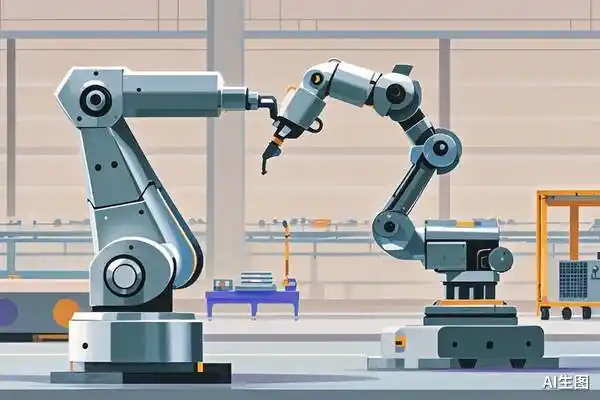
Munich-based humanoid robotics company Neura has completed a $1.4 billion (approximately RMB 94.9 billion) Series C funding round, valuing the company at around $7 billion and positioning it among the global leaders in the sector. The investment round is notable not just for its size—reportedly the largest in robotics this year—but also for its strategic backers, which include tech giants like NVIDIA and Amazon, alongside established industrial players such as German engineering firms Bosch and Schaeffler. This mix of investors signals a significant shift in the industry's focus from technological demonstrations and general-purpose narratives toward practical, industrial deployment and commercialization. Neura's approach centers on developing humanoid robots for defined, high-value industrial tasks rather than pursuing a general-purpose model. Its early validation comes from a partnership with BMW, where its robots are being tested on actual production lines. The involvement of Bosch and Schaeffler, companies deeply embedded in global manufacturing, underscores a growing belief that humanoid robots are transitioning from labs to viable factory-floor solutions. The article highlights two converging trends driving investment: advancements in AI and large language models, which enhance robots' perception and decision-making in unstructured environments, and mounting pressure from labor shortages and rising costs in major manufacturing regions. The funding landscape is now bifurcating between companies like Figure AI, focusing on versatile general-purpose robots, and firms like Neura, targeting specific vertical industrial applications with clearer, shorter paths to ROI. While technical hurdles remain, the core challenges for widespread adoption are increasingly seen as engineering and commercial in nature: managing the high integration and customization costs for different factory environments and establishing robust, localized maintenance and service networks. The record investment in Neura, particularly from industrial capital, indicates the industry's growing confidence in moving from proving feasibility to solving the practical problems of scalability, reliability, and building sustainable business models around humanoid robots in real-world settings like automotive manufacturing and hazardous labor environments.

marsbit7 год тому

$9.4 Billion: The Largest Robotics Funding This Year Has Emerged

marsbit7 год тому

Торгівля

Спот
Ф'ючерси
活动图片