Покупка Memecoin Crypto Whale за 18,57 миллионов долларов повергла Солану в шок

cryptonews.ruОпубліковано о 2021-10-08Востаннє оновлено о 2025-01-08

  • Кит накапливает мемкоины на сумму $18,57 млн на Solana, вызывая тенденции волатильности рынка.
  • WIF видит падение цен на 10,45%, но объем увеличивается на 63,40%, что сигнализирует об активной торговле.
  • MICHI демонстрирует небольшое восстановление с ростом на 1,06% на фоне увеличения объема торгов.

Криптовалютный кит, идентифицированный как «DWhUa», попал в заголовки газет благодаря огромным инвестициям в размере 18,57 миллиона долларов в мемкоины на основе Solana. Покупка включала $13,3 млн в $WIF, $3,82 млн в $POPCAT, $980 000 в $FWOG и $470 000 в $MICHI. Все токены были переведены на недавно созданный кошелек «D2Noa», что вызвало спекуляции о потенциальных движениях цен и рыночных тенденциях.

WIF сталкивается со спадом, несмотря на рост объемов

$WIF, крупнейший холдинг, уже упал на 10,45% до $1,85 за последние 24 часа, несмотря на резкий 24-часовой рост объема торгов на 63,40%. Это потенциально указывает на активную торговлю или потенциальные распродажи. К слову, токен достиг пика на уровне $2,065, прежде чем испытать устойчивый нисходящий импульс.


Источник: Coinmarketcap

Уровни поддержки на уровне $1,80 и $1,70 могут обеспечить безопасность для цен. И наоборот, уровни сопротивления на уровне 1,90 и 2,00 доллара могут помешать попыткам восстановления. Примечательно, что высокое соотношение объема к рыночной капитализации (28,05%) подчеркивает нестабильную торговую среду токена.

POPCAT: резкий спад на фоне роста торговой активности

$POPCAT в настоящее время торгуется на уровне $0,6669, демонстрируя значительное дневное снижение на 16,84%. Достигнув пика в $0,802, токен столкнулся с резким нисходящим давлением. Объем торгов увеличился на 20,64%, что свидетельствует о повышенной активности на рынке.


Источник: Coinmarketcap

Ближайшие уровни поддержки находятся на уровне 0,65 и 0,60 доллара, тогда как сопротивление наблюдается на уровне 0,70 и 0,75 доллара. Весь оборотный запас токена усиливает чувствительность цен, делая его уязвимым для дальнейших колебаний.

FWOG видит умеренные потери при растущем объеме

Цена $FWOG составляет $0,2285, снизившись на 4,63% за последние 24 часа. Рост в начале сессии был сведен на нет постоянным нисходящим давлением. Объем торгов вырос на 68,59%, что указывает на повышенную активность.


Источник: Coinmarketcap

Уровни поддержки на уровне 0,22 и 0,21 доллара могут предотвратить дальнейшее снижение, а сопротивление на уровне 0,24 и 0,25 доллара может ограничить восходящий импульс. Отношение объема к рыночной капитализации в 20,93% отражает умеренную интенсивность торговли.

MICHI немного восстанавливается на фоне смешанных тенденций

$MICHI вырос на 1,06%, а его цена составила $0,1232. Токен восстановился от внутридневных минимумов в $0,111, чему способствовал рост объема торгов на 15,41%.


Источник: Coinmarketcap

Ключевые уровни поддержки на уровне 0,115 и 0,111 доллара указывают на потенциальную стабильность, а сопротивление на уровне 0,1239 и 0,126 доллара указывает на бычьи препятствия. Обратное предложение токена повышает ликвидность, что позволяет ему реагировать на движения рынка.
Пов'язані матеріали

Latin America's Payments Landscape Is Not What You Think It Is

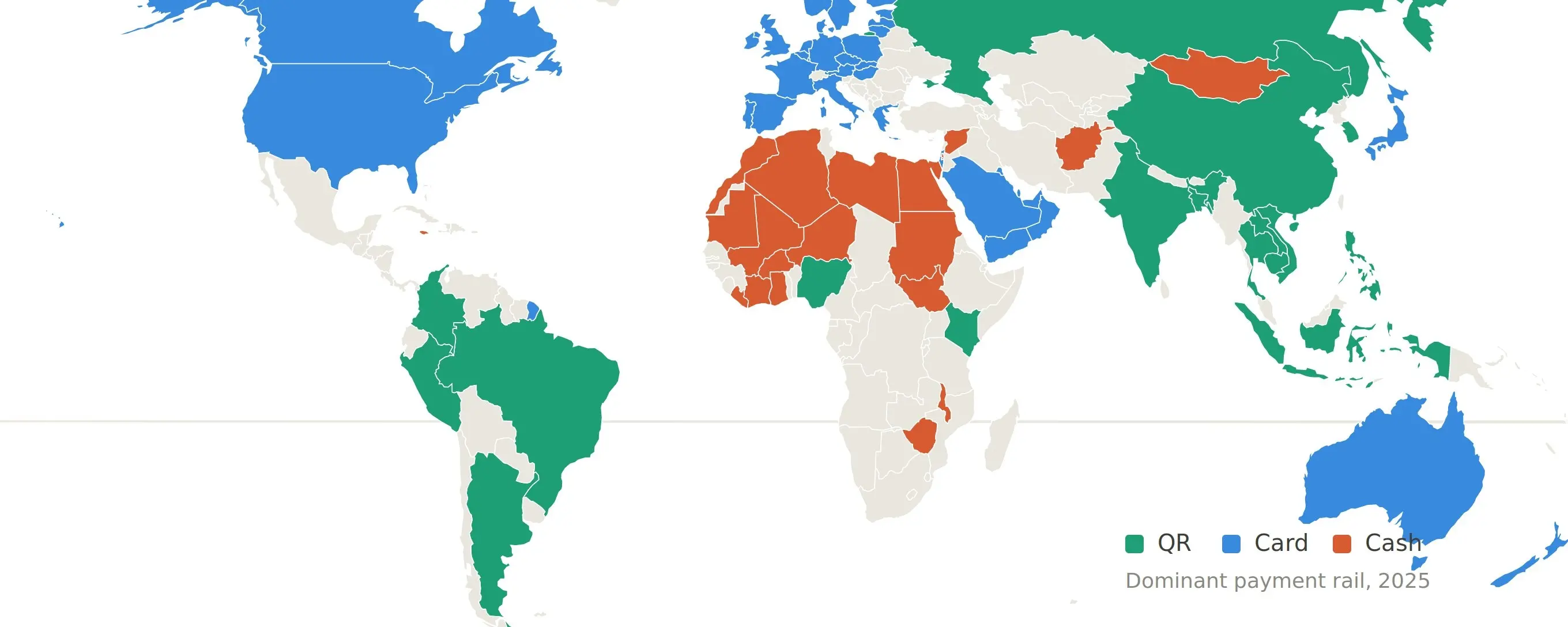
This report challenges common misconceptions about Latin America's payment landscape, based on over 500 hours of firsthand research. Key findings include: 1) Crypto card transaction volume primarily comes from high-net-worth individuals receiving USDT salaries, not retail spending. 2) QR code payments (e.g., Brazil's Pix, Argentina's Mercado Pago) are the dominant payment method across most emerging markets, not cards. 3) A major untapped opportunity lies in enabling cross-border interoperability between domestic instant payment systems. 4) Payment competition is shifting from customer acquisition to owning the settlement layer (e.g., acquiring banks). 5) Latin America is not a single market; Brazil, Mexico, Argentina, and smaller "forgotten five" countries (e.g., Guatemala, Honduras) have vastly different dynamics. 6) Stablecoin-to-fiat conversion margins are collapsing toward zero, pushing companies to build value-added services on top. 7) Future payment winners will be multi-country brands, not single-corridor specialists. 8) Marketing must target specific user segments (e.g., digital nomads, unbanked immigrants) with tailored messaging, not a generic "Brazilian" audience. 9) Contrary to perception, Latin American regulators are often ahead of the US in creating frameworks for digital assets and instant payments, with clear licensing deadlines. The core takeaway is that the region's payment rules are being rewritten, moving beyond cards and stablecoin arbitrage towards integrated, cross-border QR-based solutions.

链捕手4 хв тому

Latin America's Payments Landscape Is Not What You Think It Is

链捕手4 хв тому

Vitalik's Algorithmic Stablecoin Vision: Interpreting the Mechanism and Challenges from an Options Perspective

Vitalik Buterin's recent algorithmic stablecoin proposal envisions using an option-like mechanism to create a stablecoin without the liquidation risks inherent in traditional collateralized debt position (CDP) models. The design splits one unit of ETH into two components: a 'stable' leg (P) that maintains value up to a certain strike price, and an 'upside' leg (N) that captures any appreciation above that price. Together, they always sum to one ETH, eliminating the need for debt or liquidation mechanisms. From an options perspective, the stable leg essentially functions as a synthetic, covered call position. However, significant challenges exist. For the stable asset to maintain its peg, it must continuously roll deep in-the-money call options, leading to potential rollover slippage, predictable trading paths vulnerable to front-running, and liquidity issues. Crucially, the system's scalability depends on a constant demand for the upside leg—a form of leveraged ETH long position without funding rates or liquidation risk. It's unclear if such persistent, specific demand will materialize from speculators or market makers who have simpler alternatives like perpetual swaps. The author, drawing from experience with Rysk, argues that DeFi options have struggled as standalone trading products due to complexity and fragmented liquidity. Their potential lies instead as foundational infrastructure underpinning more complex financial primitives like stablecoins, structured yields, or index products—transforming from a direct product into a core pricing and risk distribution engine for the next generation of on-chain finance.

marsbit1 год тому

Vitalik's Algorithmic Stablecoin Vision: Interpreting the Mechanism and Challenges from an Options Perspective

marsbit1 год тому

GPT-5.6 Countdown: Abandon the Illusion of a Single API, Computational Iteration Can't Outpace a Single Page of Compliance

In mid-June, three seemingly independent industry events—the compliance-driven throttling of Fable 5, the open-sourcing of GLM-5.2, and the leaked release timeline for GPT-5.6—are pushing the global AI industry toward a watershed moment. These shifts signal a fundamental restructuring of the industry's underlying logic. First, **"usability" has substantially overtaken "advanced capabilities"** as the primary weight, pushing the global large language model (LLM) supply chain into a "dual-track" phase of controlled closed-source and local open-source coexistence. Second, **the competitive moats of closed-source giants are shifting**. Their technical focus is moving from "language intelligence" toward "spatial intelligence (world models)"—a domain heavily reliant on computing power. Third, faced with常态化 transnational compliance risks, **a "model-agnostic" decoupled design has become a survival necessity for application-layer developers to maintain business continuity.** The article details how Anthropic's Fable 5, despite its advanced engineering feats, was restricted for non-U.S. citizens within 72 hours of launch, highlighting how geopolitical compliance can instantly limit even the most advanced models. In response, the open-source camp, exemplified by Zhipu AI's MIT-licensed GLM-5.2, is gaining market share by offering stable performance improvements and significant cost advantages (up to 70% savings for enterprises), while achieving full adaptation with domestic semiconductor platforms. Meanwhile, closed-source leaders like OpenAI are pivoting. The anticipated GPT-5.6 reportedly shifts focus from language to spatial intelligence and world models, aiming to rebuild a generational gap in areas like 3D understanding, simulation, and industrial design that demand immense compute. The core conclusion is that the LLM supply chain's logic has changed. Enterprises must now evaluate infrastructure based on a composite of technical performance and policy compliance. For developers, complete reliance on a single closed-source API poses unacceptable risk. Implementing a truly model-agnostic architecture—enabling swift switches to compliant, locally deployable open-source alternatives—is no longer just good practice but a fundamental baseline for business continuity.

marsbit4 год тому

GPT-5.6 Countdown: Abandon the Illusion of a Single API, Computational Iteration Can't Outpace a Single Page of Compliance

marsbit4 год тому

Торгівля

Спот
Ф'ючерси
活动图片