WEEX携手迈克尔·欧文,革新加密货币交易体验

Odaily星球日报Опубліковано о 2024-12-03Востаннє оновлено о 2024-12-03

Анотація

将尖端的加密货币与顶级体育精神完美融合,为行业带来全新突破与可能性。

WEEX携手迈克尔·欧文,革新加密货币交易体验

全球加密货币交易平台 WEEX 正式宣布,与足球传奇迈克尔·欧文达成合作。这一跨界联手,将尖端的加密货币与顶级体育精神完美融合,为行业带来全新突破与可能性。

迈克尔·欧文,以闪电般的速度和精准无比的射门闻名于世,更凭借卓越的职业生涯成为无数球迷心中的偶像。从斩获 2001 年金球奖,到两度荣膺英超金靴奖,再到在皇马单赛季攻入 16 球,欧文不仅是球场上的传奇,更是利物浦多次问鼎国内外赛事的功臣。他的每一步,都为足球史写下了浓墨重彩的一笔。

自 2018 年成立以来,WEEX 始终以卓越创新为核心,不断迈向新的高峰: 2019 年获得首笔 1 亿美元投资;2021 年通过美国和加拿大 MSB 监管牌照认证;2022 年实现日交易额突破 50 亿美元,用户规模突破 50 万;2023 年获得韩国数字营销巨头 FSN 集团以 1 亿美元估值投资,奠定了 2024 年全球扩张的重要基础。

WEEX 副总裁 Andrew Weiner 表示:“迈克尔·欧文的加入,等于为我们的团队签下了一位球坛传奇。他所代表的卓越精神和不懈追求,与 WEEX 致力于金融创新的理念不谋而合。这不仅仅是一次合作,而是一场将体育与金融科技融为一体的全新探索,我们将携手为全球用户创造独特而非凡的体验。”

这一合作的意义,远不止于体育和加密货币的结合,更在于传递不断突破和勇攀高峰的精神。WEEX 专注于打造极速创新的交易平台,这一目标与欧文快、准、稳的比赛风格完美契合。双方的强强联手将激励更多人,充分展现两大领域翘楚合作所能迸发的无限潜力。

随着 WEEX 与迈克尔·欧文携手踏上全新征程,我们期待通过这次战略合作,向世界展现一场融合体育与金融科技的创新之旅,同时为用户带来独一无二的价值与体验。

关于 WEEX

成立于 2018 年的 WEEX,凭借出色的创新能力和服务迅速崛起,成为全球加密货币领域的重要角色。平台提供超过 1, 000 种交易对,热门币对限时零交易手续费的政策,赢得行业广泛认可。

WEEX 还推出了全新的 “WEEX WE-Launch” 计划,为 WXT 持有者提供参与独家代币空投的机会,开启用户参与和赋能的新篇章。如今,WEEX 的活跃用户已突破 500 万,CoinMarketCap 全球衍生品排名最高达前五名,长期稳居全球前 20 名。这一切充分彰显了 WEEX 对卓越品质与服务的坚持,巩固了其在加密货币交易领域的领先地位。

更多信息:

官网:WEEX Exchange

媒体联系:market@weexglobal.com

客服支持:support@weex.com

WEEX WE-Launch:WEEX WE-Launch

Пов'язані матеріали

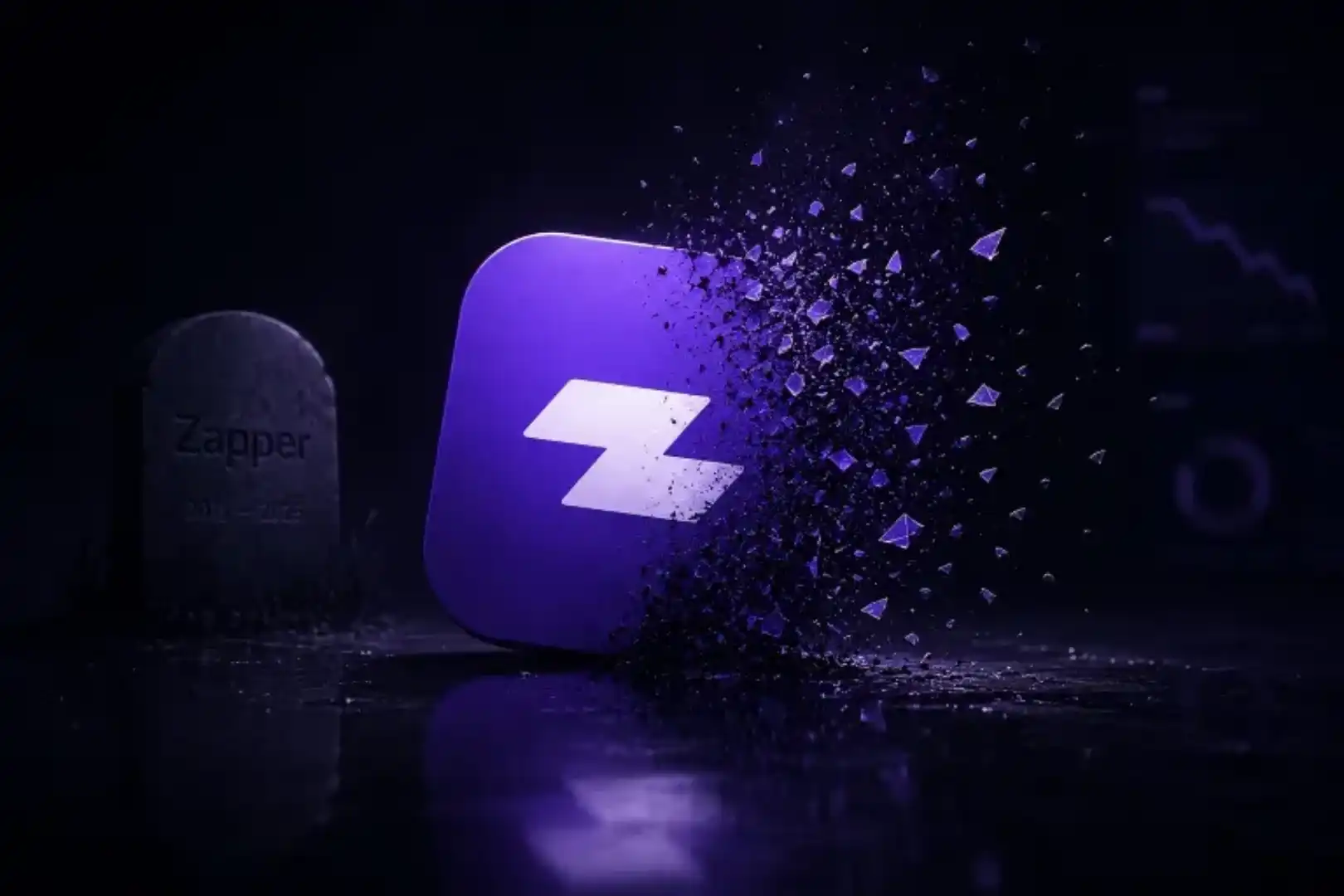
From 2 Million Monthly Active Users to Zero: Zapper's Demise in the "Maturation" of DeFi

From 2M MAU to Zero: The Demise of Zapper in a Maturing DeFi Landscape On July 8, 2026, Zapper co-founder Seb Audet announced the platform's full shutdown. Once a DeFi star with 2 million monthly active users, $13B in processed transactions, and $16.5M in funding, Zapper's journey ends. Born in 2020 from the merger of DeFiZap and DeFiSnap, Zapper rode the "DeFi Summer" wave. It became essential for users to track complex, multi-protocol yield farming positions across chains. At its peak, it supported 14 chains, 450+ protocols, and 7000+ tokens, with its signature "Zap" feature simplifying multi-step DeFi actions. However, sustainable revenue never materialized. Its primary model—taking small fees from DEX aggregation—faced fierce competition and squeezed margins. Meanwhile, maintaining its extensive, real-time data indexing system was costly. Crucially, the DeFi ecosystem matured, with activity and liquidity concentrating in fewer top protocols. The core demand for a complex, multi-protocol dashboard waned as user behavior simplified. Zapper attempted multiple pivots that failed to gain traction: an NFT-based points system (2021), a social app called Chainchat (2023), and plans for a ZAP token and open protocol (2024). These efforts reflected a persistent "blockchain-native" mindset focused on creating new C端 (consumer) needs rather than addressing existing pain points or bolstering its revenue-generating products. The article contrasts Zapper with DeBank, which successfully narrowed its asset-tracking focus while developing Rabby Wallet—a revenue-stabilizing, competitive product. Zapper's story serves as a cautionary tale for tooling projects: over-immersion in a purist vision, coupled with an inability to adapt business models to market shifts—like the consolidation of DeFi activity—can be fatal, even for once-dominant platforms.

marsbit19 хв тому

From 2 Million Monthly Active Users to Zero: Zapper's Demise in the "Maturation" of DeFi

marsbit19 хв тому

Goldman Sachs Bans It, Google Bans It Too: The Gray Zone of Prediction Markets Is Shrinking Fast

Goldman Sachs has updated its personal trading policy, prohibiting employees from trading event contracts on prediction markets involving specific companies (including whether Goldman itself might restructure or initiate acquisitions in a quarter), election outcomes, financial market performance (including Bitcoin prices), macroeconomic data, geopolitical events, and regulatory results for pending M&A deals. Sports and entertainment bets remain allowed. Violations can lead to dismissal or account closure, and the firm may reclaim profits over $200 or donate them to charity. This follows a CFTC case against a Google engineer who allegedly used non-public data to profit $1.2 million on Polymarket. Simultaneously, Google's Chrome Web Store updated its policy, banning extensions that facilitate real-money trading on prediction market outcomes, effective August 1, 2026. While not affecting platforms' websites or mobile apps directly, this restricts a key user access channel. These actions occur amid growing regulatory pressure on prediction markets. The CFTC is investigating Polymarket for alleged misconduct, and a consumer group has filed a lawsuit. Over 30 countries, including Argentina, have blocked access. Despite this, trading volume has hit record highs, and major investments continue, such as ICE's $2 billion stake in Polymarket. The core debate remains whether prediction markets are financial instruments or gambling. CFTC argues for federal oversight as derivatives, while some states seek to regulate them under gambling laws. Multiple fronts—federal probes, political pressure, internal corporate bans, and platform restrictions—are narrowing the operational space for these markets.

Foresight News25 хв тому

Goldman Sachs Bans It, Google Bans It Too: The Gray Zone of Prediction Markets Is Shrinking Fast

Foresight News25 хв тому

Tsinghua AI Mathematician Emerges: From Intuition to Theorem, Contributing to an 84-Page Quantum Algorithm Paper

Tsinghua University’s Intelligent Industry Research Institute (AIR) has developed an AI mathematician agent named AIM, designed not just to solve math problems but to actively participate in early-stage research. In a recent study, researchers collaborated with AIM to develop "Sign Embedding Quantum Algorithms," resulting in an 84-page paper on quantum algorithms for matrix equations and functions. The research began with a human researcher's intuition: can rational approximation serve as a design principle for quantum algorithms? AIM helped expand this idea into multiple candidate research directions. Human researchers then filtered and focused on the most promising path. AIM assisted in organizing theorems, generating proof drafts, and performing complexity analysis, while humans maintained oversight, auditing assumptions and refining derivations. This case illustrates a human-AI collaborative workflow: AI rapidly explores and expands research avenues, generates draft materials, and aids in checking derivations; human researchers provide critical judgment on direction, value, and validity. The process emphasizes "high-throughput candidate generation + human value gating + AI-assisted audit and repair + human final integration." The resulting quantum algorithm framework offers a unified approach to several matrix problems, advancing quantum linear algebra under more general conditions. This work suggests AI's role in theoretical research is evolving from task-specific assistance to supporting the entire research lifecycle—enhancing exploration and efficiency while keeping human expertise central to guiding inquiry and ensuring rigor. *Paper & System Links:* - AIM application report: https://arxiv.org/abs/2606.24899 - Quantum algorithm paper: https://arxiv.org/abs/2604.25333 - AIM repository: https://github.com/TheoryFoundry/AIMv2

marsbit1 год тому

Tsinghua AI Mathematician Emerges: From Intuition to Theorem, Contributing to an 84-Page Quantum Algorithm Paper

marsbit1 год тому

Торгівля

Спот
活动图片