Exploring the Impact of Blockchain on Modern Business

bitcoinistОпубліковано о 2024-09-30Востаннє оновлено о 2024-09-30

Анотація

Blockchain technology has transformed the way businesses operate by offering several effective tools for data integrity and security. Blockchain basically...

Blockchain technology has transformed the way businesses operate by offering several effective tools for data integrity and security. Blockchain basically stands for the blocks of data that are linked together to form a chain, and each block contains a record of transactions. Once a block is attached to the chain, it cannot be altered or deleted, and thus, it highly enhances data protection and security.

In blockchain, a single entity cannot control the entire network. Instead, it is managed by participants, i.e., nodes. Blockchain technology plays a key role in maintaining transparency and trust and thus immensely helps businesses manage their transactions while ensuring data safety and integrity.

Blockchain in Supply Chain Management

Blockchain technology plays a very effective role in supply chain management by providing businesses with the tools to track their movements and keep records of every transaction. Due to the involvement of multiple parties—manufacturers and suppliers—it was very difficult for the businesses to take records of all the processes, and it was also not easy for them to trace the location of the products and their authenticity.

With the implication of blockchain technology, errors and frauds in supply chains have also been reduced to a greater extent, and the overall process has become very convenient for businesses. In this way, customers are also able to trust the products they are buying, which plays a vital role in gaining the trust of customers to overcome market competition and enhance sales.

Blockchain in Finance and Banking

Blockchain is also playing an impressive role in enhancing finance, banking and even in online casino platforms by eliminating the requirements of intermediaries in the transaction process. In the traditional system, there were many intermediaries like banks and payment processors, due to which high fees and extra charges were required for transactions.

Also, the process was quite slow, but with the use of blockchain technology, peer-to-peer transactions can be made, which are relatively faster and more secure. Bitcoin is a key application of blockchain in finance, which allows users to transfer money to one another without any need of banks or other intermediaries. It has also revolutionised how businesses handle agreements by providing the tools that automatically execute when the predefined conditions are obtained.
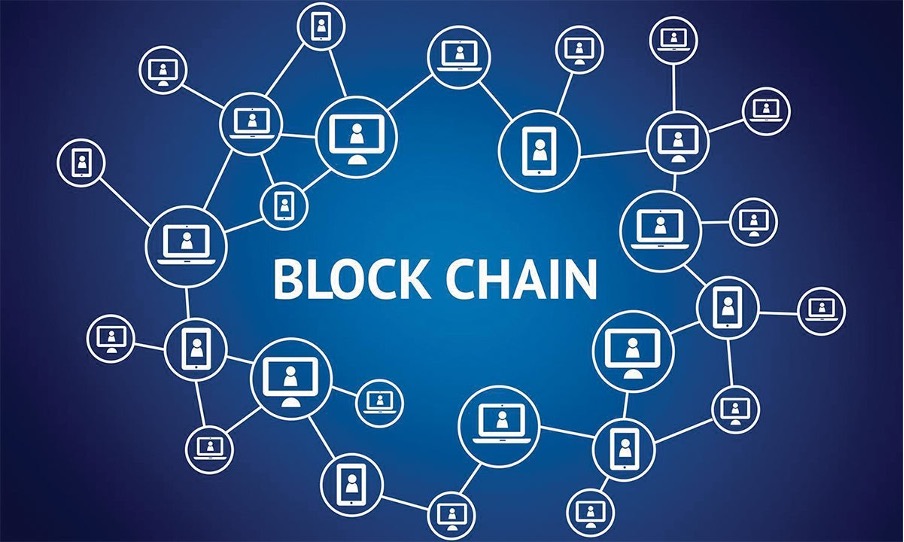
Image Source: Blockchain Technology

Blockchain in Healthcare

Blockchain also has a significant positive impact on the healthcare sector by offering various features that play a very crucial role in managing a vast amount of data related to the medical records of the patients. Blockchain provides tools to store and share medical data, which allows the healthcare provider to access the previous health records of the patient for better treatment.

The complete medical information is stored systematically and is also updated time-to-time and cannot be accessed by anyone without the consent of the patient. Thus, blockchain offers effective solutions to the issues of data safety for patients and immensely helps them in obtaining the best medical services.

Blockchain in Real Estate

Blockchain technology has come up with the best solutions to make property transactions and title transfers more convenient, transparent, and secure. With the help of this technology, the transactions can be recorded digitally, which eliminates the need for brokers, lawyers, and notaries and thus enhances the process of transferring ownership. It has transformed how the real estate industries operate and has also put a check on spam and fraud in property-related deals.


Bitcoinist

Bitcoinist

Bitcoinist is the ultimate news and review site for the crypto currency community!

Пов'язані матеріали

In the AI Era, What's Left for Bitcoin?

As Bitcoin falls below $60,000, the author reflects on the relationship between AI and Bitcoin, seeing them as two sides of the same coin. In the AI era, the cost of generating content has plummeted, making fake text, images, and videos increasingly easy and cheap to produce. This has led to a fundamental shift: while AI dramatically lowers the cost of information production, it also undermines trust and authenticity online. What becomes truly valuable is not more content, but the ability to verify what is real—"verifiability." This perspective offers a new lens for Bitcoin. Its massive energy consumption, often criticized as wasteful, is reinterpreted. While AI burns energy to enhance "capability" and efficiency, Bitcoin burns energy to produce "verifiability." Its purpose is not to be trusted but to enable a system where no trust in intermediaries—banks, platforms, or developers—is needed. Every transaction and the entire ledger's history is secured by cryptography and a decentralized network of nodes, making it independently verifiable. AI cannot forge a transaction on the Bitcoin network because the system is designed for proof, not generation. The author draws a historical parallel to the Renaissance: the printing press drastically reduced the cost of copying knowledge, while double-entry bookkeeping reduced the cost of trust in commerce. Today, AI is the new printing press, reducing content creation costs to near zero. Blockchain, and Bitcoin as its pioneer, may be the modern equivalent of double-entry bookkeeping—a foundational technology for verifying digital asset ownership and historical records without centralized authorities. Thus, AI and blockchain are not competitors. AI lowers the cost of creation; blockchain lowers the cost of verification. In an age where AI can generate anything, true scarcity may lie not in more content, but in independently verifiable facts. Whether the market will reprice Bitcoin accordingly remains uncertain, but its core value proposition as a "machine for producing verifiability" becomes strikingly relevant.

marsbit21 хв тому

In the AI Era, What's Left for Bitcoin?

marsbit21 хв тому

In the Age of AI, What's Left for Bitcoin?

Author: Sevclub, Seven Research Amid Bitcoin's recent drop below $60k, the author reflects on a growing sense that AI and Bitcoin are two sides of the same coin. Today, encountering any content triggers a new default question: "Was this made by AI?" The cost of generating convincing text, images, and video is now negligible. While the internet lowered information *distribution* costs, AI is crashing information *production* costs to near zero. The consequence is a flood of content where truth and falsehood are increasingly indistinguishable. In this environment, what becomes truly valuable is not more information, but the ability to verify what is real—"verifiability." This reframes the common criticism that Bitcoin "wastes electricity." AI consumes power to produce "capability" (e.g., more powerful models). Bitcoin consumes power to produce something else: "verifiability." Bitcoin's core purpose isn't about belief or trust in any institution, developer, or even its creator. It's about enabling independent verification. Every bitcoin's origin, every transaction, and the integrity of the entire ledger are secured by mathematics, cryptography, and a global network of nodes. AI can fabricate convincing media, but it cannot falsify a transaction on the Bitcoin network. The expended energy makes篡改历史 (tampering with history) prohibitively expensive, purchasing a globally verifiable ledger. The author draws a historical parallel to the Renaissance. The printing press drastically reduced the cost of copying knowledge, while double-entry bookkeeping reduced the cost of trust in commerce—one enabled creation, the other verification. Today, AI is the new printing press, driving content production costs toward zero. The question becomes: what is this era's "double-entry bookkeeping"? Blockchain appears to be the leading candidate. It doesn't verify which news is true or which image is real, but it provides a foundational layer for independently verifying asset ownership and historical records in the digital realm without centralized authorities. Therefore, AI and blockchain are not in competition. AI lowers the cost of *generation*. Blockchain (and Bitcoin as a prime example) lowers the cost of *verification*. One creates, the other proves. Whether Bitcoin ultimately succeeds remains uncertain, facing potential challenges from quantum computing, regulation, and technical evolution. However, the author now sees it less as a "machine for making bitcoin" and more as a "machine for making verifiability." In an age where AI can generate anything, true scarcity may no longer be "more content," but "more independently verifiable facts." Whether the market will price this accordingly is a separate question.

链捕手29 хв тому

In the Age of AI, What's Left for Bitcoin?

链捕手29 хв тому

Торгівля

Спот
活动图片