被 Vitalik 喊单,链上数据高速增长,老牌公链 Celo 借 L2 和稳定币开启新叙事

深潮Опубліковано о 2024-09-26Востаннє оновлено о 2024-09-26

Vitalik 一条推文,Celo 开启双位数上涨。

撰文:Nancy,PANews

Vitalik 一条推文,Celo 开启双位数上涨。作为老牌公链,原先主打 ReFi(再生金融)概念的 Celo 正在加速推进向 L2 和稳定币的战略转型并已取得亮眼成绩单,这也为其增加更多看点。

推进 L2 和稳定币的新叙事转型

9 月 25 日,以太坊联合创始人 Vitalik Buterin 发表关于 Celo 的推文并带动其代币 CELO 短时最高上涨约 22.3%。Vitalik 在 X 上表示,「改善全球对基本支付 / 金融的访问一直是以太坊对世界带来好处的关键方式,很高兴看到 Celo 获得关注。我的印象是,Celo 明确地以发展中国家为重点。这对他们来说是件好事,因为这是许多重要挑战和机遇所在。」

其实,Vitalik 高调称赞 Celo 背后离不开其叙事转变。一方面,Celo 转向 L2「投诚」以太坊。自去年 7 月首次提出从 EVM 兼容的 Layer1 区块链迁移后,Celo 在近期宣布正在转型为以太坊 Layer2 解决方案,旨在提供快速、低成本和易用性的无缝用户体验。对于此次转变,Celo 强调与以太坊文化的一致性,称「成为 L2 不仅使 Celo 更紧密地与以太坊的庞大网络紧密联系,还使社区能够以更大的信心和影响力进行创新」。

作为这一转型的一部分,目前 Celo 正在运行两个第二层测试网:已上线的基于 OP Stack 构建的 Dango 和将今年 9 月 26 日升级为 L2 的 Alfajores,并将在今年 11 月正式启动 L2 主网。

除了这一重磅转型外,Celo 还开始发力稳定币支付以及整个 RWA 赛道。例如,今年 2 月,Celo 基金会宣布 Circle 的美元稳定币 USDC 已在 Celo 主网部署,次月又宣布与 Tether 达成合作完成 USDT 的部署。且为增加用户使用率,Celo 还允许使用 USDC 或 USDT 支付 Gas 费。这一决策得到了数十个协议的支持,覆盖链上储蓄、借贷、汇款、点对点和跨境支付等领域。

另外,Celo 还通过合作推出 Credit Collective 并提供 200 万枚 cEUR 以支持 RWA 项目、与 RWA 协议 Centrifuge 集成以及合作推出 RWA Base Camp 加速器计划等举措来进一步布局 RWA。

而根据 Celo 官方披露,Celo 已经与超过 1000 个合作伙伴在 150 个国家建立了合作关系,其中包括在肯尼亚和加纳等国家的 Opera MiniPay 超轻稳定币钱包,该钱包在非洲的用户数量最近已经超过 200 万。这也为 Celo 迅速扩大在 L2 和 RWA 市场影响力增加底气。

多项数据今年飙升,或受稳定币刺激

多项高速增长的数据,展现了 Celo 变革举措所取得的成效。
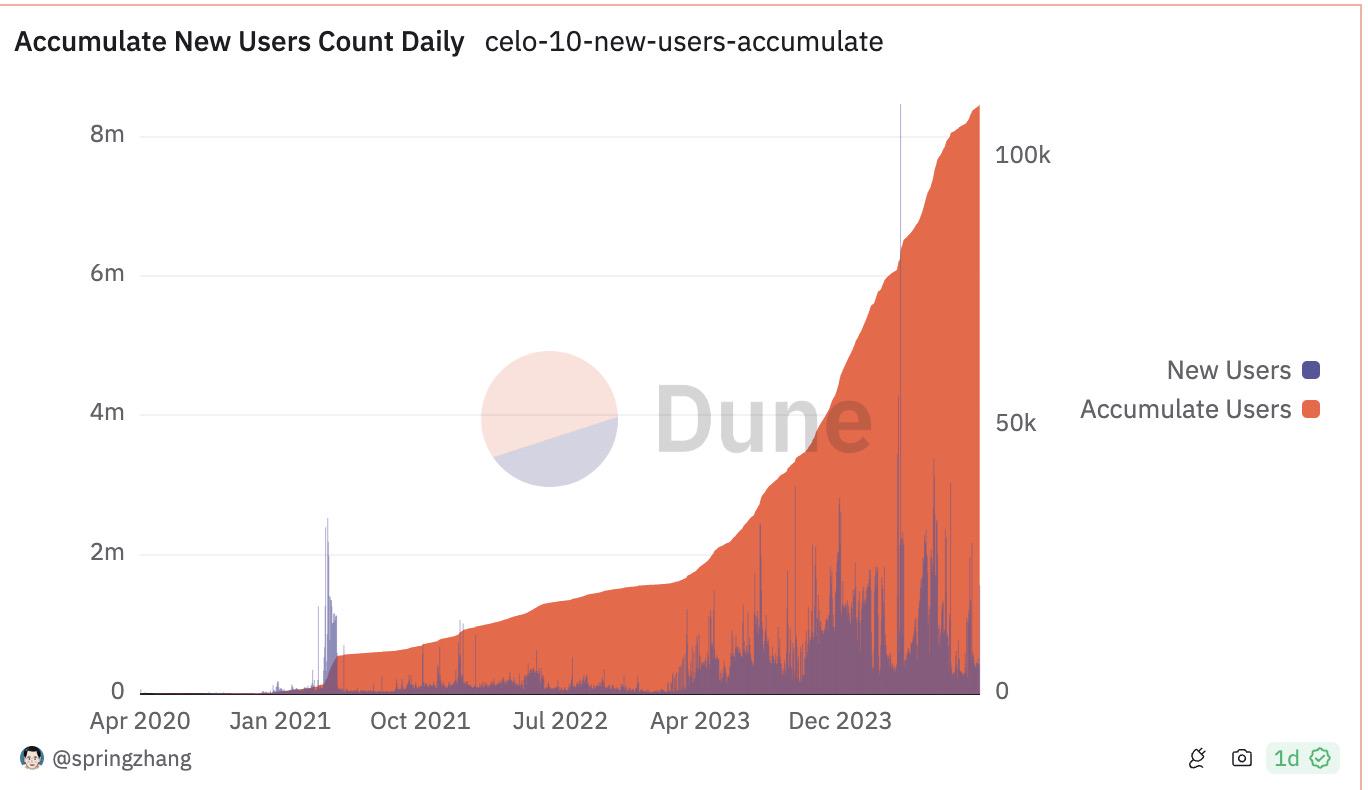
Dune 数据显示,截至 9 月 25 日,Celo 网络的交易笔数已超 4.7 亿,基本呈逐月递增的态势,日交易笔数则较今年年初翻了超 3 倍至 120 万笔;而用户地址数已增长至 846.7 万个,在今年增幅达 84.1%,其中新用户占比还在今年 4 月一度触及 63.1%。
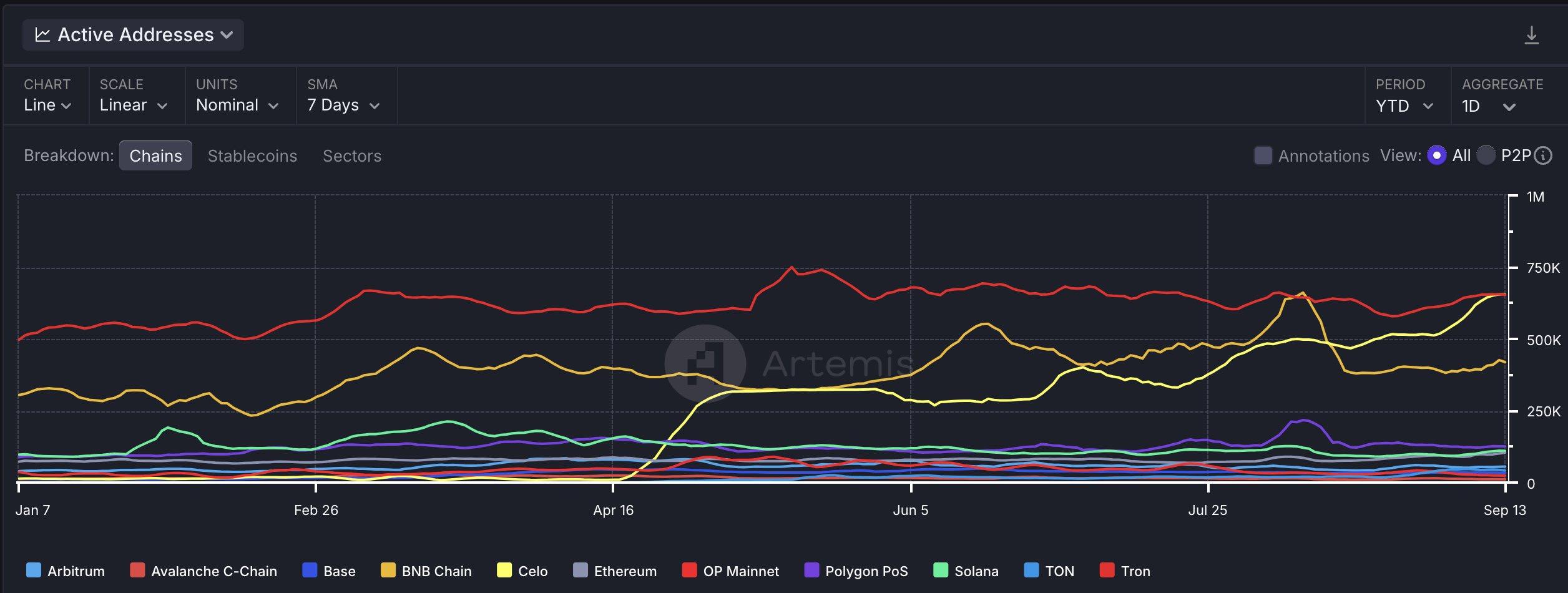
同时,Artemis 数据显示,Celo 近期的活跃地址数超过了 Tron、BNB Chain、Polygon PoS 等。而数据进一步表现,这种地址数上涨是受 Celo 稳定币交易量的增长。

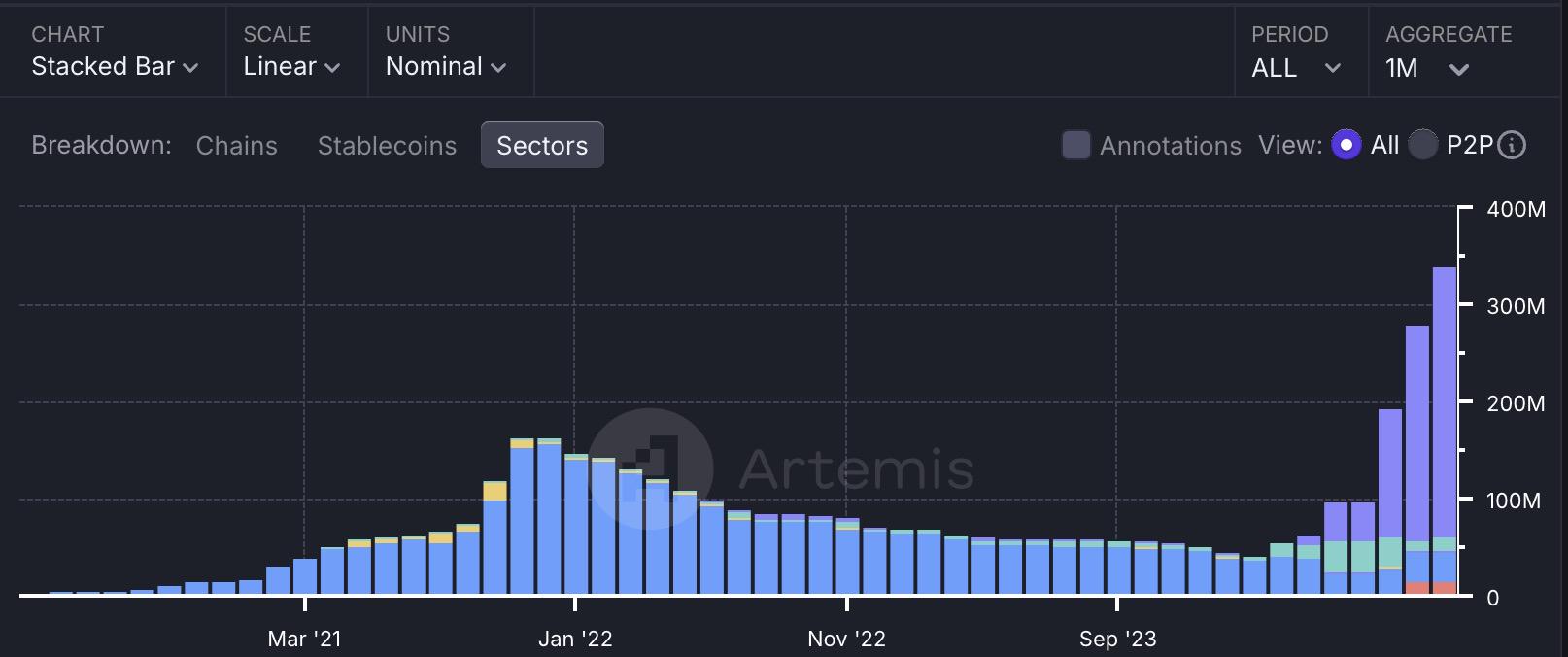
Artemis 数据显示,截至 9 月 25 日,Celo 的稳定币月转账量近 11.3 亿笔,过去三个月增长率超 28.3%,且稳定币供应量已达到 2.9 亿,相比今年年初大幅翻了约 6.4 倍。其中,Tether 官方透明度页面数据显示,Celo 链上 Tether 已授权总量突破 4.7 亿美元,超过 Near 和 Cosmos,其中已授权但尚未发行的 Celo 链上 Tether 为 2.69 亿美元。
另外,基于 Celo 生态钱包应用的数据增长也印证了整个生态的高速增长,例如 Web3 支付钱包 MiniPay 在 2023 年推出后五个月内达到 100 万个钱包,截至今年 7 月则增至 300 万个,且还拓展至肯尼亚、加纳和南非等加密货币采用率较高的国家。


Пов'язані матеріали

Wall Street Takes Over Bitcoin and Stablecoins, But Where Are the Real Profit Opportunities for Retail Investors?

Wall Street is taking over Bitcoin and stablecoins, but where can retail investors really make money now? The common narrative is that Wall Street's dominance via ETFs and regulated stablecoins has structurally ended the era of easy 100x returns from altcoins. While this is true for Bitcoin and stablecoins, which are becoming traditional financial products, it's only half the story. Other crypto sectors are failing for their own reasons. GameFi is largely dead, with 93% of projects failed. NFTs are at multi-year lows with most collections losing all value. Memecoins persist but overwhelmingly benefit insiders and whales at the expense of late retail buyers. These sectors aren't being consumed by TradFi; they've exhausted their growth narratives. The real opportunities for retail in the next 6-12 months lie elsewhere: 1. **Prediction Markets:** Platforms like Polymarket have seen explosive growth (21x in a year) with a genuine, active retail user base. The utility of forecasting events provides sustainable demand beyond mere speculation. 2. **DeFi Yield:** While the era of 1000% APY farms is over, sustainable yields of 4-8% are available through liquid staking, regulated stablecoin platforms, and RWA lending. 3. **Select Altcoins:** If Bitcoin breaks its all-time high, a selective altcoin season could emerge. The favorable bets would be on ETH, assets within the Base and Solana ecosystems with real users, and asymmetric opportunities in AI-crypto and DePIN presales. The most likely market scenario (45% probability) is sideways action, making asset selection far more critical than broad market momentum. The playbook has changed. Actionable steps: Focus time on prediction markets; use DeFi for reliable yield, not lottery tickets; only buy altcoins with genuine user bases; and avoid GameFi, random NFTs, and new memecoins. The "TradFi is eating crypto" story misses the growing sectors. The easy money era is over, leaving a niche, selective market that requires real understanding, but opportunities remain for those who adapt.

marsbit3 хв тому

Wall Street Takes Over Bitcoin and Stablecoins, But Where Are the Real Profit Opportunities for Retail Investors?

marsbit3 хв тому

A Trillion-Dollar Frenzy for Memory Sellers, Halved Profits for Memory Buyers

Summary: A stark divide has emerged in the tech industry. While memory chipmaker Micron's stock soared 19% in a single day, pushing its market cap over $1 trillion, smartphone manufacturer Xiaomi reported a 43% plunge in adjusted net profit. The core driver is a severe supply crunch in memory chips, particularly for AI applications. Wall Street analysts, led by UBS and its unprecedented 204% target price hike for Micron, argue that long-term agreements (LTAs) from AI cloud giants are fundamentally ending the sector's notorious boom-and-bust cycles, justifying a re-rating from cyclical to infrastructure-like valuations. However, the "storage" market is now fragmented into three tiers. The first, AI-grade memory like HBM and server DDR5, faces extreme shortages and soaring prices driven by massive cloud capex. The second, mobile memory for smartphones, is also seeing sharp price hikes as manufacturers like Xiaomi are forced to pay more for remaining capacity, severely squeezing their margins. The third, PC retail channels, shows price declines due to existing inventory. The article questions the sustainability of the "supercycle" narrative. It highlights that Micron's revenue surge is driven almost entirely by price increases, not shipment volumes, making it vulnerable to a potential demand slowdown. While LTAs may dampen volatility, history suggests they are often tested during downturns. The current peak earnings, used to justify high valuations, represent a classic cyclical top. The piece concludes with a note of caution: when the entire Street chants "this time is different," it's wise to remember past bubbles, even as it acknowledges AI demand may indeed be structural.

marsbit1 год тому

A Trillion-Dollar Frenzy for Memory Sellers, Halved Profits for Memory Buyers

marsbit1 год тому

This New Generation of US Stock Trading Gods No Longer Read Financial Reports

The new generation of "stock gods" in the 2026 US AI bull market are not analyzing traditional financial reports. Instead of focusing on giants like NVIDIA, figures like the 22-year-old Leopold Aschenbrenner (who reportedly turned $200M into $14B) and influencers like Serenity on platforms like Reddit's WallStreetBets, X, and Substack are gaining fame and returns by targeting obscure, low-cap "micro-cap" stocks. Their strategy, dubbed "supply chain sniping," involves identifying critical, often monopolistic, bottlenecks in the AI hardware supply chain—such as specific materials or components essential for giants like Google and NVIDIA—that are missed by mainstream Wall Street analysts. Serenity's call on AXTI, a $700M company supplying indium phosphide substrates crucial for photonics and optical interconnects, saw the stock soar from ~$12 to nearly $150. Similarly, accounts like KawzInvests and PhotonCap focus on thematic, supply-chain-driven research in areas like AI infrastructure, optics, and cloud services for SMEs, bypassing traditional valuation metrics. This shift represents a cultural move away from Warren Buffett-style value investing based on deep financial statement analysis. The new approach thrives on low liquidity, early narratives, and strong community propagation on social media, similar to meme stocks or crypto. However, this "attention economy" strategy carries risks: it depends on sustained information gaps, the underlying companies' ability to deliver fundamental results, and the potential for crowded, volatile exits as narratives shift. The trend also shows crypto traders applying their narrative-sensing skills to US micro-caps, marking a significant evolution in trading culture.

marsbit1 год тому

This New Generation of US Stock Trading Gods No Longer Read Financial Reports

marsbit1 год тому

Trillion-Dollar Euphoria for Memory Sellers, Halved Profits for Memory Buyers

Title: The Trillion-Dollar Memory Seller's Carnival vs. The Buyer's Halved Profits On May 26, a stark contrast unfolded. While memory chipmaker Micron's market cap surged past $1 trillion, smartphone maker Xiaomi reported plummeting profits. Xiaomi's Q1 2026 profits fell 43% year-on-year. Executive Lu Weibing cited memory prices quadrupling from last year, adding roughly $210 to a phone's cost. To survive, Xiaomi is cutting entry-level models, sacrificing volume. Micron's stock, however, skyrocketed over 19% in a day, capping an 8x gain in a year. Major banks like UBS and JPMorgan issued bullish reports, raising price targets drastically. Their core thesis: Long-Term Agreements (LTAs) with AI cloud giants (Microsoft, Google, etc.) are eliminating the memory industry's notorious boom-bust cycle. By locking in fixed-price, multi-year contracts for AI-grade memory (HBM, server DDR5), these deals promise stable, utility-like earnings, justifying a higher valuation (20-30x P/E vs. the historical 8-15x). The article reveals a three-tiered memory market in 2026: 1) **AI Storage (HBM/DDR5/Enterprise SSD)**: Extreme shortage, soaring prices, LTAs. This is Micron's story. 2) **Mobile/Embedded Memory**: Also facing sharp price hikes as AI production crowds out capacity, severely pressuring phone makers like Xiaomi. 3) **PC Retail**: Some spot prices are falling due to channel inventory liquidation, creating a divergence from contract markets. The author questions if LTAs truly end the cycle. It hinges on sustained, hyper-growth AI demand. Micron's current profits are at a cycle peak, driven mostly by price hikes, not volume. If AI capital expenditure growth slows, the massive industry capacity expansion (e.g., Micron's $250B+ CapEx plan) could lead to a glut. Historically, using peak-cycle earnings for valuation is a classic trap. While the AI-driven structural shift might be real, the unanimous Wall Street euphoria warrants caution, echoing past bubbles like Cisco's in 2000. The memory seller's trillion-dollar狂欢 (carnival) continues, but the cycle's shadow remains.

链捕手1 год тому

Trillion-Dollar Euphoria for Memory Sellers, Halved Profits for Memory Buyers

链捕手1 год тому

Торгівля

Спот
Ф'ючерси

Популярні статті

Як купити CELO

Ласкаво просимо до HTX.com! Ми зробили покупку Celo (CELO) простою та зручною. Дотримуйтесь нашої покрокової інструкції, щоб розпочати свою криптовалютну подорож.Крок 1: Створіть обліковий запис на HTXВикористовуйте свою електронну пошту або номер телефону, щоб зареєструвати обліковий запис на HTX безплатно. Пройдіть безпроблемну реєстрацію й отримайте доступ до всіх функцій.ЗареєструватисьКрок 2: Перейдіть до розділу Купити крипту і виберіть спосіб оплатиКредитна/дебетова картка: використовуйте вашу картку Visa або Mastercard, щоб миттєво купити Celo (CELO).Баланс: використовуйте кошти з балансу вашого рахунку HTX для безперешкодної торгівлі.Треті особи: ми додали популярні способи оплати, такі як Google Pay та Apple Pay, щоб підвищити зручність.P2P: Торгуйте безпосередньо з іншими користувачами на HTX.Позабіржова торгівля (OTC): ми пропонуємо індивідуальні послуги та конкурентні обмінні курси для трейдерів.Крок 3: Зберігайте свої Celo (CELO)Після придбання Celo (CELO) збережіть його у своєму обліковому записі на HTX. Крім того, ви можете відправити його в інше місце за допомогою блокчейн-переказу або використовувати його для торгівлі іншими криптовалютами.Крок 4: Торгівля Celo (CELO)Легко торгуйте Celo (CELO) на спотовому ринку HTX. Просто увійдіть до свого облікового запису, виберіть торгову пару, укладайте угоди та спостерігайте за ними в режимі реального часу. Ми пропонуємо зручний досвід як для початківців, так і для досвідчених трейдерів.

38 переглядів усьогоОпубліковано 2024.12.10Оновлено 2025.03.21

Як купити CELO

Обговорення

Ласкаво просимо до спільноти HTX. Тут ви можете бути в курсі останніх подій розвитку платформи та отримати доступ до професійної ринкової інформації. Нижче представлені думки користувачів щодо ціни CELO (CELO).

活动图片