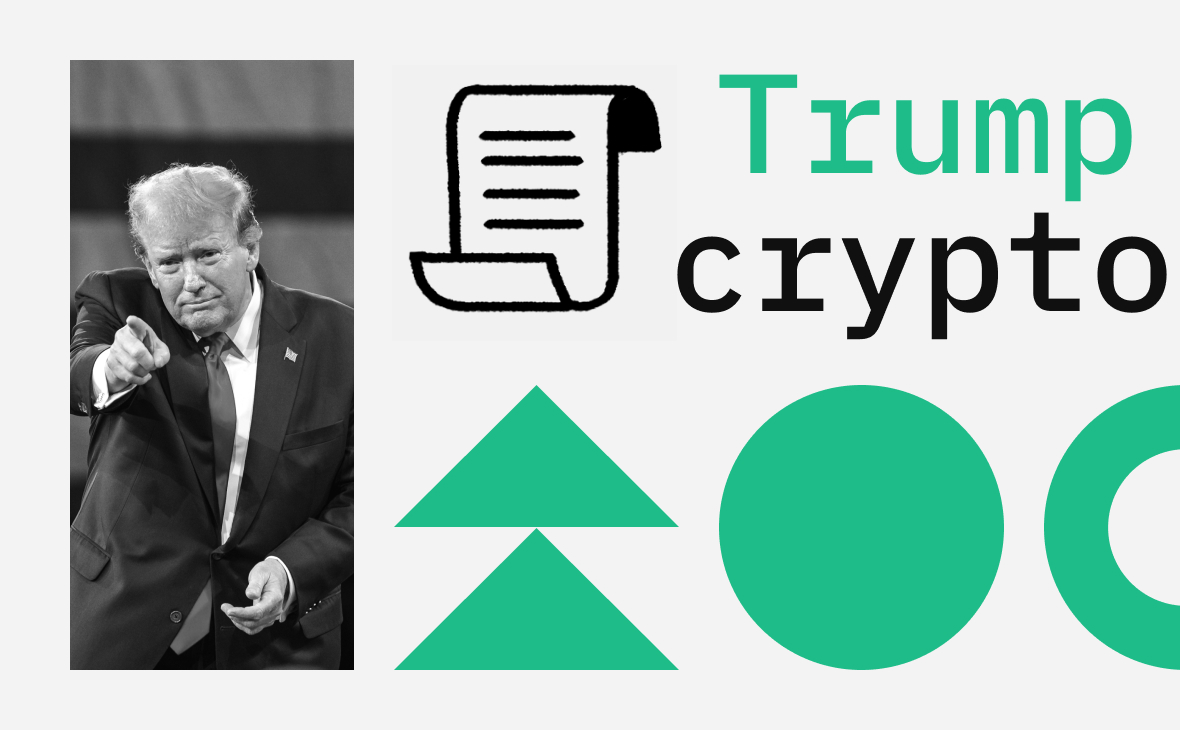
Как устроен криптопроект Трампа. Почему он опасается конкуренции с Китаем

RBK-cryptoОпубліковано о 2024-09-17Востаннє оновлено о 2024-09-17

Раскрыты детали продажи криптовалюты проекта, поддерживаемого семьей Трампа. Кому достанутся и кто сможет купить новые токены. Каким Трамп видит будущее криптовалют в США

Команда криптопроекта World Liberty Financial, поддерживаемого бывшим президентом Дональдом Трампом и тремя его сыновьями, раскрыли детали нативного токена платформы WLFI. Подробности по выпуску токена стали известны в ходе аудиотрансляции в соцсети X, пишет Coindesk.

В отличии от команды WLFI, в ходе выступления в X Трамп не обсуждал проект, а поделился взглядами на развитие государственной политики в сфере криптовалют. Его намерение заключается в том, чтобы сделать США крупнейшим криптохабом в мире.

«Если мы этого не сделаем, это сделает Китай. Если мы этого не сделаем, мы не будем крупнейшими», — цитирует Трампа Bloomberg.

В дополнение к геополитическим взглядам, Трамп изложил опасения на счет внутренних процессов в стране. Он заявил, что действия Комиссии по ценным бумагам и биржам США (SEC) представляют собой опасность для американских разработчиков криптовалют. И они «будут жить в аду», если его не изберут на второй срок в ноябре, пишет Decrypt.

Условия продажи токенов

Сам проект семьи Трампа при этом не будет регистрироваться в SEC. Продажа будет проходить согласно правилам Положения D (Reg D), предусматривающего механизмы продажи ценных бумаг без необходимости их регистрации в SEC. Раскрыто и процентное соотношении по распределению WLFI:

Около 63% выделили для продажи.

17% отведено для вознаграждения пользователям.

20% оставили для команды проекта.

Будущий токен кредитной криптоплатформы World Liberty Financial, разработанный на базе блокчейна Ethereum, выйдет под тикером WLFI. Команда проекта отметила, что продажа токена будет доступна только аккредитованным инвесторам, а сам криптоактив предназначен лишь для участия в управлении и не предлагает никаких экономических стимулов.

World Liberty Financial анонсировали в конце августа. В документах все три сына Трампа указаны в качестве членов команды. Помимо блокчейна Ethereum, лежащего в основе платформы, проект будет использовать наработки крупнейшего на рынке лендингового протокола Aave.

Дети Трампа запустят криптопроект. Что это и при чем тут взлом на $2 млн

Опасения по поводу WLFI

Ранее сообщалось, что кодовая база WLFI практически полностью скопирована у проекта Dough Finance, который потерял $2 млн в результате июльского взлома. Также известно, что в руководящем составе «проекта семьи Трампа» находятся создатели взломанного протокола Dough Зак Фолкман и Чейз Херро.

«Наша цель — создание понятных проектов, которые легко и просто использовать. Где вам не нужно звонить другу, чтобы получить пошаговое руководство», — сказал во время трансляции Зак Фолкман.

Будущая платформа из сектора децентрализованных финансовых приложений (DeFi) World Liberty Financial стала очередным криптопроектом, поддерживаемым Трампом. На счету бывшего президента США четыре коллекции карточек в виде невзаимозаменяемых токенов (NFT). Последняя из них выпущена в продажу в конце августа с начальной ценой $99 за штуку. По состоянию на 17 сентября, согласно Polygonscan, выпущено почти 31 тыс. токенов четвертой коллекции из 360 тыс. возможных.

Телеграм-канал «РБК-Крипто» — подпишитесь и будьте в курсе самых главных и актуальных новостей о криптовалюте.

Присоединяйтесь к форуму «РБК-Крипто» в Telegram для обсуждения новостей и тенденций криптомира.

Помимо поддержки отдельных криптопроектов и участия в тематических мероприятиях, Трамп публично высказывался о намерении сделать США мировым криптохабом.

Как решение по ставке ФРС повлияет на рынок криптовалют. Что нужно знать

ЦБ снова назвал криптовалюты угрозой для российского рынка

«Слишком силен страх». Что будет с биткоином в ближайшую неделю

Критики Tether снова подняли вопрос резервов USDT. Чем ответит компания

«РБК-Крипто» запустил мониторинг криптовалютных обменников. Выбирайте надежный обменный сервис с выгодным курсом на yourcryptoex.ru или в удобном телеграм-боте.

Пов'язані матеріали

Tiger Research: Zuckerberg Begins Betting on Prediction Markets, While Asian Nations Still View Them as Gambling

This article examines the rise of prediction markets, contrasting their growing institutional acceptance in the West with their restrictive regulation in Asia. It details how prediction markets, which originated from informal political betting and academic experiments like the Iowa Electronic Market, aggregate crowd wisdom into probabilistic prices through binary contracts. Their growth accelerated around 2020, reaching over $14 billion in monthly volume. A key driver is the "skin in the game" principle, where users risk their own capital, leading to high accuracy in predicting events like Fed rate decisions and elections, as demonstrated by platforms like Polymarket. Meta's entry, with Mark Zuckerberg reportedly leading the development of the Arena app, signals the market's maturation. In the U.S., court rulings have distinguished prediction markets from gambling, facilitating entry by traditional financial institutions. However, most Asian jurisdictions still classify them as gambling, focusing on social control rather than financial innovation. The article argues this stance creates three problems for Asia: 1) regulatory arbitrage pushes users to riskier offshore platforms, 2) loss of sovereign information infrastructure as valuable social sentiment data accumulates abroad, and 3) abandonment of user protection. It concludes that Asia needs a policy shift from prohibition to constructive regulation, integrating these markets into the formal system to harness their data as a national asset, as initiatives like Limitless Research are beginning to do.

marsbit1 год тому

Tiger Research: Zuckerberg Begins Betting on Prediction Markets, While Asian Nations Still View Them as Gambling

marsbit1 год тому

Ethereum's Next Decade in the Eyes of Vitalik

"Lean Ethereum" Long-Term Roadmap Unveiled by Vitalik Buterin On July 5, 2026, Vitalik Buterin published the "Lean Ethereum" roadmap, positioning it as Ethereum's third major evolution following the Merge. This multi-year, multi-phase upgrade aims to fundamentally transform Ethereum's core protocol through staged network upgrades extending to 2029. Key goals include achieving 1 gigagas per second L1 throughput (a massive increase from the current ~32 TPS), near-instant finality, and quantum-resistant cryptography. The plan involves transitioning Ethereum's security model from full transaction re-execution by all nodes to native verification via recursive STARK proofs. A major proposed change is replacing the EVM with a proof-friendly architecture like RISC-V or leanISA, though this remains a point of contention, especially with L2s like Arbitrum favoring alternatives like WASM. Other planned upgrades include a restructured state model with a large, cheap "warehouse" storage layer to drastically reduce fees for migrated applications, multi-dimensional gas pricing, and a new focus on making privacy a first-class, native protocol feature. While the roadmap significantly raises Ethereum's long-term technical ceiling, analysts note it does not directly address ETH's mid-term token economics or value capture. The plan's multi-year timeline means near-term price impact will likely depend on observable progress milestones, such as the successful deployment of the upcoming Glamsterdam gas limit increase, growth in L2 activity and blob usage, and trends in L1 fee revenue and ETH burn.

链捕手2 год тому

Ethereum's Next Decade in the Eyes of Vitalik

链捕手2 год тому

In Just 11 Days, Claude Rewrote Millions of Lines of Code, an Epic AI Engineering Feat Sparks Fury

In just 11 days, Bun's founder Jarred Sumner used Anthropic's Claude AI models to rewrite its million lines of code from Zig to Rust. This move sparked significant controversy, particularly from Zig's creator, Andrew Kelley, who publicly criticized Sumner's engineering practices and the decision to use AI for such a massive rewrite. Bun, a high-performance JavaScript/TypeScript runtime and rival to Node.js, was originally written in Zig. After Anthropic acquired Bun, the team encountered persistent stability and memory safety bugs in the Zig codebase. These issues, combined with Zig's strict policy against LLM-generated code, led to the decision to rewrite in Rust. The rewrite was executed using Claude AI tools at an estimated API cost of $165,000, dramatically reducing the expected time and financial cost. Andrew Kelley's response was scathing. He blamed the original bugs on poor engineering habits, calling Bun's Zig code a collection of "hacks on top of hacks." He expressed relief that Bun was no longer associated with Zig, fearing it would misrepresent the language and attract low-quality, AI-generated contributions. The tech community is divided; some view Kelley's critique as unprofessional, while others see it as a defense of engineering integrity. A major concern about the AI-driven rewrite is the resulting code quality. The translation from Zig left approximately 27,000 lines of unsafe Rust code, raising fears about long-term maintainability and technical debt. The debate centers on whether this project is a milestone in AI-assisted development or a future maintenance nightmare.

marsbit3 год тому

In Just 11 Days, Claude Rewrote Millions of Lines of Code, an Epic AI Engineering Feat Sparks Fury

marsbit3 год тому

From Auto Finance to Bitcoin to AI Engines: An Analysis of Cango's 'What Not to Do' Strategy

From Auto Finance to Bitcoin and Now AI: Cango's "What Not to Do" Strategy Cango, a Chinese auto finance platform that went public on the NYSE in 2018, is undergoing its third major transformation. After selling its entire auto business in 2024, it pivoted to become a large-scale Bitcoin miner, acquiring 50 exahash of mining rigs from Bitmain. However, its true goal was never Bitcoin, but owning and controlling energy infrastructure. Now, Cango is pivoting again. While most listed Bitcoin miners are leasing power to giant hyperscalers for AI training clusters, Cango is taking the opposite path. It has launched an AI inference subsidiary called EcoHash, focusing not on training but on distributed inference. The company's strategy hinges on the insight that over 70% of mining industry power is controlled by small, independent sites (10-50 MW), which are too small for hyperscalers but ideal for low-latency AI inference. Cango aims to partner with these small operators, providing the AI technology, customers, and financing through its EcoLink software layer, which can distribute workloads across sites for reliability. Cango maintains a hybrid model, running roughly 31.7 EH/s of Bitcoin mining for cash flow while aggressively cleaning its balance sheet—slashing long-term debt by 94.5% to $30.6 million and raising $75 million for its AI venture. Its first AI deployment will be at a 50 MW site in Georgia. The strategy faces skepticism, given the high costs of converting mining sites and the potential for an AI bubble. However, Cango's leadership believes discipline around "what not to do"—avoiding direct competition with hyperscalers in training—positions it to capture the long-tail demand for distributed AI inference power.

Foresight News3 год тому

From Auto Finance to Bitcoin to AI Engines: An Analysis of Cango's 'What Not to Do' Strategy

Foresight News3 год тому

Торгівля

Спот
活动图片