QCP Capital: причины падения биткоина и стратегия с доходностью 33% годовых

cryptonews.ruОпубліковано о 2022-08-07Востаннє оновлено о 2024-09-07

Трейдинговая фирма QCP Capital выпустила новый отчет, в котором анализирует текущую ситуацию на криптовалютном рынке и предлагает интересную торговую стратегию. Давай разберемся в деталях.

Рынок труда и реакция криптовалют

Согласно отчету QCP Capital, опубликованные данные по рынку труда США за август оказались ниже ожиданий. Количество новых рабочих мест вне сельскохозяйственного сектора составило 142 000 при прогнозе в 165 000. Уровень безработицы остался на отметке 4,2%, что соответствует ожиданиям и ниже показателя предыдущего месяца (4,3%).

Первоначально рынок отреагировал позитивно, что привело к росту рисковых активов. Однако затем настроения резко изменились, когда участники рынка начали пересматривать ожидания по снижению ставки ФРС в сентябре. Если сразу после публикации отчета вероятность снижения ставки на 50 базисных пунктов оценивалась в 55%, то к утру следующего дня рынок оценивал вероятность снижения на 25 базисных пунктов в 70%, а на 50 базисных пунктов — лишь в 30%.
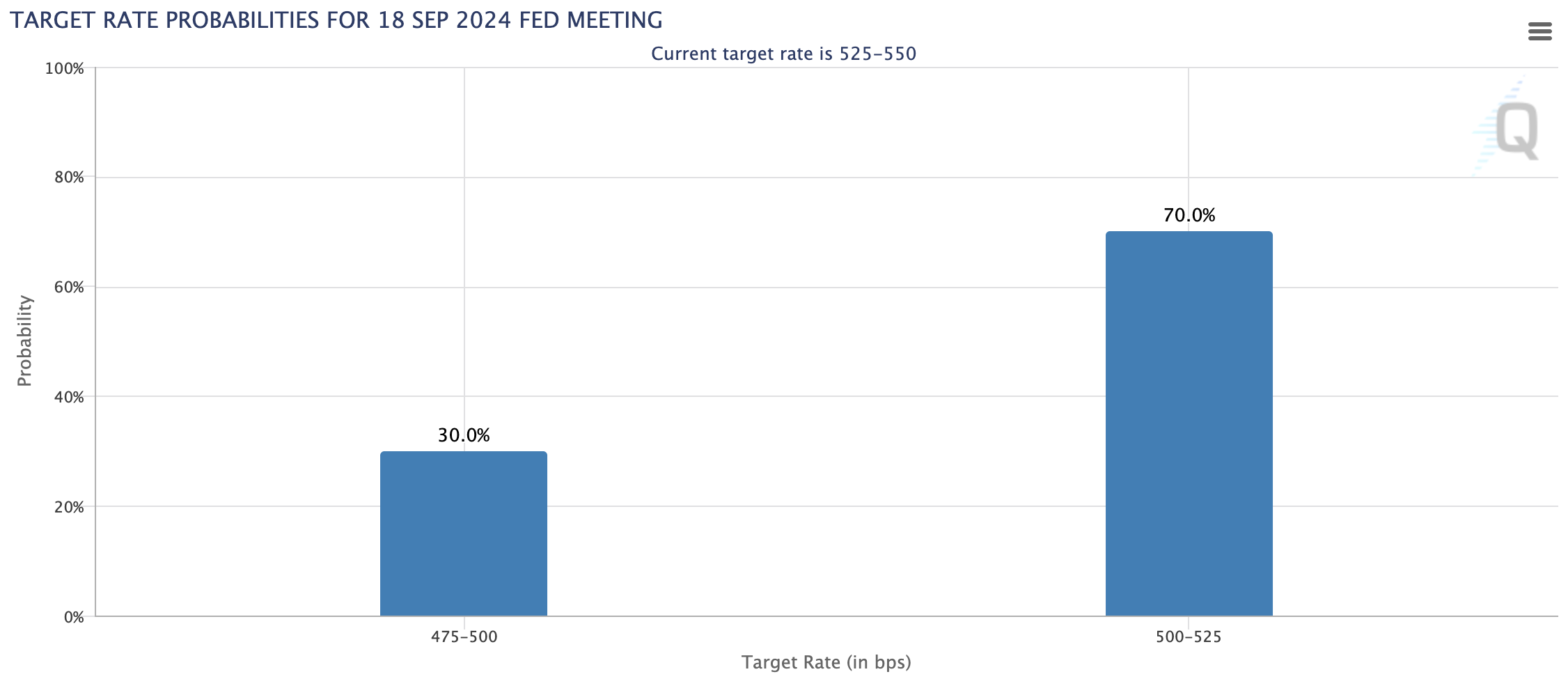
Вероятность изменения ставки ФРС. Источник: Fedwatch

Влияние на криптовалютный рынок

Эти новости, в сочетании с продолжающимся снижением акций Nvidia (NVDA), оказали негативное влияние на криптовалютный рынок. Биткоин опустился до $52 500, найдя поддержку на уровне $54 000, в то время как Ethereum упал до $2 150.
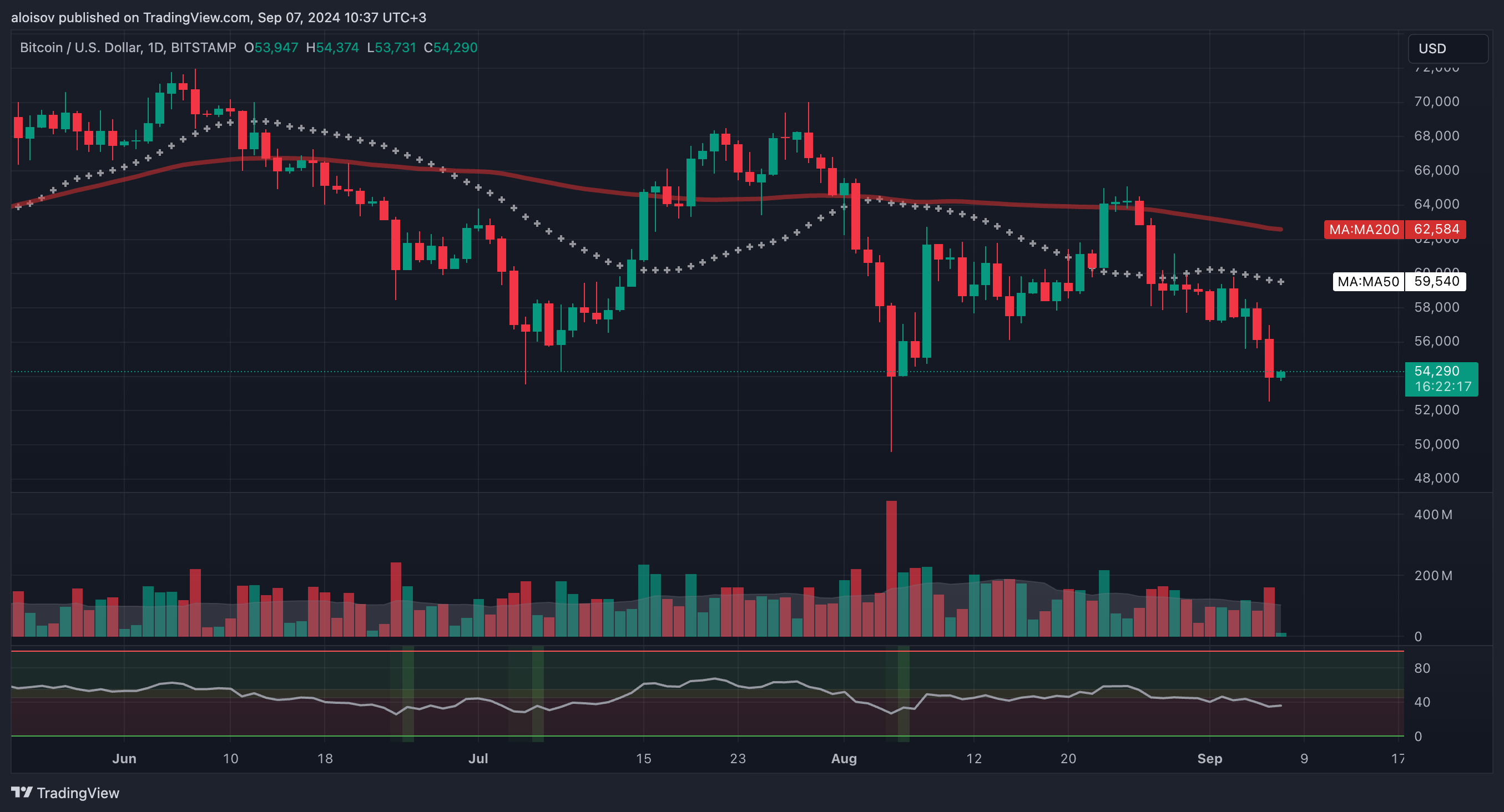
1-дневный график BTC/USD. Источник: Bitstamp/TradingView

Аналитики QCP Capital отмечают, что спотовые биткоин-ETF продолжили серию оттоков средств, которая длится уже 8 дней подряд.
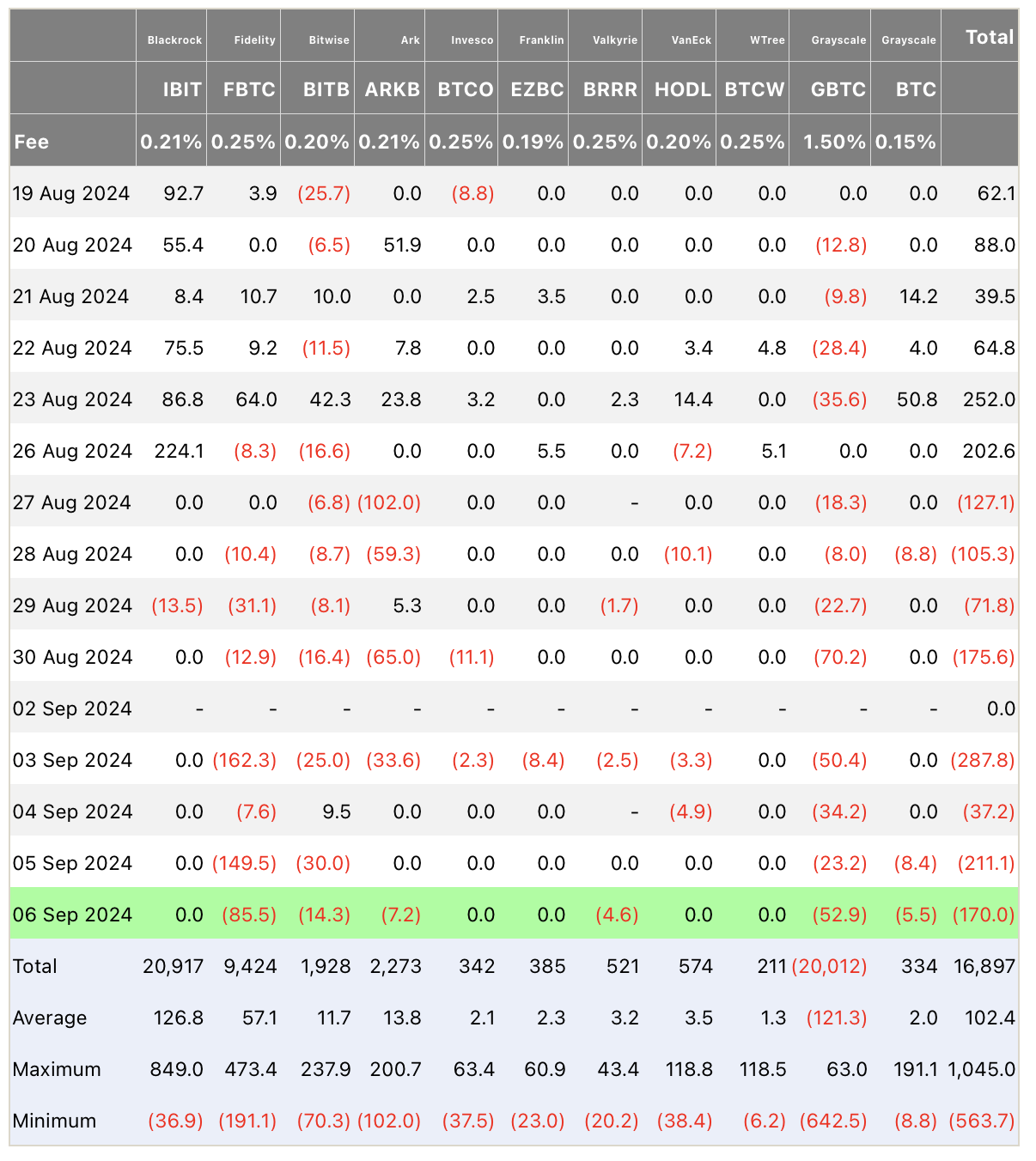
Движение средств в биткоин-ETF США. Источник: Farside Investors

Поведение опционного рынка

Несмотря на резкое падение цен, опционный рынок оставался относительно спокойным. По данным QCP Capital, в течение сессии наблюдались крупные продажи пут-опционов. Аналитики также отмечают снижение волатильности на ближнем конце кривой по мере консолидации спотового рынка перед выходными.

Торговая стратегия от QCP Capital

В условиях повышенной волатильности и низкой доходности базиса, QCP Capital предлагает интересную торговую стратегию — Fixed Coupon Convertible (FCC). Давай разберем, как она работает:

  1. Суть стратегии: FCC — это финансовый инструмент, который позволяет инвестору получать фиксированный купонный доход, при этом имея возможность конвертации в базовый актив (в данном случае, биткоин) при определенных условиях.
  2. Параметры предложенной стратегии:
    • Срок погашения: 29 ноября 2024 года
    • Ставка купона: 33% годовых, если цена биткоина остается выше $50 000
    • Частота выплаты купона: еженедельно, начиная с 13 сентября 2024 года
    • Цена страйк: $45 000
    • Уровень защиты: $40 000
  3. Как это работает:
    • Инвестор получает высокую фиксированную доходность (33% годовых) до тех пор, пока цена биткоина остается выше $50 000.
    • Если на момент погашения цена биткоина выше $40 000, инвестор получает свои средства обратно.
    • Если на момент погашения цена биткоина ниже $40 000, инвестор получает биткоины по цене $45 000.
  4. Преимущества:
    • Высокая фиксированная доходность в условиях нестабильного рынка.
    • Частичная защита от падения цены биткоина.
    • Потенциал для получения дополнительной прибыли при росте биткоина выше цены страйк.
  5. Риски:
    • Если цена биткоина упадет ниже $40 000, инвестор получит биткоины по цене выше рыночной.
    • Упущенная выгода при сильном росте биткоина выше цены страйк.

Эта стратегия может быть привлекательна для инвесторов, которые ожидают умеренного роста или стабилизации цены биткоина, но хотят защититься от возможного снижения.

Ретроспективный анализ

Стоит отметить, что в предыдущем отчете от 5 сентября QCP Capital отмечала рост биткоина выше $58 500 и Ethereum до $2 500 на фоне ожиданий снижения ставок ФРС. Однако текущая ситуация показывает, насколько быстро может меняться настроение рынка.

Криптовалютный рынок продолжает демонстрировать высокую волатильность, реагируя на макроэкономические данные и настроения инвесторов. В этих условиях стратегии, подобные предложенной QCP Capital, могут предоставить инвесторам интересные возможности для управления рисками и получения дохода.


Пов'язані матеріали

Foundation Steps Back, Ethlabs Steps Forward: Ethereum Undergoes Its Largest Restructuring in History

On June 23rd, the Ethereum ecosystem witnessed two major shifts, signaling a significant governance realignment. First, former Ethereum Foundation researchers established Ethlabs, a new independent non-profit. Backed by major ETH holders like Bitmine and SharpLink, Ethlabs aims to address practical needs for institutional adoption, including faster settlement, native asset issuance, cross-chain transactions, and mainnet scaling. Secondly, the Ethereum Foundation announced a major restructuring, laying off 54 employees (20% of its staff) to become a leaner entity focused on protocol governance and maintenance rather than being the primary builder. This move represents a pivotal correction. Criticisms had mounted over the Foundation's perceived slowness, lack of clear strategy, and over-reliance on Vitalik Buterin's influence. Ethlabs emerges as a more execution-oriented, "industrialized" layer focused on market adoption—bridging the gap between research and real-world use. Notably, Vitalik Buterin is absent from its list of supporters, interpreted as an intentional step to avoid excessive personal endorsement and allow the organization to build independent credibility. The Ethereum Foundation's downsizing and redefinition mark a retreat from its former central coordinating role. It now aims to share the "privilege of stewarding Ethereum" with other emerging groups like Ethlabs, the Ethereum Applications Guild, and The Ethereum Economic Zone. Analysts frame this dual shift as the Foundation ensuring Ethereum remains "correct" (credibly neutral), while Ethlabs must prove it remains "effective" (competitive and attractive for capital and adoption). This addresses community "shareholder-like anxiety" about ETH's market performance. While risks exist—such as concerns over shifting from Foundation centrality to large-holder influence—the consensus is that the greater risk for Ethereum was inaction, caught between technical idealism and organizational inertia. These steps aim to create a more multi-stakeholder, execution-driven future for the network.

链捕手4 год тому

Foundation Steps Back, Ethlabs Steps Forward: Ethereum Undergoes Its Largest Restructuring in History

链捕手4 год тому

Second Half of U.S. Crypto Policy: The Clarity Act Aims for 60 Votes, CFTC's "One-Person Commission" Becomes Biggest Variable

In a pivotal year for US crypto policy, the "CLARITY Act" is advancing in the Senate but faces a high hurdle, needing 60 votes to pass. Key challenges include bridging partisan divides on ethics and swaying undecided Republican senators within a tight legislative calendar of only about 40 working days. The policy "second half" involves intense negotiations on a broader framework for Web3 and DeFi, including crypto tax reforms and the Blockchain Regulatory Certainty Act. A significant uncertainty is the understaffed CFTC, operating with four commissioner vacancies, which complicates regulatory clarity. Meanwhile, the departure of key "crypto champions"—SEC Commissioner Hester Peirce and Senator Cynthia Lummis—will impact ongoing policy efforts. Industry experts are cautiously optimistic but realistic. Sara K. Weed notes that while progress is being made, CLARITY is unlikely to pass this Congress, pushing agencies like the SEC and CFTC to provide more guidance. Sulolit Mukherjee suggests meaningful crypto tax legislation is more likely to be attached to larger must-pass bills. Rashan Colbert discusses the jurisdictional debate over prediction markets, emphasizing the need for a regulatory framework that fosters their development as financial tools rather than treating them broadly as gambling. The clock is ticking, but opportunities remain for substantive progress through continued bipartisan dialogue and pragmatic efforts.

marsbit7 год тому

Second Half of U.S. Crypto Policy: The Clarity Act Aims for 60 Votes, CFTC's "One-Person Commission" Becomes Biggest Variable

marsbit7 год тому

Dan Koe's New Essay: Escaping the Fate of the Wage Slave, How to Survive the AI Replacement Wave?

Dan Koe argues that the true threat in the AI era isn't technology itself, but a reliance on others for one's livelihood and happiness. The core problem is "wage slavery"—spending life on unfulfilling work. To survive and thrive, one must escape this by building their own enterprise. The key is developing five elements: Agency (initiative), Taste (discernment), Persuasion, Persistence, and Iteration. These boil down to problem-solving skills and experiential knowledge, which cannot be learned passively but only through doing your own projects. The solution is to become "unemployable" by shifting your identity. This requires: 1) Radically changing your environment to force growth, 2) Choosing a medium (like content creation) that provides real feedback through trial and error, and 3) Mastering either code or, preferably, media (content). Content creation is more valuable because its subjective nature and need for human perspective create a durable advantage over generic AI output. To start, define your life's work by answering foundational questions about your innate knowledge, unique abilities, and contrarian beliefs. Then, immediately act by publishing your first piece of content. The cycle of creating, receiving feedback, and iterating is the essential path to developing the skills needed for an independent, meaningful career and financial resilience.

marsbit7 год тому

Dan Koe's New Essay: Escaping the Fate of the Wage Slave, How to Survive the AI Replacement Wave?

marsbit7 год тому

Research Report Analysis: Morgan Stanley Details SanDisk SNDK, The Truth About Cloud Data Center Pricing Power and AI Inference Benefits

Morgan Stanley raised its price target for SanDisk (SNDK) from $1100 to $1750 on June 22, maintaining an Overweight rating. The upgrade is driven by AI inference demand reshaping the NAND market, particularly for KV Cache and context window storage in cloud data centers. These cloud clients exhibit price inelasticity and sign long-term contracts, granting SanDisk significant pricing power. SanDisk's New Business Model (NBM) agreements, covering over one-third of FY27 bit shipments with 3-5 year terms and fixed price/price collar structures, are crucial. They are projected to sustain gross margins around 80% even at floor prices, providing a buffer against cyclical downturns. Morgan Stanley forecasts gross margins to surge from 30.3% in FY25 to 86.7% in FY27e. With NAND supply expected to remain tight into 2026/2027 and cloud/data centers becoming the largest end-market, SanDisk holds supply-side pricing power. The company targets 15-19% bit growth via technology transitions, not capacity expansion. Revenue is projected to grow ~6.6x from FY25 to FY27, with EPS rising from $2.74 to $14.73, driven by high-margin cloud business. Key upside catalysts include faster enterprise SSD adoption and edge AI growth. Downside risks involve slower industry growth, competitor capex increases, market share loss, and competition from Chinese players like YMTC. The investment thesis rests on AI-driven structural demand, NBM's margin protection, and sustained supply tightness. The $1750 target implies ~28x FY27e P/E.

marsbit8 год тому

Research Report Analysis: Morgan Stanley Details SanDisk SNDK, The Truth About Cloud Data Center Pricing Power and AI Inference Benefits

marsbit8 год тому

Торгівля

Спот
Ф'ючерси
活动图片