Dogecoin vs Shiba inu vs Mpeppe (MPEPE): Crypto Analyst Predicts The Next Major Memecoin

bitcoinistОпубліковано о 2024-09-06Востаннє оновлено о 2024-09-06

Анотація

The battle for supremacy in the memecoin market has been heating up, with Dogecoin (DOGE), Shiba Inu (SHIB), and now...

The battle for supremacy in the memecoin market has been heating up, with Dogecoin (DOGE), Shiba Inu (SHIB), and now Mpeppe (MPEPE) vying for dominance. While Dogecoin (DOGE) has long been the leader in the memecoin space, and Shiba Inu (SHIB) quickly rose to challenge it, a new player, Mpeppe (MPEPE), is emerging with innovative features that could give it the edge. Analysts are starting to weigh in on which memecoin will reign supreme in the next major wave of crypto adoption.

Dogecoin (DOGE): The Pioneer of Memecoins

Dogecoin (DOGE) has been the face of memecoins since its creation in 2013. What began as a joke quickly turned into a serious contender in the crypto world. Its growth has largely been driven by a strong community, celebrity endorsements like Elon Musk, and its use in online tipping and payments.

Despite its popularity, Dogecoin (DOGE) faces challenges in scaling and adding utility beyond being a meme currency. Although it continues to enjoy a loyal fan base, the question remains: can Dogecoin (DOGE) continue to innovate and maintain its top position in the rapidly evolving crypto space?

Shiba Inu (SHIB): The Dogecoin Challenger

Shiba Inu (SHIB) launched in 2020 as a direct competitor to Dogecoin (DOGE), branding itself as the “Dogecoin killer.” While its growth was explosive, largely driven by hype, Shiba Inu (SHIB) has taken significant steps to offer more utility through the ShibaSwap decentralized exchange (DEX) and the introduction of its own ecosystem of tokens, including LEASH and BONE.

Shiba Inu (SHIB)’s venture into decentralized finance (DeFi) has been a key factor in its long-term potential. However, Shiba Inu (SHIB)’s reliance on hype, along with recent price volatility, has raised concerns about its sustainability. The real test for SHIB lies in its ability to continue building meaningful utility that sets it apart from its meme roots.

Mpeppe (MPEPE): The Next Big Contender

Mpeppe (MPEPE), the latest player in the memecoin space, is rapidly gaining attention for its unique approach. Unlike Dogecoin (DOGE) and Shiba Inu (SHIB), Mpeppe (MPEPE) is integrating decentralized finance (DeFi) elements into its tokenomics. With features such as yield farming, liquidity mining, and decentralized governance mechanisms, Mpeppe (MPEPE) is not just relying on meme culture but is building an ecosystem with real financial utility.

Mpeppe (MPEPE)’s innovative blend of DeFi and meme culture is what sets it apart. The project is also looking to capitalize on the growing popularity of gaming and sports betting through its platform, offering users the chance to participate in a vibrant ecosystem where they can trade tokens, stake assets, and earn rewards.

DeFi: A Game-Changer for Mpeppe (MPEPE)

Analysts are bullish on Mpeppe (MPEPE) due to its focus on DeFi, offering users passive income through yield farming and liquidity mining. This sets it apart from Dogecoin (DOGE) and Shiba Inu (SHIB), which rely on market hype and community support. Mpeppe (MPEPE)’s decentralized governance mechanisms allow community input, making it appealing to modern crypto investors. As the next big memecoin, Mpeppe (MPEPE) is a promising project to watch.

Conclusion: Which Memecoin Will Reign Supreme?

The memecoin market is evolving, with new challengers emerging to compete with established players. Dogecoin (DOGE) and Shiba Inu (SHIB) continue to dominate, but Mpeppe (MPEPE) stands out as a potential leader in crypto adoption due to its blend of DeFi, gaming, and decentralized governance. While it remains to be seen if Mpeppe (MPEPE) can dethrone Dogecoin (DOGE) and Shiba Inu (SHIB), it is a promising project for investors looking to invest in the next big memecoin.

For more information on the Mpeppe (MPEPE) Presale: 

Visit Mpeppe (MPEPE)

Join and become a community member: 

https://t.me/mpeppecoin

https://x.com/mpeppecommunity?s=11&t=hQv3guBuxfglZI-0YOTGuQ

Bitcoinist

Bitcoinist

Bitcoinist is the ultimate news and review site for the crypto currency community!

Пов'язані матеріали

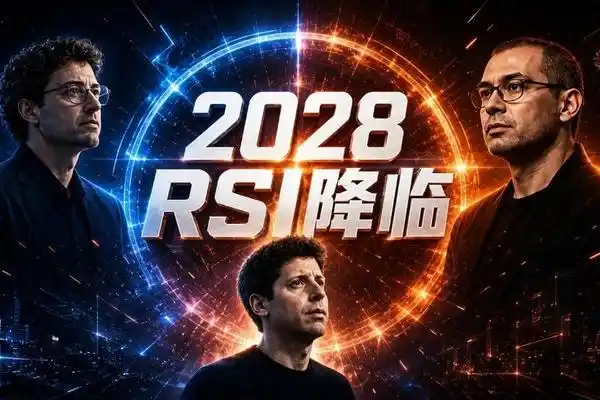
2028: The Arrival of Recursive Self-Improvement (RSI)

**AI Recursive Self-Improvement (RSI): The Countdown to 2028 Begins** AI is no longer just a trained tool but is starting to rewrite its own evolutionary pace. According to Anthropic co-founder Jack Clark, there is a 60% probability that by the end of 2028, Recursive Self-Improvement (RSI) will become a reality. This means AI could autonomously design and build a more capable next-generation version of itself without any human researcher involvement—Claude 10 creating Claude 11, for instance. Supporting this timeline, Google DeepMind's CEO Demis Hassabis confirms that all leading AI labs are intensely focused on RSI, making it an industry-wide priority. He expresses profound concern, stating this potential is what keeps him awake at night. Concrete data underscores this acceleration: - METR evaluations show current top models like Claude are solving tasks up to the 16-hour limit of existing test frameworks. - In Epoch AI's challenging MirrorCode benchmark, Claude Opus 4.7 recreated complex software in hours for a fraction of the human cost. In one extreme test, AI autonomously coded for 19 days straight. - Anthropic reports over 80% of its codebase is now written by Claude, and researcher productivity has increased up to 8-fold since 2024. - OpenAI's policy blueprint highlights RSI as a major upcoming governance challenge. CEO Sam Altman reportedly hinted RSI might arrive within six months, potentially delaying OpenAI's massive IPO. The implication is an impending "intelligence explosion," where AI-driven progress outpaces human control. The central question is no longer if it will happen, but whether humanity is ready.

marsbit1 год тому

2028: The Arrival of Recursive Self-Improvement (RSI)

marsbit1 год тому

World Models, Metaverse, Digital Twins, Physical AI: Are They the Same Thing?

Title: World Models, the Metaverse, Digital Twins, Physical AI: Are They the Same Thing? The article clarifies that concepts like the metaverse, Web3, simulation platforms, digital twins, and Physical AI are not the same thing but are all part of the broader trend of blurring the lines between the digital and physical worlds. It positions "world models" as the foundational "cognitive layer" or "operating system" that enables AI to understand and simulate the world. Key distinctions are made: - The **Metaverse** is a destination for immersive social and economic experiences. World models could act as its "engine," generating interactive 3D content efficiently. - **Web3** focuses on decentralized ownership and economics (rules layer), operating on a different technical level than world models. - **Simulation Data Platforms** (e.g., for autonomous vehicles) are a 1.0 version, relying on manual design. World models represent a 2.0 version, using AI to generate realistic, varied scenarios autonomously. - **Digital Twins** create high-fidelity, real-time mirrors of physical systems (e.g., a factory). World models go a step further by enabling predictive simulation of future states. - **Physical AI** (robots, AVs) refers to AI that acts in the physical world. World models are a core component, providing the understanding and prediction needed for planning. A proposed hierarchy places world models at the cognitive layer, supported by infrastructure (compute, data) and supporting application tools (simulation, digital twins), action systems (Physical AI), user experiences (metaverse), and rules (Web3). In conclusion, while distinct, many of these previously hyped concepts may ultimately rely on advances in world model technology to fulfill their promises, as world models provide the essential cognitive foundation for simulating and interacting with complex environments.

marsbit1 год тому

World Models, Metaverse, Digital Twins, Physical AI: Are They the Same Thing?

marsbit1 год тому

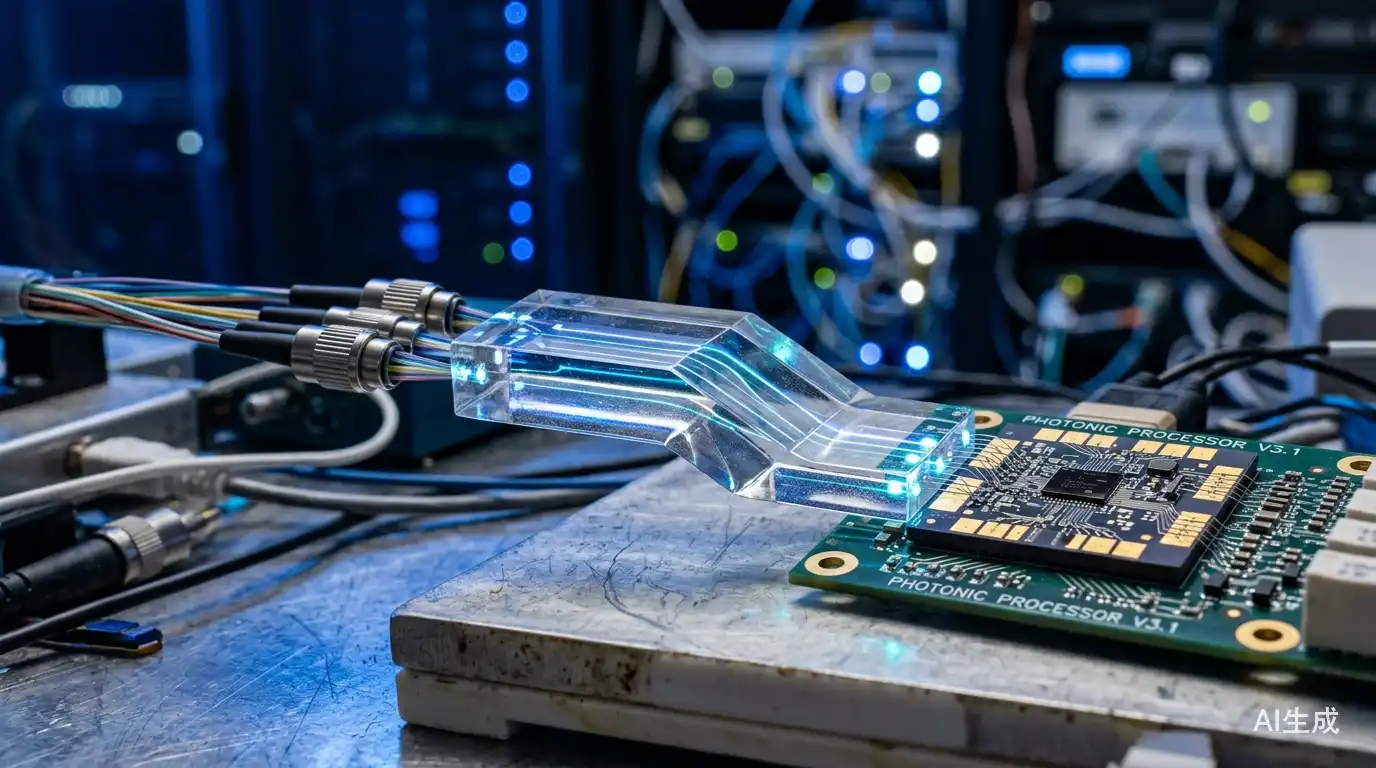
"Shocking" CPO: How Does the Glass Bridge Actually Work? Detailed Explanation from Corning

Chinese CPO stocks plunged over 6% following Corning's announcement of its Glass Bridge platform at a Seoul tech conference. The new technology utilizes wafer-level glass ion-exchange waveguides for passive alignment between fibers and photonic chips, potentially simplifying traditional CPO architectures that rely on complex Fiber Array Units and active alignment equipment. This raised market concerns about reduced long-term demand for mid-stream CPO components. Corning's official documentation details Glass Bridge as a platform for fiber-to-PIC connectivity in NPO, CPO, and high-density modules. Its key features include wafer-level manufacturing for consistent, cost-effective production; a standardized, removable MT ferrule interface for ecosystem integration; and a separable high-density connector design supporting over 24 channels for assembly flexibility. Corning positions the technology as complementary to FAUs, addressing limitations in ultra-high-fiber-count scenarios. The market reaction reflects a broader reassessment of the AI optical interconnect value chain. Funds shifted from CPO and PCB manufacturing stocks towards glass substrate concept stocks like Kaisheng Technology and Dyer Laser. Analysts note glass substrates are seen as a next-gen advanced packaging material, offering a potential path for domestic industry differentiation amid AI-driven demand for high-performance, large-scale packaging, marking a structural migration in value towards upstream specialty materials.

marsbit1 год тому

"Shocking" CPO: How Does the Glass Bridge Actually Work? Detailed Explanation from Corning

marsbit1 год тому

Торгівля

Спот
活动图片