Shiba Inu Team Teases ‘New Era Is Dawning’ On Shibarium: Here’s Why

bitcoinistОпубліковано о 2024-09-05Востаннє оновлено о 2024-09-06

Анотація

In the latest edition of The SHIB Magazine, the Shiba Inu team has unveiled new details about the upcoming DevPortal...

In the latest edition of The SHIB Magazine, the Shiba Inu team has unveiled new details about the upcoming DevPortal which is about to reshape the Shibarium Layer 2 blockchain landscape. This new tool is a comprehensive platform engineered to empower developers and significantly streamline the decentralized application (dApp) development process in the Shiba Inu ecosystem.

“A new era of development is dawning on Shibarium. The Shiba Inu ecosystem, born from meme culture, is shedding its playful skin and revealing a steely resolve. Leading the charge of this growing movement is the Shiba Inu DevPortal, a powerful gateway to a decentralized future,” the Shiba Inu team teased.

John Doe, engineering manager at Shibarium, elaborated on the capabilities and objectives of the DevPortal in a detailed interview. “By providing a comprehensive suite of tools—like the Dashboard, API keys, Node access, On-chain Data, and more—we’re lowering the barriers to entry and enabling developers to build, test, and deploy their dApps more easily,” Doe explained.

How The Shiba Inu DevPortal Enables A ‘New Era’

The DevPortal is designed to accommodate both novice and experienced developers. It offers an intuitive entry point for newcomers with streamlined onboarding processes and detailed documentation, while also providing sophisticated tools that seasoned developers need to efficiently manage and scale their projects on Shibarium. Doe highlighted the dual focus of the portal, saying, “The DevPortal streamlines onboarding with comprehensive documentation and easy-to-use tools, making it accessible for both new and experienced developers.”

A key feature of the DevPortal is its user-friendly interface, which simplifies complex blockchain development challenges. The Dashboard offers a centralized command center for projects, API usage, node status, and on-chain data insights. This centralization is critical for developers who need to monitor and adjust their projects in real-time. Moreover, the API Keys Management system provides a secure and streamlined process for generating and managing the keys that developers use to access Shibarium’s blockchain infrastructure.

Doe also discussed the security and operational features that are integral to the DevPortal. “We’ve prioritized security, offering resources and best practices to ensure that dApps built on Shibarium are robust and protected against vulnerabilities,” he stated. Furthermore, the DevPortal fosters a collaborative environment among developers. It includes dedicated support channels and collaboration tools that encourage sharing of knowledge and resources, amplifying the collective potential of the developer community.

“These features are designed to provide a seamless development experience, allowing you to focus on innovation and building valuable dApps. Whether you’re just getting started or looking to scale your project, the Shiba Inu DevPortal has the tools and resources you need to succeed,” Doe elaborated.

The potential applications for dApps developed via the DevPortal are broad and diverse. From decentralized finance (DeFi) protocols and NFT marketplaces to gaming platforms and social networks, the range of possible applications illustrates the platform’s capacity to support a kaleidoscope of blockchain uses. Doe particularly noted the growing fields of DeFi and NFTs as areas ripe for exploration and innovation through the DevPortal.

He concluded with a vision for the future, emphasizing the strategic importance of the DevPortal in driving Shibarium’s growth and adoption. “The possibilities are vast,” he remarked, pointing to the platform’s support for more complex applications like supply chain tracking, identity verification, and cross-chain interoperability solutions.

At press time, SHIB traded at $0.00001332.

Shiba Inu price
Shiba Inu price, 1-day chart | Source: SHIBUSDT on TradingView.com
Featured image created with DALL.E, chart from TradingView.com
Jake Simmons

Jake Simmons

Jake Simmons has been a Bitcoin enthusiast since 2016. Ever since he heard about Bitcoin, he has been studying the topic every day and trying to share his knowledge with others. His goal is to contribute to Bitcoin's financial revolution, which will replace the fiat money system. Besides BTC and crypto, Jake studied Business Informatics at a university. After graduation in 2017, he has been working in the blockchain and crypto sector. You can follow Jake on Twitter at @realJakeSimmons.

Пов'язані матеріали

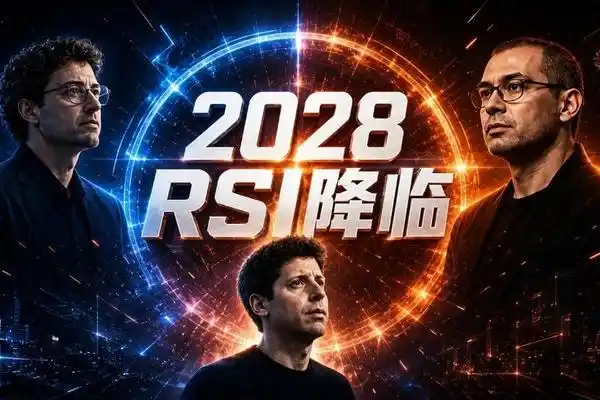
2028: The Arrival of Recursive Self-Improvement (RSI)

**AI Recursive Self-Improvement (RSI): The Countdown to 2028 Begins** AI is no longer just a trained tool but is starting to rewrite its own evolutionary pace. According to Anthropic co-founder Jack Clark, there is a 60% probability that by the end of 2028, Recursive Self-Improvement (RSI) will become a reality. This means AI could autonomously design and build a more capable next-generation version of itself without any human researcher involvement—Claude 10 creating Claude 11, for instance. Supporting this timeline, Google DeepMind's CEO Demis Hassabis confirms that all leading AI labs are intensely focused on RSI, making it an industry-wide priority. He expresses profound concern, stating this potential is what keeps him awake at night. Concrete data underscores this acceleration: - METR evaluations show current top models like Claude are solving tasks up to the 16-hour limit of existing test frameworks. - In Epoch AI's challenging MirrorCode benchmark, Claude Opus 4.7 recreated complex software in hours for a fraction of the human cost. In one extreme test, AI autonomously coded for 19 days straight. - Anthropic reports over 80% of its codebase is now written by Claude, and researcher productivity has increased up to 8-fold since 2024. - OpenAI's policy blueprint highlights RSI as a major upcoming governance challenge. CEO Sam Altman reportedly hinted RSI might arrive within six months, potentially delaying OpenAI's massive IPO. The implication is an impending "intelligence explosion," where AI-driven progress outpaces human control. The central question is no longer if it will happen, but whether humanity is ready.

marsbit43 хв тому

2028: The Arrival of Recursive Self-Improvement (RSI)

marsbit43 хв тому

World Models, Metaverse, Digital Twins, Physical AI: Are They the Same Thing?

Title: World Models, the Metaverse, Digital Twins, Physical AI: Are They the Same Thing? The article clarifies that concepts like the metaverse, Web3, simulation platforms, digital twins, and Physical AI are not the same thing but are all part of the broader trend of blurring the lines between the digital and physical worlds. It positions "world models" as the foundational "cognitive layer" or "operating system" that enables AI to understand and simulate the world. Key distinctions are made: - The **Metaverse** is a destination for immersive social and economic experiences. World models could act as its "engine," generating interactive 3D content efficiently. - **Web3** focuses on decentralized ownership and economics (rules layer), operating on a different technical level than world models. - **Simulation Data Platforms** (e.g., for autonomous vehicles) are a 1.0 version, relying on manual design. World models represent a 2.0 version, using AI to generate realistic, varied scenarios autonomously. - **Digital Twins** create high-fidelity, real-time mirrors of physical systems (e.g., a factory). World models go a step further by enabling predictive simulation of future states. - **Physical AI** (robots, AVs) refers to AI that acts in the physical world. World models are a core component, providing the understanding and prediction needed for planning. A proposed hierarchy places world models at the cognitive layer, supported by infrastructure (compute, data) and supporting application tools (simulation, digital twins), action systems (Physical AI), user experiences (metaverse), and rules (Web3). In conclusion, while distinct, many of these previously hyped concepts may ultimately rely on advances in world model technology to fulfill their promises, as world models provide the essential cognitive foundation for simulating and interacting with complex environments.

marsbit47 хв тому

World Models, Metaverse, Digital Twins, Physical AI: Are They the Same Thing?

marsbit47 хв тому

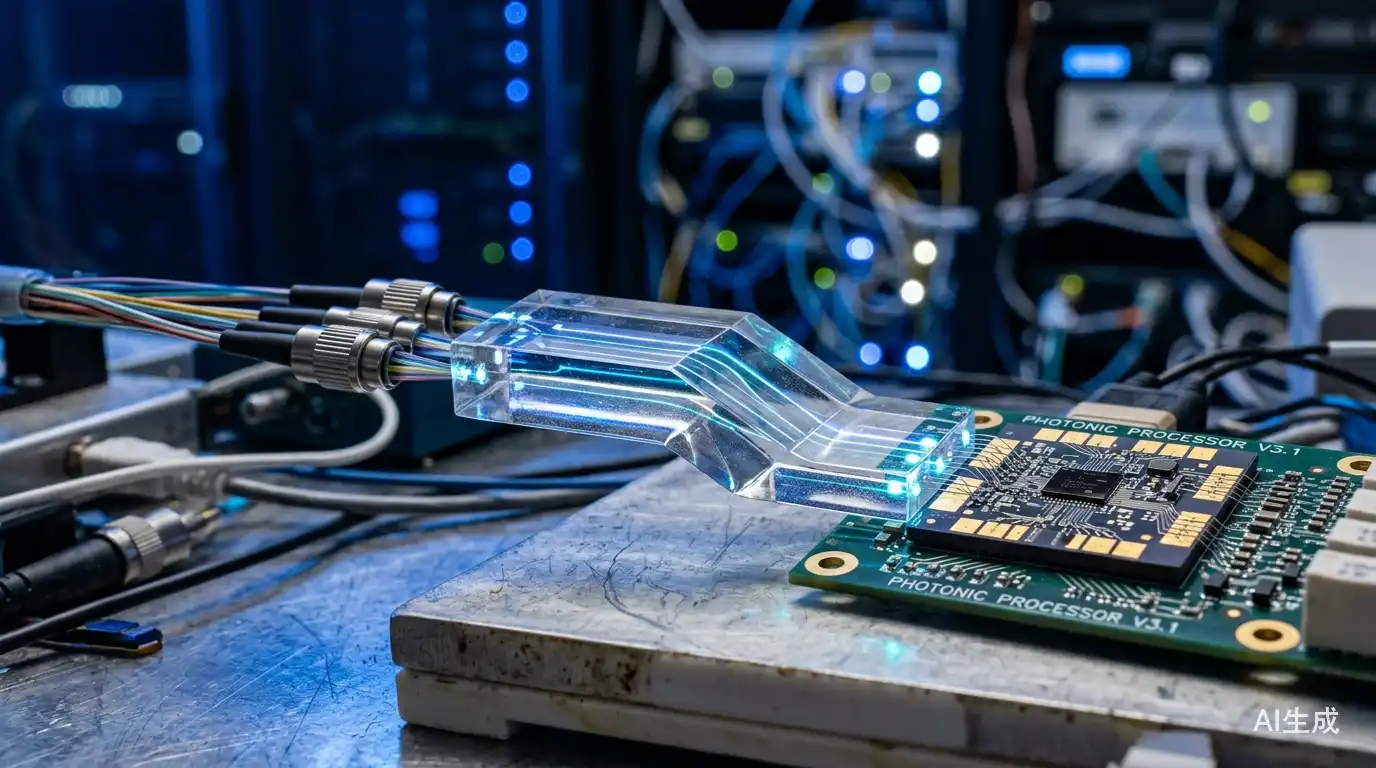
"Shocking" CPO: How Does the Glass Bridge Actually Work? Detailed Explanation from Corning

Chinese CPO stocks plunged over 6% following Corning's announcement of its Glass Bridge platform at a Seoul tech conference. The new technology utilizes wafer-level glass ion-exchange waveguides for passive alignment between fibers and photonic chips, potentially simplifying traditional CPO architectures that rely on complex Fiber Array Units and active alignment equipment. This raised market concerns about reduced long-term demand for mid-stream CPO components. Corning's official documentation details Glass Bridge as a platform for fiber-to-PIC connectivity in NPO, CPO, and high-density modules. Its key features include wafer-level manufacturing for consistent, cost-effective production; a standardized, removable MT ferrule interface for ecosystem integration; and a separable high-density connector design supporting over 24 channels for assembly flexibility. Corning positions the technology as complementary to FAUs, addressing limitations in ultra-high-fiber-count scenarios. The market reaction reflects a broader reassessment of the AI optical interconnect value chain. Funds shifted from CPO and PCB manufacturing stocks towards glass substrate concept stocks like Kaisheng Technology and Dyer Laser. Analysts note glass substrates are seen as a next-gen advanced packaging material, offering a potential path for domestic industry differentiation amid AI-driven demand for high-performance, large-scale packaging, marking a structural migration in value towards upstream specialty materials.

marsbit47 хв тому

"Shocking" CPO: How Does the Glass Bridge Actually Work? Detailed Explanation from Corning

marsbit47 хв тому

Торгівля

Спот
活动图片