Top 3 Reasons FLOKI & PlayDoge Investors Are Adding Mpeppe To Their Holdings

bitcoinistОпубліковано о 2024-09-04Востаннє оновлено о 2024-09-04

Анотація

Among the meme coins making waves recently, Mpeppe (MPEPE) has stood out, attracting significant interest from holders of other popular...

Among the meme coins making waves recently, Mpeppe (MPEPE) has stood out, attracting significant interest from holders of other popular meme coins like Floki (FLOKI) and PlayDoge (PLAY). But what is driving this trend? Here are the top three reasons why FLOKI and PlayDoge investors are adding Mpeppe to their portfolios.

  • Mpeppe’s Explosive Presale Growth

One of the primary reasons FLOKI and PlayDoge investors are turning their attention to Mpeppe is its explosive growth potential. Mpeppe, a relatively new entrant in the meme coin market, has already shown remarkable momentum during its presale phase. The coin has been gaining traction quickly, with its community expanding at an impressive rate. This rapid adoption suggests that Mpeppe could follow in the footsteps of its predecessors, like Dogecoin and Shiba Inu, which experienced meteoric rises after gaining a critical mass of followers.

Mpeppe’s presale has been so successful that it has nearly reached its cap, indicating strong investor confidence. Many early adopters of FLOKI and PlayDoge see parallels between the early days of these tokens and Mpeppe’s current trajectory. This has led them to believe that Mpeppe could be the next big thing in the meme coin world, offering the kind of returns that made FLOKI and PlayDoge household names in the crypto community.

  • Diversification of Meme Coin Portfolios

Another reason behind the shift towards Mpeppe (MPEPE) is the desire for diversification within meme coin portfolios. While FLOKI and PlayDoge have provided substantial returns to their investors, seasoned crypto enthusiasts know the importance of spreading risk across multiple assets. By adding Mpeppe to their holdings, these investors are not just hedging their bets but also positioning themselves to capitalize on the unique characteristics that each of these tokens brings to the table.

FLOKI has carved out a niche for itself with its strong branding and community-driven initiatives. It recently announced a high-profile partnership with the University of Miami Athletics, showcasing its ambition to bridge the gap between the crypto world and mainstream culture. PlayDoge, on the other hand, has tapped into the booming play-to-earn (P2E) sector, offering a unique proposition to gamers and investors alike. By diversifying into Mpeppe, investors in these coins are looking to complement their existing holdings with a fresh, high-growth asset that has the potential to deliver significant returns.

  • Mpeppe’s Strong Community and Marketing Strategy

The third reason investors are flocking to Mpeppe (MPEPE) is its strong community, marketing strategy and online presence. In the meme coin space, community engagement and effective marketing are crucial drivers of a token’s success. Mpeppe has excelled in both areas, building a vibrant community that is passionate about the project and its potential. The team behind Mpeppe has also been strategic in its marketing efforts, leveraging social media platforms and influencer partnerships to spread the word and attract new investors.

FLOKI and PlayDoge investors recognize the importance of these factors, having seen firsthand how community and marketing played pivotal roles in the rise of their respective tokens. Mpeppe’s approach to building its brand and community mirrors the strategies that have proven successful for other meme coins, making it an attractive addition to any meme coin portfolio.

Final Thought

As the meme coin market continues to evolve, investors are constantly on the lookout for the next big opportunity. Mpeppe’s (MPEPE) explosive growth potential, the diversification it offers to meme coin portfolios, and its strong community and marketing strategy are key reasons why FLOKI and PlayDoge investors are adding it to their holdings. While the future of any cryptocurrency is uncertain, the enthusiasm surrounding Mpeppe suggests that it could be poised for significant gains, making it a compelling option for those looking to expand their investment horizons within the meme coin sector.

For more information on the Mpeppe (MPEPPE) Presale: 

Visit Mpeppe (MPEPPE)

Join and become a community member: 

https://t.me/mpeppecoin

https://x.com/mpeppecommunity?s=11&t=hQv3guBuxfglZI-0YOTGuQ


Bitcoinist

Bitcoinist

Bitcoinist is the ultimate news and review site for the crypto currency community!

Трендові криптовалюти

Пов'язані матеріали

Apple and the Power Rebalancing with 'The Microns': Dissecting the Profit Ledger Behind the iPhone

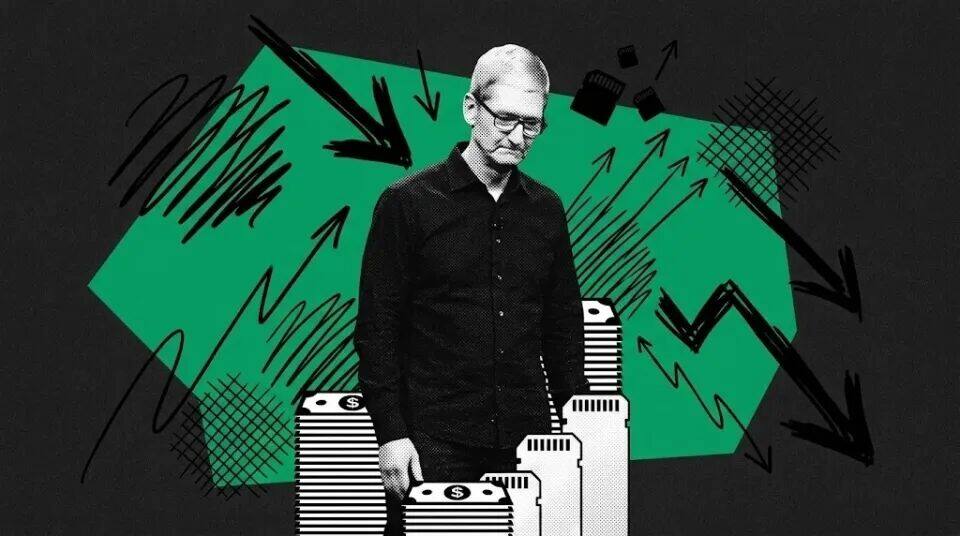
The article analyzes the shifting profit dynamics and power balance between Apple and memory suppliers like Micron within the iPhone supply chain. It highlights a social media post criticizing Apple for raising iPhone prices while blaming memory chip cost increases, despite historically paying suppliers like Micron very little. An estimated iPhone 18 cost breakdown is referenced. Historically, memory was a minor cost component. In 2017's iPhone X, memory accounted for only about 1.6-2.3% of the price, with Apple capturing nearly 50% net profit. Over time, memory's share of the Bill-of-Materials (BOM) cost has grown significantly, reaching an estimated 12-15% for the iPhone 17 series. The core driver of this change is soaring demand for memory from the AI industry, particularly for High Bandwidth Memory (HBM) and AI servers, which is diverting production capacity and squeezing supply for consumer electronics. Memory manufacturers, after enduring periods of low profits, now hold greater pricing power. This is reflected in their recent strong financials, like Micron's 84.6% gross margin. Apple CEO Tim Cook initially described the memory price pressure as unprecedented in his 40-year career, later calling it a "once-in-a-century flood," before Apple announced price hikes across several product lines, causing a significant stock drop. Elon Musk echoed Cook's sentiment about the dramatic cost surge. The article concludes that the era of memory suppliers being at the mercy of Apple's pricing power has temporarily reversed, thanks to AI-driven demand. It notes Apple is reportedly seeking to diversify its supply chain, including exploring chips from China's CXMT.

Odaily星球日报12 хв тому

Apple and the Power Rebalancing with 'The Microns': Dissecting the Profit Ledger Behind the iPhone

Odaily星球日报12 хв тому

Conversation with the Founder of 42 Macro: The Fed's 'Boiling the Frog Slowly' and the K-Shaped Economy

In a conversation with Anthony Pompliano, Darius Dale, founder of 42 Macro, discusses the Federal Reserve's monetary policy and the K-shaped U.S. economy. Dale characterizes new Fed Chair Kevin Warsh as a "dove in hawk's clothing," expecting the Fed to signal or enact policy tightening in the coming quarters to create room for later easing. He argues current economic signals, including high deficit spending, debt monetization, and credit growth, strongly indicate inflation is not on a credible path back to 2%, forcing the Fed to act. The discussion highlights the stark "K-shaped" economic reality. While top earners, buoyed by massive cash savings (up ~$8 trillion since pre-pandemic), continue robust spending, those at the bottom face severe financial strain, with delinquency rates on consumer loans reaching crisis-era highs. Dale attributes much of the current social and political anxiety to this divergence, driven by the "Cantillon effects" of monetary expansion, which disproportionately benefits asset owners. He emphasizes that in this environment of "financial repression," individuals must participate in asset markets to avoid being left behind. On equities, Dale notes a rotation from the "Magnificent Seven" tech giants into broader AI-exposed companies, while warning that the tech giants' massive capital expenditure cycles could eventually puncture over-optimistic cash flow projections. Dale concludes by stressing that the core desire across all economic strata is simply the dignity to provide for one's family, a goal currently undermined by systemic policies that act as a "wealth siphon" from the bottom to the top.

marsbit42 хв тому

Conversation with the Founder of 42 Macro: The Fed's 'Boiling the Frog Slowly' and the K-Shaped Economy

marsbit42 хв тому

The Eight Fathers of Transformer: Where Are They Now?

The founding authors of the seminal 2017 paper "Attention Is All You Need," which introduced the Transformer architecture, have all departed from Google and are now pioneering diverse ventures across the AI landscape. Their current paths highlight the field's evolution and fragmentation. Ashish Vaswani co-founded Essential AI after a stint at Adept, but recent reports suggest he and his team are being recruited by Nvidia. Noam Shazeer left Google twice, first to found Character.AI—later acquired by Google—before recently joining OpenAI. Niki Parmar, after co-founding both Adept and Essential AI with Vaswani, is now at Anthropic. Jakob Uszkoreit is the CEO of Inceptive, applying AI to RNA and drug design. Llion Jones co-founded Sakana AI in Tokyo, exploring collective intelligence from smaller models. Aidan N. Gomez is the CEO of Cohere, focusing on enterprise AI solutions. Łukasz Kaiser remains in research at OpenAI, contributing to models like GPT-4 and o1. Illia Polosukhin co-founded the NEAR Protocol blockchain, positioning it for an AI-agent economy. Despite their divergent paths—spanning biotech, enterprise software, blockchain, and foundational research—a shared sentiment persists: the Transformer is not the final answer. Each founder continues to seek the next significant architectural breakthrough, driven by the same innovative spirit that created the modern AI era.

marsbit46 хв тому

The Eight Fathers of Transformer: Where Are They Now?

marsbit46 хв тому

The Domestic Answer to Space Computing Power: Photonics Are More Efficient, Musk and Huang's Approaches Are Too Roundabout

The Space Computing Race: A Photonic Advantage The competition for space-based computing has intensified, with figures like Elon Musk and NVIDIA's Jensen Huang highlighting its potential. Musk predicts solar-powered AI satellites could offer the most cost-effective computing by 2032. However, space presents extreme challenges for traditional electronic chips: radiation from cosmic particles can cause errors, the vacuum environment hinders heat dissipation, and limited solar power constrains energy-hungry systems. Photonic computing, using light instead of electrons, offers a promising solution. Its core advantages for space are threefold: 1) **Radiation Resistance**: Photons are charge-neutral, making them inherently immune to particle interference. 2) **Low Heat Generation**: Light propagation in waveguides generates minimal heat, bypassing critical thermal management issues. 3) **Low Power Consumption**: Photonic chips have near-zero static power draw, aligning perfectly with the energy constraints of satellites. Furthermore, for a given payload weight and volume, photonic systems can potentially deliver higher total compute density. Since they require less bulky cooling and power infrastructure, more space can be allocated to the compute units themselves. While photonic computing holds great promise, current industry approaches face hurdles like the memory-compute bottleneck (separate storage and processing) and challenges in large-scale integration. Engineering for space—withstanding launch vibrations and validating full system operation in orbit—remains a critical step. The path forward resembles the evolution from single GPUs to computing clusters, but via a photonic route. As electronic chips approach physical limits in miniaturization, photonic computing and optical interconnects (光算光联) may provide a key alternative to bypass these constraints and define the next generation of space-based computing capabilities.

marsbit1 год тому

The Domestic Answer to Space Computing Power: Photonics Are More Efficient, Musk and Huang's Approaches Are Too Roundabout

marsbit1 год тому

Торгівля

Спот

Популярні статті

Як купити FLOKI

Ласкаво просимо до HTX.com! Ми зробили покупку FLOKI (FLOKI) простою та зручною. Дотримуйтесь нашої покрокової інструкції, щоб розпочати свою криптовалютну подорож.Крок 1: Створіть обліковий запис на HTXВикористовуйте свою електронну пошту або номер телефону, щоб зареєструвати обліковий запис на HTX безплатно. Пройдіть безпроблемну реєстрацію й отримайте доступ до всіх функцій.ЗареєструватисьКрок 2: Перейдіть до розділу Купити крипту і виберіть спосіб оплатиКредитна/дебетова картка: використовуйте вашу картку Visa або Mastercard, щоб миттєво купити FLOKI (FLOKI).Баланс: використовуйте кошти з балансу вашого рахунку HTX для безперешкодної торгівлі.Треті особи: ми додали популярні способи оплати, такі як Google Pay та Apple Pay, щоб підвищити зручність.P2P: Торгуйте безпосередньо з іншими користувачами на HTX.Позабіржова торгівля (OTC): ми пропонуємо індивідуальні послуги та конкурентні обмінні курси для трейдерів.Крок 3: Зберігайте свої FLOKI (FLOKI)Після придбання FLOKI (FLOKI) збережіть його у своєму обліковому записі на HTX. Крім того, ви можете відправити його в інше місце за допомогою блокчейн-переказу або використовувати його для торгівлі іншими криптовалютами.Крок 4: Торгівля FLOKI (FLOKI)Легко торгуйте FLOKI (FLOKI) на спотовому ринку HTX. Просто увійдіть до свого облікового запису, виберіть торгову пару, укладайте угоди та спостерігайте за ними в режимі реального часу. Ми пропонуємо зручний досвід як для початківців, так і для досвідчених трейдерів.

246 переглядів усьогоОпубліковано 2024.12.12Оновлено 2026.06.02

Як купити FLOKI

Обговорення

Ласкаво просимо до спільноти HTX. Тут ви можете бути в курсі останніх подій розвитку платформи та отримати доступ до професійної ринкової інформації. Нижче представлені думки користувачів щодо ціни FLOKI (FLOKI).

活动图片