QCP Capital: биткоин может обойти другие рисковые активы

cryptonews.ruОпубліковано о 2022-01-27Востаннє оновлено о 2024-08-27

Трейдинговая фирма QCP Capital выпустила свежий отчет, который раскрывает интересные тенденции на криптовалютном рынке и предлагает необычную торговую стратегию для биткоина.

Согласно отчету, равновзвешенный индекс S&P 500 достиг исторического максимума, что свидетельствует о расширении бычьего импульса за пределы так называемой «Великолепной семерки» — группы крупнейших технологических компаний, в которую входят Apple (AAPL), Microsoft (MSFT), Alphabet (GOOGL), Amazon (AMZN), NVIDIA (NVDA), Meta Platforms (META) и Tesla (TSLA).

QCP Capital отмечает любопытную корреляцию между криптовалютами и акциями компаний с малой капитализацией. В двух из трех предыдущих периодов снижения ставок малые капитализации обгоняли крупные. Аналитики задаются вопросом: может ли биткоин в этот раз превзойти другие рисковые активы? Под «другими рисковыми активами» здесь подразумеваются акции технологических компаний, высокодоходные облигации, сырьевые товары и валюты развивающихся стран — все то, что традиционно считается более волатильным и рискованным по сравнению с «защитными» активами вроде государственных облигаций или золота.

Что говорит крипторынок?

Спотовые на биткоин-ETF переживают настоящий бум — приток средств не прекращается уже 12 дней подряд. А вот ETF на Ethereum испытывают отток капитала восемь дней кряду. На рынке опционов биткоин также доминирует, что, по мнению аналитиков QCP, отражает макроэкономическую природу текущего режима снижения ставок.

Трейдеры осторожно покупают колл-спреды, в то время как волатильность на ближнем конце кривой снижается. Колл-спред — это опционная стратегия, при которой трейдер одновременно покупает и продает опционы колл с разными ценами исполнения. Такой подход позволяет ограничить риски и потенциальную прибыль, что особенно актуально в условиях неопределенности. Эти сигналы указывают на сдержанный оптимизм рынка: инвесторы ожидают роста, но страхуются от чрезмерных колебаний.

Стратегия от QCP: аккумулятор биткоина

QCP Capital предлагает интересную торговую идею — стратегию «аккумулятор» для биткоина. Это условная сделка на покупку актива, которая активируется при определенных рыночных условиях. Суть в том, что вы получаете возможность регулярно покупать биткоин по фиксированной цене, если рынок находится в заданном диапазоне.

Вот детали стратегии:

  • Срок действия: 1 ноября 2024 (10 недель)
  • Цена покупки: $57 600 (-8,27% от текущей цены)
  • Верхний барьер: $67 000 (+6,7% от текущей цены)
  • Частота проверки условий: еженедельно

Как это работает? Каждую неделю, если цена биткоина ниже $67 000, у инвестора появляется обязательство купить его по $57 600. Это дает потенциальную скидку в 8,27% от текущей рыночной цены. Однако если цена превысит верхний барьер, сделка на эту неделю не состоится.

Такая стратегия может быть выгодной при умеренном росте или боковом движении цены биткоина. Однако при резком росте выше верхнего барьера инвестор может упустить часть прибыли, а при сильном падении — оказаться в убытке, покупая по цене выше рыночной.

Ретроспектива: взгляд на предыдущий отчет

Интересно сравнить текущий отчет с предыдущим, выпущенным 26 августа 2024 года. Тогда QCP отмечала агрессивные покупки колл-спредов после симпозиума в Джексон-Хоул, но также наблюдала массовые продажи коллов со страйком около $100 000 на март 2025 года. Это указывало на то, что рынок был настроен оптимистично, но не ожидал взрывного роста в ближайшее время.

Пов'язані матеріали

Commerce Ministry's Latest Export Controls Target 10 US Companies: Three Market-Moving Threads Explained

China's Ministry of Commerce placed 10 U.S. entities, including MP Materials, USA Rare Earth, Red Cat Holdings, and Teal Drones, on an export control list, banning the export of dual-use items. This move is seen as part of an ongoing countermeasure in the rare earth sector. The analysis suggests the primary impact is on U.S. companies within the **military, drone, and rare earth** sectors, aiming to restrict their access to critical Chinese materials and technology. For the Chinese market, the event is interpreted as reinforcing the **strategic value and pricing power** of domestic rare earth suppliers. However, the potential stock market reactions are nuanced: 1. **Chinese Rare Earth Upstream:** Companies like Northern Rare Earth are near yearly highs, indicating this event's "beneficiary" logic is largely priced in. It may confirm the trend but is unlikely to be a new major catalyst. 2. **Chinese Rare Earth Mid/Downstream & Drones:** Sectors like magnetic materials (e.g., Da Di Bear, Zhenghai Magnetic) and military drones (e.g., China Aerospace) are relatively undervalued. While the drone listing highlights sectoral competition, it doesn't directly translate to new orders for Chinese firms. 3. **Impact on Listed U.S. Companies:** The effect on stocks like MP Materials is ambiguous. While Chinese restrictions pose a challenge, these companies are also core to U.S. supply chain security efforts and may receive increased government support, potentially offsetting negative impacts. Their pre-announcement stock prices did not indicate panic selling. In summary, the export controls strengthen China's position in the global rare earth supply chain but have uneven effects across related stock market segments, with upstream Chinese gains likely priced in and downstream/drone sectors receiving more indirect, sentiment-driven attention. The outcome for the targeted U.S. stocks depends on the balance between restriction impacts and potential compensatory U.S. policy support.

marsbit2 хв тому

Commerce Ministry's Latest Export Controls Target 10 US Companies: Three Market-Moving Threads Explained

marsbit2 хв тому

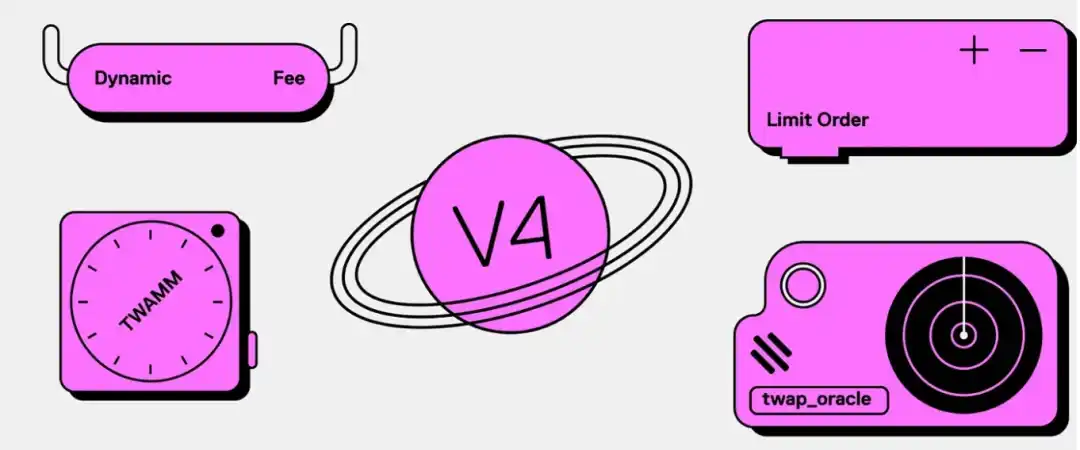
Uniswap v4 Hook Analysis: Architecture Design, Common Vulnerabilities, and Protection Practices

Uniswap v4's Hook mechanism is a major innovation, enabling custom logic injection into liquidity pool lifecycle events like swaps and liquidity provisioning. This transforms the AMM into programmable infrastructure, shifting the security model from protocol-level to pool-level, as each pool's safety now depends on its bound Hook contract. The core architecture revolves around the singleton PoolManager contract, which manages all pools via a flash accounting system. State changes are tracked in transient storage and must be settled by the end of a transaction. Hook contracts are permanently bound to pools via a PoolKey, with their permissions encoded directly into their address via specific low-order bits. This design introduces unique security considerations and challenges for future upgrades. Key vulnerabilities and best practices identified include: - **Access Control Gaps:** Early versions of the BaseHook abstract contract only protect `unlockCallback()`, leaving other lifecycle functions (`beforeSwap`, `afterSwap`, etc.) exposed unless explicitly secured by developers. - **Unrestricted Pool Binding:** The `initialize()` function does not validate if a Hook "consents" to a new pool. Hooks must implement their own whitelisting in `beforeInitialize` to prevent unauthorized pool creation. - **Async/Custom Curve Hooks:** These high-risk Hooks can completely replace Uniswap's swap logic. Their security depends entirely on their own implementation, as they operate outside the native protocol's pricing safeguards. - **Delta Accounting Risks:** The system ensures final balance (NonzeroDeltaCount == 0) but cannot guarantee the *correctness* of intermediate delta states, which attackers could manipulate. - **Token Confusion:** Protocols must implement semantic validation for tokens in user-created markets, not just interface checks, to prevent cross-market confusion attacks. The article emphasizes that Hook auditing requires a "sub-protocol" approach due to extended interaction chains, highlighting a significant shift in security methodology for the v4 ecosystem.

marsbit54 хв тому

Uniswap v4 Hook Analysis: Architecture Design, Common Vulnerabilities, and Protection Practices

marsbit54 хв тому

Chips, Open-Source Models, and $50 Trillion: Joe Tsai Reassesses Alibaba Once Again

Alibaba Executive Chairman Joe Tsai recently outlined the company's comprehensive AI strategy in a public discussion. He believes AI represents a massive opportunity, estimating its potential economic impact at up to $50 trillion, stemming from the automation of human intelligence and productivity. Tsai detailed Alibaba's four-layer investment approach across the AI stack: starting from the chip level, moving to cloud infrastructure (Alibaba Cloud), then the model layer with its open-source Qwen model, and finally applications within its vast digital ecosystem (e-commerce, logistics, etc.). The company avoids the energy layer due to China's efficient infrastructure. This broad strategy is designed to ensure Alibaba captures value regardless of where it ultimately concentrates in the AI value chain. He dismissed concerns about an AI investment bubble, pointing to the enormous $50 trillion opportunity. While acknowledging U.S. cloud giants' higher capital expenditure, he argued Chinese firms, including Alibaba (funded by its cash-generative e-commerce core), need to invest more in AI infrastructure. A key theme was technological sovereignty. Tsai positioned open-source models like Qwen as a solution for companies, especially in Europe, seeking independence from proprietary U.S. models and greater data privacy control. He contrasted this with the trend of U.S. giants keeping their models closed-source. Tsai highlighted Alibaba's collaborations with European manufacturers like Bosch and Siemens, using AI for design and quality control. He concluded with an optimistic vision of AI agents enhancing productivity, ultimately freeing up human time for leisure, family, and experiences like live entertainment.

marsbit1 год тому

Chips, Open-Source Models, and $50 Trillion: Joe Tsai Reassesses Alibaba Once Again

marsbit1 год тому

Торгівля

Спот
Ф'ючерси
活动图片