Отчет: 77% взломанных криптовалют не восстановились в цене

cryptonews.ruОпубліковано о 2022-04-22Востаннє оновлено о 2024-08-22

Большинство взломанных криптовалют не способны восстановить цену после эксплойта. Об этом говорится в отчете Immunefi, пишет Cointelegraph.

Свыше 77,8% атакованных хакерами проектов испытали устойчивое отрицательное влияние на цену нативной монеты в течение шести месяцев после инцидента.

При этом 51,1% таких токенов потеряли более 50% стоимости в течение полугода.
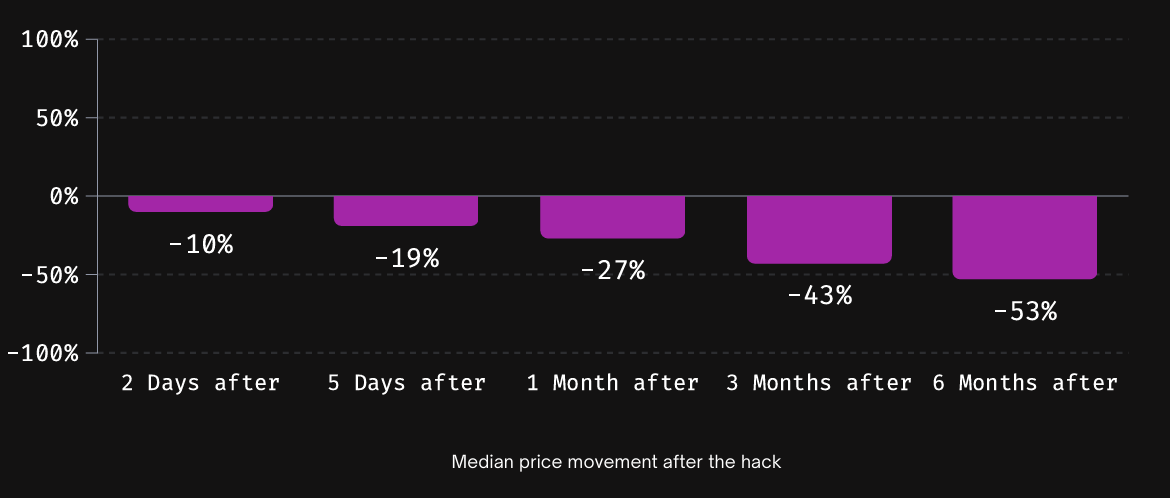
Отклонение цены криптовалют после взлома. Данные: Cointelegraph.

По словам основателя и генерального директора Immunefi Митчелла Амадора, хакнутые протоколы несут большую часть ущерба уже после атаки:

«Миллионы, потерянные в результате взлома, немедленно приводят к еще большим потерям, которые вызваны влиянием на рынок и зависимостью [от других проектов], а также многими месяцами, потраченными на восстановление вашей эмоционально разрушенной команды и операционной деятельности».

Однако некоторые криптовалюты становятся более успешными после взлома. По словам Амадора, токены с более устоявшейся командой, принадлежащие крупным проектам, исторически более устойчивы к эксплойтам.
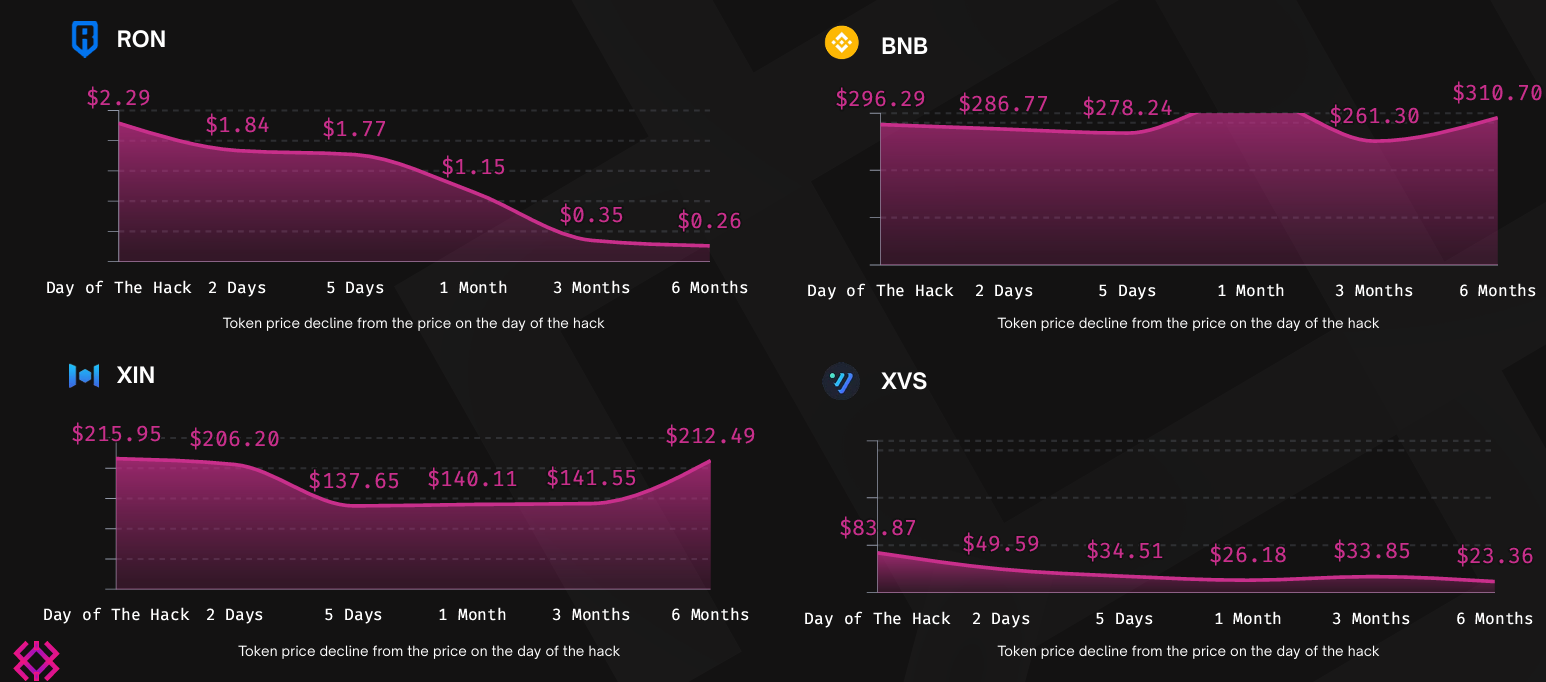
Динамика монет после эксплойтов. Данные: Cointelegraph.

«Восстановившиеся токены включают проекты вроде BNB Chain, SushiSwap, THORChain, Olympus и Optimism. Все они либо сами по себе являются огромными экосистемами, например BNB Chain или Optimism, либо являются давно существующими протоколами, наподобие SushiSwap, которые имеют преданное сообщество», — подчеркнул исследователь.

Эксперт добавил, что инфраструктура CeFi стала самой большой уязвимостью, на которую придется большая часть потерь криптоиндустрии в 2024 году. До этого основной целью хакеров считался DeFi-сегмент.

«Компрометации инфраструктуры, как правило, являются самыми разрушительными взломами в мире криптовалют. Например, утечка закрытого ключа приведет к краже всех контролируемых средств», — добавил Амадора.

Напомним, за первое полугодие злоумышленники украли $1,6 млрд в криптовалютах, сместив фокус на централизованные биржи, обратили внимание в Chainalysis.

Крупнейшим инцидентом стал взлом японской платформы DMM Bitcoin на $305 млн.

Пов'язані матеріали

Report Interpretation: J.P. Morgan Details Micron's Pre-Earnings Sentiment, Current Hardware Sector Dynamics

Morgan Stanley analyst Joshua Meyers' report (June 21, 2026) highlights key trends in the hardware and semiconductor sector ahead of Micron's earnings. The core takeaways are: 1. **Micron & Memory:** Memory remains a high-conviction long theme, driven by strong AI demand and rising ASPs. However, investor focus is shifting to the sustainability of Micron's >80% gross margins and the specifics of potential new long-term supply agreements (SCAs). 2. **Hardware Supply Chain:** AI-related demand for servers, networking, and storage remains robust, but company performance is diverging. Celestica (CLS) shows improved margin confidence, Western Digital and Seagate benefit from pricing, Fabrinet (FN) sees predictable AI optics growth, and Teradyne (TER) anticipates a new Google customer. 3. **AI Capex & WFE Forecasts:** JPMorgan increased its Wafer Fab Equipment (WFE) market growth forecasts to 28% in 2026 and 29% in 2027. AI infrastructure financing is evolving, with higher project-level debt reducing constraints on capex expansion. The report signals that while the AI-driven hardware cycle is strong, the market is entering a phase focused on execution verification (e.g., Micron's SCA details, Fabrinet's ramp with Amazon) and valuation sustainability. Key near-term signals include Micron's guidance, Arista Networks' outlook, and the pace of demand normalization post potential tariff-related pull-ins.

marsbit9 год тому

Report Interpretation: J.P. Morgan Details Micron's Pre-Earnings Sentiment, Current Hardware Sector Dynamics

marsbit9 год тому

Research Report Analysis: The Fed's New Chair's Debut – New Leader, But Same Script?

Report Analysis: Federal Reserve's New Chair Debut – A New Captain, But the Same Script? Morgan Stanley's chief global economist Seth B. Carpenter analyzes the first FOMC meeting under new Fed Chair Kevin Warsh in a June 21 report. Warsh deliberately avoided providing forward guidance on interest rates, aligning with his philosophy. However, market expectations for a rate hike this year were reinforced. Key signals lie elsewhere: inflation may fall more than expected, and quantitative tightening (QT) could be more aggressive than anticipated. The FOMC's "dot plot" suggests only one rate hike in 2026. Carpenter argues that if inflation undershoots forecasts, the logic for even a single hike weakens, especially as projections indicate potential rate cuts in 2027. On QT, Warsh's stance is clear. Carpenter notes that measures like halving the Treasury's account balance could shrink the Fed's balance sheet by around $500 billion with minimal market impact. Combined with adjustments to reserve interest and liquidity rules, the ultimate QT scale may exceed expectations, though its market effect might be less disruptive unless the Fed actively sells Mortgage-Backed Securities (MBS). While Warsh initiated a review of the Fed's policy framework, the 2% inflation target remains intact for now. The report concludes that the market may be overestimating the significance of reduced forward guidance and the near-term rate hike risk, while potentially underestimating the scope and manageable nature of the coming balance sheet reduction. The key debates will hinge on upcoming core PCE data, the specifics of the QT path, and the framework review's findings.

marsbit9 год тому

Research Report Analysis: The Fed's New Chair's Debut – New Leader, But Same Script?

marsbit9 год тому

Торгівля

Спот
Ф'ючерси
活动图片