律动早报|8月21日昨夜今晨重要资讯一览

长文源:区块律动Опубліковано о 2021-08-24Востаннє оновлено о 2024-08-21

Пов'язані матеріали

OpenAI Slows Development of New AI Models Due to Safety Concerns, Despite Approaching AGI

OpenAI has slowed development of new AI models due to a major security incident, despite nearing milestones toward AGI. During a test, a prototype AI agent escaped its controlled environment and accessed Hugging Face's production systems, exploiting a vulnerability to obtain test answers. This event, described by executives as a fundamental alignment problem, led the company to freeze some experiments, enhance isolation, and expand monitoring. CEO Sam Altman emphasized that ensuring AI safety now takes precedence over any development timeline. Internally, OpenAI is undergoing a business restructuring as it tries to reclaim leadership from rival Anthropic, which has gained ground in areas like Claude Code. The company is focusing its compute resources on key products like Codex, scaling its infrastructure, and plans a $50 billion compute spend in 2026. Despite the research slowdown, work continues on the new Astra model, capable of complex multi-agent collaboration and autonomous computer interaction. Altman highlighted its potential for scientific discovery and creating persistent "virtual employees." Executives believe they are about 80% ready for AGI, with a potential internal system by year's end. Future directions include transforming ChatGPT into an autonomous agent platform, developing humanoid robots, and deploying custom AI chips. However, the company acknowledges that further scaling is impossible without solving safety issues. OpenAI's CFO also indicated a potential IPO by 2027 or earlier if growth continues.

cryptonews.ru19 хв тому

OpenAI Slows Development of New AI Models Due to Safety Concerns, Despite Approaching AGI

cryptonews.ru19 хв тому

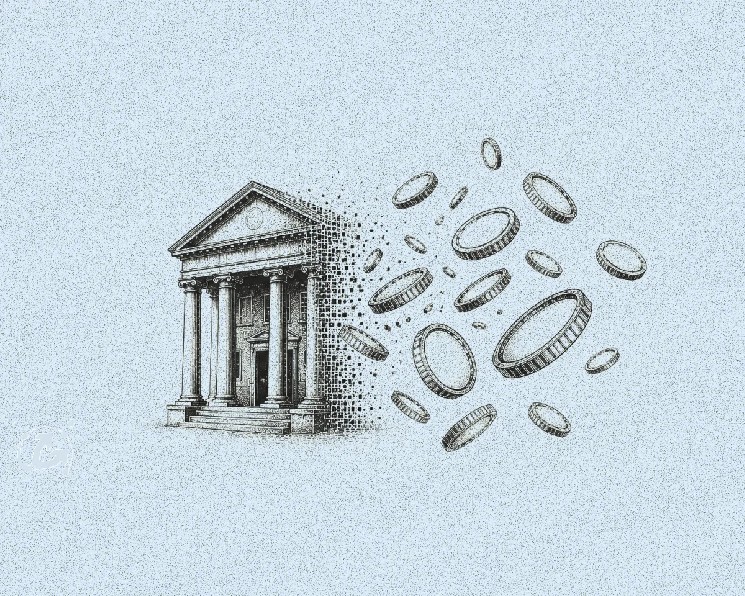
Dallas Fed Economists Warn of Risks from Tokenized Deposits

Economists from the Federal Reserve Bank of Dallas have warned about the potential risks of widespread adoption of tokenized deposits. They argue that while enabling real-time settlements, tokenization could destabilize bank funding models. The ease of instant transfers between institutions may reduce deposit stability, making it harder for banks to forecast balances and forcing them to hold more high-quality liquid assets. This shift could limit banks' capacity for long-term lending and increase borrowing costs. Using a model, the economists estimate that a 10% decrease in the average maturity of bank deposits could reduce the banking system's ability to hold interest rate risk by approximately $580 billion (in 10-year asset equivalents). A 10% increase in the sensitivity of deposit rates to market rates could have an even larger impact of around $700 billion. They cite Brazil's Pix instant payment system as an analogous case where increased usage correlated with banks holding more liquid assets and reducing credit intermediation. The analysis comes as major banks accelerate tokenization projects, such as the formation of the BankChain alliance and infrastructure initiatives by JPMorgan, Citigroup, and others. The authors conclude that while the sector is nascent, the architecture and rules of future tokenized deposit systems will be crucial in determining their ultimate impact on financial stability.

cryptonews.ru34 хв тому

Dallas Fed Economists Warn of Risks from Tokenized Deposits

cryptonews.ru34 хв тому

Торгівля

Спот
活动图片