Биткоин-опционы указали на оптимизм трейдеров после выборов в США

cryptonews.ruОпубліковано о 2022-08-20Востаннє оновлено о 2024-08-20

Распределение опционов на биткоин со сроком экспирации через четыре дня после президентских выборов в США демонстрирует оптимистичные ожидания участников рынка. Об этом сообщает CoinDesk со ссылкой на отчет Wintermute.

Возможность открыть соответствующие позиции на Deribit появилась месяц назад. Их объем уже достиг $345,83 млн.

При этом соотношение контрактов пут/колл составляет примерно 2:1, что означает ставку большинства на рост цены базового актива.
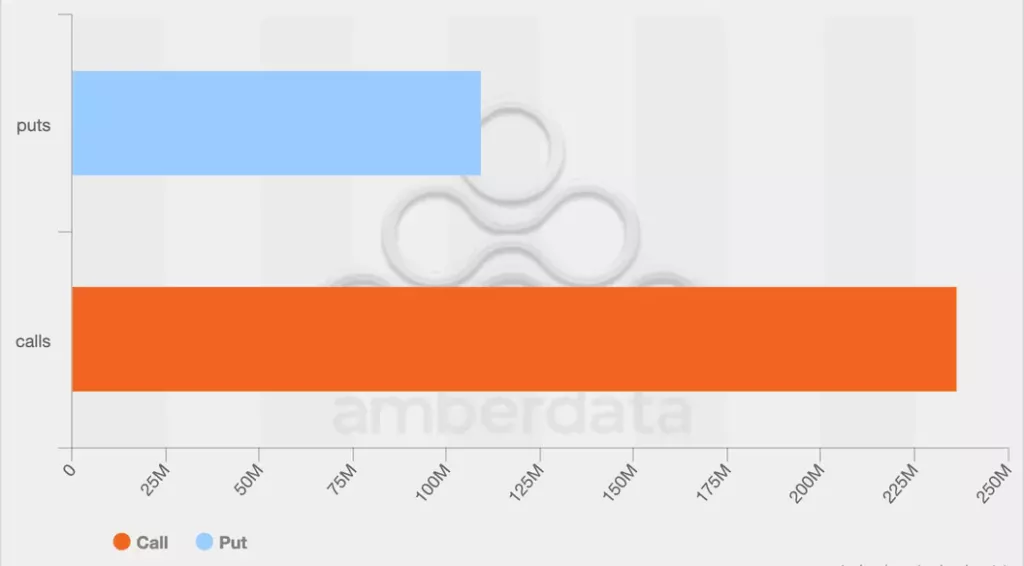
Данные: CoinDesk.

«Эти приуроченные к выборам контракты позволяют инвесторам извлекать выгоду из возросшего интереса, спекулируя на том, как событие может повлиять на крипторынки. Текущее соотношение пут/колл указывает на оптимистичные настроения», — отметили в Wintermute.

Самой популярной позицией является колл-опцион со страйк-ценой $80 000 — общий объем составляет более $39 млн. В целом открытый интерес в основном сосредоточен в диапазоне $70 000-$140 000, что может быть признаком ожидания трейдерами новых максимумов в этот период.

Внимание экспертов привлекли те же $39 млн в пут-опционах по цене $45 000.
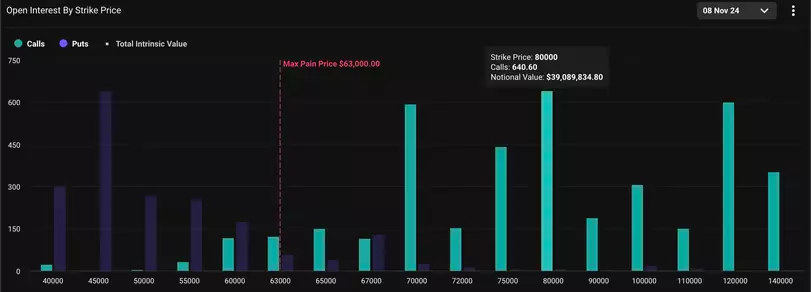
Данные: CoinDesk.

«Концентрация открытого интереса в позициях со страйками около $80 000 и $100 000 говорит о готовности участников рынка к потенциальному росту биткоина, тогда как наличие пут-контрактов с более низкой ценой исполнения в $45 000 указывает на определенный уровень хеджирования или защиты от снижения», — полагают они.

Ожидания индустрии

Большая часть криптоиндустрии связывает надежды с возвращением в кресло президента республиканца Дональда Трампа. Политик неоднократно заявлял о поддержке цифровых активов и майнинга.

Он открыл прием пожертвований на предвыборную кампанию в криптовалютах и привлек донаты в $1 млн от известных участников отрасли вроде братьев Уинклвоссов и сооснователя Kraken Джесса Пауэлла.

Выступая на конференции Bitcoin 2024, Трамп пообещал положить конец войне властей с криптовалютами в случае избрания. В ходе мероприятия он собрал в предвыборный фонд более $20 млн.

После выхода из гонки Джо Байдена его заменила действующий вице-президент Камала Харрис. Некоторые игроки индустрии вроде миллиардера Марка Кьюбана допустили, что новый кандидат от демократов окажется «гораздо более открытой» для криптовалют.

Ее сторонники в отрасли запустили кампанию Crypto for Harris для противостояния адресованным криптоинвесторам призывам Трампа. Однако отсутствие Харрис на виртуальном мероприятии инициативы дало повод усомниться в ее потенциальной поддержке индустрии.

Более того, издание Washington Reporter со ссылкой на собственные источники сообщило, что в случае избрания она может назначить на пост министра финансов главу SEC Гэри Генслера. Он является одним из самых неприемлемых сообществом топ-чиновников в администрации Байдена из-за жесткой регуляторной политики. Однако даже некоторые сторонники Трампа в отрасли отнеслись к новости со скепсисом.

OK, multiple Dems contacted me to say the “Gensler as Treasury Secretary” rumor is false. One thinks the source of the rumor is Gensler himself — (thinks he planted it just to mess with all of us…that sounds about right TBH)🤷‍♀️ https://t.co/nTRwq1Gafu

— Caitlin Long 🔑⚡️🟠 (@CaitlinLong_) August 19, 2024

Согласно влиятельному конгрессмену-республиканцу Тому Эммеру, Минфин при Харрис может возглавить сенаторка Элизабет Уоррен. Она известна как непримиримый критик криптовалют.

В сообществе также обращают внимание, что кандидат от Демократической партии до сих пор публично не обозначила свою позицию касательно цифровых активов, упоминание которых отсутствует в ее предвыборной платформе. Журналисты NBC News отметили, что документ разрабатывался «под Байдена» и получил одобрение за несколько дней до заявления президента о выходе из электоральной кампании.

Напомним, инвестиционный директор Bitwise Мэтт Хоуган пришел к выводу, что для индустрии не имеет значение отношение политиков. Подобное мнение высказал и экс-CEO BitMEX Артур Хэйес.


Пов'язані матеріали

Foundation Steps Back, Ethlabs Steps Forward: Ethereum Undergoes Its Largest Restructuring in History

On June 23rd, the Ethereum ecosystem witnessed two major shifts, signaling a significant governance realignment. First, former Ethereum Foundation researchers established Ethlabs, a new independent non-profit. Backed by major ETH holders like Bitmine and SharpLink, Ethlabs aims to address practical needs for institutional adoption, including faster settlement, native asset issuance, cross-chain transactions, and mainnet scaling. Secondly, the Ethereum Foundation announced a major restructuring, laying off 54 employees (20% of its staff) to become a leaner entity focused on protocol governance and maintenance rather than being the primary builder. This move represents a pivotal correction. Criticisms had mounted over the Foundation's perceived slowness, lack of clear strategy, and over-reliance on Vitalik Buterin's influence. Ethlabs emerges as a more execution-oriented, "industrialized" layer focused on market adoption—bridging the gap between research and real-world use. Notably, Vitalik Buterin is absent from its list of supporters, interpreted as an intentional step to avoid excessive personal endorsement and allow the organization to build independent credibility. The Ethereum Foundation's downsizing and redefinition mark a retreat from its former central coordinating role. It now aims to share the "privilege of stewarding Ethereum" with other emerging groups like Ethlabs, the Ethereum Applications Guild, and The Ethereum Economic Zone. Analysts frame this dual shift as the Foundation ensuring Ethereum remains "correct" (credibly neutral), while Ethlabs must prove it remains "effective" (competitive and attractive for capital and adoption). This addresses community "shareholder-like anxiety" about ETH's market performance. While risks exist—such as concerns over shifting from Foundation centrality to large-holder influence—the consensus is that the greater risk for Ethereum was inaction, caught between technical idealism and organizational inertia. These steps aim to create a more multi-stakeholder, execution-driven future for the network.

链捕手7 год тому

Foundation Steps Back, Ethlabs Steps Forward: Ethereum Undergoes Its Largest Restructuring in History

链捕手7 год тому

Second Half of U.S. Crypto Policy: The Clarity Act Aims for 60 Votes, CFTC's "One-Person Commission" Becomes Biggest Variable

In a pivotal year for US crypto policy, the "CLARITY Act" is advancing in the Senate but faces a high hurdle, needing 60 votes to pass. Key challenges include bridging partisan divides on ethics and swaying undecided Republican senators within a tight legislative calendar of only about 40 working days. The policy "second half" involves intense negotiations on a broader framework for Web3 and DeFi, including crypto tax reforms and the Blockchain Regulatory Certainty Act. A significant uncertainty is the understaffed CFTC, operating with four commissioner vacancies, which complicates regulatory clarity. Meanwhile, the departure of key "crypto champions"—SEC Commissioner Hester Peirce and Senator Cynthia Lummis—will impact ongoing policy efforts. Industry experts are cautiously optimistic but realistic. Sara K. Weed notes that while progress is being made, CLARITY is unlikely to pass this Congress, pushing agencies like the SEC and CFTC to provide more guidance. Sulolit Mukherjee suggests meaningful crypto tax legislation is more likely to be attached to larger must-pass bills. Rashan Colbert discusses the jurisdictional debate over prediction markets, emphasizing the need for a regulatory framework that fosters their development as financial tools rather than treating them broadly as gambling. The clock is ticking, but opportunities remain for substantive progress through continued bipartisan dialogue and pragmatic efforts.

marsbit9 год тому

Second Half of U.S. Crypto Policy: The Clarity Act Aims for 60 Votes, CFTC's "One-Person Commission" Becomes Biggest Variable

marsbit9 год тому

Dan Koe's New Essay: Escaping the Fate of the Wage Slave, How to Survive the AI Replacement Wave?

Dan Koe argues that the true threat in the AI era isn't technology itself, but a reliance on others for one's livelihood and happiness. The core problem is "wage slavery"—spending life on unfulfilling work. To survive and thrive, one must escape this by building their own enterprise. The key is developing five elements: Agency (initiative), Taste (discernment), Persuasion, Persistence, and Iteration. These boil down to problem-solving skills and experiential knowledge, which cannot be learned passively but only through doing your own projects. The solution is to become "unemployable" by shifting your identity. This requires: 1) Radically changing your environment to force growth, 2) Choosing a medium (like content creation) that provides real feedback through trial and error, and 3) Mastering either code or, preferably, media (content). Content creation is more valuable because its subjective nature and need for human perspective create a durable advantage over generic AI output. To start, define your life's work by answering foundational questions about your innate knowledge, unique abilities, and contrarian beliefs. Then, immediately act by publishing your first piece of content. The cycle of creating, receiving feedback, and iterating is the essential path to developing the skills needed for an independent, meaningful career and financial resilience.

marsbit10 год тому

Dan Koe's New Essay: Escaping the Fate of the Wage Slave, How to Survive the AI Replacement Wave?

marsbit10 год тому

Research Report Analysis: Morgan Stanley Details SanDisk SNDK, The Truth About Cloud Data Center Pricing Power and AI Inference Benefits

Morgan Stanley raised its price target for SanDisk (SNDK) from $1100 to $1750 on June 22, maintaining an Overweight rating. The upgrade is driven by AI inference demand reshaping the NAND market, particularly for KV Cache and context window storage in cloud data centers. These cloud clients exhibit price inelasticity and sign long-term contracts, granting SanDisk significant pricing power. SanDisk's New Business Model (NBM) agreements, covering over one-third of FY27 bit shipments with 3-5 year terms and fixed price/price collar structures, are crucial. They are projected to sustain gross margins around 80% even at floor prices, providing a buffer against cyclical downturns. Morgan Stanley forecasts gross margins to surge from 30.3% in FY25 to 86.7% in FY27e. With NAND supply expected to remain tight into 2026/2027 and cloud/data centers becoming the largest end-market, SanDisk holds supply-side pricing power. The company targets 15-19% bit growth via technology transitions, not capacity expansion. Revenue is projected to grow ~6.6x from FY25 to FY27, with EPS rising from $2.74 to $14.73, driven by high-margin cloud business. Key upside catalysts include faster enterprise SSD adoption and edge AI growth. Downside risks involve slower industry growth, competitor capex increases, market share loss, and competition from Chinese players like YMTC. The investment thesis rests on AI-driven structural demand, NBM's margin protection, and sustained supply tightness. The $1750 target implies ~28x FY27e P/E.

marsbit10 год тому

Research Report Analysis: Morgan Stanley Details SanDisk SNDK, The Truth About Cloud Data Center Pricing Power and AI Inference Benefits

marsbit10 год тому

Торгівля

Спот
Ф'ючерси
活动图片