«Яндекс» запретил рекламу криптовалют и майнинга

cryptonews.ruОпубліковано о 2020-12-18Востаннє оновлено о 2024-08-18

Компания «Яндекс» обновила требования к рекламе на своей платформе, запретив продвижение цифровых активов, майнинга, блокчейнов и криптовалютных проектов.
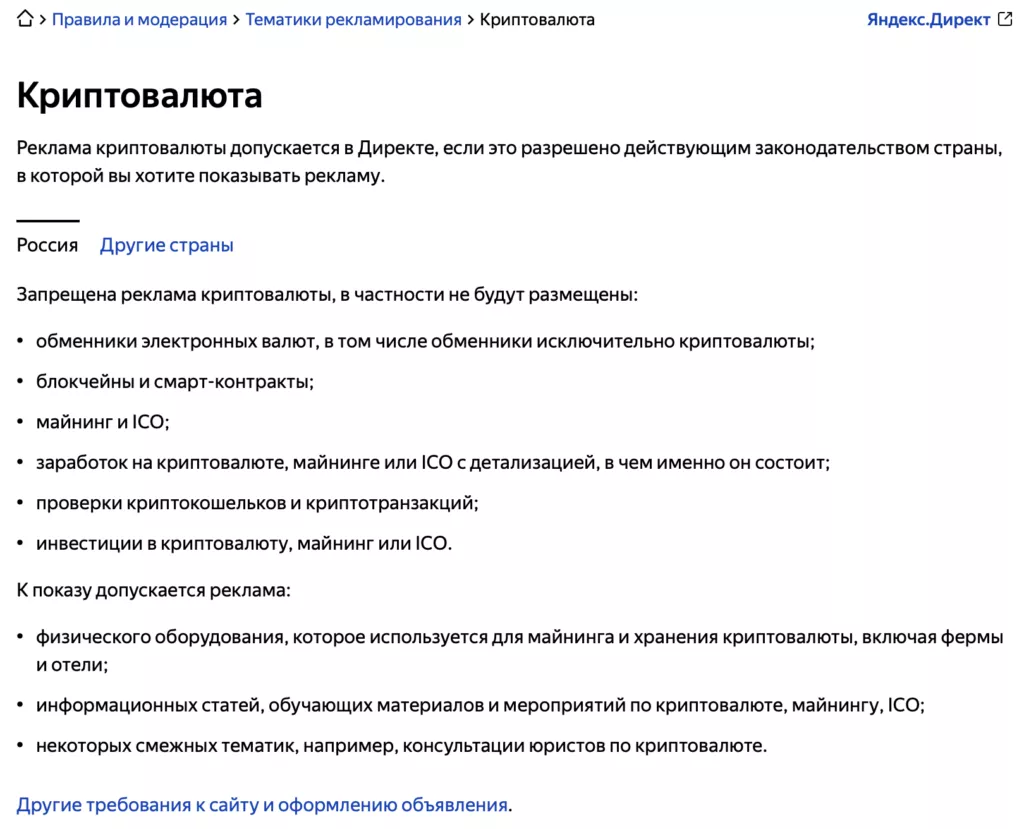
Данные: Яндекс Справка.

Согласно правилам «Яндекса», запрещена реклама:

  • обменников электронных валют, в том числе обменников исключительно криптовалют;
  • блокчейнов и смарт-контрактов;
  • майнинга и ICO;
  • заработка на криптовалюте, майнинге или ICO с детализацией, в чем именно он состоит;
  • проверок криптокошельков и криптотранзакций;
  • инвестиций в криптовалюту, майнинг или ICO.

При этом к показу допускается реклама:

  • физического оборудования, которое используется для майнинга и хранения криптовалюты, включая фермы и отели;
  • информационных статей, обучающих материалов и мероприятий по криптовалюте, майнингу, ICO;
  • некоторых смежных тематик, например, консультации юристов по криптовалюте.

Юрист Виктор Першиков в своем Telegram-канале пояснил, что закон «О рекламе» запрещает рекламу цифровой валюты и товаров (работ, услуг) в целях организации обращения и (или) обращения цифровой валюты.

«В текущей формулировке мы имеем запрет на рекламу всего чего угодно за исключением рекламы по купле-продаже майнеров, а также сторонних сервисов, типа консультаций (опять же, не по тому, как получить крипту или как ее обменять, а, например, юридических консультаций по крипторынку). С точки зрения трактовки пункта закона именно в таком широком виде его и будут трактовать рекламные площадки в РФ», — написал он.

Першиков также подчеркнул, что майнинговые пулы также не имеют право рекламировать свои услуги в России. При этом 8 августа президент РФ Владимир Путин подписал закон, позволяющий легализовать добычу криптовалют в стране.

«То есть работать можно, а рекламировать свои услуги нет. Класс, че. Интересно, стоит ли рассчитывать на какие-то комментарии, уточнения, подзаконные акты или это так же наивно, как ожидать альтсезона в 2024 году?», — добавил юрист.

В компании BitOK пожаловались, что под запрет попали в том числе проверки AML/KYT.

«AML-проверки направлены на поддержание безопасности, как активов граждан, так и государства в целом. Благодаря AML-проверкам пользователи из СНГ могут избежать блокировок на иностранных платформах. Казалось бы, нужно рассказывать людям о AML/KYT, но у “Яндекса” другое мнение на этот счет», — заявили специалисты.

Эксперты Cartesius считают, что «про контекстную рекламу всему крипторынку можно будет точно забыть». Они также рассказали, что некоторые СМИ и Telegram-каналы отказались рекламировать их юридический канал из-за упоминания в нем цифровых активов.

РФ узаконила майнинг: как это повлияет на отрасль

Ранее Путин назвал крипторынок «очень динамичным и перспективным направлением современной экономики».


Пов'язані матеріали

CPU Makes a Comeback to the Table, A $170 Billion "Power Seizure" Drama Begins

A new era is dawning for the server CPU (Central Processing Unit), driven by the shift from AI model training to large-scale reasoning and the rise of Agentic AI. This article explores how the CPU is reclaiming a central role in the AI data center. For years, the focus has been on the GPU (Graphics Processing Unit) for AI training. However, as AI moves to the inference and Agent phase—where tasks involve complex, multi-step reasoning, tool calls, and data management—the workload balance is flipping. Studies show CPUs now handle over 70% of the workload in Agentic AI, up from 10-30% in training. This is because Agent tasks generate massive intermediate data (KV Cache) that exceeds GPU memory, forcing it to be offloaded to the CPU's larger, more scalable memory pools. This increased importance is translating into market changes. Major players are taking note: NVIDIA launched its first standalone CPU line, Vera, based on ARM architecture and optimized for Agent performance. AMD doubled its server CPU market forecast to over $1200 billion by 2030. Analyst reports project the total server CPU market could reach $1700 billion by 2030, with AI-driven demand being a primary driver. Furthermore, the classic ratio of CPUs to GPUs in AI servers is rapidly changing, converging from 1:8 toward 1:1 for Agent deployments. This surge in demand has led to a rare industry-wide price increase of 10-15% for server CPUs from Intel and AMD, breaking a decade-long trend of "more performance for the same price." Demand is bifurcating into high-core-count CPUs for in-rack GPU support and moderate-core CPUs for standalone Agent task orchestration. In China, this global trend presents an opportunity for domestic CPU manufacturers like Hygon (海光信息) and Huawei Kunpeng, who are bolstered by both growing AI infrastructure needs and national policies promoting technological self-reliance ("xin chuang"). The maturity of their software ecosystems is also accelerating, evidenced by faster adaptation to new AI models. In conclusion, the narrative is shifting from a GPU-centric view to one where CPU-GPU synergy is critical. The CPU is no longer a peripheral component but a performance-defining bottleneck and a key growth driver in the AI hardware stack, opening a massive new market estimated in the hundreds of billions of dollars.

marsbit3 год тому

CPU Makes a Comeback to the Table, A $170 Billion "Power Seizure" Drama Begins

marsbit3 год тому

TechFlow Intelligence: AMD AI Director Publicly Criticizes Claude Code for "Becoming Dumber and Lazier", Trump Claims Full Ceasefire in Hormuz But Strait Still Has 80 Unexploded Mines

TechFlow Intelligence Report: This daily digest covers key developments in AI, crypto, hardware, and geopolitics. In AI, SK Telecom faces US export control scrutiny over its partnership with Anthropic, while a Gemini user reports being misled in a scam scenario, sparking safety debates. China's Z.AI launches the GLM-5.2 model, rivaling Claude Opus without NVIDIA chips. In crypto, Bithumb lists ReProtocol, and Upbit delists KernelDAO. On the hardware front, MIT researchers build a custom OS to study chips, ASML denies US claims its advanced lithography machines are in China, and Amazon considers selling its in-house AI chips. Apple's future A21 Pro chip may use TSMC's latest N2P process. Major tech issues include 10,000 GitHub repositories distributing malware and Apple patching a critical eavesdropping flaw in Beats earbuds. US stocks rise, led by semiconductors, with Intel surging 10.6%, while SpaceX falls 3.5%. Geopolitically, despite a US-Iran deal, the Strait of Hormuz remains risky with ~80 uncleared mines, stalling 80M barrels of oil on standby tankers. Iran postpones Switzerland talks, and Trump calls the agreement an "unconditional surrender." The report highlights a contrast: temporary geopolitical calm versus the ongoing, fundamental restructuring of tech supply chains and chip independence.

marsbit3 год тому

TechFlow Intelligence: AMD AI Director Publicly Criticizes Claude Code for "Becoming Dumber and Lazier", Trump Claims Full Ceasefire in Hormuz But Strait Still Has 80 Unexploded Mines

marsbit3 год тому

Торгівля

Спот
Ф'ючерси
活动图片