虚拟货币投资纠纷 通过民事诉讼有维权的希望吗?

币界网Опубліковано о 2024-08-15Востаннє оновлено о 2024-08-15

币界网报道:


虚拟货币的投资纠纷,想通过民事诉讼来维权,希望大吗?经常有小伙伴来问刘律相关的问题。下文,刘律将带你一文读懂:虚拟货币投资纠纷,归不归法院管?用什么案由来立案比较合适?如果法院不管的话,还有没有维权的希望?

一 虚拟币投资纠纷,要求还币,这事儿归法院管吗?

最近,有币圈的小伙伴张三来找刘律咨询:几年前,他的朋友李四跟他说,有个稳赚不赔的理财项目,想问张三借点币投进去。张三心想:反正自己手里的币放着也是放着,出于对朋友的信任,就转了几个比特币到李四的虚拟钱包地址里。双方约好:等张三要用币的时候,李四就帮他把币转手卖掉。这些币按当时的价格来算,加起来差不多有七八万人民币。

后来,比特币的价格涨到几十万人民币一个了,张三找到李四帮他出币,但是,由于李四操作不当,这些币其实早就亏没了,李四提出要按几年前的市场价折价赔给张三。张三就不同意了:比特币的价格相比几年前,都翻了好几倍,还按原来的价格还,这我怎么愿意?于是,张三来咨询刘律:在这种情况下,我想要李四把币还回来,用什么案由去法院立案比较合适呢?以及,法院真的管这事儿吗?

二 想诉对方还币,用什么案由去法院立案更合适

(一)民间借贷纠纷

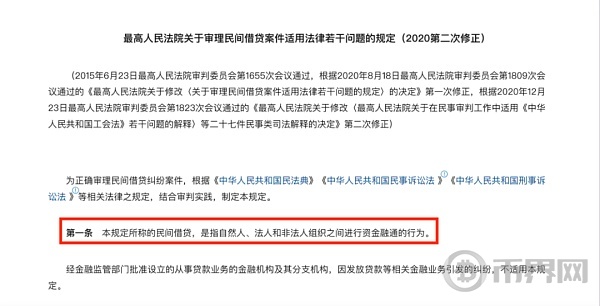
想诉对方还币,很多人可能第一反应是:俗话说“欠债还钱”,虽然要还的对象是虚拟币不是人民币,但是这不就是民间借贷嘛!关于这个看法,刘律当时就告诉张三:你要以借贷合同去法院立案,很难!因为,最高法在2020年《关于审理民间借贷案件适用法律若干问题的规定》中,第一条就规定:“本规定所称的民间借贷,是指自然人、法人和非法人组织之间进行资金融通的行为”。因此,人民币、港币、澳币、台币、外币及国库券等有价证券,能够成为民间借贷的标的物。

所以,在我国还没有明确定性虚拟币交易合法性地位的大环境下,你如果想把“借虚拟货币”的行为,认定成“资金融通”,是有点牵强的。再说了,你说是借币,你们有借条和银行转账记录吗?你只拿着转币记录去法院立案,说别人欠你币,要打借贷合同纠纷,这法院能同意吗?所以啊,以民间借贷为由,去起诉借币,法院多半是不给立案的。
那么,在这种情况下,张三还有什么办法能通过民事诉讼来维护自己的权益吗?在这里,我们给有相似经历的小伙伴支个招:根据我们的实务经验,你可以尝试以“返还原物纠纷”或者“委托合同纠纷”两个案由作为抓手。

(二)返还原物纠纷

返还原物纠纷,就是把虚拟币当成一种种类物来处理。由于虚拟货币作为商品在市场上具有交易价值,且大部分人获取虚拟货币的方式亦是通过金钱作为对价相互转让,因此虚拟货币具有经济价值。同时,虚拟货币可以通过建立电子钱包储存在公钥上,在能被任何人查询到的基础上,排除了除所有者外其他人对于虚拟货币的占有,而所有者又可以通过特定的私钥随时支付、转移其虚拟货币。因此,虚拟货币可以受所有者的支配,可以构成民法意义上的“物”。那么,根据《民法典》第235条规定,无权占有不动产或者动产的,权利人可以请求返还原物。如果是原物已经灭失的情况,虚拟货币的所有者可以请求对方返还同一种类物或者相应的折价款。

(三)委托合同纠纷

委托合同纠纷,也就是把你们之间的行为视作委托处置关系,那么理论上,作为委托人,你有权随时要求解除合同。但是需要注意的是,由于“虚拟币交易可能会增加金融炒作的风险”,按照《民法典》第153条,在实践中,你们的行为很可能被法院认定为“违背公序良俗而无效”。但是即使合同被认定为无效,根据《民法典》第157条的规定,合同被认定无效后,双方应当返还因无效民事行为取得的财产,不能返还的,折价返还。

刘律团队之前在广东就代理过一个以“委托合同纠纷”为案由,要求法院判还以太坊,最后获得胜诉的案子。该案件在二审阶段,广州中院也维持了原判。该案例也是自924通知之后,全国首例法院判还以太坊的案例。《赢了官司,虚拟币能不能执行?——刘磊律师办理首例支持还币并成功执行案》(点击查看原文)

三 去法院诉,是打“合同无效”还是打“解除合同”更合适?

既然有关虚拟货币交易的合同很可能因违背公序良俗被法院认定为无效,那么去法院起诉,是打 “合同无效”还是打“解除合同”更合适呢?我们认为:在“924通知”发布之后,目前绝大多数的公开判例都更倾向将“交易虚拟币”作为一种无效民事行为来看待。所以,相关案例也基本以“合同无效”来进行判决和认定。至于起诉的诉请里,用“合同无效”或“解除合同”其实都可以,由于“无效事由是否存在”是法院应当主动审查的事项,即使用“解除合同”起诉,法院在审理过程中发现合同存在无效情形的,也可以主动认定合同无效。

前文提到的,我们团队代理的全国首例法院判还以太坊的案件中,我们团队最初的诉讼请求是解除委托合同,之后结合具体案情提交了变更诉请,最后,诉争合同也确实被法院判定因违反公序良俗而无效了。法院依据《民法典》中对合同无效后处理方式的规定,判令被告返还原告相应的虚拟币,从客观上来看,我们主张的诉讼请求得到了支持。结合司法实践中其他虚拟货币合同纠纷的案例,我们尝试对裁判规则进行梳理,以此来洞悉司法机关对于虚拟货币合同的效力认定的态度

(一)主张合同无效

1.法院以交易行为损害公共利益为由认定合同无效

从刘思宇诉盛林林委托合同纠纷案【(2021)京03民终14106号】我们可以看到,二审法院认为案涉《资产管理顾问协议》因违反了“924通知”的有关规定,损害了社会公共利益,因此案涉《资产管理顾问协议》无效。而在丰复久信公司诉中研智创公司服务合同纠纷案【(2022)京03民终3852号】中,法院认为“挖矿”行为不仅与社会能源消耗相关,而其产生的比特币后续带来的一系列交易行为与金融秩序同样密切相关。因此,法院同样认定案涉“挖矿”合同损害社会公共利益,属于无效合同。

2.法院以交易行为或交易标的违反法律法规的强制性规定为由认定合同无效

贺亮芳、周杰买卖合同纠纷案【(2019)湘01民终6247号】中,法院依据公告的规定,认定当事人的帮呗、硒链网络虚拟货币买卖,违反了法律法规的强制性规定,应当确认无效。而在朱晓萍与张健香买卖合同纠纷案【(2018)苏05民终8325号】和李双江、黄淑敏买卖合同纠纷【(2021)粤04民终2401号】中,法院认为案涉虚拟货币不具有与货币等同的法律地位,不能且不应当作为货币在市场上流通使用,或由于案涉标的物本身的不合法性,相应买卖行为应当被禁止,因此案涉买卖合同为无效合同。

我们可以看到,损害公共利益违反法律法规强制性规定是虚拟货币交易合同无效的两大原因。若合同被认定为无效,则可能会避免复杂的解除合同程序。且法律后果明确,合同一开始就没有法律约束力,该路径对于案件的处理较为高效。但是,合同无效的证明难度较高。且若虚拟货币交易合同已经执行了一段时间,财产返还可能较为复杂。

(二)主张解除合同

也有一些法院,会认定虚拟货币买卖或委托合同是有效的。因此,会按照一般的民事合同的处理规则,去处理虚拟货币纠纷。在这样的情况下,我们主张解除合同,同样可以实现我们的诉讼请求。

如在朱瑞清与方海鹰买卖合同纠纷【(2020)京民终747号】和何红梅等与买卖合同纠纷【(2021)沪01民终11624号】案件中,两地的法院都认定案涉虚拟货币买卖合同是有效的。因此,法院按照《民法典》中“合同无法继续履行”的规则对纠纷进行了判决,对案涉合同进行了解除,让过错方退还款项或折价赔偿。但是我们要注意,由于虚拟货币在我国不具有法偿性和强制性等货币属性,哪怕是在虚拟货币合同是有效的情况下,不是中央银行发行或认可的数字货币,相关权益并不受法律保护。在李仁闯与许小梅买卖合同纠纷【(2020)苏01民终11023号】案中,许小梅以虚拟货币支付货款的行为未得到法院认可。

当前,我国法律法规并未禁止虚拟货币或代币的持有和合法流转,也未禁止私人之间正常交易虚拟货币。因此,虚拟货币的交易并不违反我国法律法规和相关政策的效力性、强制性规定,主张虚拟货币交易合同有效是具有合理性的。而虚拟货币交易合同有效,有利于按照约定好的合同条款或是《民法典》中对于合同的一般规则去处理纠纷,能够更高效、更合理地保护咱们的合法权益。并且,在合同有效的情况下,若对方当事人存在违约情况,咱们可以要求对方赔偿损失,以此来最大限度保护自身的权益,同时双方也有更大的协商空间来达成解除合同的协议。

在实务中,我们也发现,部分地方法院会回避虚拟货币合同效力的问题。在谭天与覃冬源买卖合同纠纷案中【(2020)琼民申305号】,一审认定案涉交易行为无效,而二审和再审都回避了案涉合同效力认定的问题。诚然,在当前对于虚拟货币交易的规定未十分完善的背景下,虚拟货币交易、委托合同的效力认定依旧是充满了争议。在处理虚拟货币合同纠纷时,我们应具体分析案情,区分合同的性质是虚拟货币交易还是虚拟货币委托投资?合同所涉虚拟货币或交易行为是否违反法律法规强制性规定或损害公共利益?这些问题对于我们选择“合同无效”或“解除合同”的路径是至关重要的,必须具体问题具体分析。

四 法院如果不给立案,真的一点维权希望都没有了吗?

如果按照上述路径,以“返还原物纠纷”或“委托合同纠纷”为由向法院起诉,法院仍然不予立案,就真的无法维权了吗?也不是!

(一)区法院不给立的,可以要《不予立案裁定书》,向中院申请复议

首先,根据《民事诉讼法》第126条规定,人民法院应当保障当事人依照法律规定享有的起诉权利。对符合本法第一百二十二条的起诉,必须受理。符合起诉条件的,应当在七日内立案,并通知当事人;不符合起诉条件的,应当在七日内作出裁定书,不予受理;原告对裁定不服的,可以提起上诉。因此,如果法院不予立案,你可以向受理的法院申请《不予立案裁定书》。如果对该裁定不服,还可以向上一级人民法院上诉。

(二)如果涉及刑事诈骗的,可以走刑事渠道维权

其次,如果对方向你借虚拟币的目的,就是想将你的币占为己有,根本不想还给你,即名为借币,实为骗币,那就可能构成刑事犯罪。这时候,当事人可以去公安机关报案,我们之前的公众号《“盗币”、“骗币”、“抢币”,立案难!委托律师终于成功刑事立案!》(点击查看原文)一文中提到过,公安机关并不能因为案情涉及“虚拟货币”,就可以不予立案。一方面,目前并没有明确的法律、行政法规认定虚拟货币交易系违法行为;另一方面,刑法与民法所保护和调整的法律关系有所不同,办案单位不能因为民事合同无效,或者民事诉讼未被法院受理,就否认刑事案件背后保护的法律关系。


Пов'язані матеріали

Standard Chartered Bank’s 50-Fold Fantasy: Predicting AAVE to Reach $3,500

Standard Chartered Bank has issued an optimistic research report predicting that the AAVE token could surge 50-fold to $3,500 by 2030. This forecast is based on the projection that the total value locked (TVL) in DeFi will grow 37x to approximately $2.7 trillion, driven by stablecoin expansion and the tokenization of real-world assets (RWA). The bank's model links Aave's potential valuation directly to its protocol revenue, which is primarily driven by net interest margins. The report highlights Aave's current dominant position, noting it captures over 80% of the net earnings ("protocol retained earnings") in the lending sector while holding only about half of its TVL. It also points to the recent launch of the Aave V4 architecture and a healthy revenue stream of $142 million in 2025 as positive fundamentals. Grayscale's separate analysis, applying traditional valuation metrics like DCF, concluded AAVE is currently undervalued. However, the article notes significant challenges. Aave's peer-to-pool lending model suffers from inherent capital inefficiency, with an estimated $52 million annual "deadweight loss" due to idle funds needed for liquidity buffers. This structural flaw was exposed during the April KelpDAO exploit, which locked a WETH pool at 100% utilization for days. Emerging protocols like Morpho, with more efficient point-to-point models, are cited as growing competitive threats. In summary, while institutional forecasts paint a macro picture of massive growth fueled by RWA adoption, Aave's path forward hinges on addressing its core structural limitations and competitive pressures within the evolving DeFi lending landscape.

链捕手54 хв тому

Standard Chartered Bank’s 50-Fold Fantasy: Predicting AAVE to Reach $3,500

链捕手54 хв тому

Tidal Investment: We Remain Bullish on the AI Industry Chain, But the Reasons Have Changed

Tidal Investment remains optimistic about the AI industry chain, but the rationale has shifted. The market narrative has changed. While recent large-scale IPOs (e.g., SpaceX) and major fundraising plans by tech giants like Alphabet and Meta have caused some nervousness, this isn't a sign of an AI peak. The focus has moved from the initial question of AI's viability to the sustainability of massive investment cycles. The key players—primarily the major cloud providers—are not slowing down; their capital expenditure (Capex) guidance for 2026 has been increased across the board (e.g., Alphabet to $180B, Amazon to $200B). This investment cycle is proving resilient and difficult to stop. Unlike traditional hardware cycles, current AI Capex is distributed across multiple physical layers—computing, memory, networking, and critically, power infrastructure. Bottlenecks are shifting from chips to elements like electricity, transformers, and cooling systems, which have much longer lead times and cannot be easily pre-built like fiber optics during the dot-com bubble. Supply chain data (e.g., Eaton's 240% YoY data center orders) confirms this broad-based, project-driven expansion. Market concerns are acknowledged but viewed differently. First, while Capex growth currently outpaces revenue growth, raising ROI questions, this mirrors the early scaling phase of cloud computing itself. A change in view would require concrete signals like downward Capex revisions or missed AI product targets, which haven't materialized by mid-2026. Second, comparisons to the 2000 dot-com bust are flawed. That crash was driven by a massive, parallel oversupply of cheap capacity (fiber). The current cycle faces *supply constraints* in critical, capital-intensive physical infrastructure that cannot be overbuilt as easily. In conclusion, the wave of fundraising reflects the next, more complex act of the AI story. Physical bottlenecks and sustained high Capex plans suggest this is not the finale but an ongoing, capital-intensive build-out phase. The script has changed, but the play is far from over.

marsbit1 год тому

Tidal Investment: We Remain Bullish on the AI Industry Chain, But the Reasons Have Changed

marsbit1 год тому

Tidal Investment: We Remain Bullish on the AI Industry Chain, But for Different Reasons Now

Tidal Investments remains optimistic about the AI industry chain, but the rationale has shifted. The market is concerned about massive concurrent fundraising by tech giants like SpaceX, OpenAI, Alphabet, and Meta, fearing an AI peak. However, the authors argue this signals the next act of AI development, not its end. Capital expenditure (Capex) from major cloud providers (Alphabet, Amazon, Meta, Microsoft, Oracle) continues to surge aggressively into 2026. This investment cycle is more resilient than past hardware cycles due to its scale and complexity. Bottlenecks have shifted from chips to critical physical infrastructure like power grids, transformers, cooling, and data center construction—areas with long lead times and limited capacity for rapid expansion. Supply chain data (e.g., Eaton's orders) confirms substantial, tangible progress. Key market concerns are addressed: 1. **ROI vs. Capex Growth**: While Capex growth outpaces revenue, the authors note cloud giants have historically overcome similar phases through scale. The cycle will only be in danger if Capex guidance is cut, orders are canceled, or AI product demand falters—none of which are currently observed. 2. **Comparison to the 2000 Dot-com Bubble**: Unlike the telecom bubble, where cheap, oversupplied fiber crashed prices, AI infrastructure (especially power) is constrained, customized, and subject to lengthy approvals, making a similar supply glut and crash unlikely. In conclusion, the wave of fundraising reflects the immense, ongoing capital needs for AI's next phase, constrained by slow-moving physical bottlenecks. The AI cycle is not over; the script has simply changed.

链捕手2 год тому

Tidal Investment: We Remain Bullish on the AI Industry Chain, But for Different Reasons Now

链捕手2 год тому

Grayscale: These 15 Profitable Crypto Protocols Are Severely Undervalued

Grayscale Research identifies 15 top-revenue crypto protocols trading at significant valuation discounts, with many at single-digit or even 1x revenue multiples. Protocols like Pump.fun, PancakeSwap, and Meteora have market capitalizations roughly equal to their annual revenue. The report argues these financially-focused protocols (DEXs, lending, staking) are fundamentally undervalued and could benefit from the potential passage of the CLARITY Act, expected as soon as next month. This legislation aims to clarify digital asset regulation, potentially reducing institutional barriers and driving on-chain activity. The analysis breaks down the protocols into three groups: the "1x Club" (market cap ≈ revenue), mid-tier protocols with 3-9x multiples (e.g., Aave, Lido, Jupiter), and high-multiple protocols like Hyperliquid (15x) and Uniswap (37x), where valuation reflects future potential rather than current cash flows. Grayscale applies a traditional DCF model to Aave, suggesting a one-year price target of ~$175, representing ~130% upside from current levels. The report notes a risk-off macro environment since the Iran conflict has further compressed valuations, creating a potential entry window. The conclusion highlights that while the valuation data presents an intriguing opportunity, the investment thesis is contingent on the CLARITY Act's passage and subsequent institutional capital flows. Investors are cautioned to consider Grayscale's inherent conflict of interest as a crypto asset manager with products tied to these assets.

marsbit2 год тому

Grayscale: These 15 Profitable Crypto Protocols Are Severely Undervalued

marsbit2 год тому

Торгівля

Спот
Ф'ючерси
活动图片