适合本轮牛市布局的板块:Memecoins、Layer2

币界网Опубліковано о 2024-08-14Востаннє оновлено о 2024-08-14

币界网报道:

自加密市场诞生以来,它一直是创新的温床,新应用、平台和趋势层出不穷。在这种动态市场中,每天都会有新的发展出现,因此保持警惕非常重要,其中包括 11 月的美国大选,这可能对加密货币立法至关重要。

两个有望引领本轮牛市的趋势包括 Meme Coins 和 Layer 2Token。每个趋势都提供了独特的机会和可观的回报潜力。

1、Memecoin 

Memecoin,它们是源自网络 Meme 或病毒式在线趋势的加密货币。与传统加密货币不同,迷因币通常没有特定的应用场景或技术创新,而是主要从其社区和社交媒体影响力中获得价值。尽管 Memecoin 的性质充满趣味性,但在这一年中,像 Dogecoin 和 Shiba Inu 等 Memecoin 已经获得了显著的市场价值和吸引力。

Memecoin 的流行在于其社区驱动的方式以及由于病毒式传播带来的巨大回报潜力。这使得 Memecoin 成为高度投机性的投资,这也是为什么它们在今年上半年占据了主导地位,使其成为下一轮牛市之前值得投资的最佳加密趋势之一。通常,当加密市场繁荣时,迷因币也会获得关注。以下是目前发展的比较好的 Memecoin。

1)Dogecoin 

Dogecoin,它可能是所有 Memecoin 中最著名的一种。实际上,DOGE 是一种开源、对等的数字货币,近年来获得了极大的流行,目前是全球第九大加密货币,按市值计算。

DOGE 最初于 2013 年作为一个玩笑创立,被认为是原始的迷因币。它已经发展成为最知名的加密货币之一,部分原因是受到了名人和加密爱好者的支持。DOGE 庞大而热情的社区,加上其在支付和打赏中的逐步采用,持续推动着其流行和价值。

DOGE 的一个著名支持者是 X 平台的首席执行官Elon Musk。他在 Twitter 上公开表示支持这款加密货币,甚至将其推荐为一个合法的支付选项,这对其市场价格的上涨起到了很大的促进作用。

在价格走势方面,DOGE 年初至今的涨幅仅为 6.6%,而一年回报率接近 29%。然而,它的交易价格仍低于一年来的最高点 0.229 美元,远低于历史最高价 0.7316 美元。
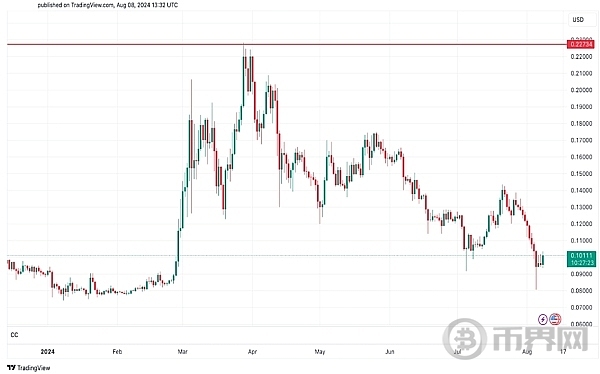
1zbUw42WgIoF7G7yfN6gk2LS2nKZI5s4nzPQJr0Z.jpeg

DOGE 的市值接近 150 亿美元,尽管存在许多怀疑,DOGE 仍然是目前最值得购买的 Memecoin 之一。

2、Layer 2 Token 

Layer 2Token 是另一个值得关注的加密货币趋势,为下一轮牛市提供了极大的潜力。在过去一年中,基于 Layer 2 技术构建的加密应用获得了巨大的流行,这主要得益于该技术解决了许多标准区块链网络的问题。

Layer 2 技术基本上指的是在现有区块链网络(Layer 1)之上构建的解决方案,以提升可扩展性和交易速度。这些解决方案,如 Rollups 和状态通道,旨在解决 Layer 1 区块链的局限性,比如高费用和慢交易速度,同时不妥协于安全性或去中心化。这项技术对区块链应用的大规模采用至关重要,因为它提升了用户体验并降低了成本。

1)Polygon 

Polygon(原名 Matic Network)是一个用于创建和连接与以太坊兼容的区块链网络的协议和框架。作为 Layer 2 解决方案,它旨在提高以太坊区块链的可扩展性、速度和成本效益。它提供了一个强大的平台,用于构建和连接以太坊兼容的区块链网络。

Polygon 通过处理以太坊主链的交易并在以太坊上最终确认这些交易,从而提高了交易吞吐量。这减少了拥堵,并降低了燃料费用,这是其他加密货币平台面临的主要问题之一。

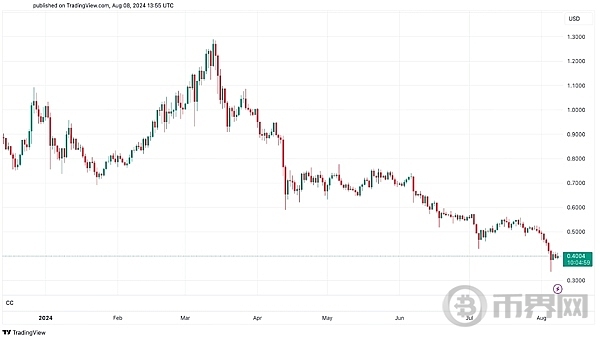
由于 Polygon 低费用、快速交易时间以及广泛的开发者支持,使其成为去中心化应用(dApps)和 DeFi 项目的热门选择。截至目前,它是第 21 大加密货币,市值略高于 40 亿美元。

在价格表现方面,Polygon 的表现不尽如人意。该币种的年初至今(YTD)跌幅为 -58%,一年跌幅为 -41%。然而,对于像 Polygon 这样已建立的项目来说,这可能是一个买入的机会。
irYG8XSDzgCEpHXyeodTNOkqzlbFfSWy2gds0l9n.jpeg

Polygon 的侧链结构专门设计用以支持以太坊生态系统内的各种去中心化金融(DeFi)协议。虽然 Polygon 目前仅支持以太坊主链,但网络计划根据社区建议和共识扩展对其他基础链的支持。

随着这种扩展,Polygon 将成为一个去中心化的、兼容的 Layer 2 区块链平台。这使得 Polygon(MATIC)无疑成为了最佳的投资选择之一,特别是对于想要在下一个牛市中加入 Layer 2 Token 趋势的投资者来说。


Пов'язані матеріали

In-Depth Report on the On-Chain Lending Market: When Off-Chain Credit Meets On-Chain Liquidation

The on-chain lending market has evolved from a peripheral DeFi niche into core financial infrastructure. As of early 2026, total value locked (TVL) in on-chain lending protocols has reached $64.3 billion, accounting for 53.54% of total DeFi TVL, making it the largest and most mature vertical within decentralized finance. Aave dominates the sector with approximately $32.9 billion in TVL, commanding nearly half of the market—a leadership position that is unlikely to be challenged in the foreseeable future. However, the path of on-chain lending forward is not without risk. Liquidation cascades, credit defaults, and cross-chain vulnerabilities remain systemic threats hanging over the industry. At the same time, a deeper structural transformation is underway: on-chain lending is shifting from a “leverage tool for crypto-native users” to a “compliant gateway for institutional capital”. The scale of RWA (Real World Asset) lending has surpassed $18.5 billion, with U.S. Treasuries and government securities increasingly serving as core collateral. Institutional capital inflows are reshaping both the user base and risk appetite of the sector. This report systematically analyzes the evolution of on-chain lending definitions, competitive dynamics, core risks, and future trends, providing a comprehensive industry outlook for investors and trade practitioners. Key findings suggest that the “one dominant player with several strong challengers” structure will persist in the short term, while fixed-rate lending, compliant collateral, and institutional credit underwriting will define the next phase of competition. For investors focused on DeFi infrastructure, three key opportunity tracks stand out, namely, the Aave ecosystem (Morpho, Spark), RWA lending protocols (Ondo, Maple) and fixed-rate innovation (Notional, Pendle).

HTX Learn58 хв тому

In-Depth Report on the On-Chain Lending Market: When Off-Chain Credit Meets On-Chain Liquidation

HTX Learn58 хв тому

Fu Peng's First Public Speech in 2026: What Exactly Are Crypto Assets? Why Did I Join the Crypto Asset Industry?

Fu Peng, a renowned macroeconomist and now Chief Economist at New火 Group, delivered his first public speech of 2026 at the Hong Kong Web3 Festival. He explained his perspective on crypto assets and why he joined the industry, framing it within the context of macroeconomic trends and financial evolution. Fu emphasized that crypto assets are transitioning from an early, belief-driven phase to a mature, institutionally integrated asset class. He drew parallels to the 1970s-80s, when technological advances (like computing) revolutionized traditional finance, leading to the rise of FICC (Fixed Income, Currencies, and Commodities). Similarly, current advancements in AI, data, and blockchain are reshaping finance, with crypto assets becoming part of a new "FICC + C" (C for Crypto) framework. He noted that institutional capital, including traditional hedge funds, avoided early crypto due to its speculative nature but are now engaging as regulatory clarity emerges (e.g., stablecoin laws, CFTC classifying crypto as a commodity). Fu predicted that 2025-2026 marks a turning point where crypto becomes a standardized, financially viable asset for diversified portfolios, akin to commodities or derivatives in traditional finance. Fu defined Bitcoin not as "digital gold" in a simplistic sense but as a value-preserving, financially tradable asset. He highlighted that crypto's future lies in regulated, institutional adoption, moving away from retail-dominated trading. His entry into crypto signals this maturation, where traditional finance integrates crypto into mainstream asset management.

marsbit2 год тому

Fu Peng's First Public Speech in 2026: What Exactly Are Crypto Assets? Why Did I Join the Crypto Asset Industry?

marsbit2 год тому

Justin Sun Sues Trump Family: What $75 Million Bought Was Only a Blacklist

Justin Sun, founder of Tron, has filed a lawsuit in federal court against World Liberty Financial (WLF), alleging he was made the "primary target of a fraudulent scheme" after investing $75 million. Sun claims the investment secured him an advisor title and WLFI tokens, which were later frozen by WLF, causing "hundreds of millions in losses." The dispute began in late 2024 when Sun's investment helped revive WLF's struggling token sale, which ultimately raised $550 million. Shortly after, the SEC dropped its lawsuit against Sun following Donald Trump's inauguration. However, relations soured when Sun refused WLF's demands for additional funding. In August 2025, WLF added a "blacklist" function to its smart contract, allowing it to unilaterally freeze tokens. Sun's holdings, worth approximately $107 million, were frozen, and he was threatened with token destruction. The lawsuit highlights WLF's structure, which directs 75% of token sale profits to the Trump family, who had earned $1 billion by December 2025. WLF's CEO is Zach Witkoff, son of U.S. Middle East envoy Steve Witkoff. The project faces scrutiny for opaque operations, including a controversial loan arrangement on the Dolomite platform, co-founded by a WLF advisor. Despite Sun's history with the SEC, the case underscores centralization risks within DeFi, as WLF controls governance and holds powers to freeze assets arbitrarily. Sun's tokens remain frozen as legal proceedings begin.

marsbit2 год тому

Justin Sun Sues Trump Family: What $75 Million Bought Was Only a Blacklist

marsbit2 год тому

Торгівля

Спот
Ф'ючерси
活动图片