2024年的大牛市有4种加密货币将会大放异彩

币界网Опубліковано о 2024-08-13Востаннє оновлено о 2024-08-13

币界网报道:

宏观方面

外围环境越来越复杂,外部环境的紧张是资本市场资金不确定性的重要原因,让我们来看一下全球范围内的潜在危机或黑天鹅的情况。首先中东紧张局势升级,其次,俄乌战争局势紧张。

关于ETF,8月12日美国比特币现货ETF净流入2700万美元,以太坊现货ETF净流入490万美元,美资金面表现仍平淡,观望情绪较重。

链上方面,资金流入流出规模,目前链上资金每月净流入120亿美元,长期持有者每月净流入16亿美元,ETF每月净流入28亿美元,可以看到ETF只占比特币市场资金流入的20%,所以说ETF虽然很重要,但其并不是币价上涨的重要驱动因素。

行情方面

比特币继续右侧确认走势,昨天虽然收了阳线,但并不是最希望看到的形态,这种K线形态意味着市场仍存在着较为激烈的供需博弈,并不是我们最想看到的供应匮乏形态,所以还需要测试。强势的标志仍是站稳63000上方,大级别仍是高位震荡,中继结构,耐心等走出来。

ETH联动走势,汇率对强势的标志是站上0.05。

山寨方面,大部分代币在超跌反弹后开始联动调整,宏观来讲,在比特币和以太坊创新高之前,山寨币很难开启大幅上涨的行情,也就是我们所说的山寨季,所以,现阶段仍是山寨币筑底和建仓的时间,赚钱效应差,需要耐心。
e8f14f008aba7de236843bf1ab6a6805.png

2024大牛市将会大放异彩的4种100倍加密货币!

1.SUI

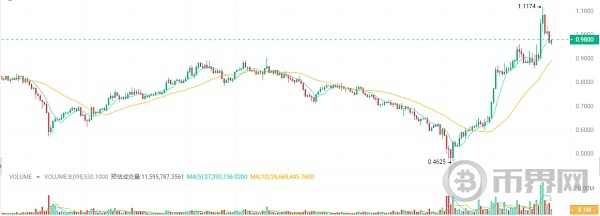
Sui Crypto 是一个为全球采用而构建的尖端第一层区块链平台。它使用新颖的对象中心数据模型和安全的 Move 编程语言来解决当前区块链中存在的低效率问题。此外,Sui 通过消除常见的区块链障碍来优先考虑用户体验。例如,zkLogin、赞助交易和可编程交易块等创新使 Sui 的应用程序更易于访问和用户友好。
0fcccbc29ab13063c3b379c69deb19e3.png

此外,Sui 的架构支持低延迟交易,费用稳定,吞吐量高,执行并行。其面向对象的设计使开发人员能够根据自己的需求创建对象,确保网络范围内的兼容性和深度可组合性。此外,独特的功能包括并行交易处理和绕过共识的快速终结。网络的安全性依赖于委托权益证明 (PoS) 机制,Narwhal 和 Bullshark 等协议可以有效地管理交易。

2.COMP

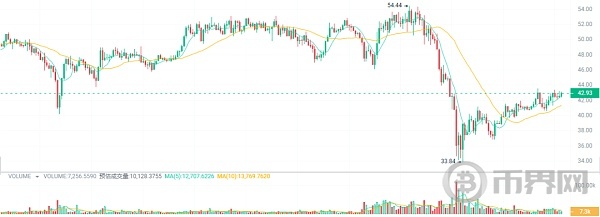
Compound 是一种 DeFi 借贷协议,用户通过将加密货币存入各种池子来赚取利息。存入代币后,用户将收到 cTokens。这些 cTokens 代表他们的权益,可以随时兑换成原始加密货币。随着时间的推移,这些 cTokens 的价值会增加,允许用户赎回比最初存入的更多的基础资产。这种机制将利息分配给用户。
15dace80f67306f22a48dbb5b66ded9a.png

另一方面,借款人可以通过将抵押品存入任何 Compound 池来获得贷款。最高贷款价值比 (LTV) 范围为 50% 至 75%,具体取决于抵押品类型。此外,利率各不相同,如果抵押品价值低于某个阈值,借款人将面临自动清算的风险。此外,该平台的治理由 COMP 代币持有者推动,允许社区提出变更并进行投票。同时,安全性通过智能合约来维护,智能合约管理 cToken 交易并强制执行超额抵押。

3.RENDER

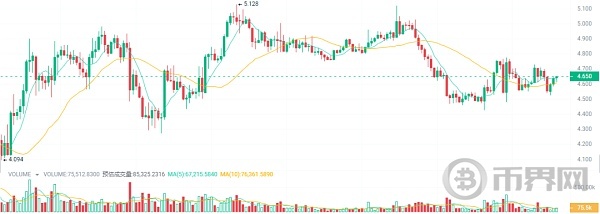
Render 是一个基于以太坊区块链的分布式 GPU 渲染网络。它旨在将需要 GPU 计算能力的艺术家和工作室与愿意出租其 GPU 能力的挖矿合作伙伴联系起来。近期,Render 经历了波动。不过,多项指标表明可能很快出现复苏。尽管近期有所下跌,但当前的阻力位和支撑位表明价格区间相对稳定,从而为潜在的上涨提供了坚实的基础。
73b3c30899780004c4229f6a7617cd75.png

未来三个月,如果看涨势头增强,RENDER 可能会上涨 20% 以上。相对强弱指数 (RSI) 等关键技术指标暗示可能出现逆转,标志着这一时期是潜在收益的关键时期。因此,随着市场情绪向好转变,投资者可能会看到大幅反弹。

4.ONDO

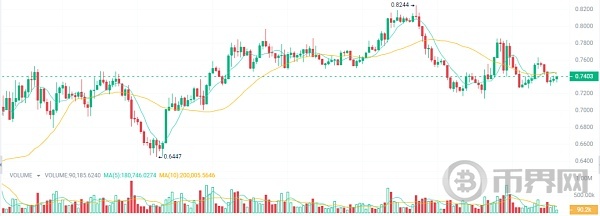
Ondo Finance 是一种去中心化金融协议,利用区块链技术提供机构级金融产品和服务。其目标是成为一家开放、无需许可、去中心化的投资银行。尽管主要代币普遍下跌,但 Ondo 代币 (ONDO) 的交易价格在 0.54 美元至 0.94 美元之间,表明具有增长潜力。此外,如果 ONDO 突破其最近的阻力位 1.19 美元,则可能上涨 100%。
b80487085098e34bc70d63c7b3f59bc2.png

近日,Aptos基金会宣布将在Aptos区块链上推出Ondo Finance的收益型稳定币Ondo US Dollar Yield(USDY)。根据公告,非美国居民将可以使用Aptos区块链来购买USDY。
Пов'язані матеріали

Autonomy or Compatibility: The Choice Facing China's AI Ecosystem Behind the Delay of DeepSeek V4

DeepSeek V4's repeated delay in early 2026 has sparked global discussions on "de-CUDA-ization" in AI. The highly anticipated trillion-parameter open-source model is undergoing deep adaptation to Huawei’s Ascend chips using the CANN framework, representing China’s first systematic attempt to run a core AI model outside the CUDA ecosystem. This shift, however, comes with significant engineering challenges. While the model uses a MoE architecture to reduce computational load, it places extreme demands on memory bandwidth, chip interconnects, and system scheduling—areas where NVIDIA’s mature CUDA ecosystem currently excels. Migrating to Ascend introduces complexities in hardware topology, communication latency, and software optimization due to CANN’s relative immaturity compared to CUDA. The move highlights a broader strategic dilemma: short-term compatibility with CUDA offers practical benefits and faster adoption, as seen in CANN’s efforts to emulate CUDA interfaces. Yet, long-term over-reliance on compatibility risks inheriting CUDA’s limitations and stifling native innovation. If global AI shifts away from transformer-based architectures, strict compatibility could lead to technological obsolescence. Despite these challenges, DeepSeek V4’s eventual release could demonstrate the viability of a full domestic AI stack and accelerate CANN’s ecosystem growth. However, true technological independence will require building an original software-hardware paradigm beyond compatibility—a critical task for China’s AI ambitions in the next 3-5 years.

marsbit9 хв тому

Autonomy or Compatibility: The Choice Facing China's AI Ecosystem Behind the Delay of DeepSeek V4

marsbit9 хв тому

How Blockchain Fills the Identity, Payment, and Trust Gaps for AI Agents?

AI Agents are rapidly evolving into autonomous economic participants, but they face critical gaps in identity, payment, and trust infrastructure. They currently lack standardized ways to prove who they are, what they are authorized to do, and how they should be compensated across different environments. Blockchain technology is emerging as a solution to these challenges by providing a neutral coordination layer. Public ledgers offer auditable credentials, wallets enable portable identities, and stablecoins serve as a programmable settlement layer. A key bottleneck is the absence of a universal identity standard for non-human entities—akin to "Know Your Agent" (KYA)—which would allow Agents to operate with verifiable, cryptographically signed credentials. Without this, Agents remain fragmented and face barriers to interoperability. Additionally, as AI systems take on governance roles, there is a risk that centralized control over models could undermine decentralized governance in practice. Cryptographic guarantees on training data, prompts, and behavior logs are essential to ensure Agents act in users' interests. Stablecoins and crypto-native payment rails are becoming the default for Agent-to-Agent commerce, enabling seamless, low-cost transactions for AI-native services. These systems support permissionless, programmable payments without traditional merchant onboarding. Finally, as AI scales, human oversight becomes impractical. Trust must be built into system architecture through verifiable provenance, on-chain attestations, and decentralized identity systems. The future of Agent economies depends on cryptographically enforced accountability, allowing users to delegate tasks with clearly defined constraints and transparent operation logs.

marsbit1 год тому

How Blockchain Fills the Identity, Payment, and Trust Gaps for AI Agents?

marsbit1 год тому

Six Years Since DeFi Summer, How Will the Decentralized Financial Revolution Continue?

In 2026, the DeFi sector faces a severe trust crisis following a series of high-profile security breaches, including a $292 million theft from KelpDAO’s rsETH, a $2.85 million exploit at Drift Protocol due to permission vulnerabilities, and a $14.9 million lending failure at Venus Protocol. These incidents triggered a withdrawal of approximately $10 billion from DeFi over a single weekend, highlighting systemic risks beyond smart contract flaws—such as governance, cross-chain complexity, and operational weaknesses. Despite these challenges, on-chain finance continues to grow, with capital shifting toward safer, regulated products. Stablecoins like USDT ($185B) and USDC ($78B) have reached a combined market cap of $263 billion, while tokenized U.S. Treasuries surged to $10.93 billion. Visa’s growing USDC settlement volume, now annualized at $3.5 billion, signals increasing institutional adoption of compliant blockchain-based financial infrastructure. The competition for the future of on-chain finance is intensifying. While native DeFi struggles with trust and capital outflows, regulated products—stablecoins, tokenized assets, and ETFs—are gaining dominance by offering programmable, 24/7 settlement without high DeFi risks. Over 80 crypto projects shut down in Q1 2026, reflecting dwindling patience for speculative ventures. The core challenge for open DeFi is to rebuild trust and demonstrate irreplaceable value—or risk ceding its role as the primary entry point to on-chain finance.

marsbit1 год тому

Six Years Since DeFi Summer, How Will the Decentralized Financial Revolution Continue?

marsbit1 год тому

Торгівля

Спот
Ф'ючерси
活动图片