探索MPC钱包在DeFi中的安全性及应用

币界网Опубліковано о 2024-08-13Востаннє оновлено о 2024-08-13

币界网报道:

随着去中心化金融(DeFi)的迅速发展,MPC(多方计算)钱包在Web3用户中越来越受欢迎。本文将深入探讨MPC协议的适用场景以及如何安全使用MPC钱包,以帮助用户更好地理解和使用这一技术。

MPC钱包与智能合约钱包的对比

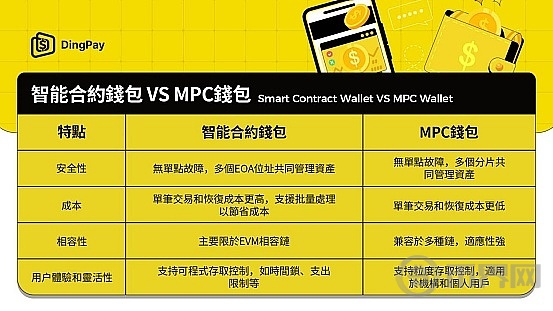
作为两大备受关注的非托管钱包,智能合约钱包(包括多签钱包)和MPC钱包各有优缺点。智能合约钱包凭借其可编程性和灵活性,吸引了许多去中心化社区用户的青睐,而MPC钱包则因其在兼容性、隐私性和低成本方面的优势,成为了机构客户的首选。
0aAJHUjHxRcAjCW4LgLo7k8RADi5EmCGdmcmKmNd.png 

在智能合约钱包中,用户可以定义不同的策略,如设置时间锁、支出限制和自动化执行等,提供了高度的灵活性和用户控制。然而,这种灵活性也带来了合约安全风险,特别是当智能合约未经过充分审计时。相比之下,MPC钱包利用分片技术,将资产管理分散到多个节点,从而消除了单点故障的风险。同时,MPC钱包在交易成本和恢复成本方面更具优势,且兼容多种区块链,适应性强。

增强MPC钱包的安全性方案

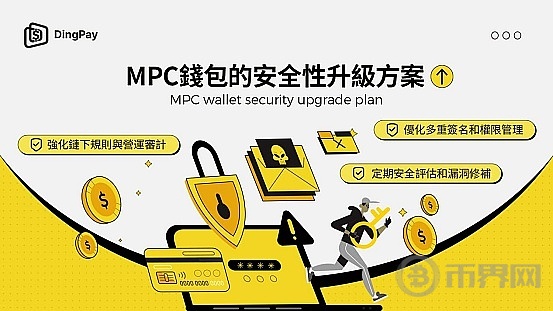
尽管MPC钱包在安全性方面表现出色,但仍需采取额外措施来确保其安全性。以下是一些增强MPC钱包安全性的建议:

1. 强化链下规则和运营审计:确保每个分片的操作都在严格的审计规则下进行,防止任何单个分片的恶意行为。通过链下规则的严格管理,可以大大提高系统的安全性和可靠性。

2. 多重签名和权限管理:引入多重签名和粒度权限控制,确保只有授权的操作才能进行。这不仅可以提高安全性,还可以为不同用户提供更精细的权限管理,满足不同场景的需求。

3. 定期安全评估和漏洞修补:定期对MPC协议和实现进行安全评估,及时修补漏洞,保持系统的安全性。通过不断的安全评估和改进,可以有效防范潜在的安全威胁。

这些措施可以帮助用户在使用MPC钱包时获得更高的安全保障,减少潜在的风险。
 TW8aZ6L64vKX8xBLPngdAWcnruP1ya4Q7zLWgI6m.png

MPC钱包与AMM的结合

MPC钱包可以与自动化市场制造者(AMM)结合,提供更高效和安全的交易体验。以下是MPC钱包与AMM结合的一些优势:

1. 提高交易隐私性:利用MPC的隐私保护特性,用户在AMM平台上的交易行为可以保持私密,防止交易策略泄露。MPC钱包的链下签名和密钥管理方式,使得交易过程更加隐秘,不易被外界监测。

2. 增强交易安全性:通过多重签名和分片管理,提高交易过程中的安全性,防止单点故障和恶意攻击。MPC钱包的分片技术,可以将交易签名分散到多个节点进行,进一步提高交易的安全性。

3. 优化交易成本:利用MPC的低交易成本特性,用户可以在AMM平台上以更低的成本进行频繁交易,提高交易效率。相比智能合约钱包,MPC钱包的交易成本更低,特别适合高频交易的场景。

结论

从上述对比中可以看出,MPC钱包和智能合约钱包各自解决了单点故障问题,提高了用户资产安全并降低了使用复杂度。MPC钱包以其兼容性、隐私性和低成本的优势,成为许多机构客户的首选方案,而智能合约钱包则在功能性、可编程性和公开透明性方面深受去中心化社区的喜爱。

通过强化安全措施和与AMM结合,MPC钱包在DeFi生态中的应用前景广阔,有望为用户提供更安全、高效和隐私保护的金融服务。通过持续的技术创新和改进,MPC钱包将在未来的区块链和DeFi生态中发挥越来越重要的作用。DingPay的MPC技术正在研发中,未来也将兼容智能合约钱包的优势,进一步提升用户体验和安全性。


Пов'язані матеріали

Ethereum's Next Stop Glamsterdam: The Core Upgrades You Must Know

The Glamsterdam upgrade, scheduled for late 2026, is a major Ethereum hard fork combining the Amsterdam execution layer and Glasgow consensus layer updates. Its primary goal is not simply increasing throughput but restructuring Ethereum's block production, validation, and resource pricing to enable future scaling. Key technical changes include **EIP-7732 (ePBS)**, which formally enshrines proposer-builder separation into the protocol. This decouples consensus and execution tasks, extending the execution payload propagation window to ~9 seconds. This provides more time for node verification, allowing for safer increases in block capacity (Gas limit) in the future. Another core component is **EIP-7928 (Block-Level Access Lists - BAL)**. It mandates a list of all state accessed within a block, moving this feature from an optional transaction-level (EIP-2930) to a mandatory block-level requirement. This explicit access list enables client optimizations like parallel disk reads and state root computations, paving the way for parallel execution. To manage long-term state growth, **EIP-8037** increases the cost of creating new state (e.g., accounts, storage slots), separating the pricing of permanent database bloat from temporary computation. This allows execution capacity to scale more aggressively without causing state size to explode proportionally. The planned upgrade bundle includes around 10 EIPs categorized into: 1) Core protocol restructuring (ePBS, BAL), 2) Resource pricing adjustments (state costs, calldata costs), and 3) EVM/developer improvements. Several other EIPs, including those potentially improving staker exit liquidity (EIP-8061, EIP-8080), are under consideration. The technical development coincides with significant personnel changes within the Ethereum Foundation's Protocol team. The Foundation's official communications frame this as part of a broader shift towards a "coalition of organizations" working on the Ethereum roadmap, citing new entities like ethlabs and the Ethereum Economic Zone. In summary, Glamsterdam represents a foundational re-engineering of Ethereum's block pipeline and economic model—focusing on ePBS, BAL, and multi-dimensional resource pricing—to prepare the network for sustainable, high-throughput scaling in the years ahead.

Foresight News8 хв тому

Ethereum's Next Stop Glamsterdam: The Core Upgrades You Must Know

Foresight News8 хв тому

The Ethereum Foundation Has Split?! An In-depth Look at Ethlabs' "Bright Future"

"Ethereum Foundation Splits? Understanding Ethlabs and Its 'Bright Future'" Former Ethereum Foundation members Ansgar Dietrichs, Barnabé Monnot, Caspar Schwarz-Schilling, Josh Rudolf, and Julian Ma have announced the launch of Ethlabs, an independent non-profit research and development lab. Announced on June 22nd, the initiative comes amidst discussions about the need for new organizational structures within the Ethereum ecosystem, a point highlighted by Bankless founder David Hoffman. Ethlabs' mission is to establish Ethereum as the foundational settlement layer for the global economy. The organization positions itself as a bridge connecting frontline developers, applications, and user needs with the core protocol. It aims to translate real-world demands into protocol improvements, industry standards, and deployable products. The founding team brings significant expertise: Dietrichs and Monnot are highly cited researchers in areas like Proposer-Builder Separation (PBS) and MEV, while Schwarz-Schilling, Rudolf, and Ma contribute backgrounds in economic modeling, consensus research, and applied cryptography. Initial supporters include BitMine, a major corporate ETH treasury; Sharplink, another treasury firm; and Consensys founder Joe Lubin in a personal capacity. Community backers include figures like Uniswap's Hayden Adams and Base's Jesse Pollak. The timing coincides with internal Ethereum Foundation discussions about "spinout" projects. While Ethlabs and the Foundation share research interests like MEV mitigation, Ethlabs frames its role not as a competitor but as part of a shift from a "single-core coordination model" to a "multi-R&D entity collaboration model." It views Ethereum as a public project belonging to all builders, with Ethlabs as one node in a broader governance network. Ultimately, Ethlabs represents an organizational evolution within the maturing Ethereum ecosystem. The key question is whether multiple research bodies can collaborate effectively to advance Ethereum as a competitive global settlement infrastructure.

Odaily星球日报12 хв тому

The Ethereum Foundation Has Split?! An In-depth Look at Ethlabs' "Bright Future"

Odaily星球日报12 хв тому

'Bear' Doomsday Prophecy: AI 'Reaching Its Peak', U.S. Stocks to Top Out Fastest in Q3, Down 30-50%

"A Short Seller's Dire Prediction: AI Boom Fading, US Stocks to Peak by Q3 with 30-50% Decline" Prominent macro investors Jeffrey Gundlach and Felix Zulauf warn that the AI-driven market rally is nearing its end, forecasting a major US stock market correction of 30-50%, potentially beginning as early as Q3. Their analysis points to alarming parallels with historical market tops, citing extreme concentration in the top AI-related stocks within the S&P 500. Zulauf's bearish thesis hinges on unsustainable capital expenditure trends among major cloud companies, negative free cash flow emergence, and soaring semiconductor prices. Gundlach highlights dangerous parallels to the 1999 tech bubble peak. A key divergence from conventional wisdom is Gundlach's view that long-term Treasury yields will not fall meaningfully even during a recession, due to America's structurally out-of-control fiscal deficits and soaring interest costs. He warns this could force the government into yield curve control or even a sovereign debt restructuring. Both investors express severe concerns about the opaque private credit market, drawing parallels to the pre-2008 financial crisis environment. They allege widespread rating inflation, misrepresented credit quality, liquidity illusions, and fraudulent asset valuations within this sector. The analysis links the AI boom and private credit crisis through financing costs. They argue that as AI companies' cash flows weaken and they seek funding, a high and sticky long-term interest rate environment will severely stress lower-rated corporate borrowers, exposing cracks in credit markets. Finally, they predict a regime shift where the US dollar weakens and US equities underperform global markets, marking the end of their long dominance. The stage is set for a significant market reversal.

marsbit20 хв тому

'Bear' Doomsday Prophecy: AI 'Reaching Its Peak', U.S. Stocks to Top Out Fastest in Q3, Down 30-50%

marsbit20 хв тому

Why Does No One Buy DeFi Insurance?

**Title: Why Isn't DeFi Insurance Being Bought?** DeFi insurance, which promised automated, unbiased payouts via smart contracts, has failed to gain traction. The core issue is economic: high premiums severely erode the yields that attract users to DeFi in the first place. For example, insuring a USDC deposit on Aave V3 could cost 1.5–2.5% of the annual yield, leaving a net return barely above a savings account. For riskier platforms like Maple Finance or Ethena, premiums can even turn net yields negative. Consequently, users often forgo insurance, as it nullifies their profit motive. The market also suffers from structural flaws. First, DeFi risks are highly correlated (e.g., an oracle failure can impact multiple protocols simultaneously), unlike the independent risks in traditional insurance. This makes large-scale events potentially catastrophic for insurers. Second, the total capital in DeFi insurance pools (e.g., Nexus Mutual's ~$81.5M) is minuscule compared to the hundreds of billions in total value locked (TVL), creating a massive capacity gap. A single major hack could drain the entire industry's reserves. Furthermore, the governance model where tokenholders vote on claims creates a conflict of interest, incentivizing them to deny payouts to protect their own funds. As a result, the sector is shrinking. While pioneers like Nexus Mutual are pivoting to preventative measures (bug bounties) and seeking external capital via reinsurance, the fundamental problems remain. DeFi insurance represents a public good—its stability benefits the entire ecosystem—but without a mechanism to share costs, a "tragedy of the commons" ensues where no one is willing to pay, leaving the system vulnerable.

marsbit34 хв тому

Why Does No One Buy DeFi Insurance?

marsbit34 хв тому

Торгівля

Спот
Ф'ючерси
活动图片