Связанный с Трампом мемкоин DJT обвалился на 99%

cryptonews.ruОпубліковано о 2022-05-06Востаннє оновлено о 2024-08-06

  • Мемкоин DJT, который связывают с Дональдом Трампом, упал на 99%.
  • Кошелек, владевший 20% от общего объема токенов, продал свои активы.

6 августа 2024 года мемкоин TrumpCoin (DJT), к созданию которого, по слухам, причастен кандидат в президенты США Дональд Трамп, упал на около 95% за 24 часа. От своего исторического максимума токен обвалился на более чем 99%.
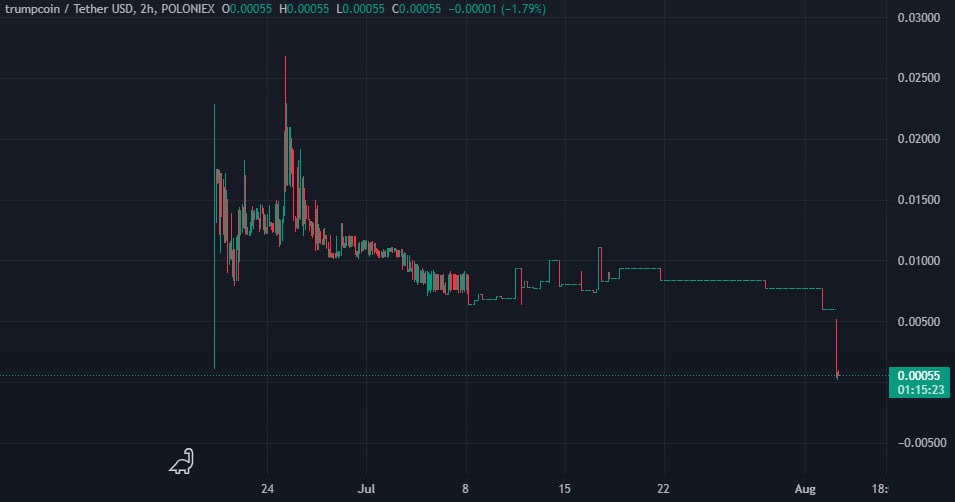
График DJT/USDT на бирже Poloniex. Данные: TradingView.

Отметим, на фоне резкого обвала цены мемкоина, количество трейдеров, которые им торгуют, увеличилось на почти 1000% за последние 24 часа, по данным Birdeye.

Участник X (ранее Twitter) под псевдонимом SlorgoftheSlugs заявил, что падение DJT произошло из-за того, что один трейдер продал 20% от общего объема токенов. Он подчеркнул, что на этот кошелек отправили активы два месяца назад.

Someone who was holding 20% of the $DJT supply just nuked the entire project in 1 clip.

The token is down 94% in a single day and has tanked 99% from its All Time High. pic.twitter.com/bWWqh6amRb

— Slorg (@SlorgoftheSlugs) August 6, 2024

Напомним, ранее сообщалось, что за разработкой токена может стоять соучредитель хедж-фонда MSMB Capital Management Мартин Шкрели. Сначала он отрицал свою причастность к созданию DJT, заявив, что актив является «настоящим токеном Трампа».

Впоследствии в Arkham предложили награду в $150 000 за информацию об авторе DJT. После того Шкрели лично связался с ончейн-детективом ZachXBT и сказал, что именно он запустил монету DJT совместно с сыном Трампа — Бэрроном Трампом.

Подчеркнем, за последние 24 часа другие PoliFi-токены, включая те, что связаны с Трампом, продемонстрировали рост.
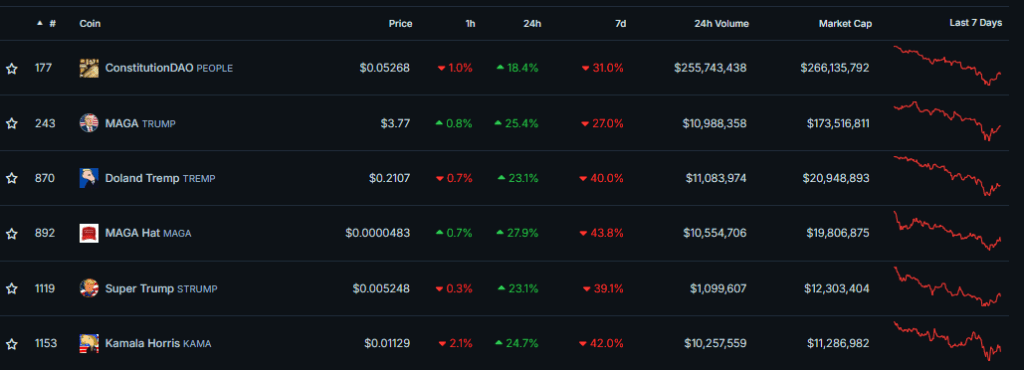
Курс PoliFi-токенов. Данные: CoinGecko.

Ранее PoliFi-токены подскочили в цене после покушения на Дональда Трампа.
Пов'язані матеріали

A Chip Company Releases AIDC Energy Storage Certification Standards. Why NVIDIA? Computing Power Reshapes Power Supply Logic. Who's in the Lead and Who's Left Out?

NVIDIA has released a "Battery Energy Storage System Self-Certification Guide," setting strict technical standards for energy storage systems specifically for AI data centers (AIDC). The guide focuses solely on certifying the Power Conversion System (PCS), not the batteries, with 10 mandatory performance metrics and 12 validation tests requiring real-world and simulation comparisons. Key requirements include rapid dynamic response to AI workloads, high-frequency system telemetry, and detailed electromagnetic transient models. The move is driven by the extreme and fluctuating power demands of next-generation AI hardware. Modern AIDCs require energy storage systems to act as intelligent, controllable grid assets, not just passive backup, to manage instantaneous, massive power load shifts that traditional UPS systems cannot handle. This redefines the competitive landscape for energy storage providers, shifting focus from capacity and cost to advanced control capabilities and system integration. While the market potential is significant—with forecasts of hundreds of GWh in new demand by 2030—the certification creates a high barrier to entry. It requires proven PCS delivery volumes and credible plans for rapid capacity scaling, favoring established, well-resourced players. Early movers like Fluence (partnering with Siemens) and several Chinese companies have secured projects ahead of the standard, but new entrants must now navigate this rigorous, costly, and time-intensive certification process to compete in the AIDC energy storage market.

marsbit3 хв тому

A Chip Company Releases AIDC Energy Storage Certification Standards. Why NVIDIA? Computing Power Reshapes Power Supply Logic. Who's in the Lead and Who's Left Out?

marsbit3 хв тому

After Missing the 20x, I've Found a 'Dumb' Method for AI Investing

**Missing the 20x Opportunity: A Simple 'Dumb' Approach to AI Investing** The AI boom, driving NVIDIA's revenue from $60B to $216B in two years, creates immense investment pressure. However, like the internet bubble of 2000, the largest AI opportunities likely lie ahead, perhaps after a correction. Instead of rushing in now or waiting paralyzed for a crash, the author proposes a third way: building a "knowledge warehouse" by systematically mapping the AI industry to be ready when opportunities arise. The core of the strategy is understanding AI's four-layer value chain: 1. **Compute Infrastructure (The "Engine"):** This foundational layer, where all money eventually flows, includes: a) **Chip Design:** NVIDIA's dominance via its CUDA ecosystem, b) **Chip Manufacturing/Packaging/Memory:** TSMC's near-monopoly in advanced manufacturing and SK Hynix's lead in High Bandwidth Memory (HBM), c) **Optical Interconnects:** Essential for large-scale AI clusters (e.g., Lumentum, Coherent), d) **Cooling & Power:** Critical for high-density AI data centers (e.g., Vertiv), e) **Servers/Data Centers & Cloud Platforms:** The physical and virtual wholesale providers. 2. **Models & Tools (The "OS"):** The competitive layer of foundation models (OpenAI, Anthropic, Google, Meta, xAI), now generating real revenue. A key shift is the center of gravity moving from **Training** models to **Inference** (running models), which demands different chip characteristics and could challenge NVIDIA's monopoly. 3. **Middleware & Platform ("The Glue"):** Connects models and applications (e.g., Scale AI, Hugging Face). This layer could explode if applications take off. 4. **Vertical Applications ("The Cash Register"):** Where AI meets end-users (e.g., enterprise AI, coding tools, medical AI, robotics). A critical cross-cutting constraint is **Energy**, as AI's massive power consumption drives investment in nuclear and other energy infrastructure. The author identifies four key questions for further research: 1) How will the shift from Training to Inference reshape the competitive landscape? 2) With tech giants spending over $600B on capex, where is the ROI from AI applications? 3) What are the under-the-radar opportunities in the "second" and "third" circles of the value chain (e.g., cooling, specialty foundries)? 4) How will geopolitics (e.g., U.S.-China chip restrictions) bifurcate the supply chain? The conclusion is that missed opportunities stem from insufficient research, not slow timing. By methodically studying each layer—its business models, competition, and valuations—investors can build the "killer intuition" needed to act decisively when the market presents its chance.

marsbit24 хв тому

After Missing the 20x, I've Found a 'Dumb' Method for AI Investing

marsbit24 хв тому

Торгівля

Спот
Ф'ючерси
活动图片