Cycle Capital:一周链上数据跟踪(20240729)

Odaily星球日报Опубліковано о 2024-07-30Востаннє оновлено о 2024-07-30

Анотація

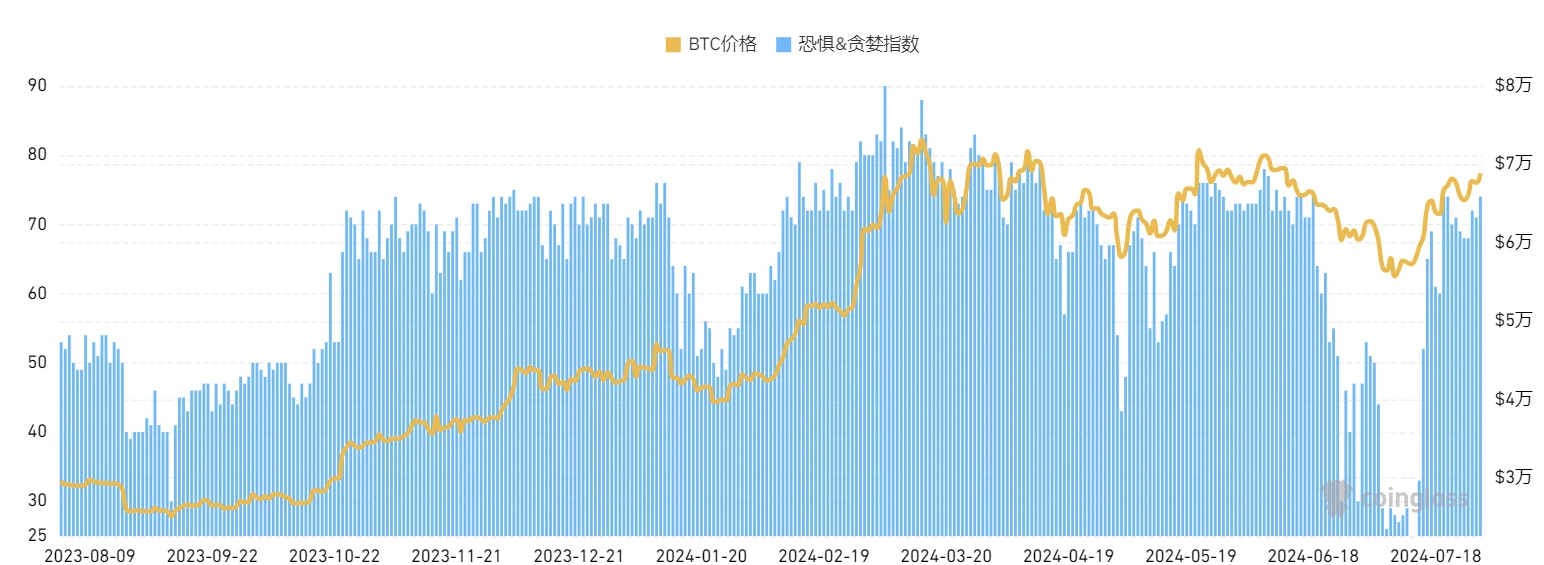
恐慌和贪婪指数现为74,处于贪婪的位置,市场投资情绪较高,6月下跌中,恐慌和贪婪指数出现较大幅度的下跌,7月初跌至30以下,是过于一年中最低的数值,之后出现了显著反弹。

Cycle Capital:一周链上数据跟踪(20240729)

恐慌和贪婪指数

恐慌和贪婪指数现为 74 ,处于贪婪的位置,市场投资情绪较高。6 月下跌中,恐慌和贪婪指数出现较大幅度的下跌, 7 月初跌至 30 以下,是过于一年中最低的数值,之后出现了显著反弹。
Cycle Capital:一周链上数据跟踪(20240729)

CME BTC 合约持仓

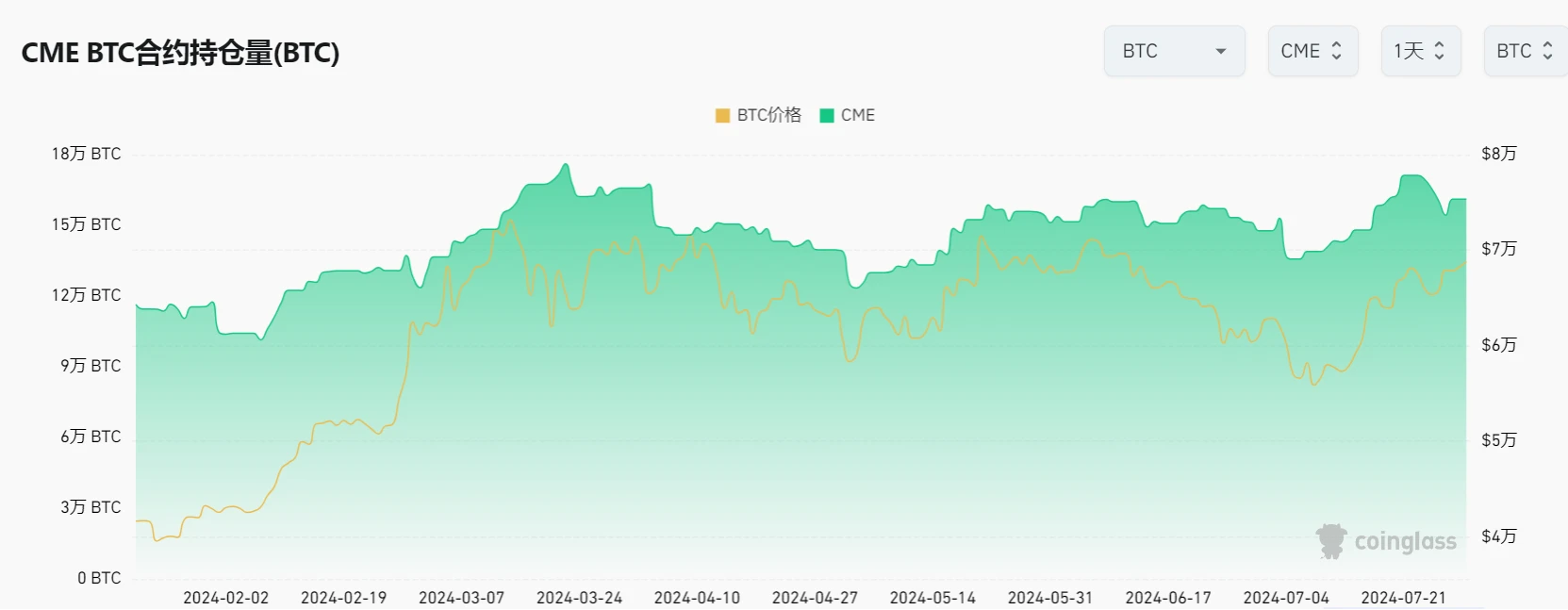
CME 持仓自 7 月 5 日以来出现连续增长,至 7 月 23 日开始有减仓, 7 月 28 日特朗普在比特币大会讲话后仓位又有所增长。

对应的逻辑变化是, 7 月 5 日之后资金看多市场, 7 月 23 日临近压力位以及比特币大会,部分卖事实资金减仓。特朗普讲话后,BTC 出现下跌,但快速反弹拉回,表明卖事实的资金引起的下跌有限,因此又有一部分资金看多后市,重新进场。
Cycle Capital:一周链上数据跟踪(20240729)

CME BTC Leveraged Funds Short Position

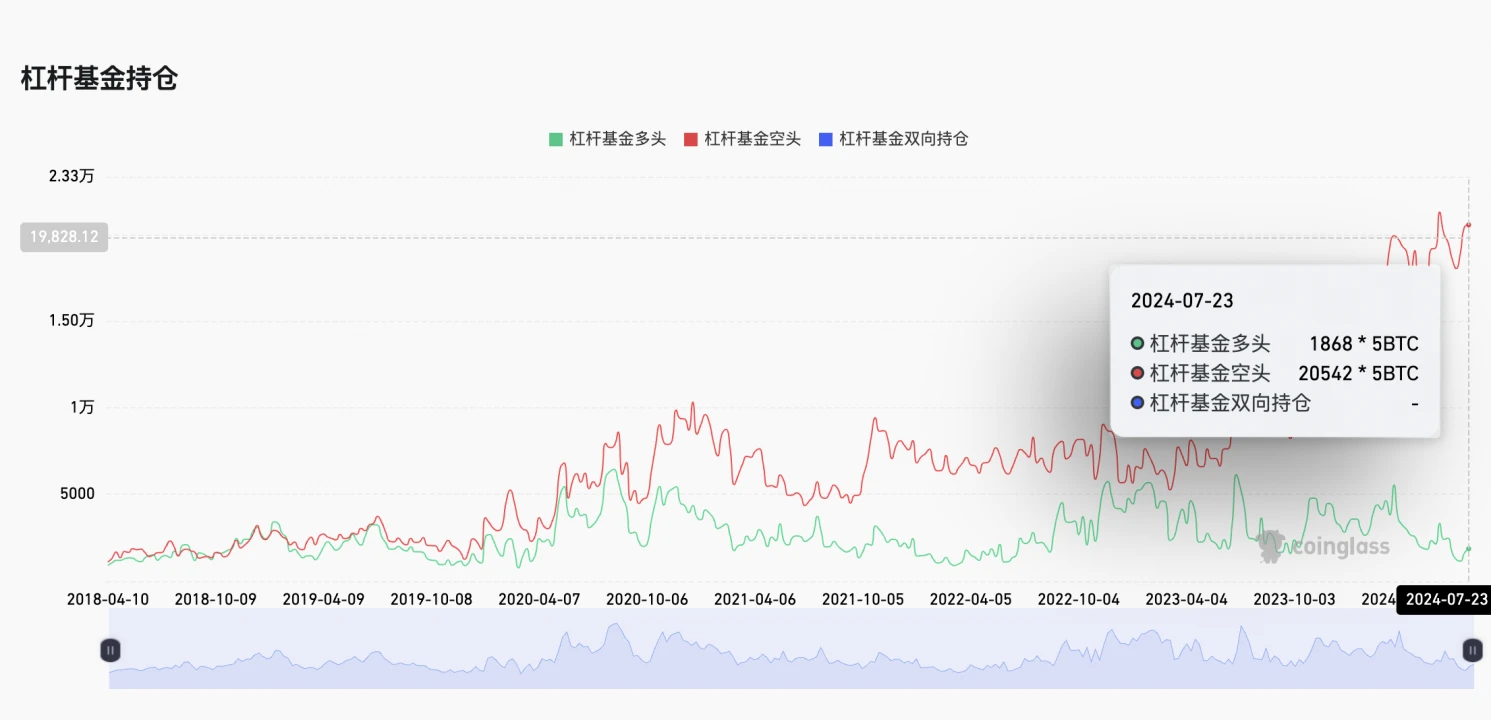
杠杆基金空头在上周(2024/07/16 – 2024/07/23)增加了 103 张, 515 个 BTC,通常这个指标在向上时也意味着套利资金的现货端也在加仓,而指标下降到达拐点指示空头平仓后会有上涨行情。
Cycle Capital:一周链上数据跟踪(20240729)

Bitfinex BTC Margin Long Position

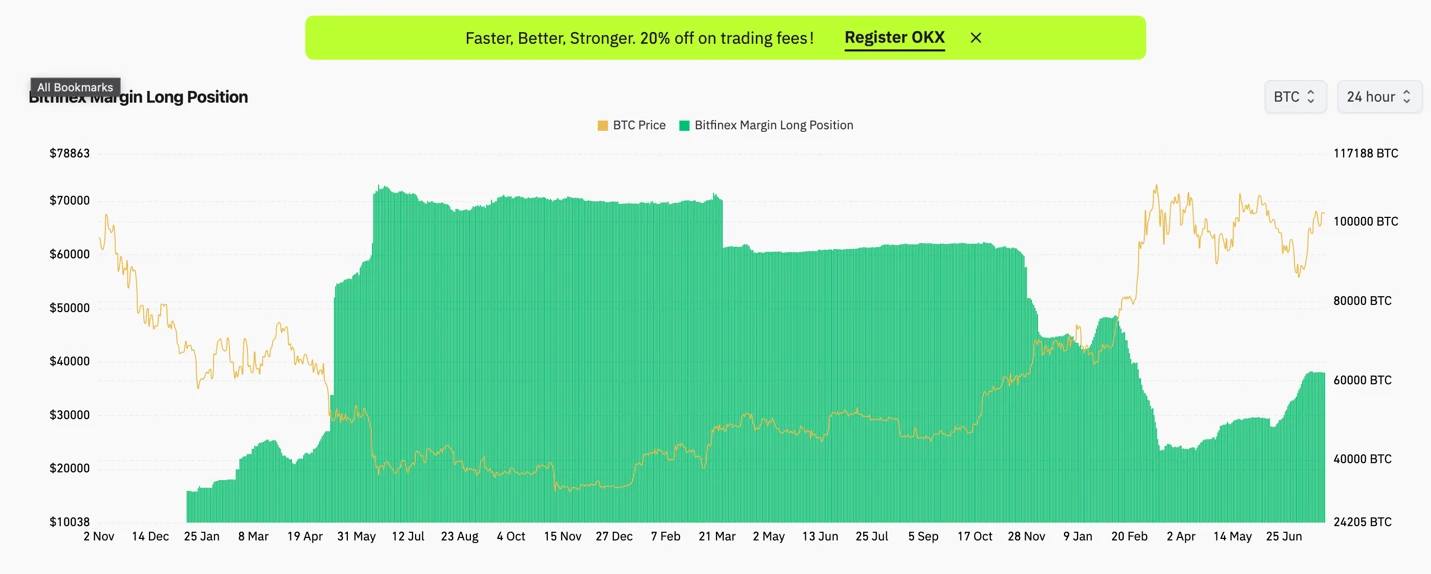
Bitfinex 多头持仓在 3 月 16 日平仓到达低点后(对应行情到达高位),随后开始继续累积多头头寸,到目前为止持仓仍在高位,但不再增长。
Cycle Capital:一周链上数据跟踪(20240729)

稳定币供应振荡器(SSRO)

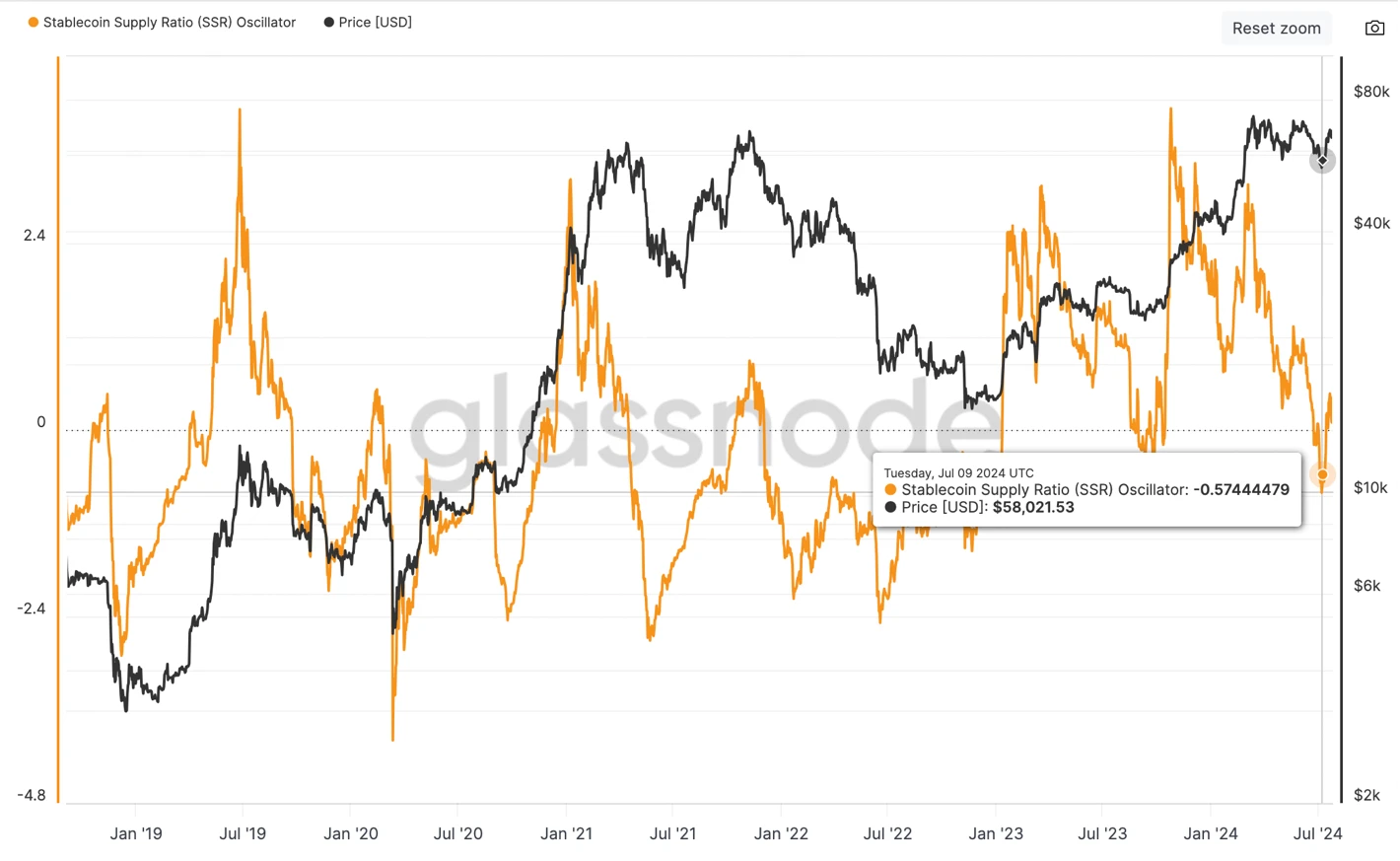
SSRO 在 7 月 9 日触底时已经低于去年 8 – 9 月的低点,表明场内资金的参与热度在急速下降。但这也形成拐点,从低点反弹。这个位置相对的低位对于山寨来说是比较好的反弹条件。
Cycle Capital:一周链上数据跟踪(20240729)

BTC 长短期持有者占比变化

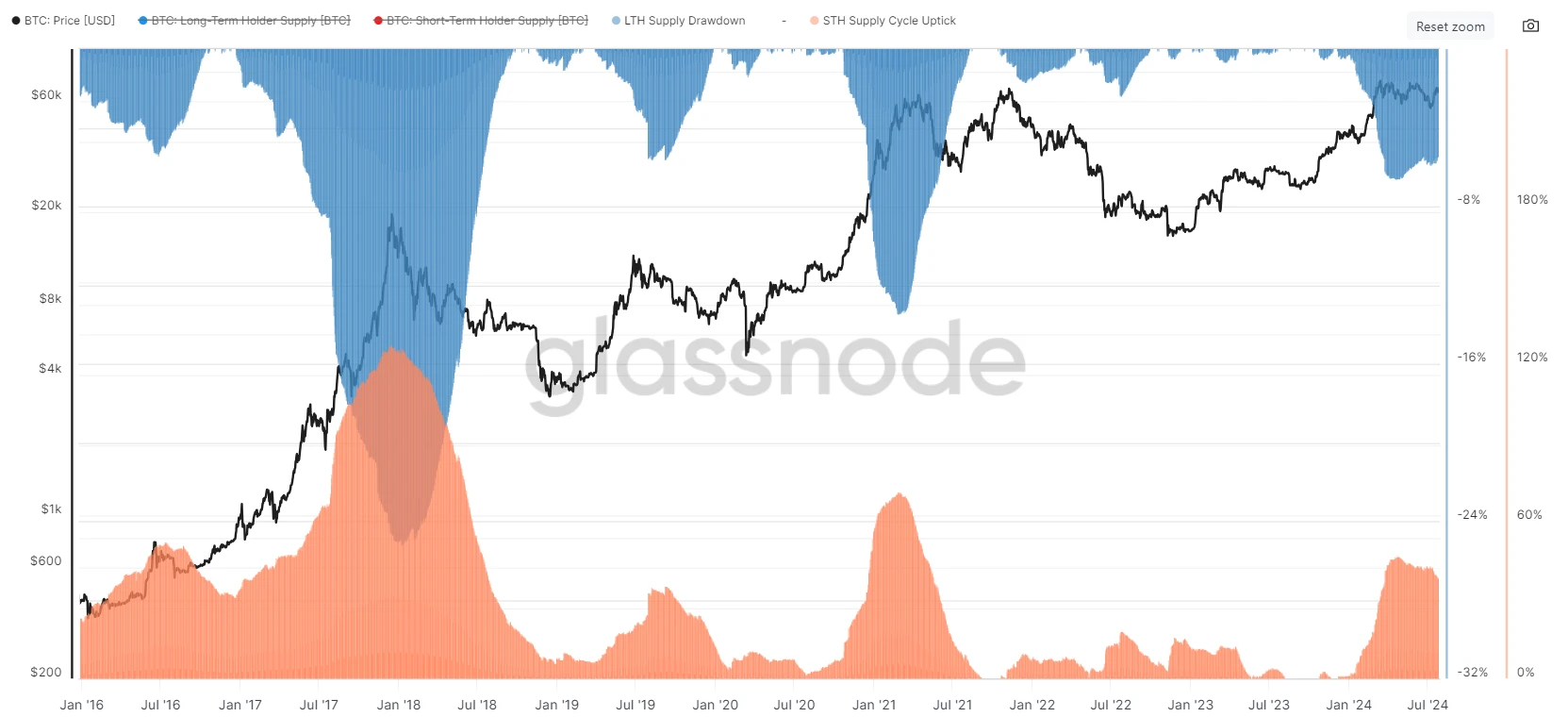
蓝色部分为 BTC 长期持有者持币占比变化。按照此前 2017 年和 2021 年的两轮牛市,会出现两次 BTC 长期持有者持币占比的降低,第二次降低的幅度要大于第一次。

2023 年 12 月至 2024 年 4 月,在 BTC 主升浪的期间,BTC 长期持有者在持续卖出。4 月以来,BTC 进入宽幅震荡区间,长期持有者停止了卖出的行为,倾向于继续持有 BTC。
Cycle Capital:一周链上数据跟踪(20240729)

BTC 长期持币者未实现净损益

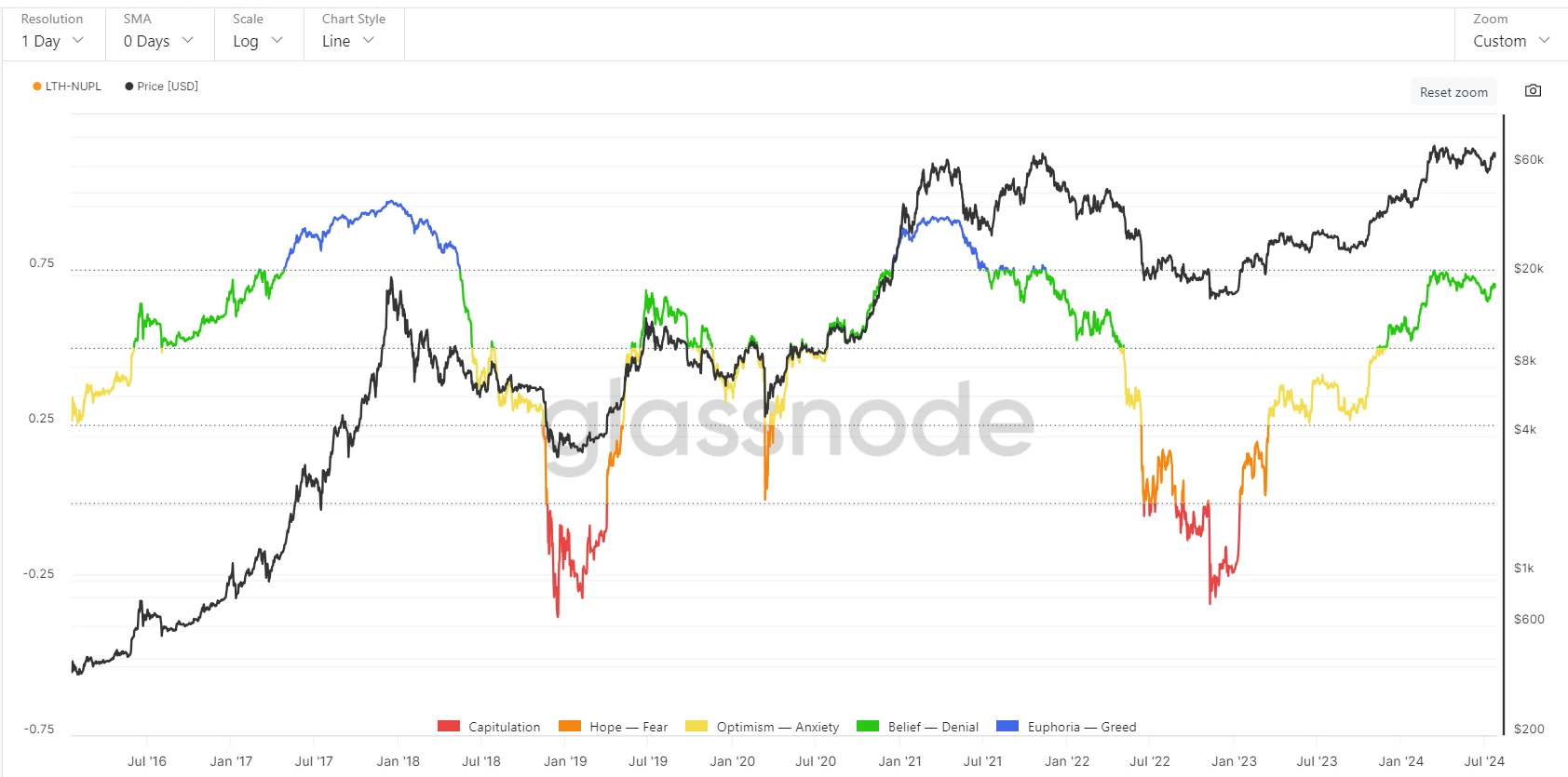
在 2017 年、 2021 年两轮周期中,BTC 长期持币者未实现净损益都进入了蓝色区域,超过了 0.75 。本轮行情以来,该指标尚未进入蓝色区域,目前仍在绿色区域运行。认为后续该指标应进入蓝色区域后运行一段时间,形成本轮行情的顶部。
Cycle Capital:一周链上数据跟踪(20240729)

BTC 短期持币者未实现净损益

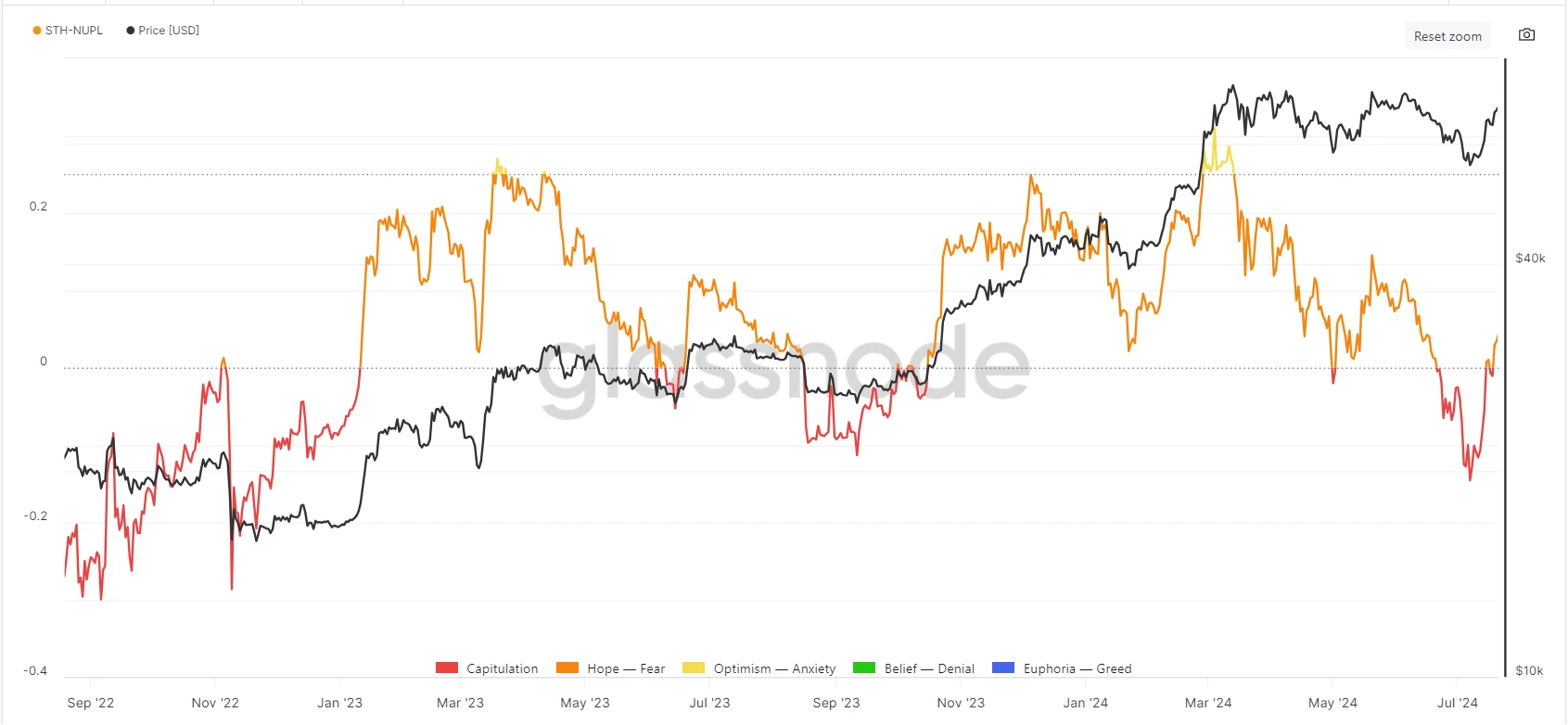
在牛市中,BTC 短期持币者未实现净损益接近 0 或者 0 以下时,会形成相对的阶段性底部。在 2023 年出现过 2 次低于 0 的情况,在 2024 年也出现了 2 次。2024 年 6 月底至 7 月初,短期持币者未实现净损益位于 0 以下, 7 月 15 日恢复到 0 以上,参考 2023 年 9 月走势,后续可能形成主升。
Cycle Capital:一周链上数据跟踪(20240729)

Пов'язані матеріали

How Does Wall Street View Warsh's Jackson Hole Debut? Hawkish 'Correction' of July Communication; Failure to Hike in September May Further Damage Fed Credibility

Wall Street widely interpreted Fed Chair Wash's first speech at the Jackson Hole symposium as a "hawkish correction" to the Fed's July FOMC communications. Wash firmly reiterated the Fed's unwavering commitment to the 2% inflation target, indicated that overall financial conditions are not restrictive, and stated that recent positive PCE and CPI data are not enough to show meaningful improvement in underlying inflation trends. He said if confidence is lacking that inflation is falling "clearly and fast enough," the Fed "has more work to do," with Reuters calling it his closest admission yet that another rate hike may be needed. This shifted market focus to the September meeting. JPMorgan's Priya Misra called it a "hawkish speech" that cleaned up July's communication "misstep." Aberdeen's Matthew Amis warned that if the Fed doesn't hike in September, its credibility could take another hit. Barclays and Société Générale now forecast 25-basis-point hikes in September and December, with SocGen adding a March hike expectation. However, analysts noted Wash provided principles but no explicit forward guidance. The "new Fed whisperer," Nick Timiraos, observed Wash gave a more hawkish diagnosis but no clear "reaction function." The CME's FedWatch Tool showed the probability of a September hike jumped from about 35% to around 50-60% after the speech. The bond market reaction was telling: short-term yields rose more than long-term yields, indicating traders were repricing near-term rate hikes. In essence, Wash rebuilt a hawkish policy logic: if the economy remains resilient and inflation doesn't fall fast enough, more tightening is possible. The consensus is that he successfully delivered a hawkish reset. While a September hike is now a serious possibility, the final decision will hinge on incoming data, creating a credibility test for the Fed if data doesn't improve and it holds rates steady.

marsbit4 хв тому

How Does Wall Street View Warsh's Jackson Hole Debut? Hawkish 'Correction' of July Communication; Failure to Hike in September May Further Damage Fed Credibility

marsbit4 хв тому

Warsh's Latest Speech: The Era We Are In

Federal Reserve Chairman Kevin W. Warsh delivered a speech titled "In Our Time" at the Jackson Hole Economic Policy Symposium. The remarks struck a cautiously hawkish tone, with Warsh emphasizing that inflation remains significantly above the Fed's 2% target and should be the primary focus of monetary policy. He expressed that recent, better-than-expected CPI and PCE data do not yet signal a meaningful improvement in the underlying inflation trend. Warsh outlined core principles for monetary policy, including the firm commitment to the 2% inflation target, the importance of both price stability and maximum employment, and the primary role of short-term interest rates as a policy tool. He also stressed the relevance of monetary aggregates and advocated for a Fed that communicates with greater purpose and restraint. A significant portion of the speech addressed the practice of "forward guidance." Warsh argued that while essential during crises, forward guidance should be limited in normal times. He warned that excessive pre-commitment to future policy paths can constrain the Fed's flexibility and create a "hall-of-mirrors" problem, where markets rely too heavily on Fed signals rather than independently assessing economic fundamentals. On the current economy, Warsh noted impressive resilience, strong business investment (partly driven by AI infrastructure), healthy consumer spending, and a stable labor market with low unemployment. However, he observed that broad financial conditions are not particularly restrictive. Despite economic strength, inflation metrics remain elevated, with a high proportion of PCE basket components still showing price increases above 3%. Warsh concluded by stating the Fed's standard: policymakers must be confident that underlying inflation is moving clearly and sufficiently quickly toward the 2% target. Otherwise, "we have more work to do." He framed his approach as a commitment to disciplined policy-making rather than to any specific near-term decision.

marsbit1 год тому

Warsh's Latest Speech: The Era We Are In

marsbit1 год тому

Access to Active Sessions Instead of Databases: How the Shadow Market in Russia Has Changed

The Russian cybercriminal underground is shifting from selling massive, stolen corporate databases to trading active, short-term access to user accounts, according to a 2026 report. The value of information intercepted directly from infected devices by malware has risen nearly 13% in a year. Attackers now sell packets containing active session tokens (bypassing passwords and two-factor authentication), live email credentials, VPN and cloud storage logins, and corporate network access. A subscription for a steady stream of fresh data costs $250-$300 per month, far exceeding the value of outdated archives. While Russian regulators have successfully penalized companies for data leaks from centralized storage—with no repeat violations recorded after imposing turnover fines—this framework fails against the new threat model. Malware now steals data *after* it leaves the corporate perimeter and is on a user's personal device, a legal grey area. In 2026, 60% of studied web attacks aimed to steal keys for infiltrating corporate infrastructure. The situation mirrors global trends, akin to the Genesis Market shutdown in 2023, and highlights a structural risk: the demand for "fresh" data incentivizes botnet operators to maintain long-term control of infected devices for recurring revenue. This creates a persistent vulnerability layer between personal devices and corporate networks, currently outside the reach of existing regulatory protections.

cryptonews.ru4 год тому

Access to Active Sessions Instead of Databases: How the Shadow Market in Russia Has Changed

cryptonews.ru4 год тому

Торгівля

Спот
活动图片