Shiba Inu负责人推动Shibarium等Web3解决方案以应对CrowdStrike全球宕机

币界网Опубліковано о 2024-07-20Востаннє оновлено о 2024-07-20

币界网报道:

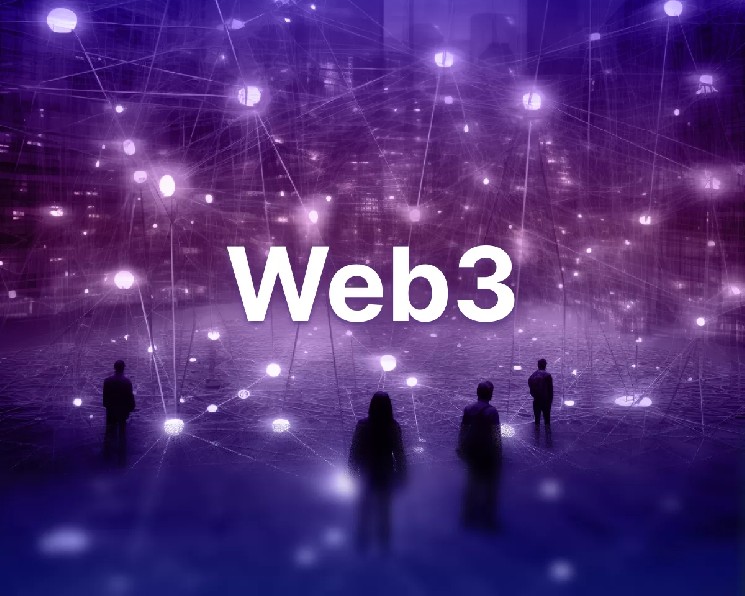
Shiba Inu生态系统神秘的领导者草间弥生抓住最近CrowdStrike全球宕机的机会,倡导Web3解决方案,如Shibarium,以分散关键基础设施。

7月19日,一场广泛的技术故障导致航班停滞,支付系统瘫痪,医疗服务中断。此外,它还阻止了对微软服务的访问。专家们称这是有记录以来最灾难性的IT故障之一。

与此同时,中断的根本原因可以追溯到为多个行业提供服务的网络安全公司CrowdStrike的软件更新故障。有缺陷的更新对Windows操作的计算机造成了严重破坏,导致全球范围内发生了深远的技术故障。

Shiba Inu铅反应

在这一事件之后,Shiba Inu团队利用这个机会强调了权力下放的重要性。他们强调,需要摆脱对集中式服务的依赖,转向更具弹性、社区驱动的解决方案。

Kusama在最近的一篇关于X的帖子中哀叹,一次有缺陷的更新的深远影响凸显了对新的全球操作系统的需求。

Shiba Inu领导人认为,世界需要一个避免依赖中央权威的系统,拥抱去中心化,并利用Web3技术的力量,从根本上抵御周五的中断。

此外,草间弥生表示,目前的情况正是Shiba Inu团队在全球巡演中倡导人们“善待自己”的原因。

他指出,这次巡演不仅仅是象征性的推广。相反,它侧重于从传统的Web2标准向更高水平的参与的范式转变,为客户、利益相关者和个人提供安全和创新。

草间弥生提出Web3解决方案:Shibarium

Kusama指出,幸运的是,Shiba Inu社区分散的创新者和爱好者网络在熊市期间一直在忙于开发解决方案。他强调,这些解决方案是专门为减轻像这次全球停电这样的灾难性事件的影响而设计的。

值得注意的是,Shiba Inu团队于2023年8月推出了其原生区块链Shibarium。这种区块链在不到一年的时间里得到了广泛的应用,记录了超过4.17亿笔交易。此外,Shibarium的平均块时间速度为5.0秒。

此外,Shibarium还建立了重要的合作伙伴关系,以改善全球技术空间。4月,Shiba Inu团队加入了内容交付和安全协会(CDSA),通过Shibarium为苹果、亚马逊和Netflix等成员解决人工智能驱动的内容挑战。

当全世界都在努力应对CrowdStrike基础设施故障的毁灭性后果时,Shiba Inu生态系统的目标是站在对话的最前沿,支持Web3驱动的未来愿景。

Пов'язані матеріали

Gold Price Achieves Strongest Rally in 46 Years, Tokenized Gold Trading Volume Already Exceeds Full-Year 2025

Gold is experiencing its strongest rally since 1979, with prices reaching a record high near $5,600 per ounce in January. This surge is driven primarily by central banks, not retail investors. In 2025, central banks net purchased 863 tonnes of gold, with a similar increase expected in 2026. Traditional gold investment methods—physical bullion and ETFs—present trade-offs like storage issues, limited access, or management fees. Tokenized gold emerges as a third option: digital tokens representing ownership of physical bars stored in professional vaults. These tokens are globally transferable in seconds, divisible, and redeemable for physical metal. The potential impact mirrors that of dollar stablecoins. Stablecoins digitized the dollar, enabling cheap, instant, global transfers and driving adoption from $27 billion in 2020 to over $3 trillion today. Similarly, tokenized gold solves gold's "form problem"—its lack of divisibility, portability, and accessibility. Adoption is accelerating. In Q1 2026, tokenized gold trading volume hit $90.7 billion, surpassing the $84.6 billion for all of 2025. Its market cap exceeded $6 billion, growing 5.5 times faster than physical gold holdings in the quarter. While concerns about counterparty risk exist, tokenized gold represents a direct claim on allocated bars, with major issuers providing regular attestation reports. Just as stablecoins placed dollars on a digital, global rail, tokenized gold now offers a more practical form for this ancient asset, potentially expanding access to billions.

marsbit12 хв тому

Gold Price Achieves Strongest Rally in 46 Years, Tokenized Gold Trading Volume Already Exceeds Full-Year 2025

marsbit12 хв тому

Japanese Rates Return to 1996 Levels, Can Bitcoin Withstand the September Rate Hike?

Japanese borrowing costs have hit their highest levels since 1996, with yields on 30-year bonds reaching 4.185%. This marks a significant shift for a country long reliant on negative rates. Concurrently, Bitcoin surged 22% past $80,000, seemingly decoupled from the bond market turmoil. Historically, the massive yen carry trade has fueled global risk assets, predicated on near-zero Japanese rates. This assumption is now challenged. A potential rate hike by the Bank of Japan in September could strengthen the yen, forcing carry trade unwinds and potentially triggering a global deleveraging event, as seen in August 2024 when Bitcoin fell sharply. Conversely, if the yen weakens further, Bitcoin could attract Japanese investors as a hedge against currency depreciation and the country's massive debt burden. Institutional adoption in Japan is growing, with regulatory changes paving the way for potential crypto ETFs by 2027. The key variable is the BoJ's September policy signal. If it hints at a rapid tightening cycle to combat inflation and support the yen, risk assets like Bitcoin may face selling pressure from carry trade liquidation. However, if debt sustainability concerns limit its hawkishness, leading to a weaker yen, Bitcoin could benefit. Currently, the market is betting on a slow-motion debt crisis, not a sudden collapse. While Bitcoin shows resilience, its fate remains tied to the direction of the yen and the scale of any carry trade unwind.

marsbit15 хв тому

Japanese Rates Return to 1996 Levels, Can Bitcoin Withstand the September Rate Hike?

marsbit15 хв тому

How Can Bitcoin Resist Quantum Computers? A Comparison of Three Lattice-Based Signature Schemes

"Bitcoin's Quantum Defense: A Comparison of Three Lattice-Based Signature Schemes" by the Blockstream Research Team explores how Bitcoin can transition to quantum-resistant digital signatures, as current schemes like Schnorr and ECDSA are vulnerable to quantum computers. The report evaluates three lattice-based signature candidates—Dilithium, Falcon, and Hawk—against criteria like on-chain cost (key/signature size), implementation complexity, deployment risks, and support for Bitcoin's key derivation standard (BIP-32). The analysis recommends a minimum Security Level 3 for Bitcoin due to its long-term security needs. Dilithium (ML-DSA) is praised for its simplicity and integer-only operations, making it easier to implement securely, but it has the largest signature size (~5.3 KB for Level 3). Falcon (FN-DSA) offers the most compact signatures (e.g., ~3.1 KB for Level 5) and the fastest verification, though its signing requires complex floating-point sampling—a solvable engineering challenge. Hawk, despite its small size, was withdrawn from NIST standardization after a security vulnerability was discovered, highlighting the importance of conservative security margins. Currently, neither Dilithium nor Falcon has a fully viable, production-ready BIP-32 key derivation method. The report concludes that if a lattice-based scheme had to be chosen now, Falcon-1024 would be the preferred option for its balance of size, speed, and mature security assumptions. However, the short-term recommendation remains hash-based signatures (like SPHINCS+) for their lower risk, with a potential future hybrid or full transition to Falcon once its standard (FN-DSA) is finalized and well-supported.

marsbit17 хв тому

How Can Bitcoin Resist Quantum Computers? A Comparison of Three Lattice-Based Signature Schemes

marsbit17 хв тому

Торгівля

Спот
活动图片