近90亿美元潜在抛压!比特币“大跳水”,暴风雨即将来袭?

jin10Опубліковано о 2024-06-24Востаннє оновлено о 2024-06-24

比特币交易所交易基金(ETF)的需求降温以及货币政策的不确定性,导致加密货币市场在创下2024年以来第二大单周跌幅之后,损失不断增加。

比特币周一下跌8.1%,至58528美元,创4月13日以来最大盘中跌幅。由于持有这种加密货币的交易所交易产品连续两周遭受资金外流,比特币的价格受到了冲击。

根据追踪机构Coinglass汇编的数据,在过去12小时内,价值超过2.1亿美元的加密货币看涨押注被清算。彭博社汇编的数据显示,在截至上周日的七天里,最大的100种数字资产下跌了约5%,这是自4月份以来的最大跌幅。

十多年前遭到黑客攻击的日本加密货币交易所Mt.Gox的托管人宣布将于7月开始偿还比特币和比特币现金,这加剧了人们对抛售压力增加的担忧。

“鉴于Mt Gox的公告,似乎有市场参与者开始做空,”OSL SG Pte.交易主管Stefan von Haenisch说,“加密货币市场目前正在努力捕捉出价”。
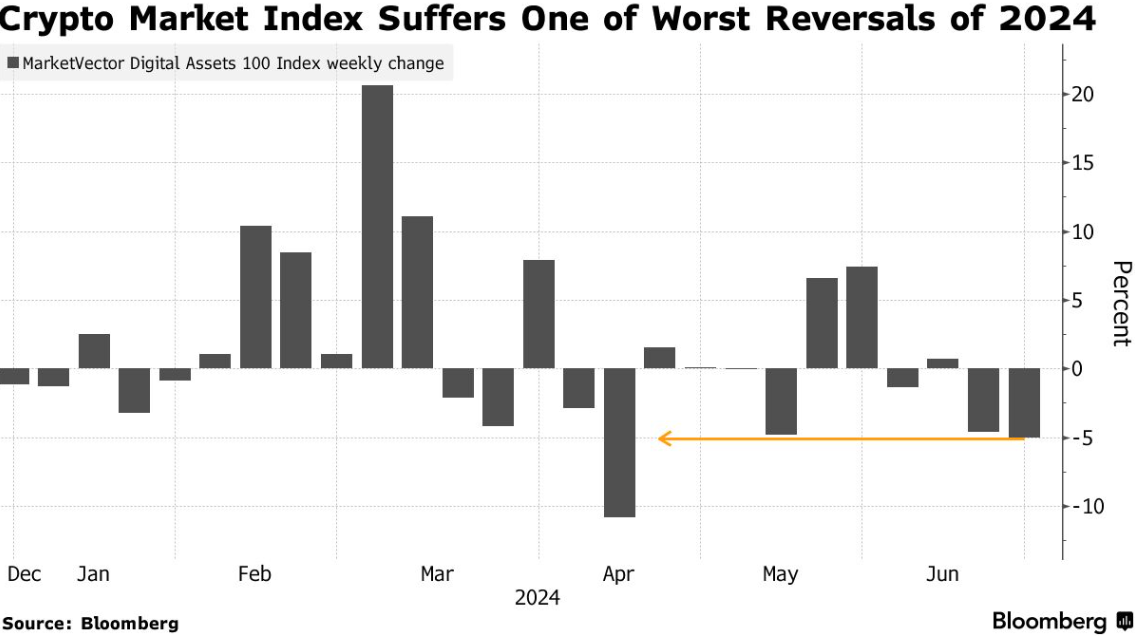
加密货币出现裂痕正值人们对美联储能否从二十年高位迅速降息产生怀疑之际。在一些分析师看来,数字资产的回落是对更广泛风险偏好的警示信号

FalconX公司研究主管大卫-劳安特(David Lawant)在一份报告中写道:“当前加密货币市场动态的特点是波动性低、交易量疲软,当价格开始向区间边缘移动时,订单簿就会失去平衡。”

一些角落的跌幅尤为明显:以太坊和索拉纳(Solana)的跌势分别是自去年和2022年以来最长的。而且,这还是发生在基金公司准备推出首批直接投资于以太币的美国ETF之时。与此同时,索拉纳最近也受到了各种数字资产对冲基金的青睐。
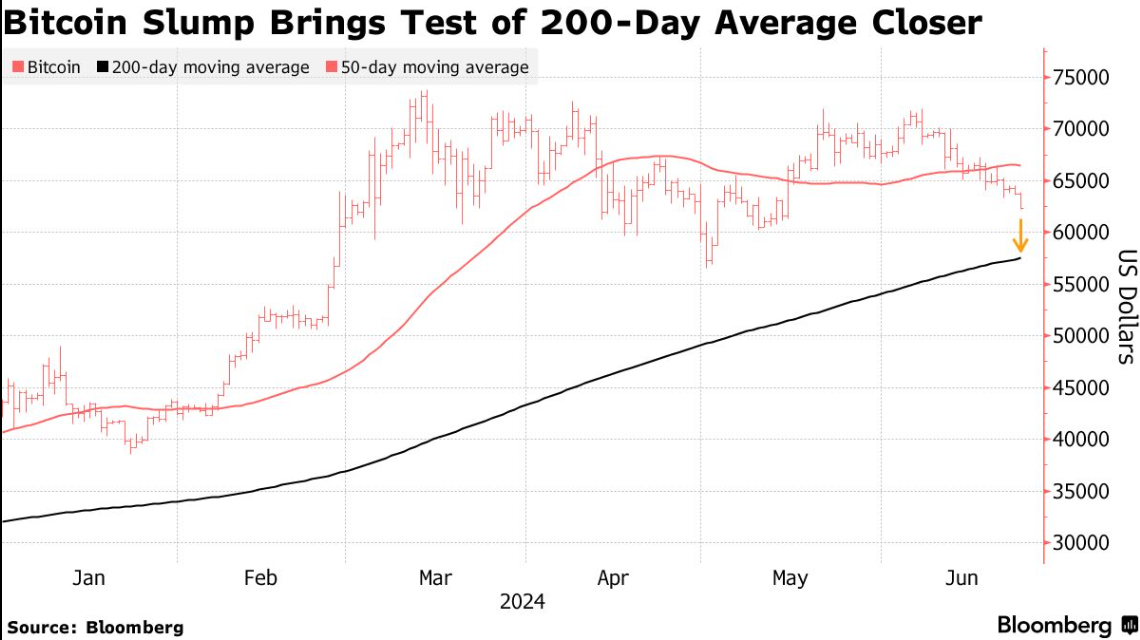
比特币跌向200日均线

比特币在3月份创下了73798美元的纪录,但本季度却落后于股票、债券和黄金等传统投资。

数字资产衍生品流动性提供商Orbit Markets的联合创始人Caroline Mauron说:“看跌情绪似乎正在形成。市场很难消化任何大额卖单。”

比特币投资产品连续两周流出约6亿美元,这是自美国1月份批准ETF持有这种最大的加密货币以来两周内流出最多的一次。

币安国际有限公司(CoinShares International Ltd.)的数据显示,在截至6月21日的一周内,数字资产产品总体上遭遇了5.84亿美元的资金外流。比特币产品占了大多数,在前一周流出6.3亿美元之后,本周又流出了6亿美元。

近90亿美元潜在抛压袭来

比特币突然面临潜在的近90亿美元流动性冲击,价格在过去24小时大跌5000美元,最低至5.83万美元。此事牵涉早期的加密货币交易所Mt. Gox。2011年起,该平台遭到黑客攻击,有超过60万比特币被盗,并于2014年破产。负责管理Mt. Gox剩余资金的团队24日宣布,将于7月开始向十多年前失去资产的债权人偿还加密货币,方式为比特币和比特币现金支付。

根据阿卡姆情报公司(Arkham Intelligence)的数据,截至周一,该交易所持有约141687枚比特币,价值约87亿美元。投资者担心Mt. Gox的债权人可能会选择出售他们收到的比特币,给加密货币带来压力,因为比特币现在的交易价格比十几年前高得多。

值得注意的是,Mt.Gox的一些投资者今年早些时候表示,他们已经收到了一些被盗资产的现金付款,但比特币和比特币现金的还款将于下个月开始。

卖出比特币的人正在考虑在不到一个月的时间里,超过14万枚比特币进入市场所带来的影响。Galaxy的研究主管亚历克斯-索恩(Alex Thorn)说:“我们认为,这些比特币的偿还量会比人们想象的要少,它造成的比特币抛售压力也会比市场预期的要小。”索恩说,他的研究表明,75%的债权人将在7月份“提前”领取赔款,这意味着将发放约95000枚比特币。索恩认为,其中6.5万枚将归个人债权人所有,但他认为这些人可能比大多数人预期的更“钻石手”(坚决持有不卖出的投资者)。

他说,其中一个原因是,他们已经抵制了多年“来自索赔基金的令人信服的积极报价”,更不用说鉴于比特币自破产以来上涨了140倍而涉及的资本利得税了。

Пов'язані матеріали

When Real Estate Ownership Goes Digital: What Happens to Your Rights, Risks, and Liquidity?

"Tokenizing Real Estate: Rights, Risks, and the Path to Liquidity" While tokenizing real-world assets (RWA) gains traction, real estate presents unique complexities. Beyond technical token issuance, critical challenges remain: enforcing legal rights, managing the underlying physical asset, and creating genuine secondary market liquidity. This article explores these issues through OneAsset, a Dubai-based commercial real estate (CRE) tokenization platform. OneAsset moves away from simply offering asset fragmentation. Instead, it focuses on institutional-grade infrastructure, prioritizing asset quality, legal enforceability, and operational fundamentals. Each property is held in an independent, single-asset vault, backed by a legally separate Special Purpose Vehicle (SPV) for bankruptcy remoteness. Investors acquire tokens representing the economic rights to a specific property, with precise legal claims defined by the underlying SPV structure. OneAsset emphasizes that tokenization cannot transform a poor-quality asset. Its initial focus is on institutional investors and quality Dubai-based CRE, selected for stable tenant cash flows and a clear regulatory environment. The platform integrates compliance by design, aiming to embed investor qualification and transfer rules directly into the token architecture. A core insight is that asset fragmentation does not automatically create liquidity. True liquidity depends on the asset's inherent quality—its location, cash flow, and valuation—as well as sufficient buyer demand. The goal is not just tradability, but making real estate rights more easily priced, verified, and reallocated. Looking ahead, the article discusses the potential for "AiFi" (AI-powered finance). For AI agents to autonomously allocate capital, investment assets like real estate tokens must become truly "machine-readable." This requires a high degree of standardization in legal rights, valuations, cash flows, and compliance data—a direction OneAsset is pursuing through its structured data reporting. In conclusion, real estate tokenization is shifting from a technology narrative to a focus on asset fundamentals. Blockchain can enhance efficiency and programmability, but it cannot replace sound underwriting, property management, or legal execution. The real work begins after the asset is on-chain.

marsbit28 хв тому

When Real Estate Ownership Goes Digital: What Happens to Your Rights, Risks, and Liquidity?

marsbit28 хв тому

After Affecting Two Generations, Meta Ordered to Pay $18 Billion in Damages

After more than two decades, a legal parallel has emerged. In 1998, major U.S. tobacco companies settled for $206 billion, leading to strict advertising bans and warning labels that significantly reduced smoking rates. On August 26, 2026, Meta reached a landmark settlement with U.S. attorneys general, agreeing to pay up to approximately $18 billion and implement mandatory changes to Facebook and Instagram. This historic settlement, one of the largest against a tech company, stems from allegations that Meta deliberately designed addictive features like infinite scroll and push notifications, harming youth mental health and violating child privacy laws. Facing a potential $1.4 trillion lawsuit and a series of unfavorable jury verdicts, Meta chose to settle on the eighth day of trial to avoid a catastrophic ruling. The core of the agreement is not just the financial penalty, which Meta will pay over 10 years, but a series of strict, 10-year product mandates for young users. These include a hard two-hour daily time limit (combined across apps), a default "nighttime block" from midnight to 6 AM, restricted notifications during school hours, hidden "like" counts, an optional non-algorithmic feed, and stronger age verification. An independent auditor will monitor compliance. Crucially, roughly 30% ($5.3 billion) of Meta's payment is contingent on YouTube and TikTok adopting similar measures and paying around $5 billion each. This move aims to create an industry-wide standard and prevent Meta from being competitively disadvantaged. The settlement is being likened to Big Tobacco's "tobacco moment." By legally framing addictive algorithm design as a "public nuisance," it sets a powerful precedent. Nearly 3,000 similar cases are pending against other social media giants, signaling a fundamental shift in regulatory pressure. The era where platforms could deny the addictive impact of their designs on children is effectively over.

marsbit33 хв тому

After Affecting Two Generations, Meta Ordered to Pay $18 Billion in Damages

marsbit33 хв тому

Торгівля

Спот
活动图片