CoinDeskPolicyОпубліковано о 2024-05-12Востаннє оновлено о 2024-05-13

Анотація

Senators from both parties, Cynthia Lummis and Ron Wyden, questioned the use of money-transmitter laws in cases such as those against Samouri Wallet and Tornado Cash.

  • Two U.S. senators sent a letter to the attorney general making an argument that his Department of Justice is making the wrong legal call as it prosecutes crypto mixing services.
  • The letter argues that services such as Tornado Cash aren't money transmitters, and it says that earlier Treasury Department views on transmitters bear this out.

A bipartisan pair of U.S. senators is questioning Attorney General Merrick Garland about the "unprecedented interpretation" of law the Department of Justice (DOJ) is using to pursue cryptocurrency software services as unlicensed money-transmitting businesses.

6.2K

Sens. Ron Wyden (D-Ore.) and Cynthia Lummis (R-Wyo.) sent a letter to Garland questioning the approach against such firms as Samourai Wallet and Tornado Cash, highlighting that the Treasury Department's Financial Crimes Enforcement Network (FinCEN) has previously held that non-custodial crypto services shouldn't be treated as money transmitters.

"I’m concerned the DOJ’s interpretation would treat software developers as criminals for merely writing and publishing code used by others – a dangerous precedent that contradicts decades of settled law and raises serious First Amendment concerns," Wyden said in a statement on Monday.

Advertisement
Advertisement

Samourai was the most recent crypto privacy business pursued by federal prosecutors last month. The lawmakers' letter, dated May 9, argued that "subjecting developers of non-custodial crypto asset software to potential criminal liability as unregistered money transmitters contravenes the well-established interpretation of this provision."

The DOJ also argued in a court filing that FinCEN's guidance addressing crypto mixers didn't address the idea of "control," a stance that the senators' letter took issue with. In its filing from last month, the DOJ said anything that facilitates the transfer of funds would meet the legal definition of a "money transmitter," likening the wallet to a USB cable that transfers data or a frying pan that transfers heat.

The lawmakers' letter said the rule does actually require the service to take control of the funds to be treated as a transmitter.

Read More: Samourai Wallet Charges Raise Existential Questions for Privacy Tech

"Wallet software is no more to blame for illicit finance than a highway is responsible for a bank robber's getaway car," Lummis said in a statement.

Congress has been wrestling with digital assets legislation that would establish comprehensive U.S. rules for the industry – including addressing money-laundering protections. While one of the significant bills is expected to get a vote by the House of Representatives as soon as next week, the prospect for wide-ranging legislation to become law this year is minimal, leaving federal authorities working under existing law in the meantime.


Пов'язані матеріали

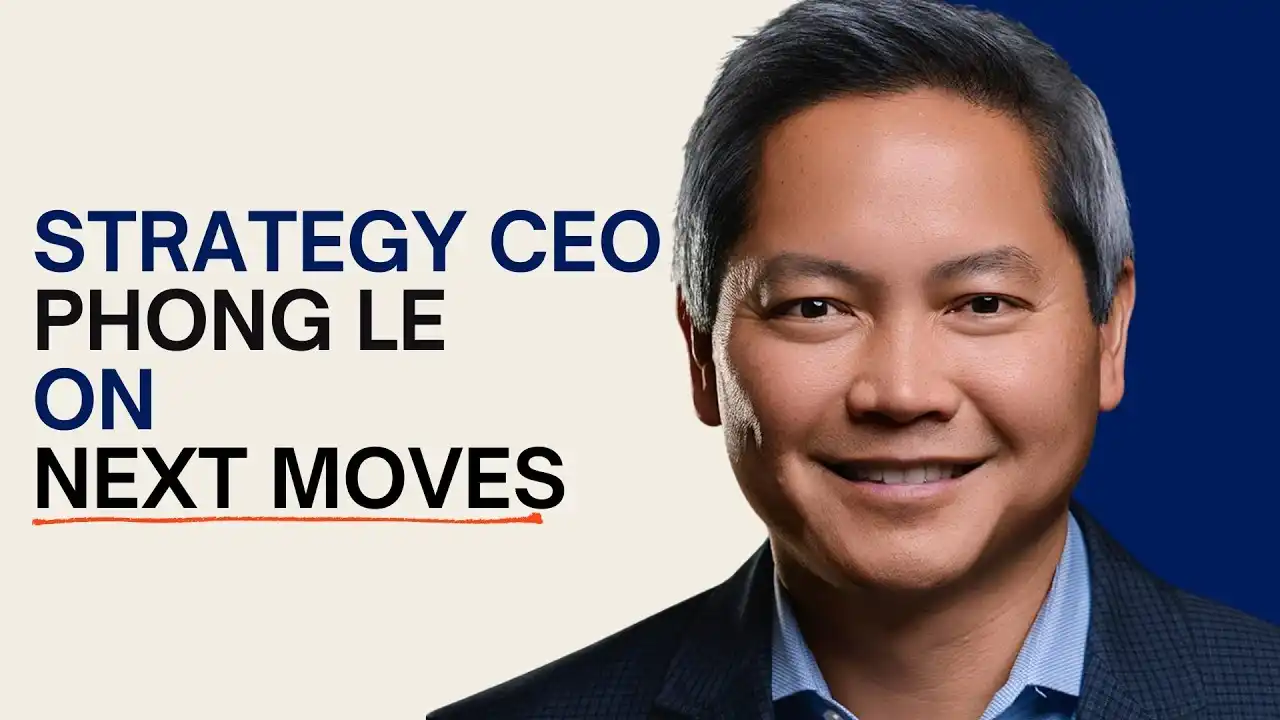
Interview with Strategy CEO: Can STRC Recover After Selling Bitcoin?

Interview with Strategy CEO Phong Le on the recent sale of 32 Bitcoin and its impact. He clarifies the move was a small, strategic action to demonstrate liquidity to debt holders, test internal processes, and prove operational discipline—not a response to fears of a "death spiral" from DeFi protocols leveraging STRC (Strategy's preferred stock product), which he notes holds less than 10% of STRC. Le emphasizes Strategy’s long-term focus as the largest corporate Bitcoin holder, using the adage that markets are a "voting machine" short-term but a "weighing machine" long-term. Decision-making is data-driven, involving the board, complex modeling, and multiple stakeholder considerations, moving beyond a founder-centric model. He outlines various capital options but stresses the strategic importance of "doing nothing" as a valid choice, citing resilience built during the 2022 bear market. Le expresses unwavering belief in Bitcoin's foundational value for global sovereignty and its future role in an AI-driven economy with trillions of autonomous agents. Addressing STRC's current price below its $100 face value, Le explains recent pressure was due to using dollar reserves for bond buybacks. He expects STRC to return to par as reserves are replenished and its semi-monthly dividend payments begin, noting the product is heavily over-collateralized. Finally, Le confirms the company sold Bitcoin the week prior to May 31st, as disclosed in an 8-K filing, leaving prediction market interpretations to others. The overarching philosophy remains "Spread Bitcoin with love," embracing all methods of gaining Bitcoin exposure.

marsbit16 хв тому

Interview with Strategy CEO: Can STRC Recover After Selling Bitcoin?

marsbit16 хв тому

IOSG Founder: Ethereum Doesn't Need Another Leap of Technical Faith, It Needs a Musk-style Compromise

Jocy, founder of IOSG Ventures, argues that Ethereum does not need renewed technological faith but a "Musk-like compromise." The recent formation of ETHLabs—funded by major ETH holders like BitMine and Lubin—highlights a market-driven move to fill a gap left by the Ethereum Foundation (EF), signaling a loss of confidence in its decentralized, hands-off approach. The core critique contrasts Vitalik Buterin's (V) idealistic, technology-first vision with Elon Musk's pragmatic, business-driven execution. The author asserts Ethereum's current shortage is not another technical roadmap but a clear, real-world application narrative and a leader willing to engage directly with commercial realities—like Musk. Internal issues are emphasized, citing EF's management problems and talent drain. While the new decentralized model with independent nodes like ETHLabs addresses the single foundation's limitations, it risks fragmentation without cohesive direction. True cohesion, the author suggests, must come from a shared, compelling narrative around ETH's value, not just from aligned financial interests. Independence claims for new entities are seen as aspirational, needing years of transparency to build trust. The ultimate threat is not competitors like Solana, but the broader shift of attention and talent toward AI. Ethereum has a limited window—12 to 18 months—to recapture focus by delivering tangible, real-world applications. The conclusion urges V to shift from abstract ideals to grounded, pragmatic leadership. The time for this crucial pivot is running out.

marsbit1 год тому

IOSG Founder: Ethereum Doesn't Need Another Leap of Technical Faith, It Needs a Musk-style Compromise

marsbit1 год тому

Google Starts Selling TPUs, Big Tech Aims to Produce "Low-Cost Tokens" with AI Chips

Google has begun selling its proprietary TPU chips and AI computing hardware directly to third-party data centers and clients, marking a strategic shift. Previously only accessible via cloud rentals, TPUs are specialized processors designed for the matrix and tensor operations central to AI models. By combining thousands into supercomputing clusters managed by CPUs, Google achieves high-efficiency AI processing. This move enables Google’s Gemini AI to offer competitive token pricing, challenging rivals like OpenAI. It also signals a broader industry trend where AI compute is becoming a commoditized resource like electricity. While NVIDIA remains dominant with its CUDA ecosystem and high-performance GPUs, the focus is shifting from raw power to cost efficiency and system integration. Google’s approach mirrors NVIDIA’s by selling an entire ecosystem—hardware, software, and data center expertise—rather than just chips. This threatens NVIDIA’s grip on the mid-range inference market, where lower-cost, efficient solutions are increasingly demanded. Similarly, cloud providers like Huawei Cloud and Alibaba Cloud in China are developing their own AI chip ecosystems (e.g., Ascend, Zhenwu), packaging chips, clusters, and tools into full-stack solutions. They aim to reduce token costs and capture market share through integrated systems. In summary, the AI infrastructure race is evolving from a competition for the strongest chips to a contest for the most efficient and cost-effective systems. Google’s TPU sales highlight this transition, emphasizing that future success lies in delivering affordable, scalable AI compute as a foundational service.

marsbit1 год тому

Google Starts Selling TPUs, Big Tech Aims to Produce "Low-Cost Tokens" with AI Chips

marsbit1 год тому

Торгівля

Спот
Ф'ючерси
活动图片