CoinDeskPolicyОпубліковано о 2024-04-16Востаннє оновлено о 2024-04-17

Анотація

Avi Eisenberg faces up to 20 years in prison if he’s convicted on all three counts against him.

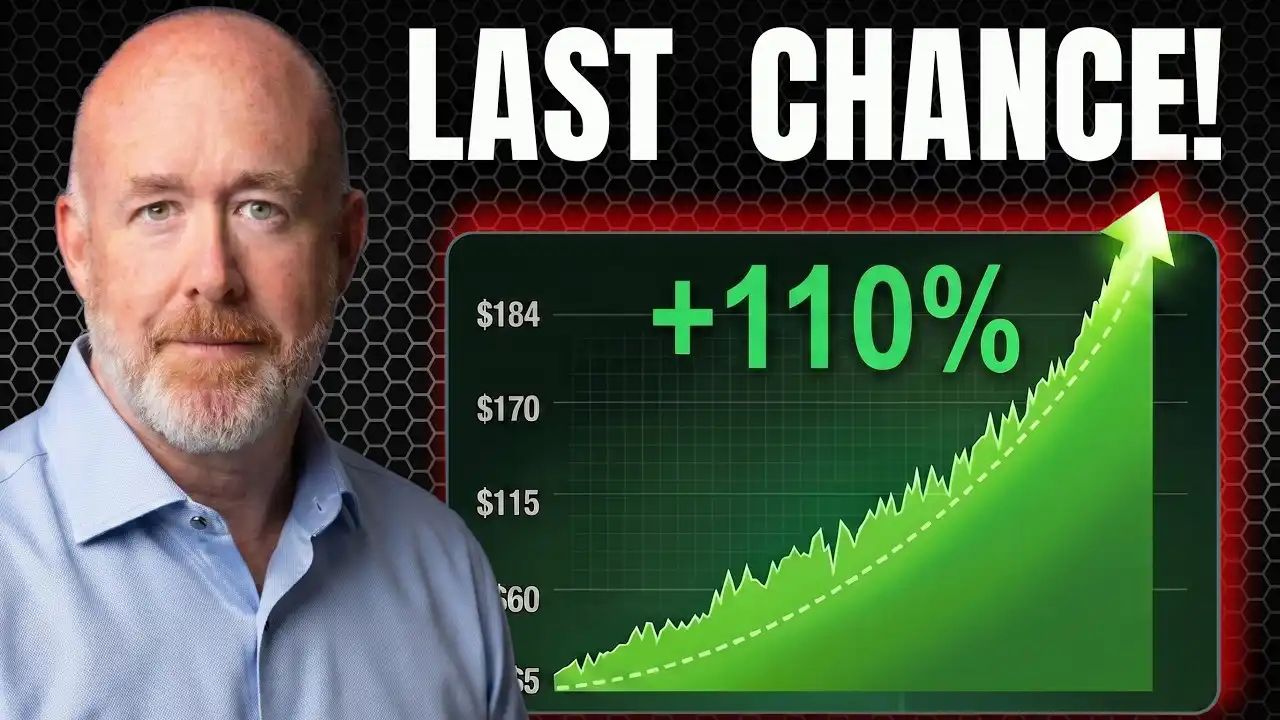
NEW YORK — Crypto trader Avi Eisenberg’s fate now rests in the hands of 12 New York jurors, who have been tasked with deciding whether his October 2022 trades on Mango Markets – which netted him $110 million – were fair game or fraud.

On Wednesday, the jury heard closing arguments in the government’s case against Eisenberg, who was arrested in Puerto Rico in December 2022 and charged with commodities fraud, commodities manipulation and wire fraud in connection with his Mango Markets exploit two months earlier.

Eisenberg, 28, was clad in a dark gray suit. His mother and two other family members were in the gallery during the proceedings. Though his attorneys suggested he may testify earlier in the trial, his defense ultimately rested without calling him to the stand.

Advertisement
Advertisement

The defense’s case on Monday and Tuesday largely hinged on a single expert witness, former Secret Service agent-turned crypto investigations consultant Jeremy Sheridan. Over two days of testimony he spoke to the mechanisms that enabled Eisenberg’s trades and the difficulty of understanding whether his borrows were, according to Mango Markets’ codebase, actually borrows at all. But much of his testimony got thrown out by the judge after the court determined his knowledge of Mango Markets’ codebase was itself insufficient.

Prosecutors have argued that Eisenberg engaged in market manipulation, trading large sums of MNGO perpetual futures contracts between himself to pump the price over 1000%, then using his newly-created collateral to fool the platform into allowing him drain $110 million in various cryptocurrencies via the platform’s “borrow” function.

But Eisenberg wasn’t borrowing, prosecutors told the jury on Wednesday – he was stealing. Hours after the exploit, he issued an “extortionate” anonymous proposal to the Mango Markets decentralized autonomous organization (DAO) offering to return $67 million of his haul in exchange for promises not to pursue criminal charges or freeze the rest of the stolen funds.

The facts of the case were largely undisputed by Eisenberg’s defense team when they took the stand. Instead, Eisenberg’s lead attorney, Brian Klein, attempted to frame Eisenberg’s massive trades as a “successful and legal trading strategy” that “fully complied” with the Mango Markets protocol. Klein pointed to Mango Markets’ lack of Terms of Use – only a checkbox that told visitors to use the site “at your own risk” – at the time of Eisenberg’s exploit, arguing that he simply used the platform as intended and made a lot of money doing it.

Advertisement
Advertisement

“This is how people do things in this world of crypto,” Klein told the jury.

Klein is a well-known defense attorney in the crypto sphere, whose past clients include Erik Voorhees, Charlie Shrem and Virgil Griffith. Klein is also currently representing Tornado Cash developer Roman Storm.

Prosecutors told the jury a different version of the story. Eisenberg, they said, knew what he was doing was illegal.

Before his exploit, Eisenberg had sued someone else in federal court for manipulating the price of WAVES. He’d also made internet searches for things like “statute of limitations market manipulation” and “elements of fraud” before his October 2022 trades. After the trades – and once his identity as the exploiter had been exposed – Eisenberg bought a ticket for a flight to Israel and searched for “FBI surveillance,” “list of Israel extraditions” and “Otisville prison,” a white-collar federal penitentiary.

“That’s what you do when you think you’ve committed a crime,” the prosecutor told the jury.

Klein told the jury Eisenberg didn’t go to Israel to escape charges, but instead because angry Mango Markets’ users were threatening his safety. Klein also said that the fact that Eisenberg sued both Circle and AscendX, a nominally Romanian exchange, to get his money back once it was frozen – as well as his willing return to the U.S. – was further evidence that he did not believe he had committed a crime.

Advertisement
Advertisement

In their rebuttal, prosecutors said that Eisenberg’s legal attempts to get his money were made after his identity as the exploiter had been exposed. He thought that his proposal to Mango Markets’ DAO, and its subsequent “waiver of liability,” meant he was off the hook, emboldening him to come back to the U.S., they said.

“Manipulation, lies, deceit – it’s criminal, whether it happens on Wall Street or on a computer program,” the prosecutor said.

Eisenberg faces up to 20 years in prison if convicted on all three counts.
Edited by Nikhilesh De.

Пов'язані матеріали

From Corning to Ciena: The 10X Stock Opportunities in the AI Optical Communication Chain

From Copper to Light: The AI-Driven Optical Communication Supply Chain and Investment Opportunities The exponential data demands of AI are pushing data centers beyond the physical limits of copper cables, forcing a critical transition to optical communication. This shift from electrical to photonic signals over distances greater than ~3 feet solves heat, power, and bandwidth constraints. The real investment opportunity lies not just in headline chipmakers, but across the entire essential photonics supply chain. **Key Investment Layers & Companies:** * **Glass & Fiber:** **Corning** is a dominant, irreplaceable supplier of advanced fiber to all major cloud/AI players (Meta, Amazon, Google, MSFT, OpenAI, NVIDIA), with multi-billion-dollar, multi-year contracts locked in years ahead of delivery. Its profit growth (93%) far outpaces revenue growth (36%), showing pricing power. * **Interconnects:** **Amphenol**, a consolidating giant in high-speed connectors (both copper and optical), shows robust growth (>80% in AI data centers) and expanding margins post-acquisition. **Credo Technology** bridges old and new worlds, extending copper's life in racks while moving into optics. It has hyper-growth but carries high customer concentration risk. * **Systems:** **Ciena** is a leader in coherent optics, enabling massive data capacity upgrades on existing fiber. It has a massive, growing order backlog ($~7B) and strong ties with cloud providers. * **Upstream & Enablers:** **AXT** produces mission-critical indium phosphide wafers for lasers, creating a supply bottleneck, but faces significant geopolitical/export license risk from its China-based manufacturing. **VEO Solutions** is the essential "picks and shovels" play, providing test equipment needed by every component in the optical chain, regardless of the eventual winner. A new pure-play photonics ETF (**FOTO**) offers a consolidated investment vehicle for this theme, though it is new and small. The core thesis is clear: the move from copper to light is inevitable and accelerating, with wealth creation spreading across this critical, multi-layered supply chain.

marsbit7 хв тому

From Corning to Ciena: The 10X Stock Opportunities in the AI Optical Communication Chain

marsbit7 хв тому

A Chip Company Releases AIDC Energy Storage Certification Standards. Why NVIDIA? Computing Power Reshapes Power Supply Logic. Who's in the Lead and Who's Left Out?

NVIDIA has released a "Battery Energy Storage System Self-Certification Guide," setting strict technical standards for energy storage systems specifically for AI data centers (AIDC). The guide focuses solely on certifying the Power Conversion System (PCS), not the batteries, with 10 mandatory performance metrics and 12 validation tests requiring real-world and simulation comparisons. Key requirements include rapid dynamic response to AI workloads, high-frequency system telemetry, and detailed electromagnetic transient models. The move is driven by the extreme and fluctuating power demands of next-generation AI hardware. Modern AIDCs require energy storage systems to act as intelligent, controllable grid assets, not just passive backup, to manage instantaneous, massive power load shifts that traditional UPS systems cannot handle. This redefines the competitive landscape for energy storage providers, shifting focus from capacity and cost to advanced control capabilities and system integration. While the market potential is significant—with forecasts of hundreds of GWh in new demand by 2030—the certification creates a high barrier to entry. It requires proven PCS delivery volumes and credible plans for rapid capacity scaling, favoring established, well-resourced players. Early movers like Fluence (partnering with Siemens) and several Chinese companies have secured projects ahead of the standard, but new entrants must now navigate this rigorous, costly, and time-intensive certification process to compete in the AIDC energy storage market.

marsbit55 хв тому

A Chip Company Releases AIDC Energy Storage Certification Standards. Why NVIDIA? Computing Power Reshapes Power Supply Logic. Who's in the Lead and Who's Left Out?

marsbit55 хв тому

Торгівля

Спот
Ф'ючерси
活动图片