Taiwanese Crypto Exchange Founder Charged With Money Laundering And Fraud

bitcoinistОпубліковано о 2024-04-10Востаннє оновлено о 2024-04-11

Анотація

David Pan, the founder of the Taiwanese crypto exchange ACE, alongside six other suspects, has been charged by prosecutors with...

David Pan, the founder of the Taiwanese crypto exchange ACE, alongside six other suspects, has been charged by prosecutors with fraud and money laundering. According to the official press release, a court ruled the confiscation of Pan’s assets.

Crypto Fraud Investigation Ends With Indictment And Seizing Of Assets

In January 2024, news broke of one of the largest crypto exchanges in Taiwan being under police investigation for alleged fraud. The investigation unveiled a “well-organized” scheme by ACE exchange founders David Pan and Lin Nam to “deceive” victims into investing in worthless virtual currencies.

The police raided over 15 locations, including ACE headquarters, and arrested 14 individuals, including Pan and Lin, as part of the investigation. Additionally, over NT$200 million, worth $6.4 million, were seized during the raids.

The investigation of the suspected money laundering and fraud of ACE and its investee company, Fu Hai Digital Innovation Company, continued. As a result, the Taichung District Attorney’s Office prosecutors indicted Pan and six other suspects with criminal charges this week.

The defendants are accused of violating the Organized Crime Prevention Ordinance, aggravated fraud, and money laundering. The press release states that 162 victims were affected, and the money lost in the fraud amounts to over NT$340 million, worth around $10.7 million.

The prosecutors asked the Taiwanese court to consider that the “circumstances of the crime are significant, and the malice is grave.” As a result, a judge approved the seizing of property of the seven individuals accused.

Around NT$3.48 million in crypto was seized, alongside NT$ 27.5 million in real estate properties, NT$140,000 in deposits, and NT$485,000 in cash. The total amount seized reaches over NT$31.6 million.

Web of Lies And ACE’s Response

Prosecutors found that the defendants engaged in “offline and over-the-counter transactions of virtual currencies through the ‘Alfred Wallet’ App.”

According to the press release, Fu Hai created the Alfred Wallet and offered the A+Card, which was used for fraud. The virtual currency stored-value cards were sold in cooperation with fake investment online groups that promoted them.

With the help of social media groups, the fraudsters promoted and hyped investing in virtual currencies, as crypto “could yield considerable returns.” Moreover, they promoted the purchase of TIDE tokens from specific dealers.

Per the investigation, the accused took advantage of the broad belief that physical stores are more trustworthy. As a result, they urged the victims to purchase their tokens at local stores authorized to operate Fu Hai’s Alfred Wallet.

Personnel in the store would aid the victims in using the A+Card to store their tokens in the Alfred Wallet. However, the defendants used the “operation mode” of the app to manage the wallets. Using this method, the “transfer of currency flows could not be publicly queried in the blockchain ledger.”

Subsequently, the system was used to manipulate the addresses of users’ wallets and control the funds from the backend. When victims tried withdrawing their funds, the members of the fraudulent group would find excuses like “wrong orders” and “account problems” or refuse to give reasons.

Following the indictment, ACE published a statement distancing itself from its founder. The crypto exchange clarified that the Alfred Wallet was not an ACE product, as it “was developed by a third party commissioned by the former director Pan.”

Finally, the exchange reassured users that its trading and operating conditions were normal, guaranteeing the safety of its users’ assets.
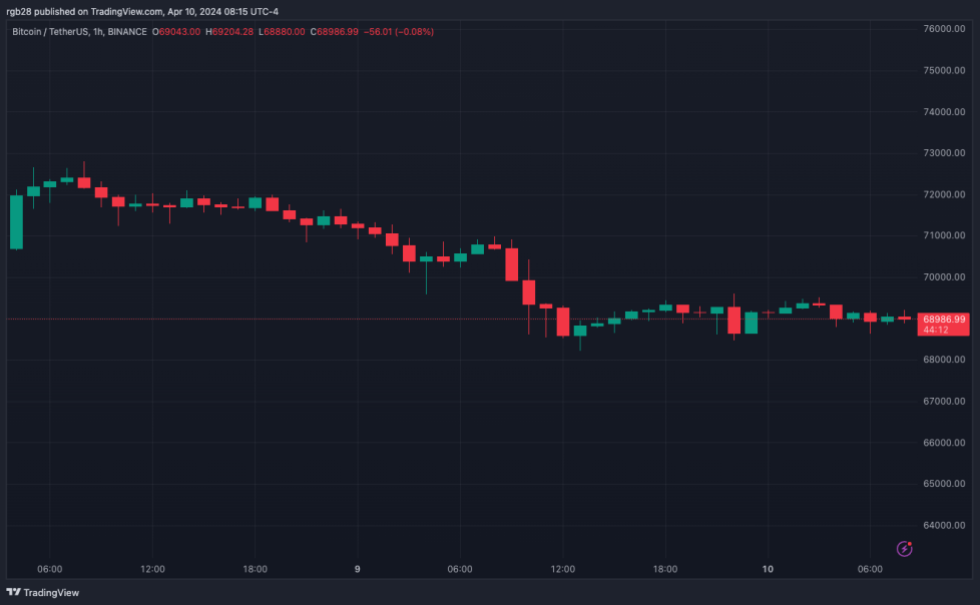
BTC, BTCUSDT, Bitcoin , Crypto

Bitcoin price performance in the 1-day chart. Source: BTCUSDT on Tradingview
Featured Image from Unsplash.com, Chart from TradingView.com
Rubmar Garcia

Rubmar Garcia

Rubmar is a crypto enthusiast who likes learning and improving constantly. She enjoys reporting on the latest news and developments in the crypto industry. Rubmar also enjoys scrapbooking, crafting, simulation games, and watching football.

Пов'язані матеріали

Uncovering the Truth About Agent Commerce, Payments, and Infrastructure

Decoding Agent Commerce, Payments, and Infrastructure: The Reality Over the past year, I've been building infrastructure for the Agent economy, engaging with major players like Stripe, Visa, Coinbase, Google, and dozens of startups. A clear conclusion emerges: true, large-scale demand does not yet exist. Startups face structural challenges. Data points illustrate this gap. Stripe's Agent commerce platform has over 1,000 merchants but only single-digit transacting agents. Visa's Agent payment token requires 9-month KYC and a $250M revenue threshold, accessible only to giants like Amazon. On-chain analysis reveals actual daily Agent transaction volume is around $17k, half of which are test transactions. The article analyzes four potential markets: **1. Agent-to-Merchant (A2M):** Current AI shopping UX is often inferior to traditional e-commerce for visual, comparison-heavy purchases (clothing, electronics). Chat interfaces are a step back. Real merchant interest is defensive "Agent Engine Optimization," fearing future obsolescence, not current demand. Potential exists in high-frequency, low-decision purchases (e.g., food delivery) or simplifying terrible UX (complex checkouts, non-native shoppers), but these require massive consumer distribution channels dominated by giants like DoorDash and Amazon. **2. Agent-to-API (A2A):** Developers already have subscriptions and billing for core APIs (compute, data). The argument for micro-payments via crypto for sub-dollar API calls is addressed by pre-paid balances today. The deeper issue is supplier resistance; major SaaS firms rely on enterprise contracts, not fractional cent pricing. Opportunity lies in the long tail of niche services, but this is a smaller market catering to developers, a historically low-paying group. **3. Agent-to-Agent (A2A):** This remains a theoretical long-term vision with near-zero current transaction volume. It involves unique challenges: discovery, trust, negotiation, dispute resolution. When it materializes, it will require a fundamentally new settlement infrastructure for high-speed, variable-value, multi-party transactions. It's a real long-term bet, but not the current market. **4. Agent-to-Finance (A2F):** This is the only category with existing, paying demand. Integrating AI into financial workflows (trading, portfolio management) is a natural evolution and enables new capabilities like autonomous rebalancing. However, competition favors incumbents with regulatory licenses, compliance infrastructure, and existing client relationships. **The Real Issue:** Why is infrastructure still being built? Incumbents can afford long-term bets, and payment companies see every problem as a nail for their payment hammer. However, payment is just one piece. The core challenge is *coordination*—orchestrating work between Agents and humans, verifying outcomes, and settling results. Payment is part of settlement, which is part of coordination. Companies that solve the coordination problem will subsume payments, not the other way around. Startups lack the infinite runway of giants and must find today's real market, which, after a year of exploration, lies outside these four categories—in an area with real, growing, and underserved activity.

marsbit8 хв тому

Uncovering the Truth About Agent Commerce, Payments, and Infrastructure

marsbit8 хв тому

Kalshi, MTS, and a16z's Ambition

The article "Kalshi, MTS, and a16z's Ambition" explores prediction markets as a focal point of excitement in 2025 for investors, crypto enthusiasts, and media. It traces their intellectual lineage from Friedrich Hayek's ideas on dispersed knowledge and market coordination to Robin Hanson's Logarithmic Market Scoring Rule (LMSR), which incentivizes truthful information sharing. The piece argues that a16z's significant investment in prediction market platform Kalshi (valued at $220B) transcends mere financial speculation. a16z frames prediction markets as a new form of "media" that provides "presence"—a way for individuals to actively engage with and influence world events through financial stakes, countering postmodern detachment. By wagering on outcomes, users become "super observers," and the market's aggregated probabilities gain authoritative power to define event truth and importance. The article uses media company MTS ("Monitoring The Situation") as a case study of a16z's "new media" strategy: rapidly producing high-intensity, multi-format content to "take over the timeline." However, prediction markets like Kalshi are presented as the ultimate piece in this media empire. Their real-money, crowd-sourced probabilities possess a unique "reality distortion field" and perceived objectivity, potentially swaying public opinion and granting a private company unprecedented interpretive power over reality. Ultimately, Kalshi's immense valuation is attributed not just to its exchange model, but to its role as a foundational component in a16z's envisioned new media landscape, where prediction markets define narrative and truth.

链捕手9 хв тому

Kalshi, MTS, and a16z's Ambition

链捕手9 хв тому

US Stocks Suffer Worst Plunge Since 2025: Three Triggers Ignite Tech Stock Valuation Reset

The US stock market experienced its most severe sell-off since the 2025 tariff crisis on June 5th, 2025. The Nasdaq Composite plummeted 4.18%, the S&P 500 fell 2.64%, and the Dow Jones dropped 695 points. The panic stemmed from three converging factors. First, Broadcom's earnings report ignited fears of a slowdown in AI growth. While its AI chip revenue surged 143% YoY to $10.8B, its Q3 AI revenue guidance of $16B fell short of the $17.2B consensus. This triggered a massive sector-wide sell-off, with the Philadelphia Semiconductor Index crashing 10.26% and semiconductor stocks losing roughly $1.3 trillion in market value in a single day. Second, a shockingly strong May jobs report crushed hopes for Federal Reserve rate cuts. Non-farm payrolls added 172,000 jobs, doubling expectations. This robust data, combined with persistently high oil prices above $92/barrel due to the ongoing Iran war and blockade of the Strait of Hormuz, drastically increased market expectations for a potential Fed rate hike instead of a cut. Higher interest rates compress the valuations of growth-heavy tech stocks. Third, the prolonged Iran conflict continues to fuel inflationary pressures, complicating the Fed's policy decisions and undermining the "inflation is tamed" narrative. Together, these events challenged the twin pillars of the market rally: the "limitless AI growth" story and expectations for imminent monetary easing. The sell-off spread globally, impacting Asian and European markets and cryptocurrencies. The article posits this is likely a severe "valuation repricing" rather than the end of the AI story. The underlying demand for AI remains strong, but investor expectations for growth speed and the prices they are willing to pay are being recalibrated. Key upcoming factors include the June FOMC meeting, future AI company earnings, and developments in the Iran conflict.

marsbit4 год тому

US Stocks Suffer Worst Plunge Since 2025: Three Triggers Ignite Tech Stock Valuation Reset

marsbit4 год тому

Торгівля

Спот
Ф'ючерси

Популярні статті

Як купити ACE

Ласкаво просимо до HTX.com! Ми зробили покупку Fusionist (ACE) простою та зручною. Дотримуйтесь нашої покрокової інструкції, щоб розпочати свою криптовалютну подорож.Крок 1: Створіть обліковий запис на HTXВикористовуйте свою електронну пошту або номер телефону, щоб зареєструвати обліковий запис на HTX безплатно. Пройдіть безпроблемну реєстрацію й отримайте доступ до всіх функцій.ЗареєструватисьКрок 2: Перейдіть до розділу Купити крипту і виберіть спосіб оплатиКредитна/дебетова картка: використовуйте вашу картку Visa або Mastercard, щоб миттєво купити Fusionist (ACE).Баланс: використовуйте кошти з балансу вашого рахунку HTX для безперешкодної торгівлі.Треті особи: ми додали популярні способи оплати, такі як Google Pay та Apple Pay, щоб підвищити зручність.P2P: Торгуйте безпосередньо з іншими користувачами на HTX.Позабіржова торгівля (OTC): ми пропонуємо індивідуальні послуги та конкурентні обмінні курси для трейдерів.Крок 3: Зберігайте свої Fusionist (ACE)Після придбання Fusionist (ACE) збережіть його у своєму обліковому записі на HTX. Крім того, ви можете відправити його в інше місце за допомогою блокчейн-переказу або використовувати його для торгівлі іншими криптовалютами.Крок 4: Торгівля Fusionist (ACE)Легко торгуйте Fusionist (ACE) на спотовому ринку HTX. Просто увійдіть до свого облікового запису, виберіть торгову пару, укладайте угоди та спостерігайте за ними в режимі реального часу. Ми пропонуємо зручний досвід як для початківців, так і для досвідчених трейдерів.

98 переглядів усьогоОпубліковано 2024.12.10Оновлено 2026.06.02

Як купити ACE

Обговорення

Ласкаво просимо до спільноти HTX. Тут ви можете бути в курсі останніх подій розвитку платформи та отримати доступ до професійної ринкової інформації. Нижче представлені думки користувачів щодо ціни ACE (ACE).

活动图片














