Blast开启“超级加倍”活动,手把手带你完成任务

PanewsОпубліковано о 2024-06-27Востаннє оновлено о 2024-06-27

Анотація

尽早交互,拒绝稀释。

作者:Azuma,Odaily 星球日报
Blast开启“超级加倍”活动,手把手带你完成任务


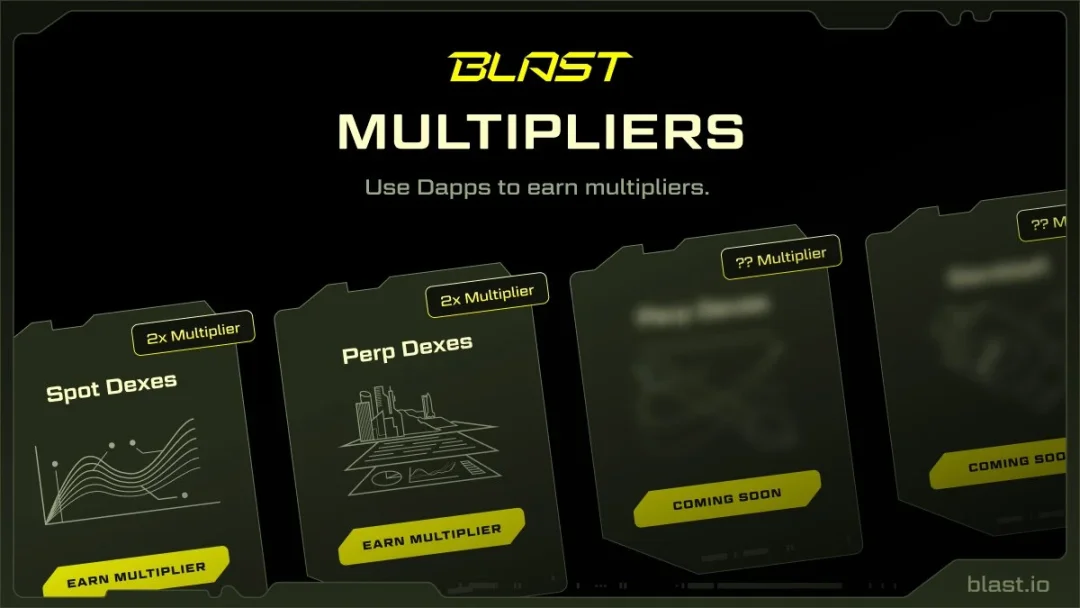
4 月 2 日,生息型 Layer 2 网络 Blast 正式启动了「积分加成」活动。
根据 Blast 的官方披露,「积分加成」活动总计将涵盖 12 个任务板块,而当前暂时仅开放了「现货交易所」及「衍生品交易所」等两大板块,其余板块预计将在后续逐步开放。
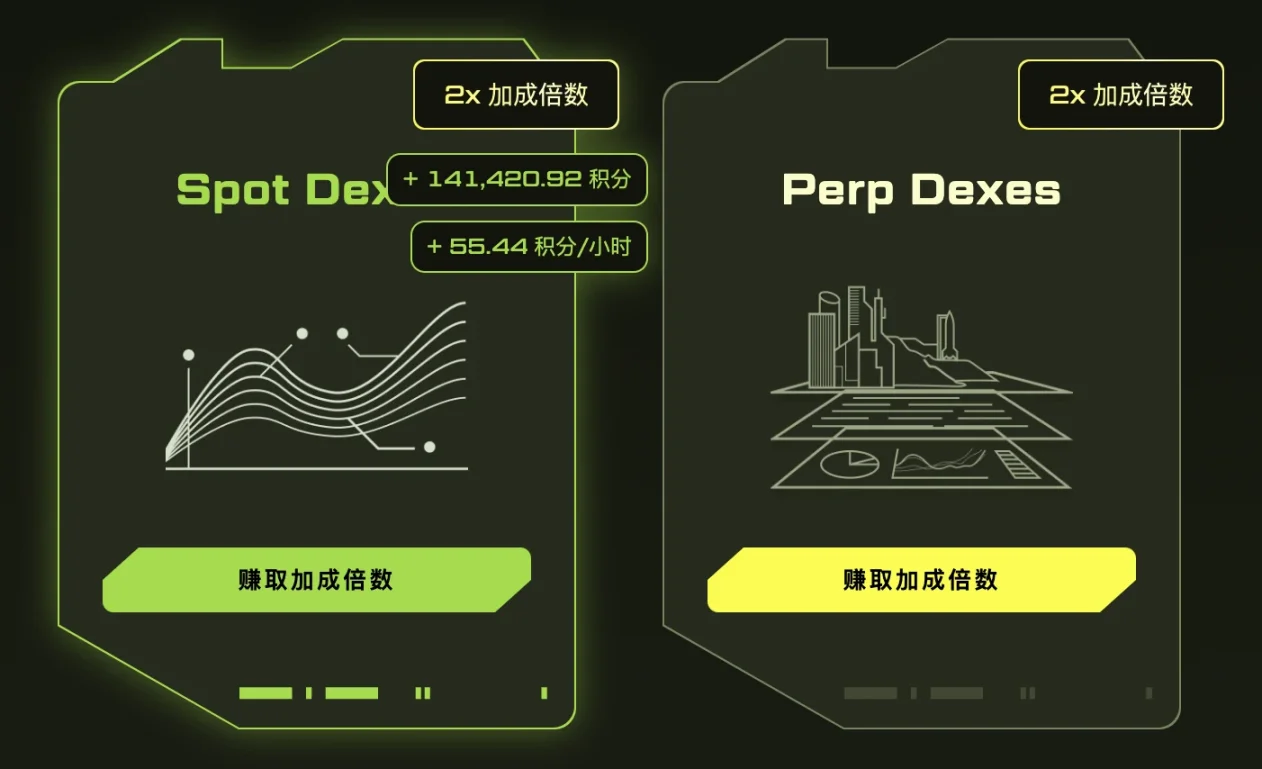
当前阶段,用户可通过官网内的「加成倍数」主页处的 「现货交易所」及「衍生品交易所」板块交互指定项目,继而一次性获得大量积分,并激活后续的积分增长倍率加成 —— 以笔者当前 75 万的总积分以及 55/h 的增长速率为例,完成任一板块任务后便可一次性获得 14 万积分(约占总积分的 18.8% ),并将积分增长速度翻倍。
Blast开启“超级加倍”活动,手把手带你完成任务


  • 在「现货交易所」任务板块下,Blast 共计列出了五家指定项目,分别为 Ring Protocol、Ambient、Mangrove、Thruster Finance 以及 BladeSwap。
  • 在「衍生品交易所」任务板块下, Blast 共计列出了七家指定项目,分别为 BFX、SynFutures、Wasabi、Particle、DTX、Bloom 以及 Blitz。

根据 Blast 的说明,交互上述指定项目即可完成「积分加成」任务,具体的交互金额则未设限制,所以我们大可以用小额资金来进行交互。此外经笔者实测,用户也无需交互所有指定项目,每个板块内仅交互其中一家即可完成任务。
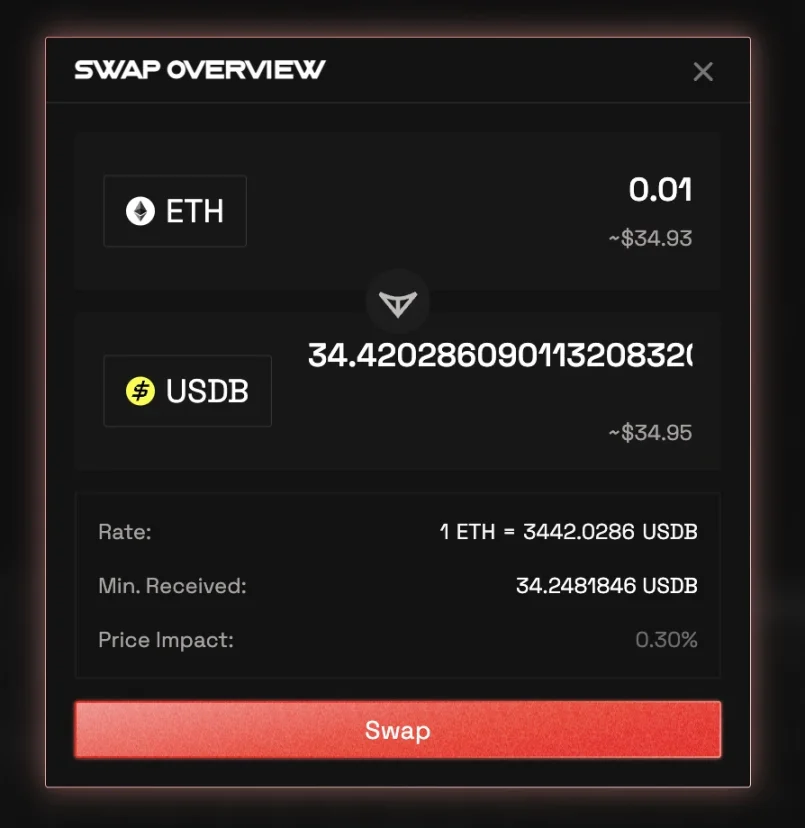
「现货交易所」中,以 Blast 生态最常用的 Thruster Finance 为例,只需在 ETH 和 USDB 之间小额互换一笔,即可完成任务要求。
Blast开启“超级加倍”活动,手把手带你完成任务


「衍生品交易所」中,我们则可以选择该生态主流交易所之一的 BFX,或是近期刚刚完成天使轮融资的 DTX 来进行交互。
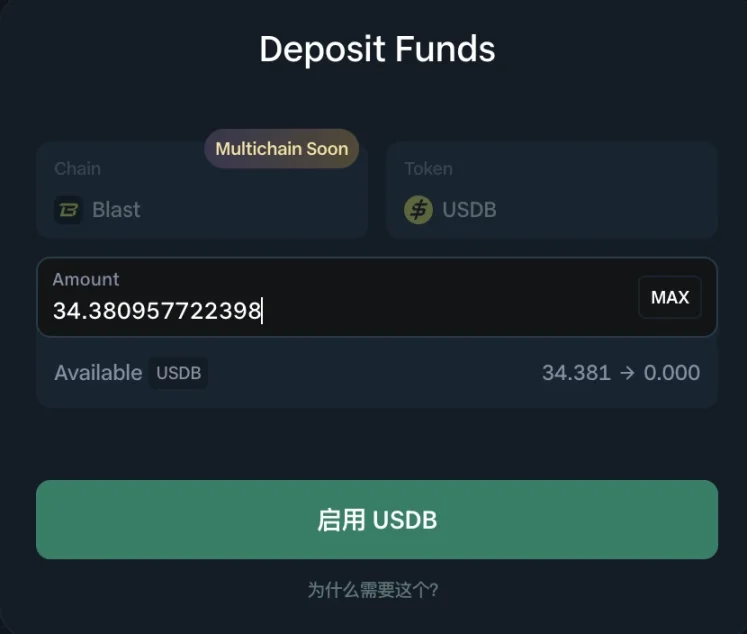
以 BFX 为例,我们首先需要向该交易所账户内(其实是个新的合约地址)存入一定数额的资金,比如我们上一步从 Thruster Finance 处换取的 USDB。
Blast开启“超级加倍”活动,手把手带你完成任务


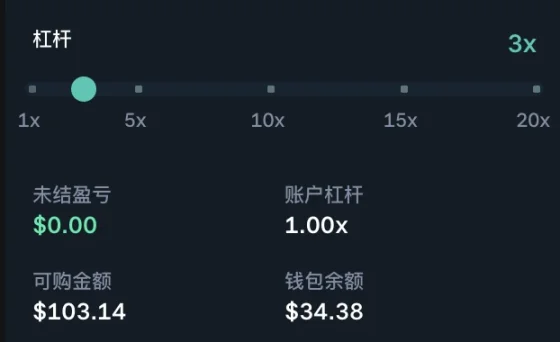
存款完成后,即可使用该资金进行合约开单,为了尽可能避免交互损耗,我们可以选择较低的杠杆倍率。
Blast开启“超级加倍”活动,手把手带你完成任务


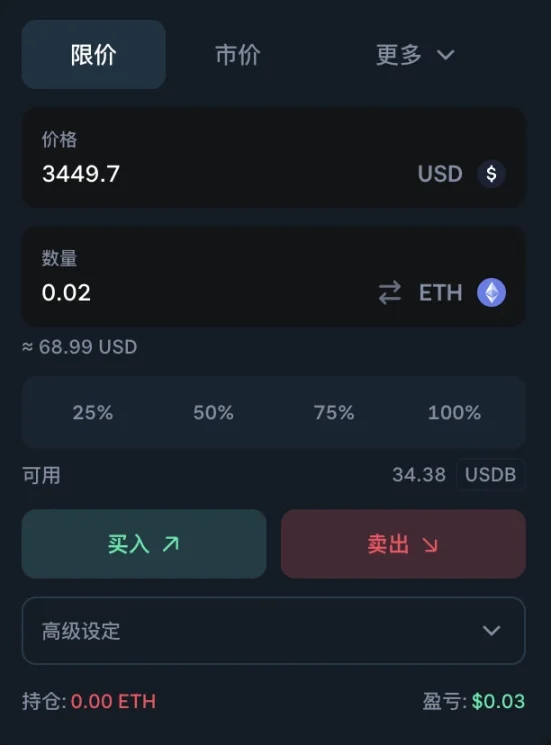
之后,我们便可以在基于对市场走势的理解选择多、空方向的开单操作,之后关闭仓位,提出 USDB 即可。
Blast开启“超级加倍”活动,手把手带你完成任务


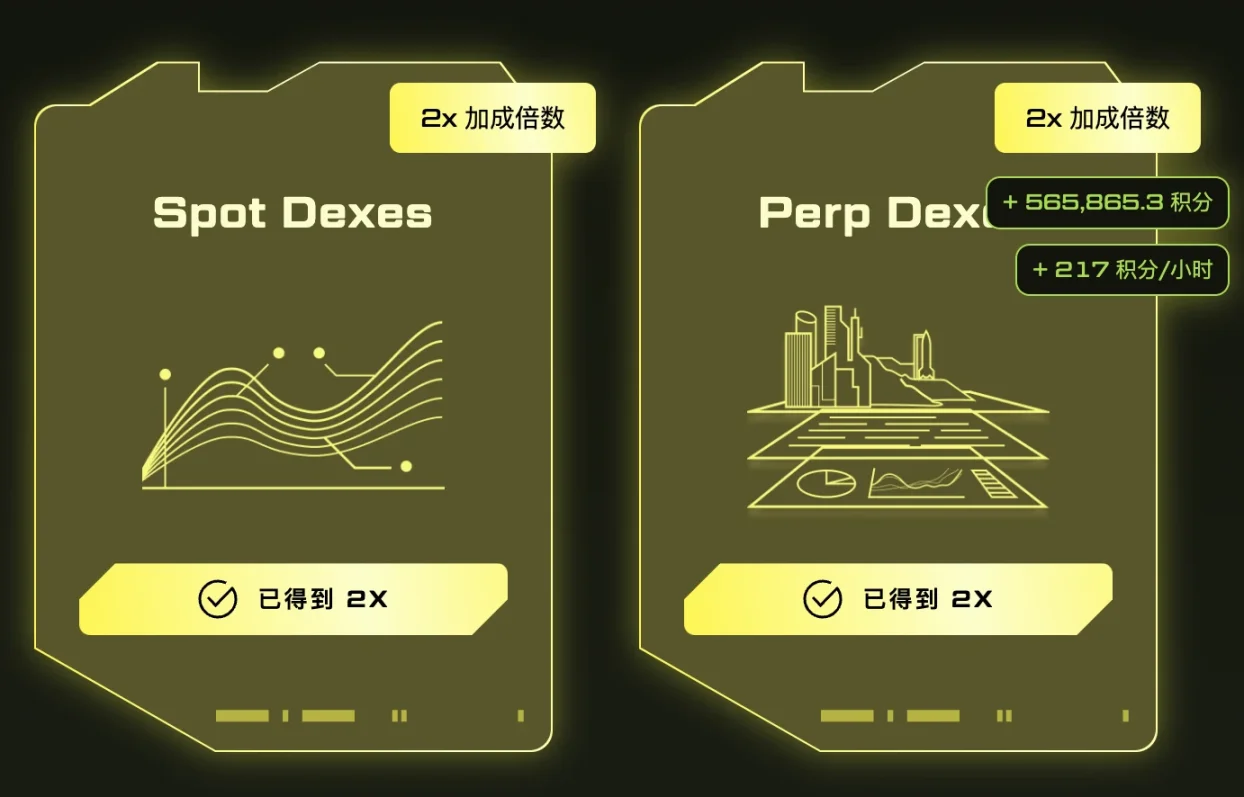
再之后我们回到主任务界面来看,可以发现两项任务均已完成。

Blast开启“超级加倍”活动,手把手带你完成任务


值得一提的是,前文提到过,以笔者个人 75 万的总积分以及 55/h 的增长速率为例,完成任一板块任务后便可一次性获得 14 万积分(约占总积分的 18.8% ),并将积分增长速度翻倍。
但实际完成两项任务后你会发现,一次性积分足足增长了约 42 万,而非 28 万(14 万乘以 2),这或许是因为 Blast 在计算第二项任务的积分奖励时,已将我们完成第一项任务后得到的积分和倍率计入了计算基础,但具体的算法暂时未知。

Blast开启“超级加倍”活动,手把手带你完成任务


此外,完成两项任务后的积分「总倍数」将变为 4 倍 —— 这里不太清楚 Blast 在用「两轮 2 倍」来计算「总倍数」时用的究竟是乘法还是加法(乘法的话可就离大谱了…一共 12 轮呢) —— 但无论如何,如果当前用户不去选择做交互任务,前期所积累的积分必会大幅稀释。

Blast开启“超级加倍”活动,手把手带你完成任务


最后需要特别强调的一点是,考虑到 Blast 生态的安全性隐忧,本次「积分加成」活动支持用户通过非常用地址进行交互,但奖励仍会释放至常用地址内,具体操作为,在主页内通过指定窗口链接其他非常用地址,将所有地址纳入至同一账户内,继而共享奖励加成。


Трендові криптовалюти

Пов'язані матеріали

He Personally Built o1 and o3, but Suddenly Announced: Humans Can Retire Forever

AI researcher Jerry Tworek, former lead of OpenAI's reasoning models (o1/o3), predicts human AI researchers will be largely obsolete within two years. He argues that while AI agents currently excel at execution (reducing experiment cycles from a month to a day), their creative idea generation remains low-quality. True frontier AI development, he claims, is driven by only 30-50 people globally, with everyone else in supporting roles. A core bottleneck is the Transformer architecture, which he believes is suboptimal but has seen only 3-4 serious replacement attempts at OpenAI in seven years due to massive computational and validation hurdles. He highlights a key paradox: you need significant compute to prove a new direction, but you need proof to get the compute. A breakthrough came when he received dedicated GPU resources, leading to scaling reinforcement learning and the o1 model. Now, through his company Core Automation, he uses AI agents to automate costly R&D tasks. In one case, a $100k AI effort optimized a GPU kernel by 60x, matching rare expert-level performance. This acceleration, he argues, will soon automate even the remaining creative and architectural work of the few top researchers. Looking ahead, Tworek envisions a post-work future where humans pursue excellence for its own sake—like ancient philosophers or dedicated athletes—free from the necessity of labor for societal function. He acknowledges the personal challenge of deriving self-worth from work but is actively building the tools that will make his own expert role, and those of his peers, redundant. The prevailing sentiment among researchers, he notes, is a mix of exhaustion and exhilaration in what may be the final, pivotal chapter of human-led AI advancement.

marsbit1 хв тому

He Personally Built o1 and o3, but Suddenly Announced: Humans Can Retire Forever

marsbit1 хв тому

Veterans of the 'Little Smart' Era Return, This Time Leading a Robot Company in a Sprint to an IPO

UTStarcom Veteran Returns: Robot Maker Rushes for IPO On August 24, UDI Robot passed the listing hearing for the Hong Kong Stock Exchange main board. Known for its delivery robots in hotels and KTVs, the company was founded in 2013 by Lu Ying, former CEO of the once-dominant "PHS" phone maker UTStarcom, and other ex-colleagues. UDI has five main product series, including indoor delivery, outdoor delivery, and cleaning robots. Significantly, its business model is shifting from hardware sales to recurring service revenue. In 2025, AI vision model solutions contributed 37.5% of its total revenue of ~318 million RMB, while robot product sales accounted for 42.5%. However, its overall business remains unprofitable, with a cumulative net loss of 5.44 billion RMB from 2023 to Q1 2026. A key challenge is low hardware毛利率 (gross margin for robot products was 8.3% in 2025). Despite losses common in the robotics sector, UDI's deficit is narrowing. It has raised ~989 million RMB over 13 pre-IPO rounds from investors including Alibaba (Ele.me, Yunfeng Capital), Legend Capital, SenseTime, and hotel chains like Huazhu. The founding team, largely from UTStarcom, collectively controls 33.40% of the company. UDI ranks as China's third-largest commercial service robotics company with an 8.9% market share in 2025. Its IPO, sought via Hong Kong's special tech chapter 18C, aims to fund R&D, expansion, and working capital, marking a comeback attempt for the "PHS" veterans in a new technological era.

marsbit5 хв тому

Veterans of the 'Little Smart' Era Return, This Time Leading a Robot Company in a Sprint to an IPO

marsbit5 хв тому

Zuck refuses to give up, secretly develops one of his own called 'Hatch', but the model uses Claude...

Meta, led by Mark Zuckerberg, is developing a new AI agent platform called "Hatch" after its reported unsuccessful attempt to acquire Manus. Described as a "consumer version of OpenClaw," Hatch aims to automate tasks across various digital services. The platform is trained on simulated versions of services like DoorDash, Etsy, Reddit, Yelp, and Outlook, and is deeply integrated with Meta's own ecosystem, including Instagram, Facebook, and WhatsApp. Its goal is to enable end-to-end task completion, such as identifying a product in a social media post, comparing prices, and facilitating purchases. During development, Hatch is reportedly relying on Anthropic's Claude model. However, Meta plans to transition to its proprietary model, Muse Spark, for the official launch, with a newer model named Watermelon expected in October. This phased migration highlights potential technical challenges, as switching core models can affect performance and user experience. Priced at up to $199.99 per month, Hatch targets consumers willing to pay for significant time savings. Its key advantage is default distribution within Meta's vast suite of apps, potentially giving it access to rich user context. However, it faces major hurdles in real-world reliability, needing to handle complex, dynamic web environments, authentication changes, and anti-bot measures that differ from its controlled training simulations. The move represents Meta's strategic push to monetize AI directly beyond its core advertising business.

marsbit7 хв тому

Zuck refuses to give up, secretly develops one of his own called 'Hatch', but the model uses Claude...

marsbit7 хв тому

IOSG: U.S. Bonds, AI, and Inflation Can't All Be Had. Which Side Should BTC Bet On?

**Title: IOSG: Can't Have It All – Treasury Bonds, AI, and Inflation. Where Should BTC Bet?** **Core Thesis:** Washington is likely to prioritize stabilizing the Treasury market and sustaining the AI investment cycle, accepting higher inflation for longer as the trade-off. This creates sustained tailwinds for both gold and Bitcoin by injecting liquidity and shifting duration risk away from private balance sheets. **Key Issue:** The critical macro price is no longer the Fed funds rate, but the yield investors demand to hold long-term US Treasuries. Recent surges in 10-year and 30-year yields stem from a combination of persistent inflation risks, heavy fiscal supply, thinning demand for duration, and new competition for capital from massive AI infrastructure investments. **The Trilemma:** The US faces a difficult choice between controlling inflation, maintaining Treasury market stability, and fostering the AI growth cycle. Political pressure suggests inflation control is the most likely sacrifice. **Treasury's Response:** Measures by Treasury Secretary Besant focus on defending the bond market: supporting the Yen to prevent forced Japanese Treasury sales, increasing long-end liquidity via repos (effectively shortening government debt maturity), and a potential shift toward more short-term bill issuance. This could generate significant liquidity, reigniting "currency debasement" trades. **Gold's Role:** Gold's ~90% surge since mid-2024 is not just an inflation hedge but a bet on monetary debasement as a politically viable path out of the debt cycle, driven by declining dollar trust. **Bitcoin's Positioning:** Bitcoin has historically failed to correlate with gold during "debasement" rallies. However, its recent strong performance alongside Treasury's liquidity actions suggests the market may be treating it as a "stealth QE" trade—a scenario where crypto assets typically thrive amid expanding global liquidity. For BTC to firmly join the "debasement hedge" category, this correlation needs to persist. **Conclusion & Risks:** The framework suggests that preserving market stability and the AI cycle will likely mean shorter debt maturity,常态化 liquidity backstops, and tolerance for higher inflation—favorable for gold and BTC. This outlook would be undermined if inflation falls toward 2%, a credible fiscal path emerges, AI becomes self-funding, or private demand absorbs debt without higher term premiums. The key question is which corner of the trilemma breaks first; accelerated "duration transfer" by the Treasury would mean a longer tailwind for Bitcoin.

marsbit22 хв тому

IOSG: U.S. Bonds, AI, and Inflation Can't All Be Had. Which Side Should BTC Bet On?

marsbit22 хв тому

How 5G Will Be Launched in Russia: The Digital Ministry's Proposal and the Roadmap to 2035

Russia's Ministry of Digital Development has proposed a plan for launching 5G networks. It allows the "Big Four" mobile operators (Beeline, Megafon, MTS, T2) to deploy 5G on existing 4G/LTE base stations and frequencies, and will allocate them the new 4.63–4.99 GHz band. A key element is "technological neutrality," permitting the use of foreign equipment until September 2026. The new 4.63–4.99 GHz band is intended for more advanced services and industrial applications. However, a phased transition to Russian-made base stations will begin in 2027, with a target of at least 50% domestic equipment by 2030. The rollout timeline aims for 5G in cities with over 1 million people by the end of 2027, expanding to 84 cities by 2035. Initial "5G Ready" service, operating over existing infrastructure, will offer minimal speed improvements. Significant speed gains (4-10x over LTE) will require the new band and corresponding equipment. The plan addresses long-standing regulatory delays, including the military's hold on the global standard 3.4–3.8 GHz band. This forced Russia to adopt the 4.63–4.99 GHz range, overlapping with a Chinese band, making Chinese equipment a potential transitional solution. The success of the rollout will depend on equipment supply and the pace of production localization, while a challenge lies in smartphone compatibility with this non-standard frequency band.

cryptonews.ru3 год тому

How 5G Will Be Launched in Russia: The Digital Ministry's Proposal and the Roadmap to 2035

cryptonews.ru3 год тому

Торгівля

Спот

Популярні статті

Як купити BLAST

Ласкаво просимо до HTX.com! Ми зробили покупку Blast (BLAST) простою та зручною. Дотримуйтесь нашої покрокової інструкції, щоб розпочати свою криптовалютну подорож.Крок 1: Створіть обліковий запис на HTXВикористовуйте свою електронну пошту або номер телефону, щоб зареєструвати обліковий запис на HTX безплатно. Пройдіть безпроблемну реєстрацію й отримайте доступ до всіх функцій.ЗареєструватисьКрок 2: Перейдіть до розділу Купити крипту і виберіть спосіб оплатиКредитна/дебетова картка: використовуйте вашу картку Visa або Mastercard, щоб миттєво купити Blast (BLAST).Баланс: використовуйте кошти з балансу вашого рахунку HTX для безперешкодної торгівлі.Треті особи: ми додали популярні способи оплати, такі як Google Pay та Apple Pay, щоб підвищити зручність.P2P: Торгуйте безпосередньо з іншими користувачами на HTX.Позабіржова торгівля (OTC): ми пропонуємо індивідуальні послуги та конкурентні обмінні курси для трейдерів.Крок 3: Зберігайте свої Blast (BLAST)Після придбання Blast (BLAST) збережіть його у своєму обліковому записі на HTX. Крім того, ви можете відправити його в інше місце за допомогою блокчейн-переказу або використовувати його для торгівлі іншими криптовалютами.Крок 4: Торгівля Blast (BLAST)Легко торгуйте Blast (BLAST) на спотовому ринку HTX. Просто увійдіть до свого облікового запису, виберіть торгову пару, укладайте угоди та спостерігайте за ними в режимі реального часу. Ми пропонуємо зручний досвід як для початківців, так і для досвідчених трейдерів.

207 переглядів усьогоОпубліковано 2024.12.11Оновлено 2026.06.02

Як купити BLAST

Обговорення

Ласкаво просимо до спільноти HTX. Тут ви можете бути в курсі останніх подій розвитку платформи та отримати доступ до професійної ринкової інформації. Нижче представлені думки користувачів щодо ціни BLAST (BLAST).

活动图片