2026 Cryptocurrency Exchange Listing Decision Questionnaire Survey Report

marsbitОпубліковано о 2026-01-21Востаннє оновлено о 2026-01-21

Анотація

The 2026 Cryptocurrency Exchange Listing Decision Survey Report, conducted by RootData, gathered 313 valid responses from professionals including Listing BD personnel, researchers, and listing committee members. Key findings reveal that over 69% of respondents are directly involved in or responsible for listing decisions, with many handling over 50 projects annually, leading to significant information overload. Major pain points in the decision-making process include fragmented and outdated data, with approximately 50% of respondents citing these issues. High "hidden costs of trust" and data inaccuracy often prolong the review process. Over 30% of respondents noted that data delays significantly impact decisions, potentially causing missed opportunities or errors. Transparency of project information—such as details about institutional investors, valuation, team, and product roadmap—is critical. More than half of the respondents rely on third-party data platforms like RootData (used by 88.9% of participants) for verification. Projects listed on authoritative platforms with detailed information can improve listing efficiency by at least 30%. Conversely, low transparency often triggers extended defensive reviews, with 16.7% of respondents likely rejecting such projects outright. The report concludes that data transparency is vital in listing approvals, significantly affecting both the efficiency and outcome of a project’s capitalization efforts.

Source: RootData

Recently, RootData initiated a survey questionnaire focusing on cryptocurrency exchange listing decisions, collecting a total of 313 valid responses. Participants included Listing BD personnel, researchers, and listing committee members, among others. The survey results are now compiled into this research report for reference.

Respondent Profile: Covering Frontline Practitioners and Decision-Makers in Listing
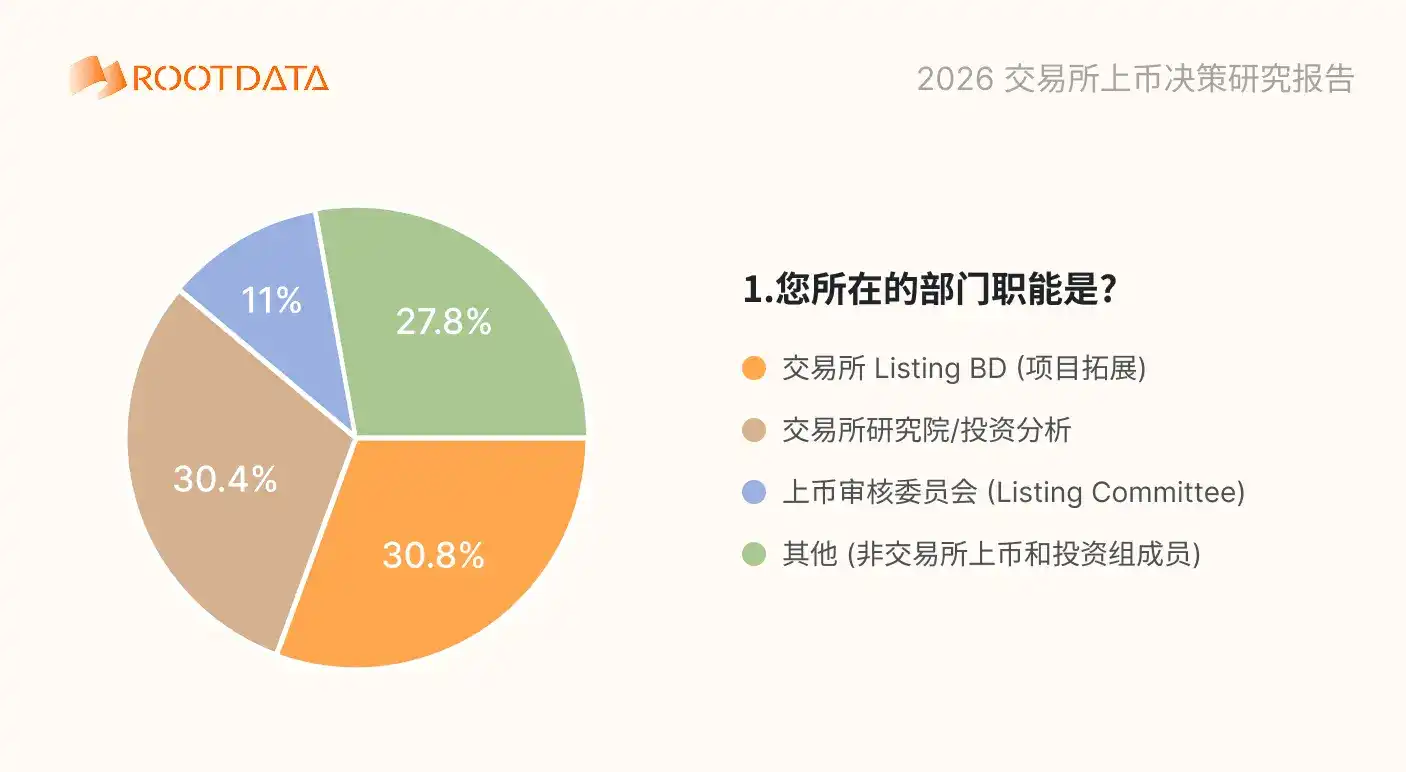
Over 69% of respondents are involved in or directly decision-makers for Listing work. Survey participants were primarily from exchange Listing BD and research institute/investment analysis roles. They are the "value discovery" and "access control" departments of exchanges, and decision-makers face immense information processing pressure.

Decision-Making Pain Points: Fragmented Data and Delayed Updates
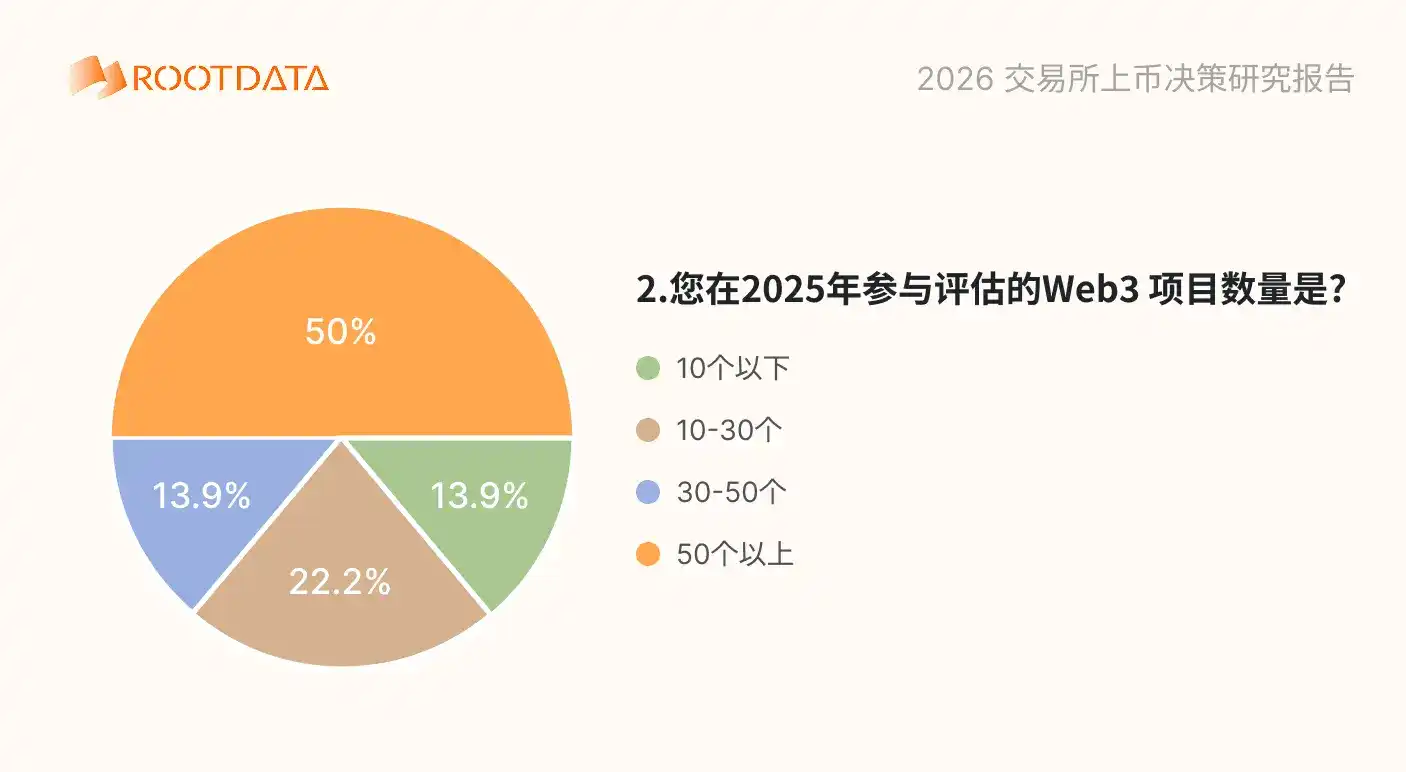
Approximately 50% of respondents evaluate over 50 projects annually. Decision-makers are in a state of severe "information overload." Among the vast number of projects, those that can provide structured and transparent data significantly reduce the cognitive cost for decision-makers. This also indicates that "transparency" has become one of the important metrics for projects to stand out within the extremely short evaluation window.

Distribution of Core Work Responsibilities
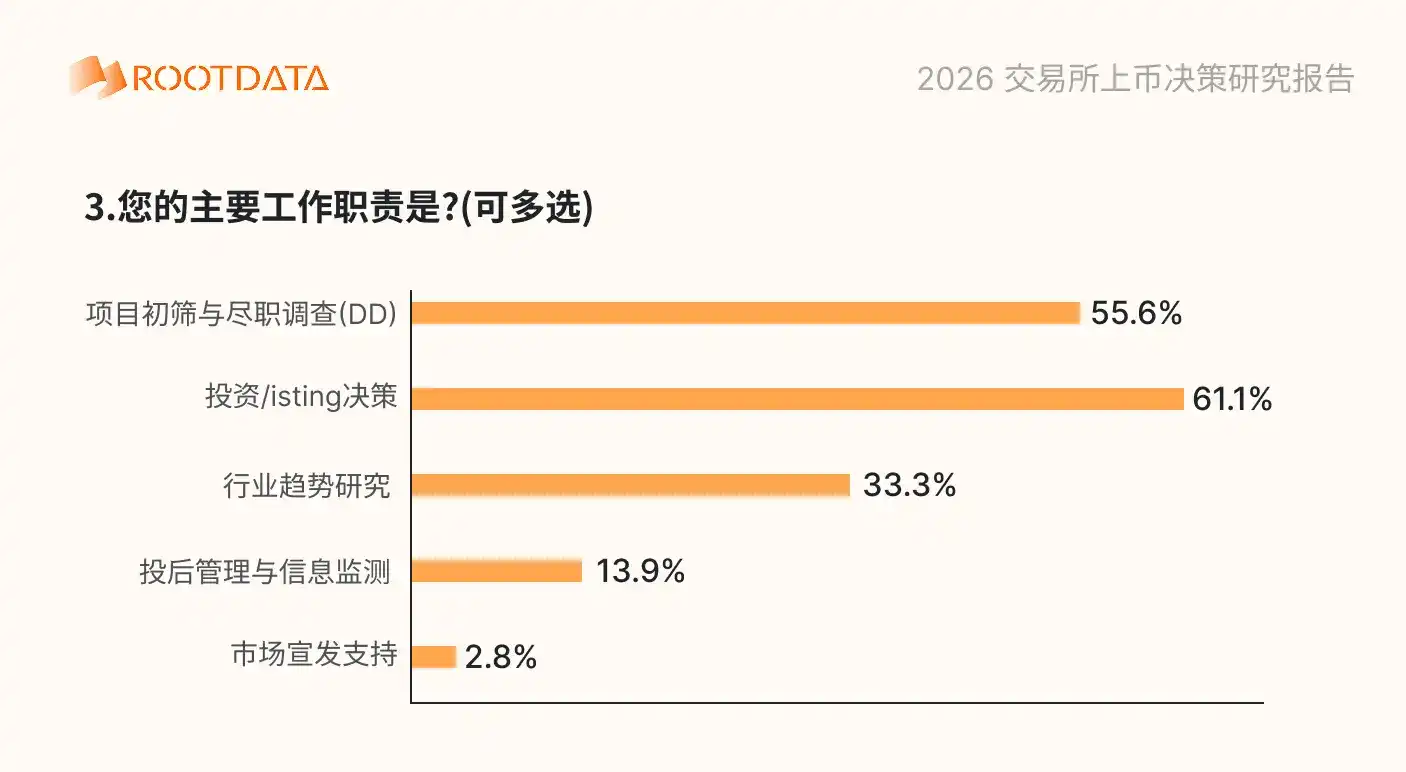
Due diligence and decision-making are highly overlapping functions. This means that data platforms are no longer just auxiliary tools but are integrated into the decision-making chain.

The "Stumbling Block" to Decision-Making Efficiency

"Trust cost" is the most expensive hidden cost for exchanges. Uncertainty in data can cause the decision-making process to repeatedly backtrack. As the compliance trend further intensifies, the accuracy and effectiveness of asset information disclosure will become important factors affecting the exchange listing cycle.

The "Hidden Penalty" of Data Delay
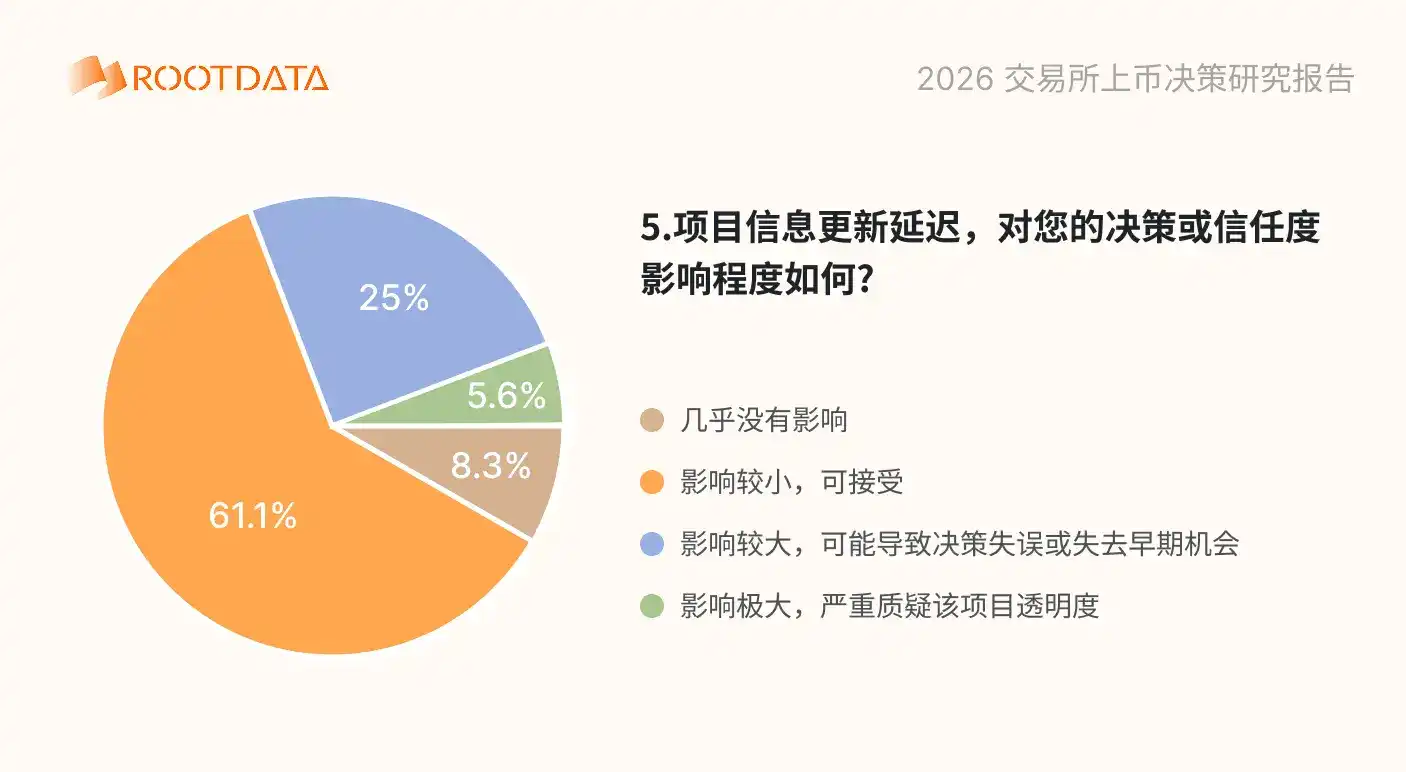
Over 30% of respondents believe delays have a significant or极大 impact, potentially leading to decision-making errors, missed opportunities, or even质疑 project transparency. Even though 60% of respondents表面 "can accept it," delayed information updates from projects may result in a hidden penalty during the Listing evaluation.

Handling of Outdated Information
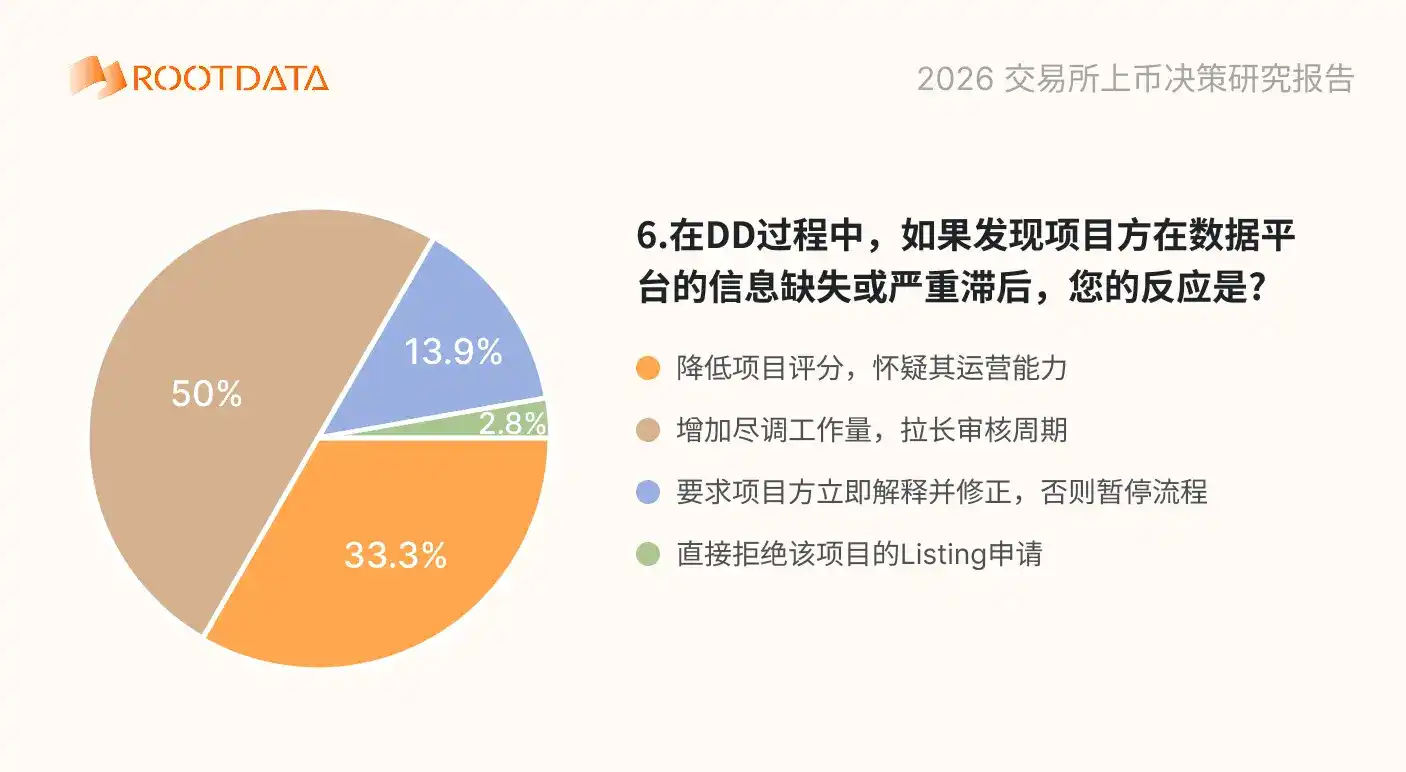
50% of respondents indicated that if project data is not transparent, it will trigger the exchange's "defensive due diligence," prolonging the review time. 16.7% of respondents explicitly stated they would stop the review process or even directly reject the project's Listing application.

The "Required Course" for Listing Review
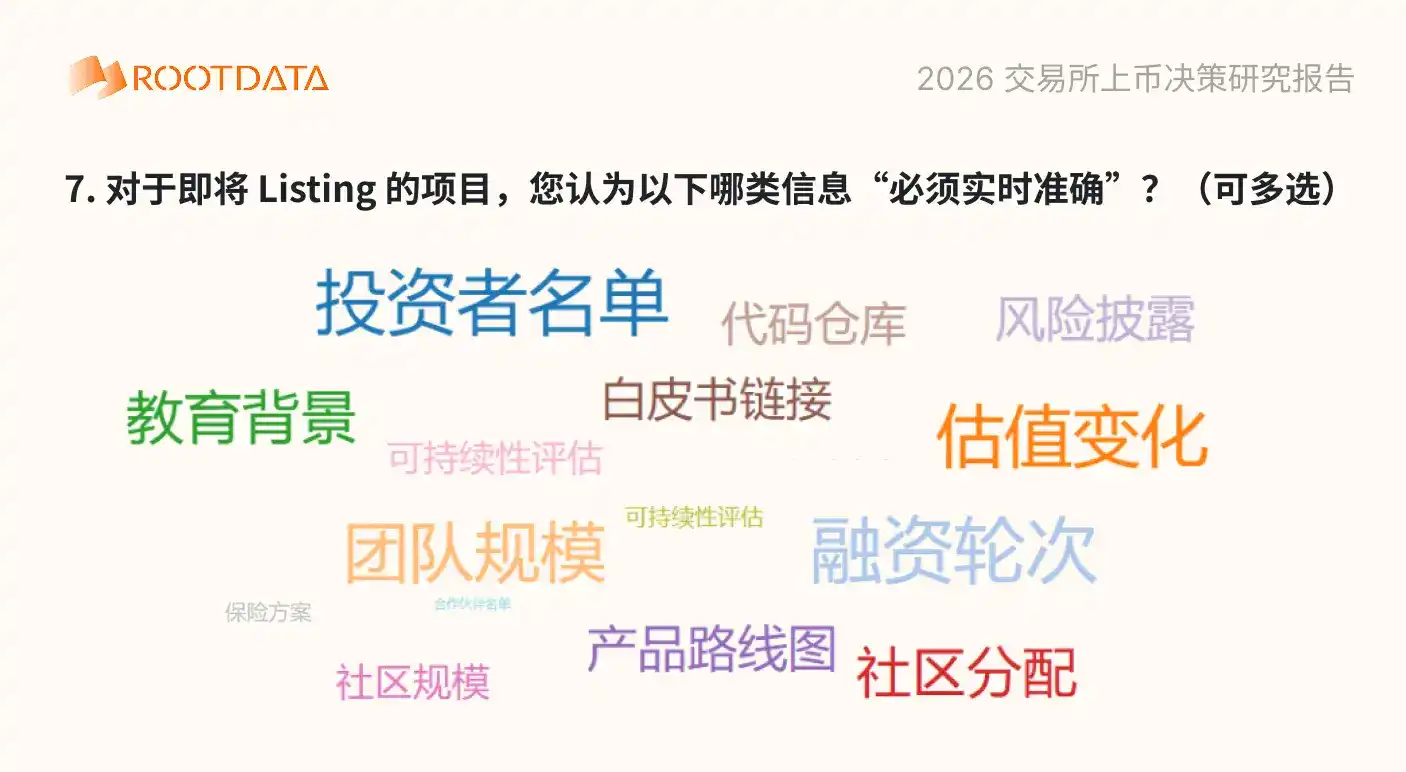
The historical track record of institutional investors, valuation, team, product roadmap, and other asset-related "essential dimensions" constitute the credit cornerstone of Web3 projects. In reality, this information is also very easy to falsify. Therefore, over half of the respondents indicated a strong need for third-party data platforms to help them cross-verify information.

Preferred Commonly Used Data Platforms
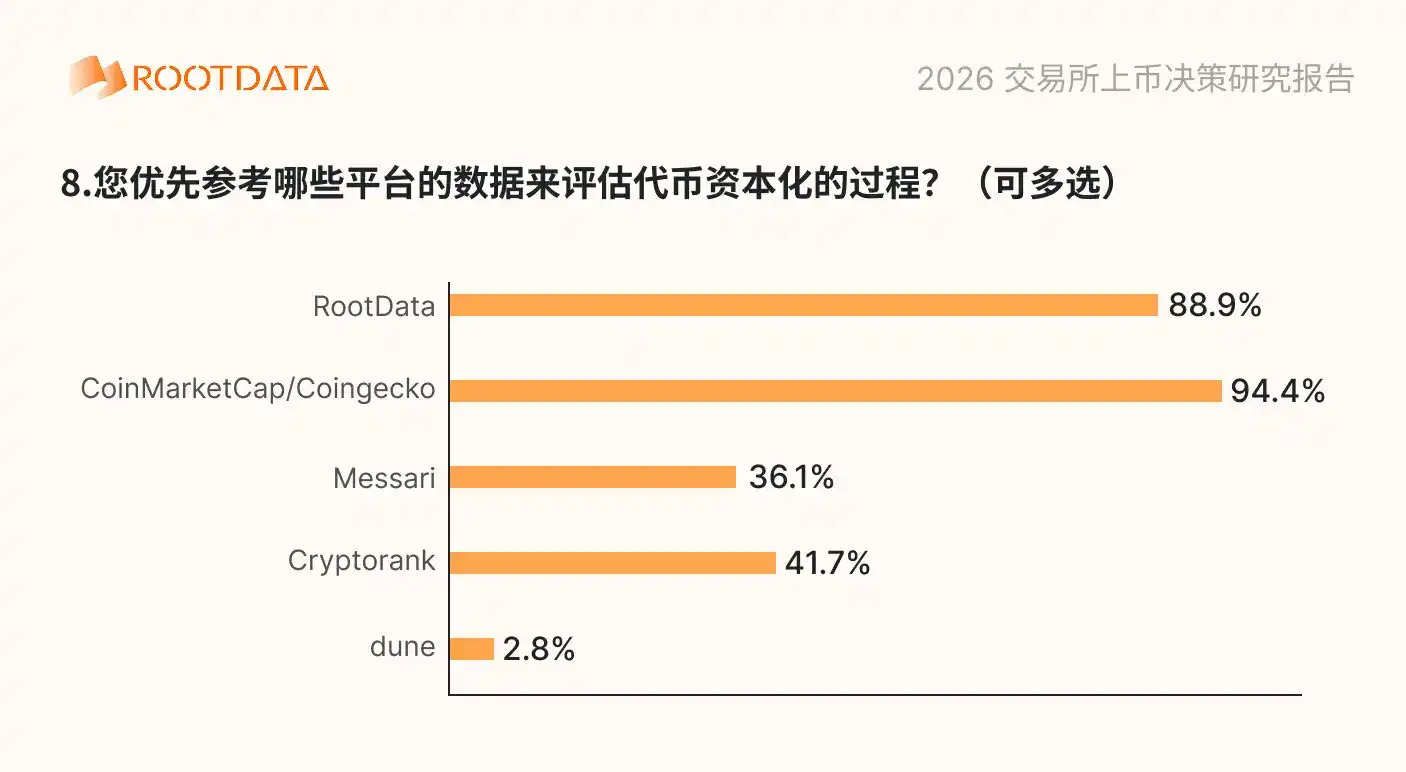
88.9% of respondents stated they choose to reference RootData's data, making it a "desktop essential" tool for exchange Listing teams. This is particularly evident for projects with lower token capitalization (primarily those with their first TGE or not yet listed on major global crypto exchanges). This high penetration rate signifies that the data structure and quality control established by RootData for Web3 projects are becoming an industry standard. For projects with very high token capitalization, 94.4% of respondents会选择 Coingecko or Coinmarketcap platforms for data cross-verification.

Efficiency Boost from Detailed Project Information
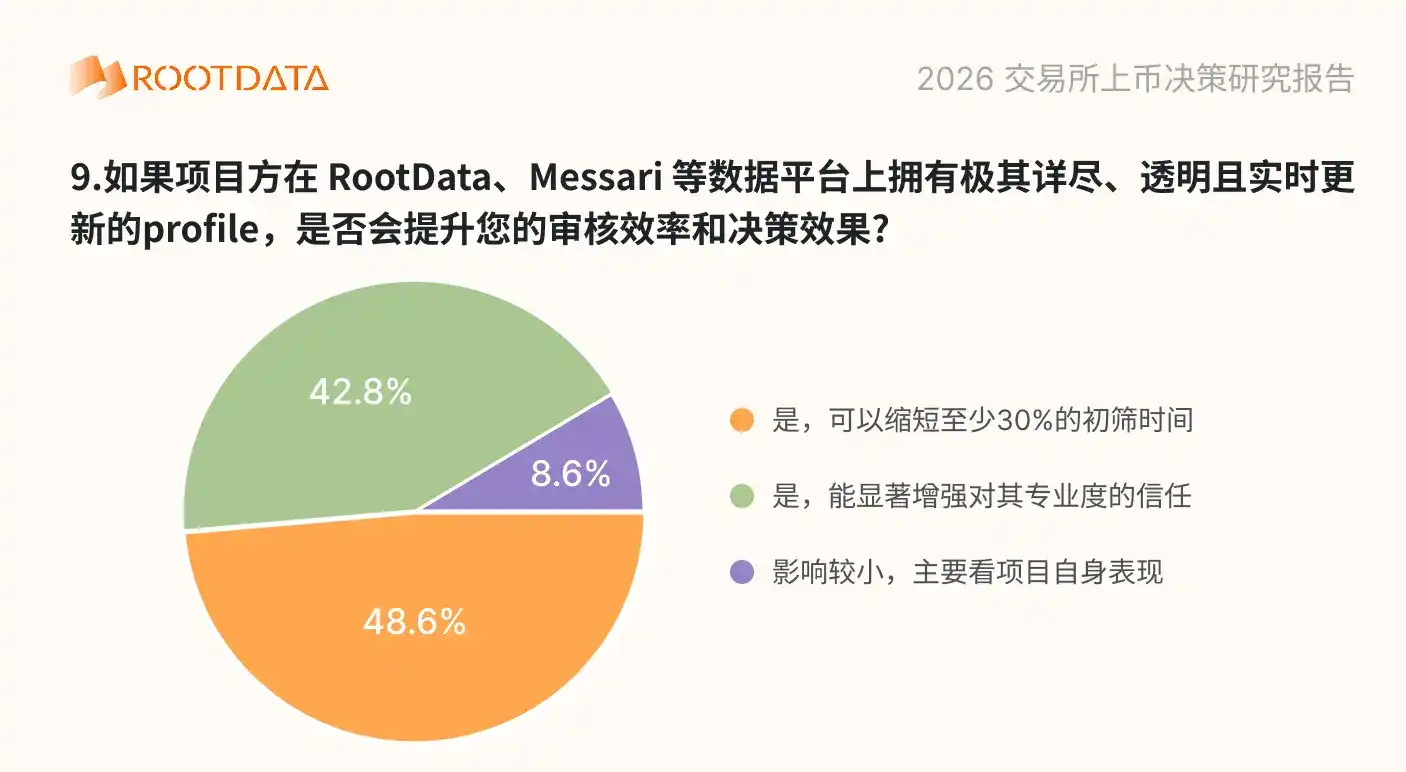
91.4% of respondents explicitly stated that a project being listed on authoritative third-party data platforms like RootData and Crunchbase with detailed information will significantly improve Listing efficiency and好感度,至少可以带来 30% 的审核效率的提升 (at least bringing a 30% improvement in review efficiency).

The Role of Data Platforms in Web3 Development

Only 2.7% of respondents believe projects do not need to focus on data transparency. Listing, being one of the most mysterious links in the industry, has over 80.6% of users agreeing that data platforms are very important for their Listing decisions. This further indicates that whether a project values data information disclosure will directly affect the effectiveness and efficiency of its capitalization.

Summary

The survey results reflect that over half of the professionals in exchange listing departments regard project information transparency as a crucial part of the listing review process, especially information regarding institutional investors, valuation, team, and product roadmap. Sufficient information transparency on third-party data platforms can effectively speed up the review progress (by over 30%), while the review cycle for projects with low transparency will be prolonged.

In the current state of industry development, a large number of projects are陷入 "launching the token only for it to break issue price immediately"窘境, and users have lost trust in the vast majority of crypto projects. The reasons include both the projects' own lack of highlights and reliable business models, as well as many projects being in an information-opaque "black box" state. The disclosure status of a project's core information has become one of the core factors affecting its capitalization progress and effectiveness.


Пов'язані питання

QWhat percentage of survey respondents are directly involved in or make decisions about exchange listings?

AOver 69% of respondents are directly involved in or make decisions regarding exchange listings.

QWhat is considered the most expensive hidden cost for exchanges during the listing process, according to the report?

A"Trust cost" is considered the most expensive hidden cost for exchanges, as data uncertainty leads to repeated backtracking in the decision-making process.

QWhich data platform is used by the vast majority (88.9%) of listing teams for reference, especially for projects with low token capitalization?

A88.9% of respondents use RootData as a reference, making it a 'desktop essential' tool for exchange listing teams, particularly for projects with low token capitalization.

QHow does having detailed information on authoritative third-party data platforms like RootData impact the listing efficiency?

A91.4% of respondents stated that having detailed information on platforms like RootData significantly improves listing efficiency and favorability, increasing audit efficiency by at least 30%.

QWhat are the 'mandatory dimensions' or core information that form the credit foundation for a Web3 project during listing reviews?

AThe 'mandatory dimensions' include institutional investors, valuation, team, product roadmap, and the asset's historical evolution, which form the credit foundation for a Web3 project.

Пов'язані матеріали

Gensyn AI: Don't Let AI Repeat the Mistakes of the Internet

In recent months, the rapid growth of the AI industry has attracted significant talent from the crypto sector. A persistent question among researchers intersecting both fields is whether blockchain can become a foundational part of AI infrastructure. While many previous AI and Crypto projects focused on application layers (like AI Agents, on-chain reasoning, data markets, and compute rentals), few achieved viable commercial models. Gensyn differentiates itself by targeting the most critical and expensive layer of AI: model training. Gensyn aims to organize globally distributed GPU resources into an open AI training network. Developers can submit training tasks, nodes provide computational power, and the network verifies results while distributing incentives. The core issue addressed is not decentralization for its own sake, but the increasing centralization of compute power among tech giants. In the era of large models, access to GPUs (like the H100) has become a decisive bottleneck, dictating the pace of AI development. Major AI companies are heavily dependent on large cloud providers for compute resources. Gensyn's approach is significant for several reasons: 1) It operates at the core infrastructure layer (model training), the most resource-intensive and technically demanding part of the AI value chain. 2) It proposes a more open, collaborative model for compute, potentially increasing resource utilization by dynamically pooling idle GPUs, similar to early cloud computing logic. 3) Its technical moat lies in solving complex challenges like verifying training results, ensuring node honesty, and maintaining reliability in a distributed environment—making it more of a deep-tech infrastructure company. 4) It targets a validated, high-growth market with genuine demand, rather than pursuing blockchain integration without purpose. Ultimately, the boundaries between Crypto and AI are blurring. AI requires global resource coordination, incentive mechanisms, and collaborative systems—areas where crypto-native solutions excel. Gensyn represents a step toward making advanced training capabilities more accessible and collaborative, moving beyond a niche controlled by a few giants. If successful, it could evolve into a fundamental piece of AI infrastructure, where the most enduring value in the AI era is often created.

marsbit13 год тому

Gensyn AI: Don't Let AI Repeat the Mistakes of the Internet

marsbit13 год тому

Why is China's AI Developing So Fast? The Answer Lies Inside the Labs

A US researcher's visit to China's top AI labs reveals distinct cultural and organizational factors driving China's rapid AI development. While talent, data, and compute are similar to the West, Chinese labs excel through a pragmatic, execution-focused culture: less emphasis on individual stardom and conceptual debate, and more on teamwork, engineering optimization, and mastering the full tech stack. A key advantage is the integration of young students and researchers who approach model-building with fresh perspectives and low ego, prioritizing collective progress over personal credit. This contrasts with the US culture of self-promotion and "star scientist" narratives. Chinese labs also exhibit a strong "build, don't buy" mentality, preferring to develop core capabilities—like data pipelines and environments—in-house rather than relying on external services. The ecosystem feels more collaborative than tribal, with mutual respect among labs. While government support exists, its scale is unclear, and technical decisions appear driven by labs, not state mandates. Chinese companies across sectors, from platforms to consumer tech, are building their own foundational models to control their tech destiny, reflecting a broader cultural drive for technological sovereignty. Demand for AI is emerging, with spending patterns potentially mirroring cloud infrastructure more than traditional SaaS. Despite challenges like a less mature data industry and GPU shortages, Chinese labs are propelled by vast talent, rapid iteration, and deep integration with the open-source community. The competition is evolving beyond a pure model race into a contest of organizational execution, developer ecosystems, and industrial pragmatism.

marsbit14 год тому

Why is China's AI Developing So Fast? The Answer Lies Inside the Labs

marsbit14 год тому

3 Years, 5 Times: The Rebirth of a Century-Old Glass Factory

Corning, a 175-year-old glass company, is experiencing a dramatic revival as a key player in AI infrastructure, driven by surging demand for high-performance optical fiber in data centers. AI data centers require vastly more fiber than traditional ones—5 to 10 times as much per rack—to handle high-speed data transmission between GPUs. This structural demand shift, coupled with supply constraints from the lengthy expansion cycle for fiber preforms, has created a significant supply-demand gap. Nvidia has invested in Corning, along with Lumentum and Coherent, in a $4.5 billion total commitment to secure the optical supply chain for AI. Corning's competitive edge lies in its expertise in producing ultra-low-loss, high-density, and bend-resistant specialty fiber, which is critical for 800G+ and future 1.6T data rates. Its deep involvement in co-packaged optics (CPO) with partners like Nvidia further solidifies its position. While not the largest fiber manufacturer globally, Corning's revenue from enterprise/data center clients now exceeds 40% of its optical communications sales, and it has secured multi-year supply agreements with major hyperscalers including Meta and Nvidia. Financially, Corning's optical communications revenue has surged, doubling from $1.3 billion in 2023 to over $3 billion in 2025. Its stock price has risen nearly 6-fold since late 2023. Key future catalysts include the rollout of Nvidia's CPO products and the scale of undisclosed customer agreements. However, risks include high current valuations and potential disruption from next-generation technologies like hollow-core fiber. The company's long-term bet on light over electricity, maintained even through the telecom bubble crash, is now being validated by the AI boom.

marsbit15 год тому

3 Years, 5 Times: The Rebirth of a Century-Old Glass Factory

marsbit15 год тому

Торгівля

Спот
Ф'ючерси
活动图片