2026 Crypto Narrative Predictions: Reputation Dominance, ICO Revival, and Neo-Banking, with Stablecoins as the Ultimate Winner

marsbitОпубліковано о 2026-01-08Востаннє оновлено о 2026-01-08

Анотація

The article predicts three major narratives for the crypto space in 2026: reputation, the revival of ICOs, and the rise of crypto neobanks. In an AI-dominated landscape, reputation will become a critical differentiator between humans and bots, serving as a trust filter to identify credible actors and deter bad behavior, sybil attacks, and impersonators. ICOs are expected to make a comeback amid clearer regulations. Unlike past failures and recent flawed models like low-float, high-FDV VC launches, a new wave of reputation-based ICOs could foster the next generation of major crypto projects. Crypto neobanks will challenge traditional finance by offering self-custody accounts, yield-earning opportunities, and instant cross-border stablecoin payments. While no clear winners have emerged, stablecoins may ultimately benefit the most from this shift.

Author:Wazz

Compiled by: Deep Tide TechFlow

Reputation

Whether driven by InfoFi, the desire for "ElonBucks," or the lofty life goal of becoming a Key Opinion Leader (KOL) in the crypto space, it's undeniable that our Crypto Twitter (CT) feeds, your favorite token airdrop campaigns, and the testnets you're "farming" are already been flooded with bots. As AI technology continues to advance, this situation will only intensify.
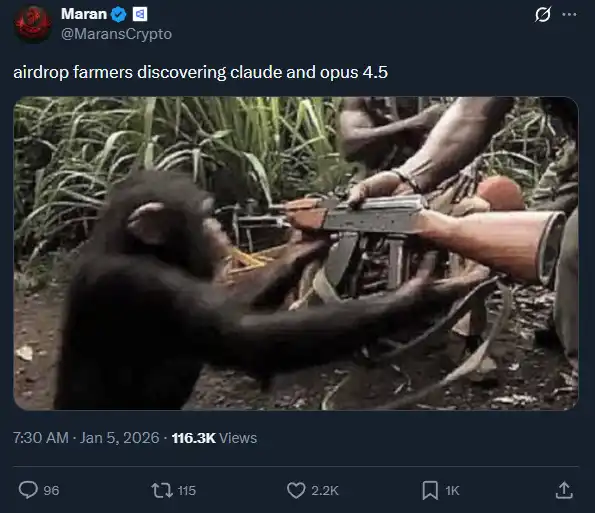
In this chaotic, AI-driven dystopian world, only one thing can distinguish real humans from bots. And no, it doesn't require handing over your biometrics to those "trustworthy" French developers.

That thing is "Reputation." It cannot be replicated by bots (any bot) because it requires hundreds or even thousands of hours to build and can only be maintained through meaningful social connections. It's called "Reputation." And no, you can't have Grok dress it up in a bikini to embellish it.
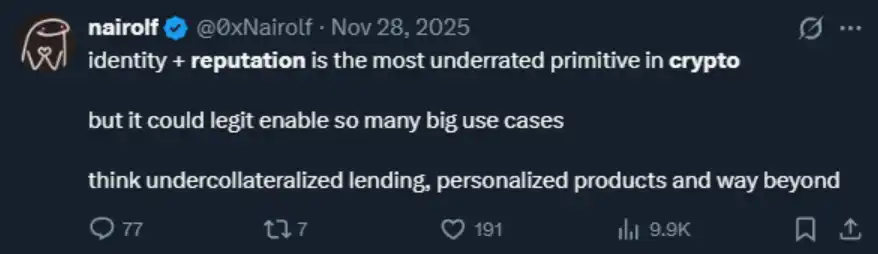
Reputation is an unshakable filter; no matter how much your "binary friends" (referring to bots) flatter in the comments, they ultimately cannot pass this threshold.

It helps you identify bad actors, scammers, and imposters (e.g., @ethos_network); it filters out those who are only there to extract value, sybil attackers, and investors with misaligned incentives (e.g., @legiondotcc); and it allows you to find credible, authentic, and influential voices in the crypto space (e.g., @KaitoAI before the InfoFi craze).

In the age of AI, the importance of reputation will become increasingly prominent. It is not only the key to distinguishing humans from machines but also the cornerstone for ensuring the healthy development of the ecosystem. Therefore, in 2026, reputation will become a dominant topic in the crypto space.

The Revival of ICOs

2017 was a frenzied era for the crypto industry. Driven by a regulatory vacuum, Ethereum's innovative ERC-20 standard, and immense speculative desire, thousands of projects successfully raised funds through what is now widely known as Initial Coin Offerings (ICOs).

This fundraising method was extremely efficient but also became a breeding ground for chaotic scams due to its disorder, eventually being halted by major regulators. However, during that era, major projects like BNB, TRX, and ADA were born and still rank among the top ten cryptocurrencies by market cap today.

The ban on ICOs plunged the crypto industry into a "dark age" and forced the entire sector into an experimental phase regarding token distribution and capital raising.
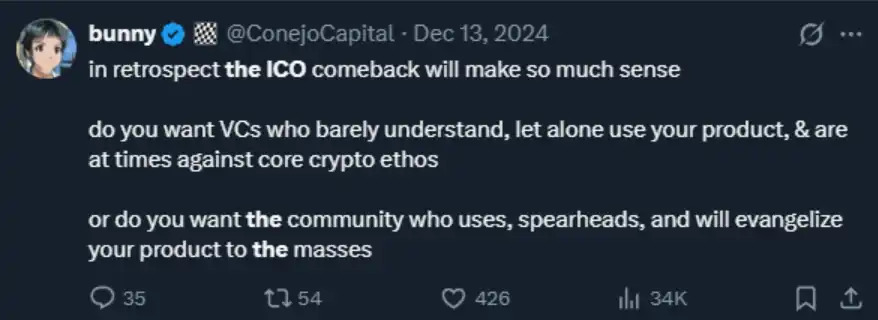
In terms of token distribution, we tried airdrops. Initially, this method achieved good distribution results at low cost and successfully attracted a lot of user attention, but it was eventually overexploited by speculators and industrialized "farmers," draining resources.

In terms of fundraising, we tried the low-circulation, high-FDV (fully diluted valuation) venture capital model. While this method was very beneficial for certain groups (mainly insiders), since most price discovery occurred before the public market, ordinary investors ended up holding the bag, suffering significant losses.
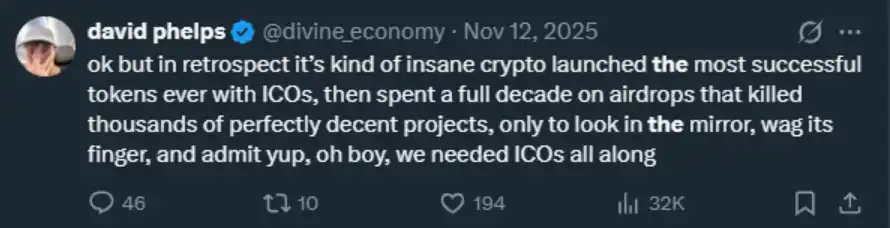
If 2025 is the year of regulatory clarity (which was the main reason ICOs were blocked), then 2026 is likely to become the "Year of the ICO Revival." History may not repeat itself exactly, but it often rhymes—in this new wave of ICOs, we may witness the emergence of some major crypto giants.

This area is becoming one of the most exciting sectors in the crypto industry, with many projects already showing promise, such as the reputation-based ICO project @legiondotcc, as well as @MetaDAOProject and the recently Coinbase-acquired @echodotxyz.

Crypto Neo-Banking

Neobanks have already disrupted traditional banking. Revolut is now one of Europe's most valuable fintech companies, and Nubank is one of the most valuable fintech companies in Latin America. As more digital-native investors emerge, the rise of Crypto Neo-Banking seems natural, especially since it can leverage the same regulatory clarity advantages as ICOs.

Self-custody accounts, yield-bearing accounts, and direct, instant cross-border stablecoin payments are features that distinguish crypto neo-banks from the traditional banking system.

With the proliferation of stablecoins and the provision of larger, more democratized yield opportunities for holders (no more enduring savings accounts with a mere 0.2% annual interest rate), crypto neo-banks will gradually eat into the market share of traditional finance (TradFi).

Although there are no clear winners yet, and I'm not sure if any tokens will benefit, stablecoins might be the ultimate winner. However, in my view, crypto neo-banking will become one of the most important narratives of 2026.


Пов'язані питання

QWhat is predicted to be the dominant narrative in the crypto space by 2026, and why is it considered crucial in the AI era?

AReputation is predicted to be the dominant narrative in the crypto space by 2026. It is considered crucial because it serves as an immutable filter to distinguish real humans from bots, identify bad actors and scammers, and find credible voices in the ecosystem, especially as AI technology advances and bot activity increases.

QWhat event from crypto history is expected to experience a revival in 2026, and what were the two main experimental phases that followed its initial ban?

AThe Initial Coin Offering (ICO) is expected to experience a revival in 2026. The two main experimental phases that followed its initial ban were airdrops (for token distribution) and the low-circulation, high-FDV venture capital model (for fundraising).

QAccording to the article, what are the key features that distinguish crypto neobanks from the traditional banking system?

AThe key features that distinguish crypto neobanks from the traditional banking system are self-custody accounts, yield-bearing accounts, and direct, instant cross-border stablecoin payments.

QWhich asset does the article suggest might be the ultimate winner in the context of the emerging crypto neobanking narrative, and why?

AThe article suggests that stablecoins might be the ultimate winner because their widespread adoption and the ability to provide larger, more democratic yield opportunities for holders will allow crypto neobanks to eat into TradFi's market share.

QName two projects mentioned in the article that are already showing promise in the context of the 'Reputation-based ICO' narrative.

ATwo projects mentioned are @legiondotcc (a reputation-based ICO project) and @MetaDAOProject.

Пов'язані матеріали

From Theft to Re-entry: How Was $292 Million "Laundered"?

A sophisticated crypto laundering operation was executed following the $292 million hack of Kelp DAO on April 18. The attack, attributed to the North Korean Lazarus group, began with anonymous infrastructure preparation using Tornado Cash to fund wallets untraceably. The hacker exploited a vulnerability in Kelp’s cross-chain bridge, stealing 116,500 rsETH. To avoid crashing the market, the attacker used Aave and Compound as laundering tools—depositing the stolen rsETH as collateral to borrow $190 million in clean, liquid ETH. This move triggered a bank run on Aave, causing an $8 billion drop in TVL. After consolidating funds, the attacker fragmented them across hundreds of wallets to evade detection. A major breakpoint was THORChain, where over $460 million in volume—30 times its usual activity—was processed in 24 hours, converting ETH into Bitcoin. This shift to Bitcoin’s UTXO model exponentially increased tracing complexity by shattering funds into countless untraceable fragments. The final destination was Tron-based USDT, the primary channel for illicit crypto flows. From there, funds were cashed out via OTC brokers in China and Southeast Asia, using unlicensed underground banks and UnionPay networks outside Western sanctions scope. Ultimately, the laundered money supports North Korea’s weapons programs, which rely heavily on crypto hacking for foreign currency. The incident underscores structural challenges in DeFi: its openness, composability, and lack of central control make such laundering not just possible, but inherently difficult to prevent.

marsbit30 хв тому

From Theft to Re-entry: How Was $292 Million "Laundered"?

marsbit30 хв тому

Google and Amazon Simultaneously Invest Heavily in a Competitor: The Most Absurd Business Logic of the AI Era Is Becoming Reality

In a span of four days, Amazon announced an additional $25 billion investment, and Google pledged up to $40 billion—both direct competitors pouring over $65 billion into the same AI startup, Anthropic. Rather than a typical venture capital move, this signals the latest escalation in the cloud wars. The core of the deal is not equity but compute pre-orders: Anthropic must spend the majority of these funds on AWS and Google Cloud services and chips, effectively locking in massive future compute consumption. This reflects a shift in cloud market dynamics—enterprises now choose cloud providers based on which hosts the best AI models, not just price or stability. With OpenAI deeply tied to Microsoft, Anthropic’s Claude has become the only viable strategic asset for Google and Amazon to remain competitive. Anthropic’s annualized revenue has surged to $30 billion, and it is expanding into verticals like biotech, positioning itself as a cross-industry AI infrastructure layer. However, this funding comes with constraints: Anthropic’s independence is challenged as it balances two rival investors, its safety-first narrative faces pressure from regulatory scrutiny, and its path to IPO introduces new financial pressures. Globally, this accelerates a "tri-polar" closed-loop structure in AI infrastructure, with Microsoft-OpenAI, Google-Anthropic, and Amazon-Anthropic forming exclusive model-cloud alliances. In contrast, China’s landscape differs—investments like Alibaba and Tencent backing open-source model firm DeepSeek reflect a more decoupled approach, though closed-source models from major cloud providers still dominate. The $65 billion bet is ultimately about securing a seat at the table in an AI-defined future—where missing the model layer means losing the cloud war.

marsbit6 год тому

Google and Amazon Simultaneously Invest Heavily in a Competitor: The Most Absurd Business Logic of the AI Era Is Becoming Reality

marsbit6 год тому

Торгівля

Спот
Ф'ючерси
活动图片




