Author: Zen, PANews
As capital shifts from broad distribution to targeted allocation, the market is now driven by "quality" rather than "quantity." In the quiet reshuffle of 2025, centralized finance (CeFi) has returned to the center stage with massive financing, the integration narrative of Web3 and AI is steadily advancing, infrastructure and DeFi remain the backbone, while once-booming Web3 gaming has faded into the background.
PANews compiled 839 disclosed financing events in the blockchain primary market for 2025, tracking the flow of $23.7 billion to understand capital choices and identify the next value hotspots.
Overall Market Review: Doubled Financing Scale Amid Declining Deal Count
According to PANews' incomplete statistics, the blockchain primary market disclosed 839 investment and financing events in 2025, with a total funding amount exceeding $23.7 billion. In terms of the number of financings, the disclosed transactions in 2025 decreased significantly compared to 1,259 in 2024, a year-on-year drop of approximately 33.6%; however, the funding inflow in 2025 increased substantially, far surpassing the $9.3 billion in 2024.
Unlike the decline, caution, and rationality seen in the primary market from 2023 to 2024, 2025 overall showed a significant warming trend. The total number of financings and the funding scale for the year both reached about half the levels of the 2022 bull market—which had 1,660 investment and financing events with a total funding of over $34.8 billion.
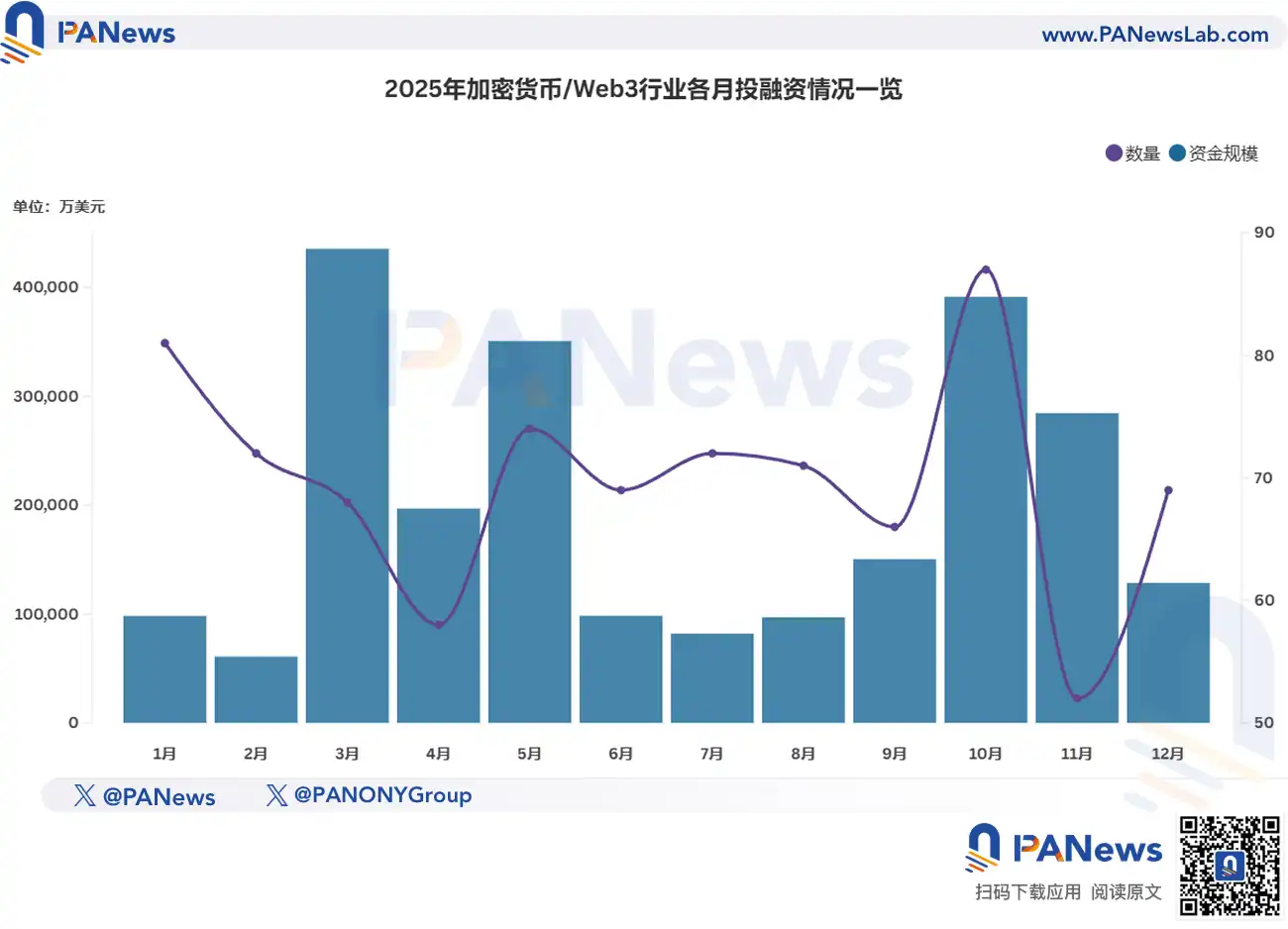
Although the market warmed significantly overall, the trends in the primary market remained largely similar to 2023 and 2024, only more extreme—from a funding inflow perspective, 2025 still had two peak periods in the first and second halves of the year, concentrated in March-May and October-November, respectively.
This was mainly influenced by ultra-large financing events: in March, Abu Dhabi's MGX invested $2 billion in Binance for a minority stake; in October, NYSE parent ICE made a $2 billion strategic investment in Polymarket at a $9 billion post-money valuation. Prediction market Kalshi raised over $300 million in a new funding round, valuing the company at $5 billion; in November, Kalshi completed another $1 billion financing, increasing its valuation to $11 billion.
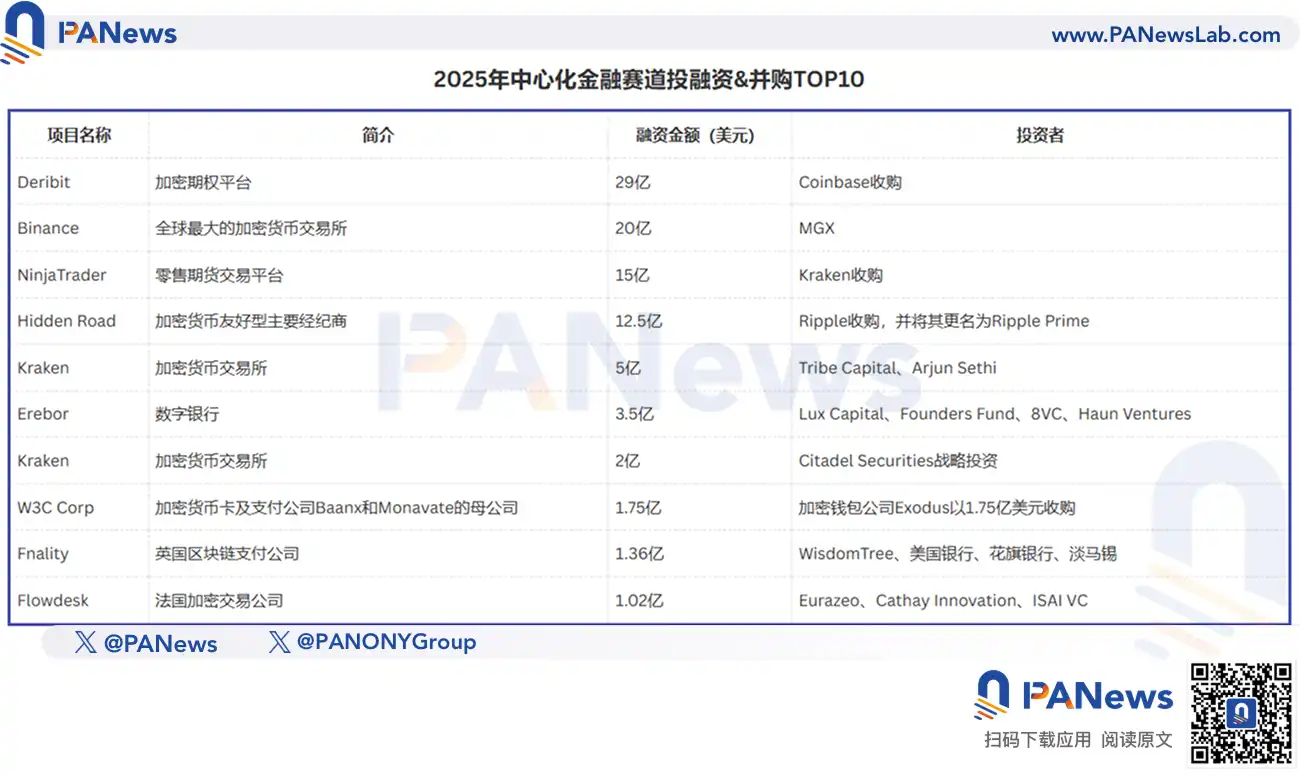
Additionally, from March to May, Kraken acquired NinjaTrader for $1.5 billion, Ripple acquired Hidden Road for $1.25 billion, and Coinbase acquired Deribit for $2.9 billion, setting the record for the largest transaction in 2025.
Subsequently, by the end of the second quarter and throughout the third quarter of 2025, the market largely replicated the calm of the past two years. However, entering the fourth quarter, the investment and financing market quickly saw the hottest month of 2025: October. This month saw both volume and value surge, with 87 investment and financing events disclosed and over $3.9 billion in funding inflows. Excluding the impact of ultra-large financings significantly boosting the total funding, the number of financing transactions in October was also the highest for the year.
After peaking in October, as the secondary market weakened and the trend turned from bull to bear, the number of publicly disclosed financing transactions plummeted to 52 in November, the lowest monthly value in 2025. However, large single financings such as Kalshi's $1 billion funding round and Ripple's $500 million strategic investment that month kept the total financing amount high.
From an industry development perspective, investment institutions favored narratives mainly centered on centralized finance involving stablecoins and payment concepts, as well as infrastructure companies, with exchanges and prediction markets being particularly standout in fundraising ability.
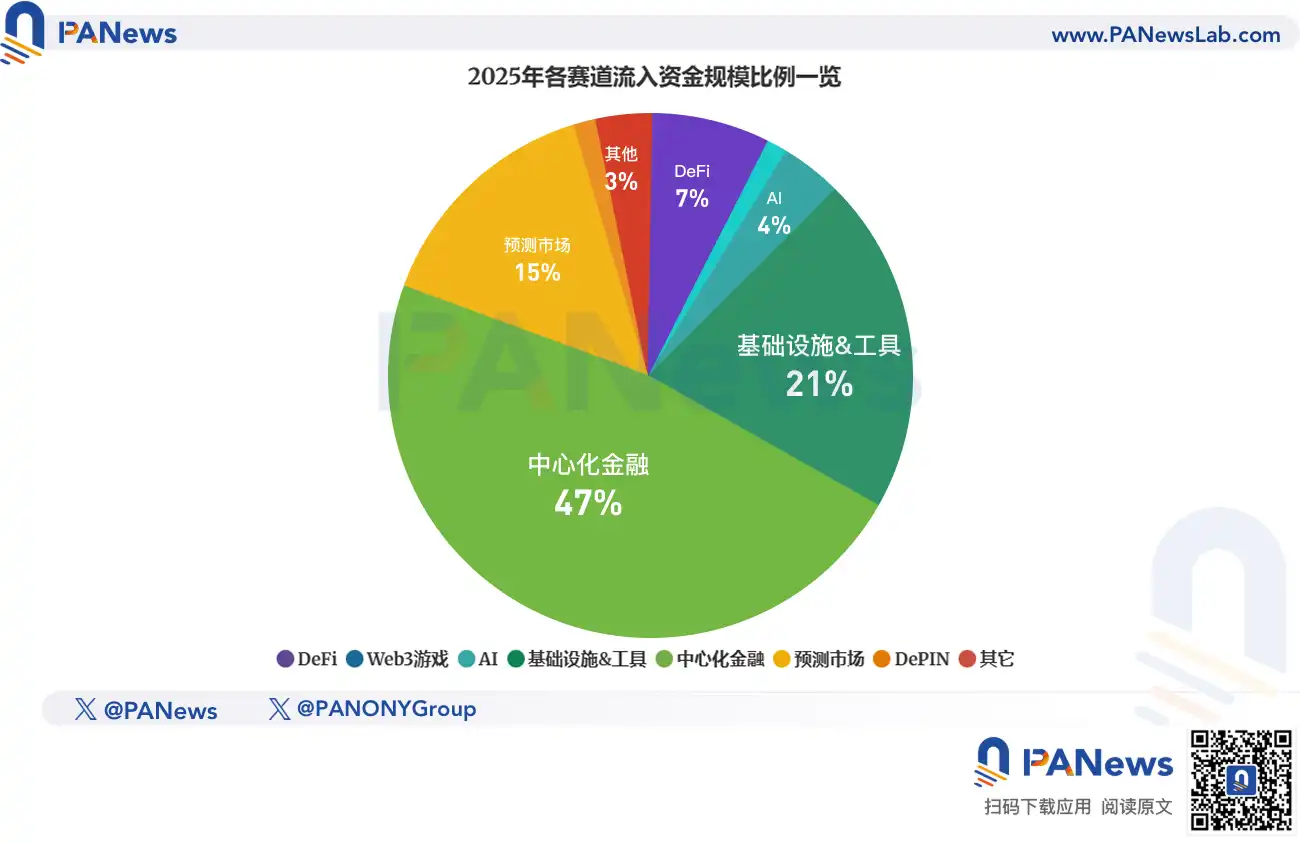
Based on market hotspots and continuity, PANews broadly categorized projects into DeFi, Web3 gaming, infrastructure & tools, AI, centralized finance, and other Web3 applications including prediction markets, DePIN, social, DeSci, etc., and compiled statistics on each sector's investment and financing situation.
Infrastructure & Tools: Significant Increase in Large Financings, Payment and Settlement Areas Favored
In 2025, the infrastructure and tools sector disclosed a total of 243 investment and financing events, raising over $4.9 billion, with an average financing amount of approximately $20.3 million.
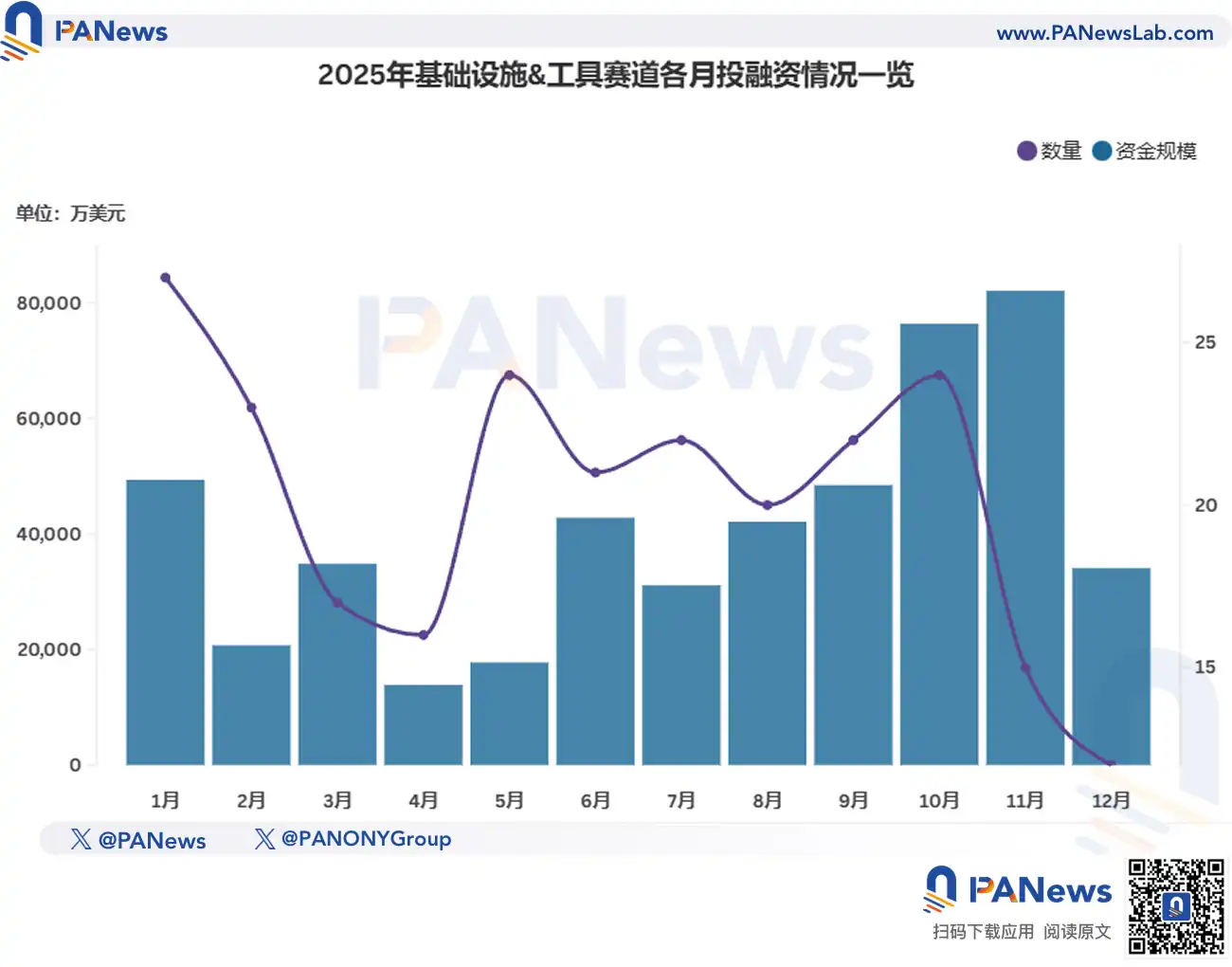
Of all financing events disclosed in 2025, about 28.96% belonged to infrastructure & tools, basically flat with 2024; however, the amount raised by this sector accounted for about 20.78% of the total, a significant decrease from 39.46% in 2024.
Nevertheless, the infrastructure & tools sector still disclosed the most large financing news, with 101 investment and financing events at the tens of millions of dollars level and above, accounting for 41.56%, significantly higher than 27.82% in 2024; there were 12 financings reaching hundreds of millions of dollars, double that of the previous year.
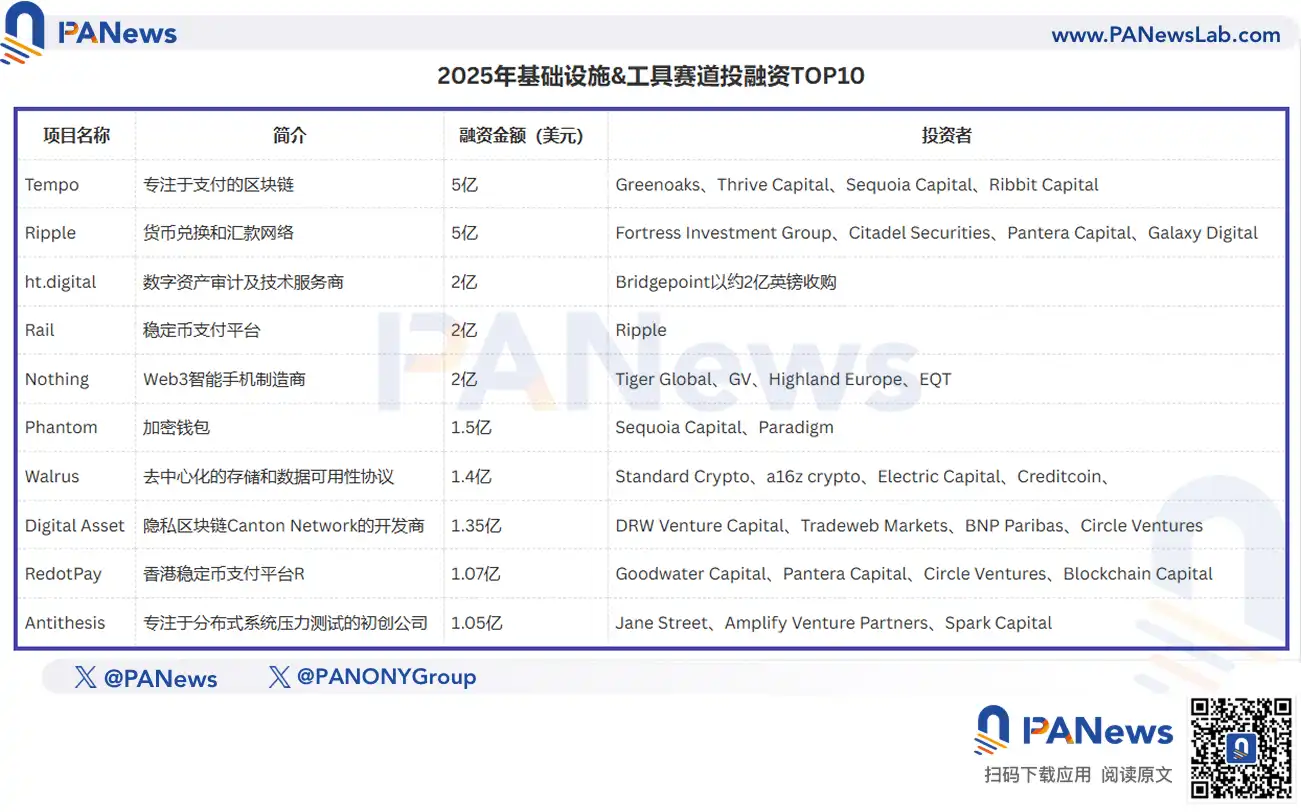
In October 2025, blockchain payment infrastructure project Tempo completed a $50 million Series A financing at a $5 billion valuation, led by Thrive Capital and Greenoaks, with participation from Sequoia, Ribbit Capital, etc.; in November, Ripple raised $50 million through institutional investors like Fortress Investment and Citadel Securities, valuing it at $40 billion. The above two transactions were the largest financings in this sector last year, both in the direction of crypto payment infrastructure.
DeFi: Foundation Remains Stable, Financing Activity Surges Against the Trend at Year-End
In 2025, DeFi remained the most watched vertical sector after infrastructure. The sector disclosed a total of 201 investment and financing events throughout the year, with funding inflows exceeding $1.748 billion, accounting for 24.04% and 7.36% respectively, the former basically flat with 2024, while the latter was significantly lower than 18.22% in 2024.
Among the financing news disclosed by DeFi projects, 41 had financing scales in the tens of millions of dollars, accounting for 20.39%, exceeding 13.51% in 2024. However, in distribution, they were still more concentrated in the range of several million dollars.
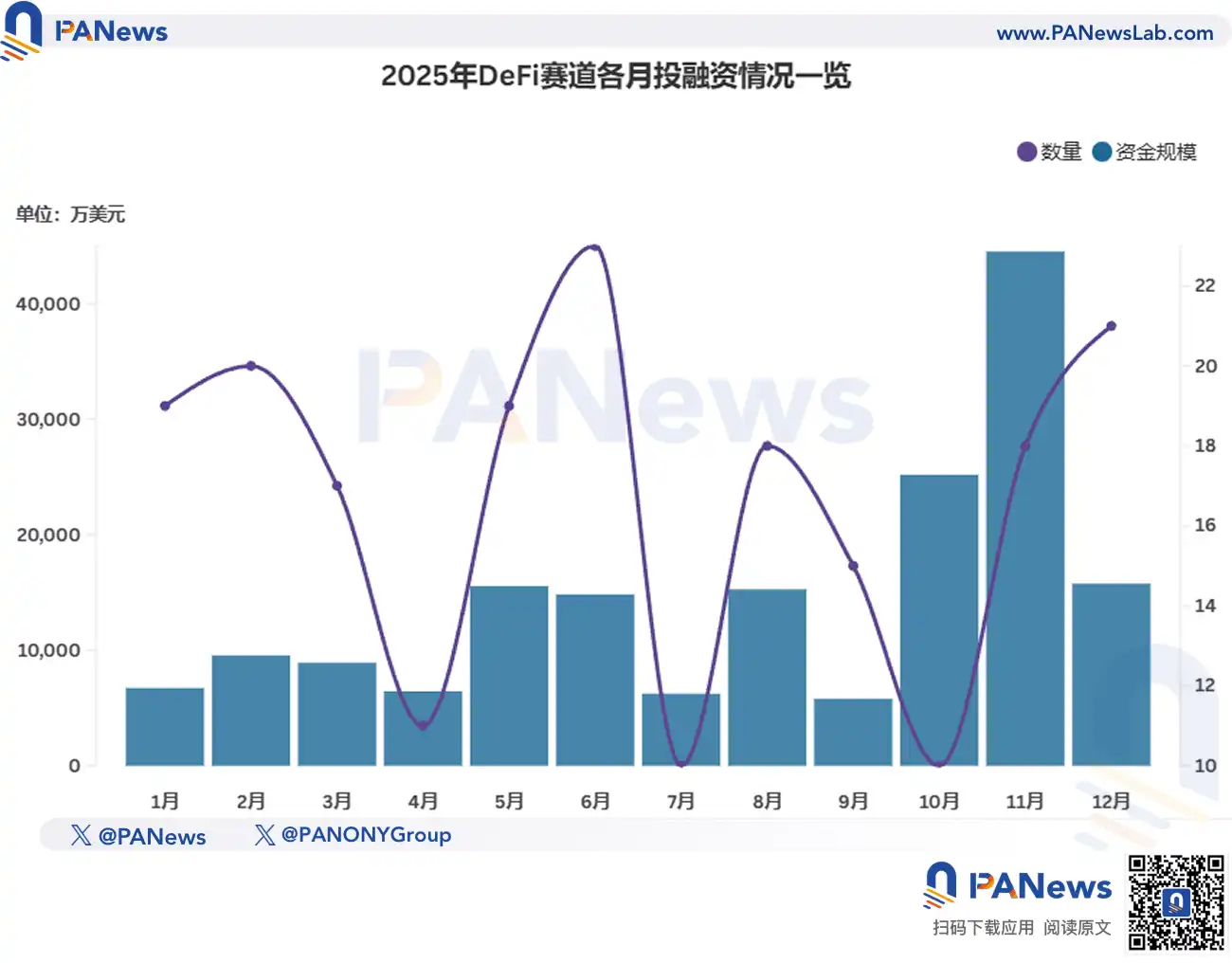
In November 2025, although the overall primary market transaction count hit its lowest point, the DeFi sector "suddenly surged," not only seeing the number of project financings rebound to 18, exceeding the annual average of 16, but also setting the highest funding inflow record for the past year, receiving over $445 million.
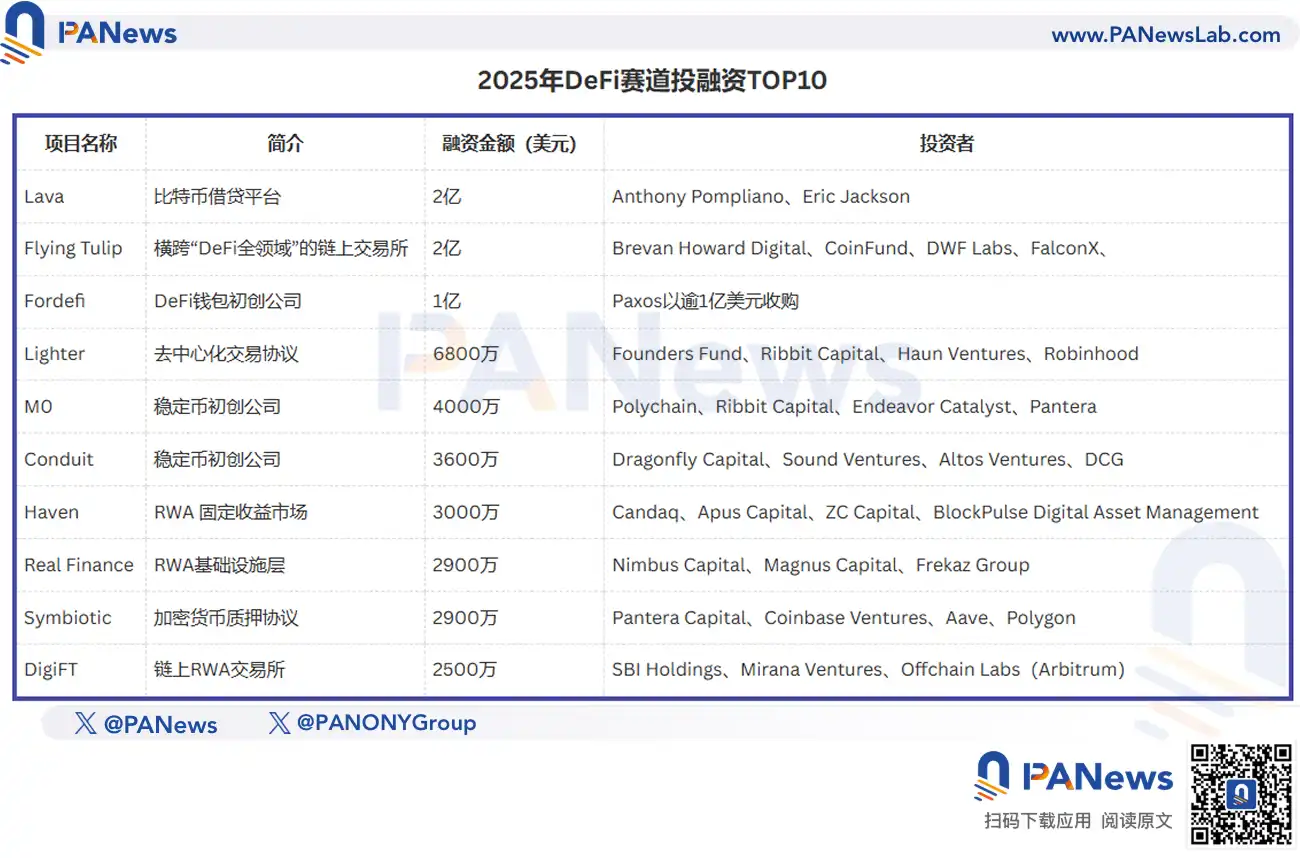
Additionally, three of the top ten financings and acquisitions in the DeFi sector in 2025 occurred in November: Bitcoin lending platform Lava raised $20 million in new funding, Paxos acquired DeFi wallet startup Fordefi for over $10 million, and decentralized exchange protocol Lighter received $6.8 million in financing.
Web3 Gaming: Popularity Declines Sharply, Financing Scale and Number Halved
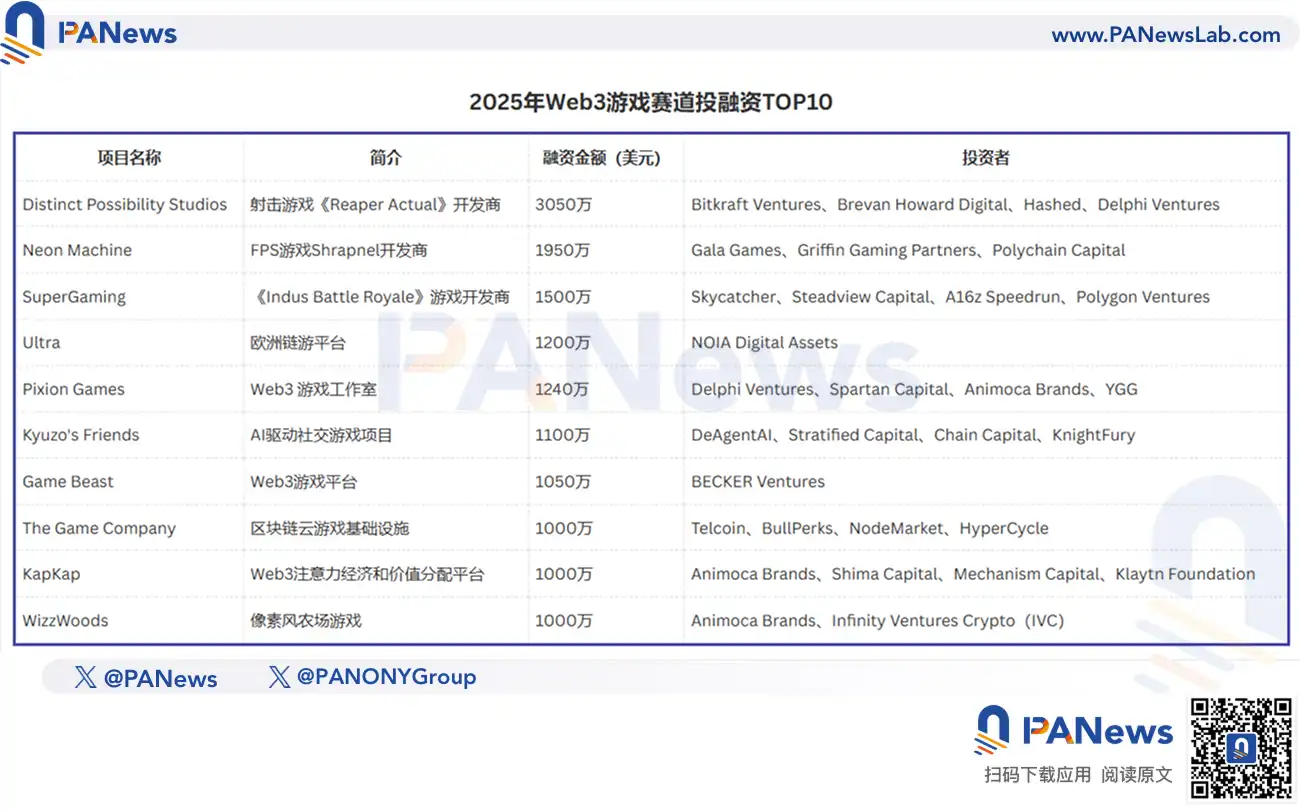
Web3 gaming continued its decline in 2025—a result known even before official statistics. The sector disclosed 57 investment and financing events throughout the year, raising $30.8 million, while the 2024 figures were 178 and $84.9 million, respectively. In terms of transaction count, Web3 gaming decreased by 67.98%; in terms of funding scale, the drop was 63.72%. From any angle, the Web3 gaming sector showed clear signs of weakness.
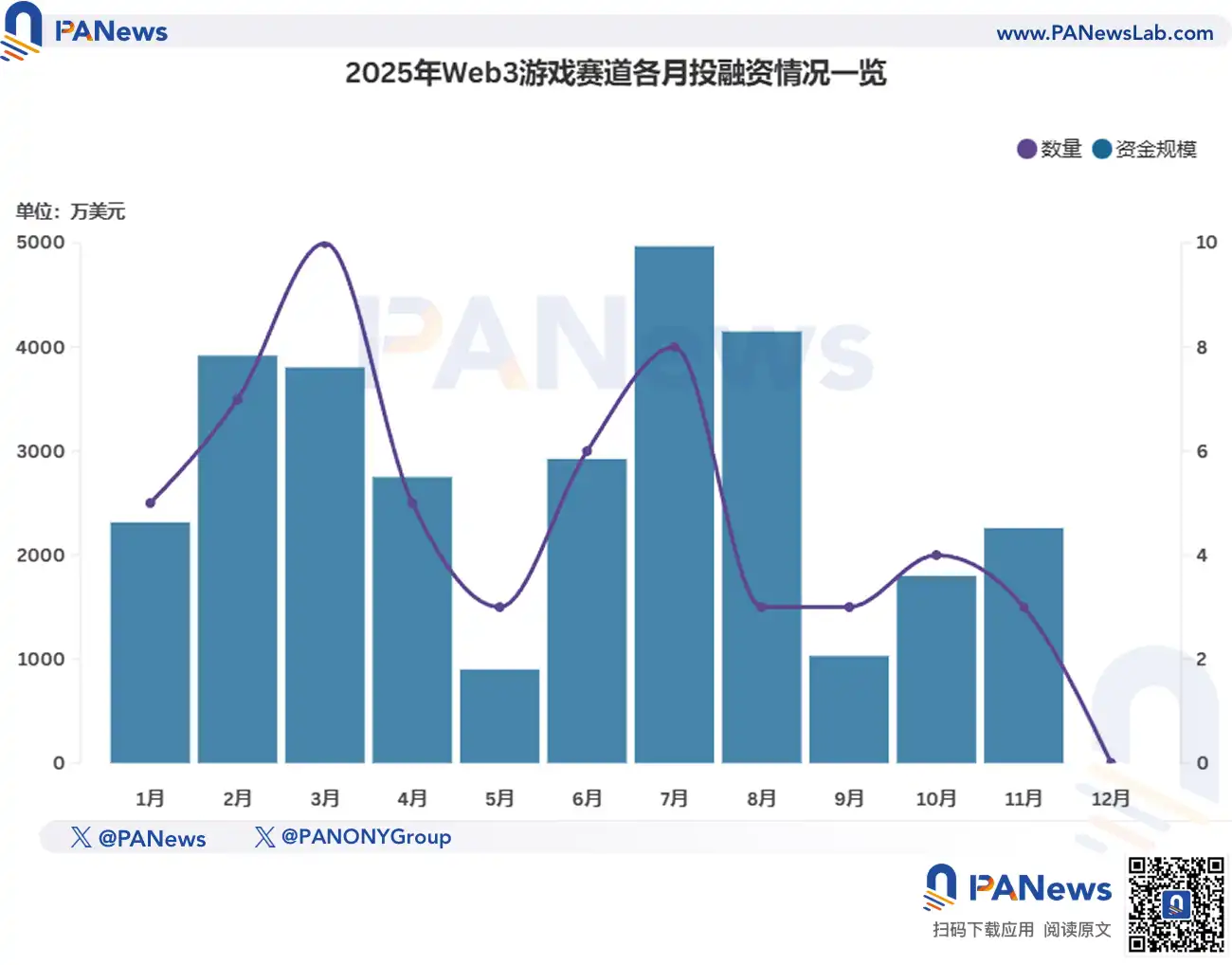
Trend-wise, excluding the impact of the overall industry correction in May, the gaming sector generally declined over time. By the fourth quarter, it had weakened to its lowest point, with no financing news for gaming projects disclosed in December. Continuing this trend, Web3 gaming in 2026 will likely follow NFTs, social, and other sectors, becoming difficult to form a sizable dedicated category in statistics.
Furthermore, the active investment institutions in this sector are basically只剩下 focused gaming sector VCs like Bitkraft Ventures, Griffin Gaming Partners, and Animoca Brands. Among them, Web3 VC Animoca Brands has invested in over 628 portfolio companies, about 200 of which are gaming projects.
Web3 + AI: Steady Progress in Narrative Integration
With the development of artificial intelligence, how to integrate with it has become a key proposition for the tech industry, and the fusion of AI with blockchain and cryptocurrency is also showing an upward trend. In 2025, the Web3+ AI sector disclosed 111 financings, with a funding scale of $88.4 million, both growing over 20%.
Due to statistical caliber issues, considering there are many blockchain projects that only integrate AI functions and applications rather than specializing in AI, the actual funding involved in this field might be even higher.
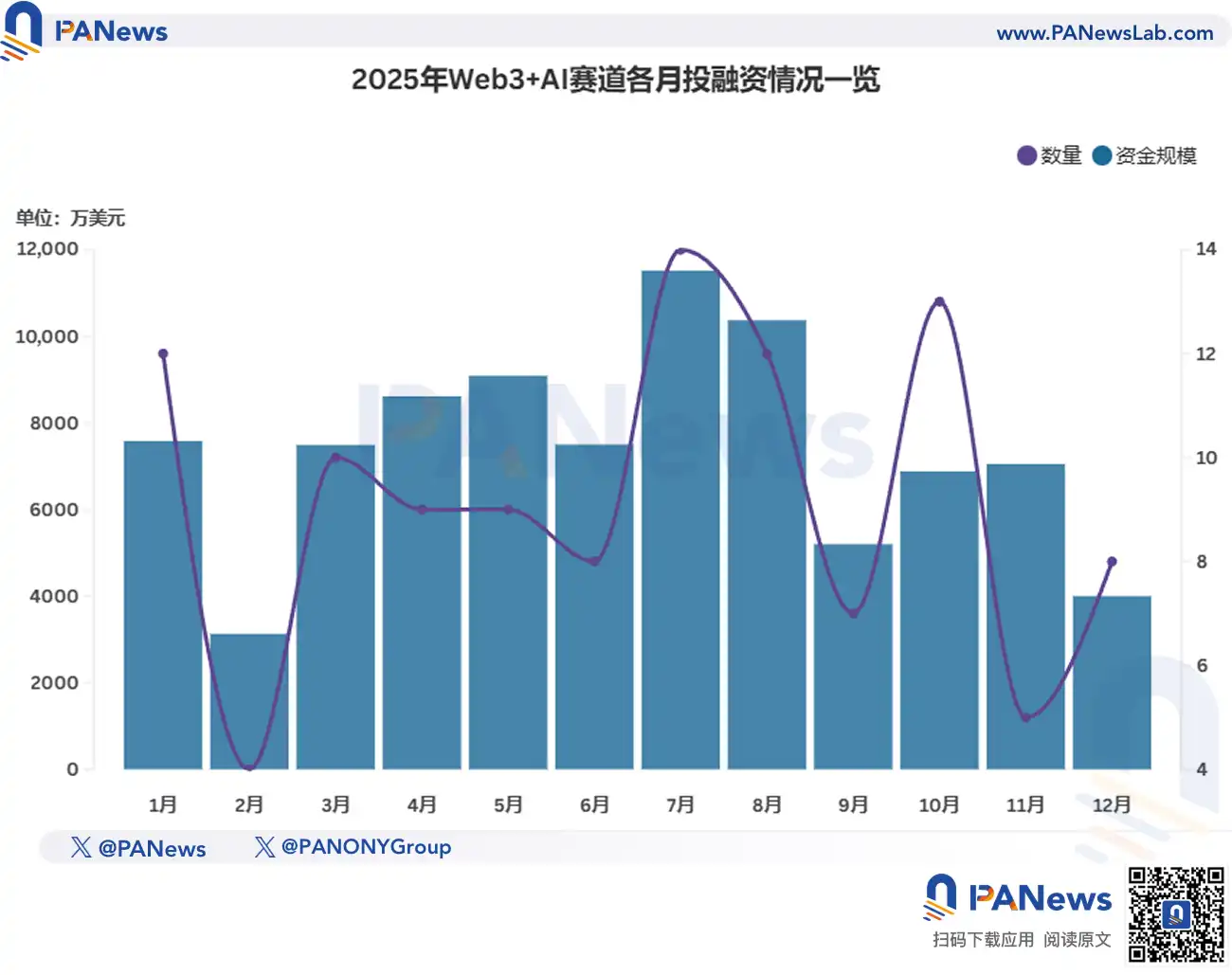
Looking at the annual trend, the Web3+ AI sector was the most stable direction. During the low periods of the second and third quarters, it instead entered its "best period," with both transaction count and financing scale reaching their highest values in July.
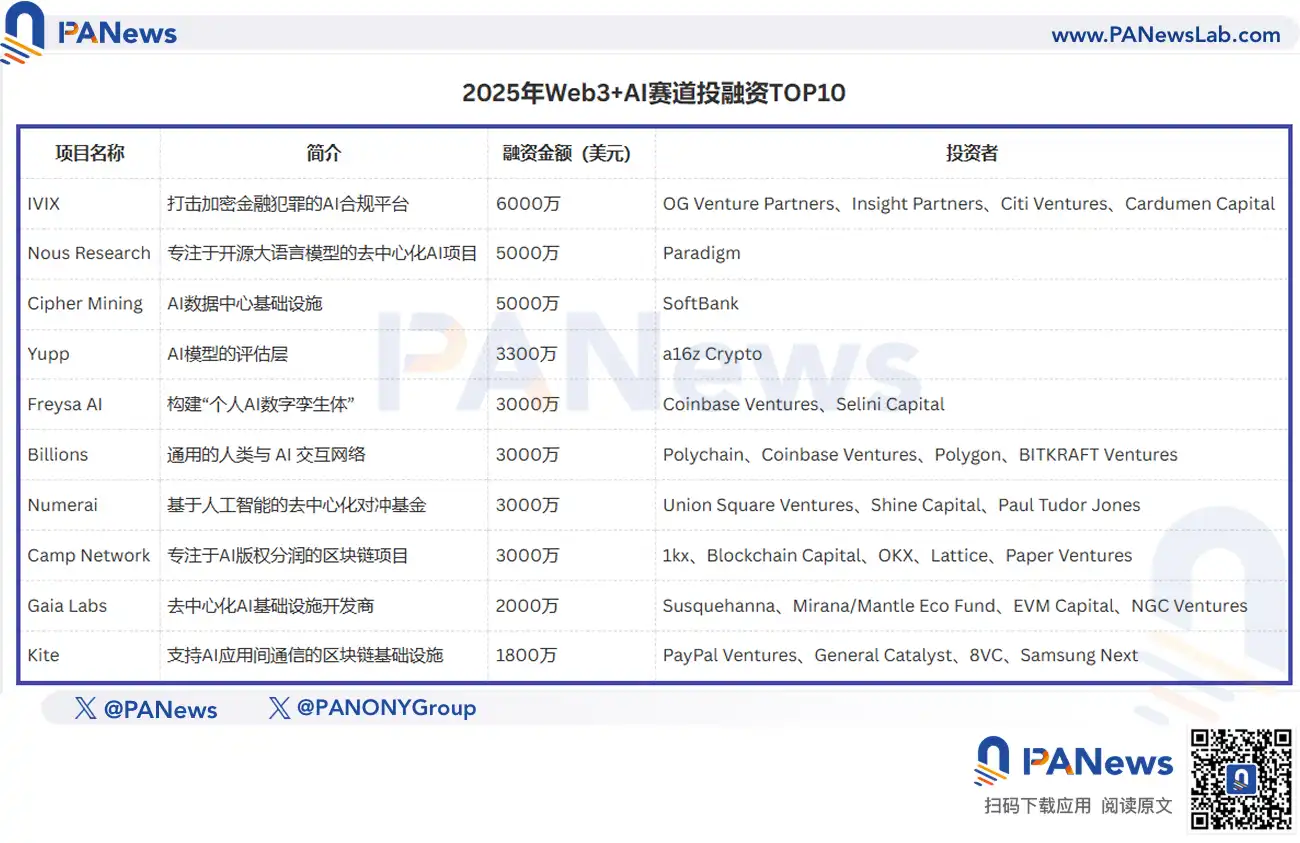
In terms of funding scale, AI projects receiving tens of millions of dollars accounted for 26.12% in 2025, significantly exceeding 15.2% in 2024, showing a steady and progressive development trend. In August 2025, AI compliance platform IVIX, which fights crypto financial crime, completed a $6 million Series B financing, setting the highest record for single financing scale in this sector.
Centralized Finance: A "Bumper Year," with Huge Financings and High Valuations Becoming the Norm
2025 was a "bumper year" for the centralized finance sector: it disclosed 120 investment and financing events throughout the year, with a funding scale of $11.2 billion. Compared to 2024, the former doubled, while the latter increased nearly 8 times.
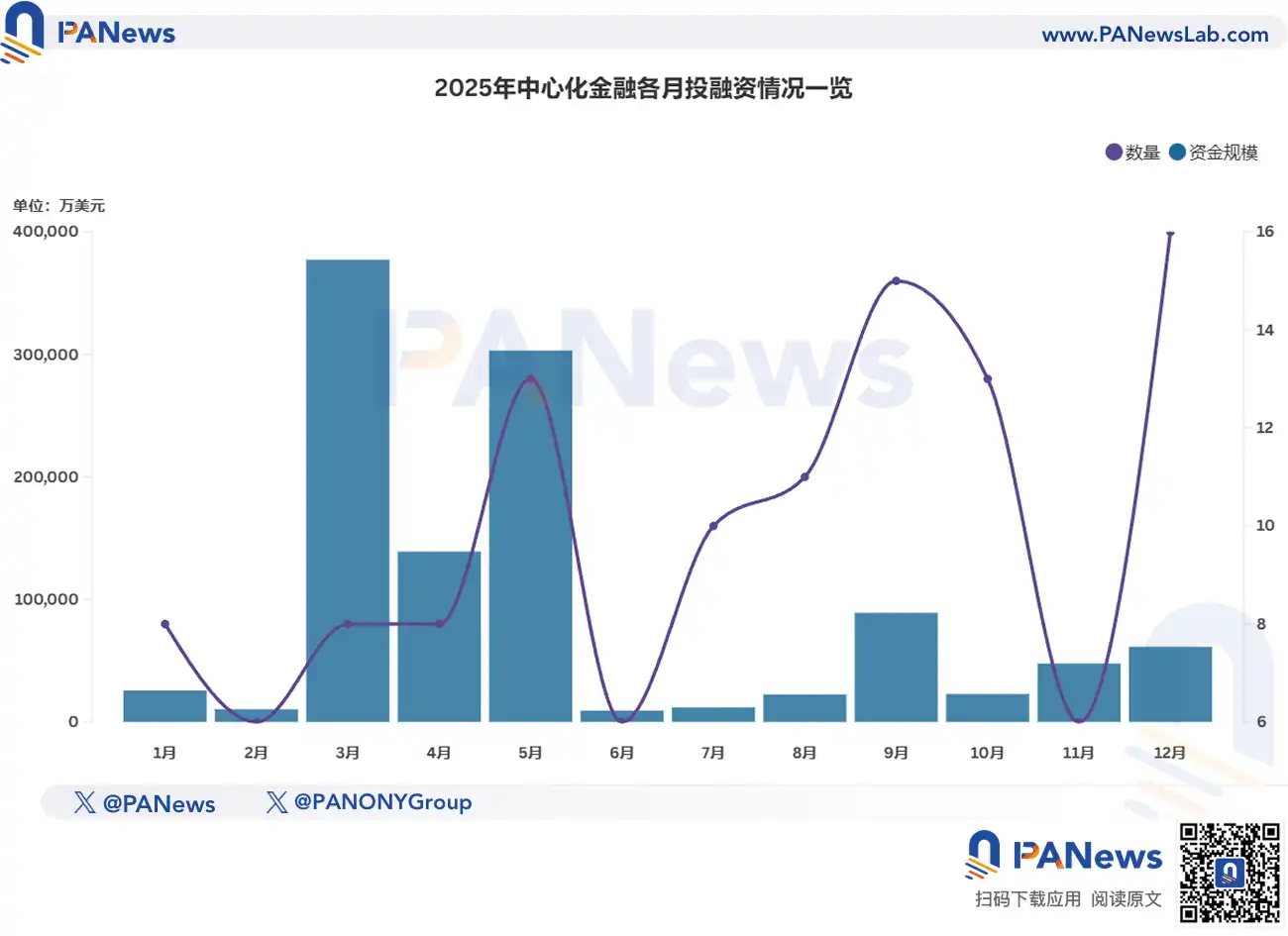
Centralized finance has historically been the vertical sector with the highest average financing amount in the entire industry, reaching $93.37 million in 2025. This was mainly due to large acquisitions like Coinbase's $2.9 billion acquisition of Deribit and Binance's single $2 billion ultra-large financing event significantly boosting the funding scale. Even ignoring these large transactions, the centralized finance sector overall still performed well: the sector had 73 investment and financings reaching the tens of millions level, accounting for a high 60.83%, further increasing from the already high base of 43.48% in 2024.
Additionally, compared to only Hashkey's financing amount approaching the hundred million dollar level in 2024, there were 7 financing events with scales in the hundred million range throughout 2025. Among them, US veteran crypto exchange Kraken secured two financings in the hundred millions, and Citadel Securities received a single strategic investment as high as $20 million.
It is worth mentioning that Korean tech giant Naver is acquiring Dunamu, the parent company of cryptocurrency exchange Upbit, for $10.3 billion. The transaction is an all-stock merger expected to be completed in June 2026, so it is temporarily not included in the 2025 statistics.
Others: Prediction Markets Lead Hotspots
The "Others" category includes prediction markets, DePIN, crypto mining, DAO, DeSci, social platforms, and other blockchain application directions. It should be noted that although prediction markets were undoubtedly the hottest topic in 2025, due to their lack of continuity and funding almost entirely concentrated on the duopoly of Polymarket and Kalshi, they are temporarily classified under "Others."
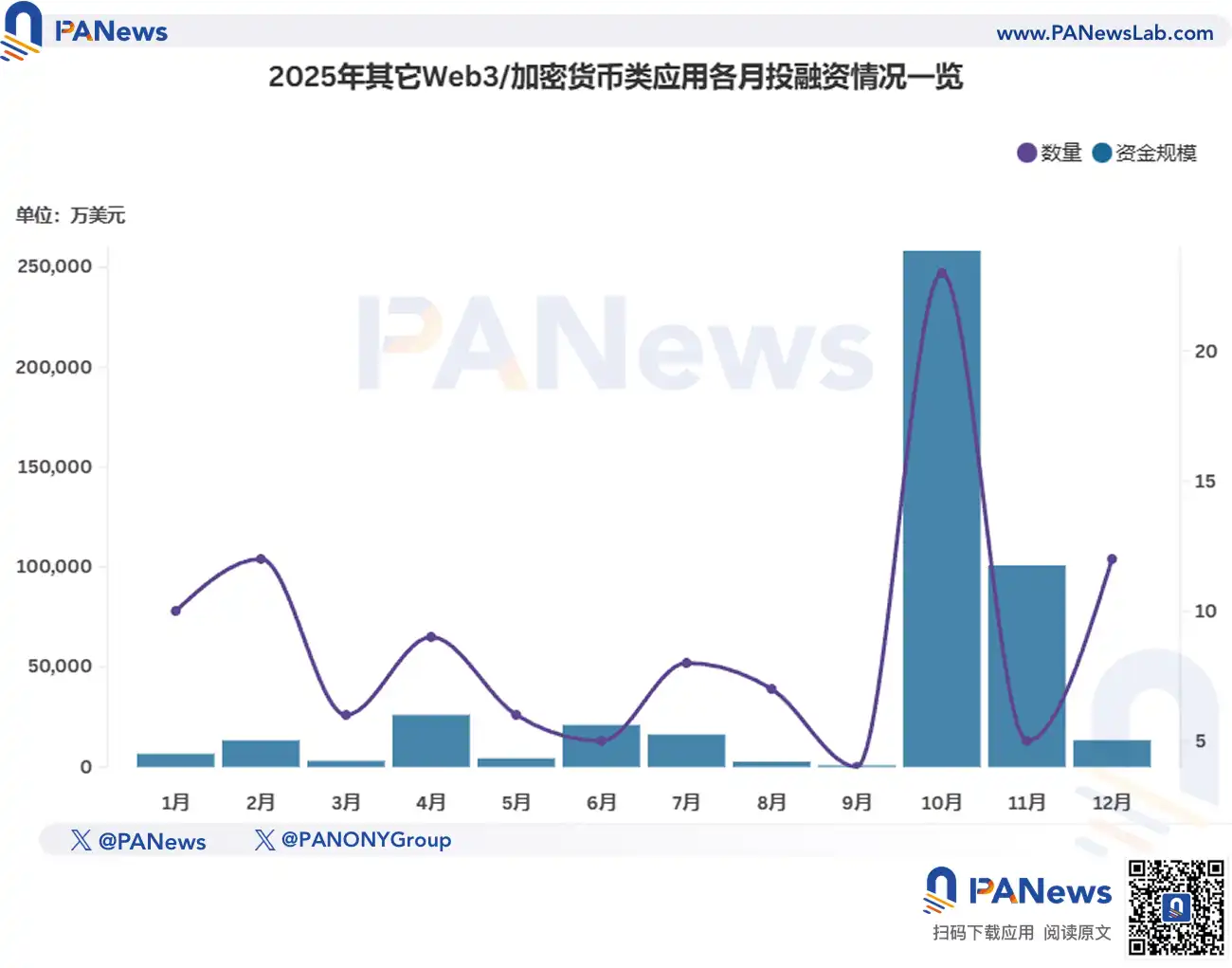
In 2025, this sector disclosed 107 investment and financing events, with a financing scale of $4.376 billion. Among them, prediction market financing alone amounted to $3.561 billion—Polymarket received a single $2 billion financing, and Kalshi followed closely, completing three rounds of financing within months from mid-year, raising a total of $1.485 billion.
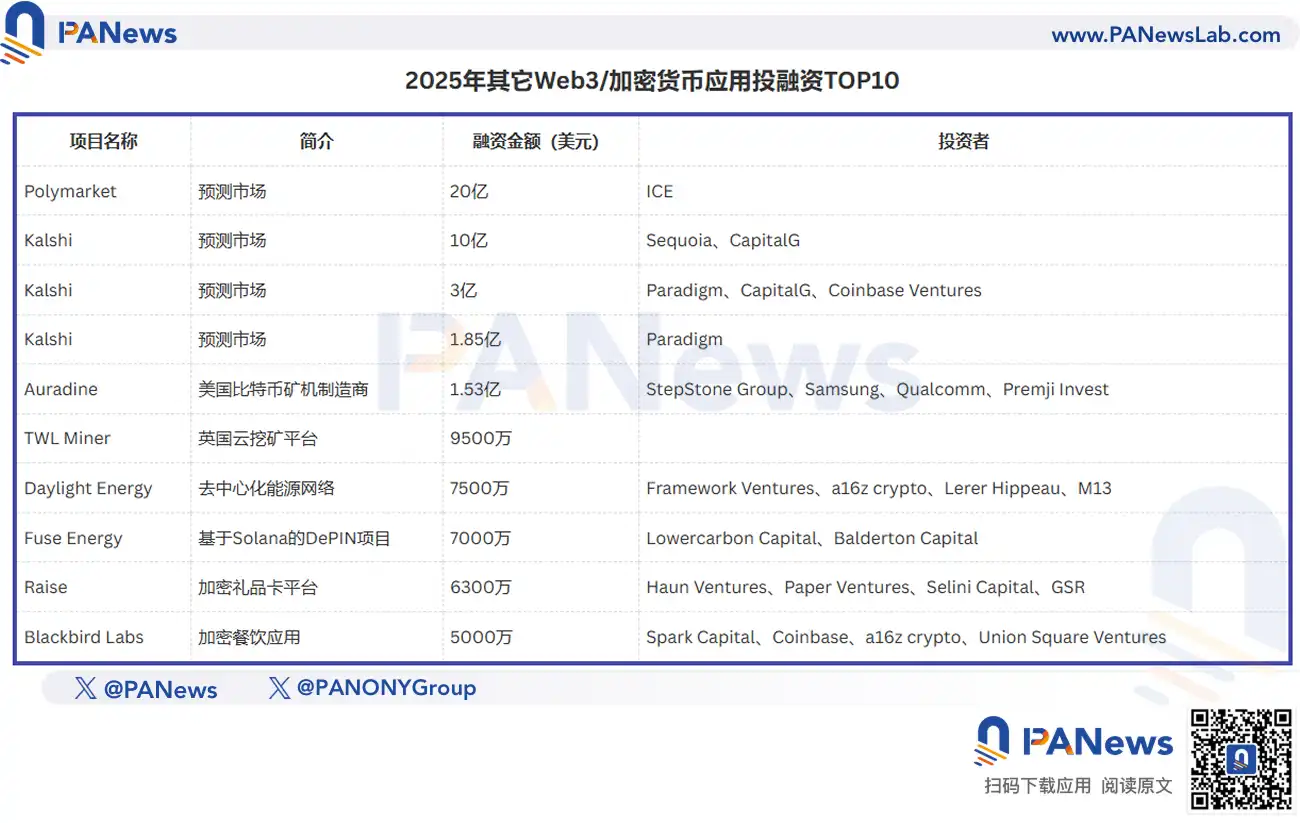
In terms of funding scale, besides prediction markets, crypto mining, DePIN projects, and consumer projects also secured large financings. Among them, US Bitcoin miner manufacturer Auradine completed a $15.3 million financing with participation from StepStone Group, Samsung, Qualcomm, Premji Invest, etc.
Investment Institutions: Prioritizing Quality Over Quantity, Family Office Funds Stand Out
According to PANews' incomplete statistics, 36 crypto investment funds were launched in 2025, a decrease from 47 in 2024; the total scale reached $5.082 billion, exceeding $4.34 billion in 2024.
As cycles turn and the sands shift, many crypto VCs have gradually faded out. In 2025, the investment institution field continued to evolve towards "prioritizing quality over quantity." Among the VCs launching crypto investment funds in 2025, 20 had fundraising scales exceeding $100 million, accounting for 55.5%, double that of 2024.
In October 2025, former Binance Labs, now transformed into a family office, YZi Labs established a $1 billion fund to support BNB ecosystem construction, which was also the largest fund by size in 2025.