2008-style crisis ahead? – How crypto investors are reacting to ‘zero rate cuts’

ambcryptoОпубліковано о 2026-03-21Востаннє оновлено о 2026-03-21

Анотація

With expectations of zero rate cuts and persistent inflation risks, crypto market dynamics are shifting toward capital preservation. While the total crypto market cap remains stable near $2.4 trillion, defensive positioning is evident as stablecoin supply hits a new all-time high of $316 billion. USDT outflows and declining exchange reserves indicate investors are moving liquidity into on-chain stablecoins, preparing to redeploy when risk appetite improves. Analysts warn that sustained high yields and borrowing costs could heighten systemic risks, echoing pre-crisis conditions. This cautious stance suggests stablecoins are becoming a key hedging tool amid deteriorating macro conditions.

Markets are now pricing in the “long-term” macro impact of the ongoing war.

Notably, one consistent theme across analysts is that expectations for rate cuts this year have effectively dropped to zero. Historically, crypto has thrived in low-rate environments, where cheap liquidity fuels risk-taking and makes leverage more accessible.

However, with inflation risks embedding deeper into the economy, the outlook for fresh capital inflows is clearly weakening. In fact, a recent Bloomberg report indicates that investors are pricing U.S. inflation above 5% over the next 12 months, based on the 1-year breakeven rate.
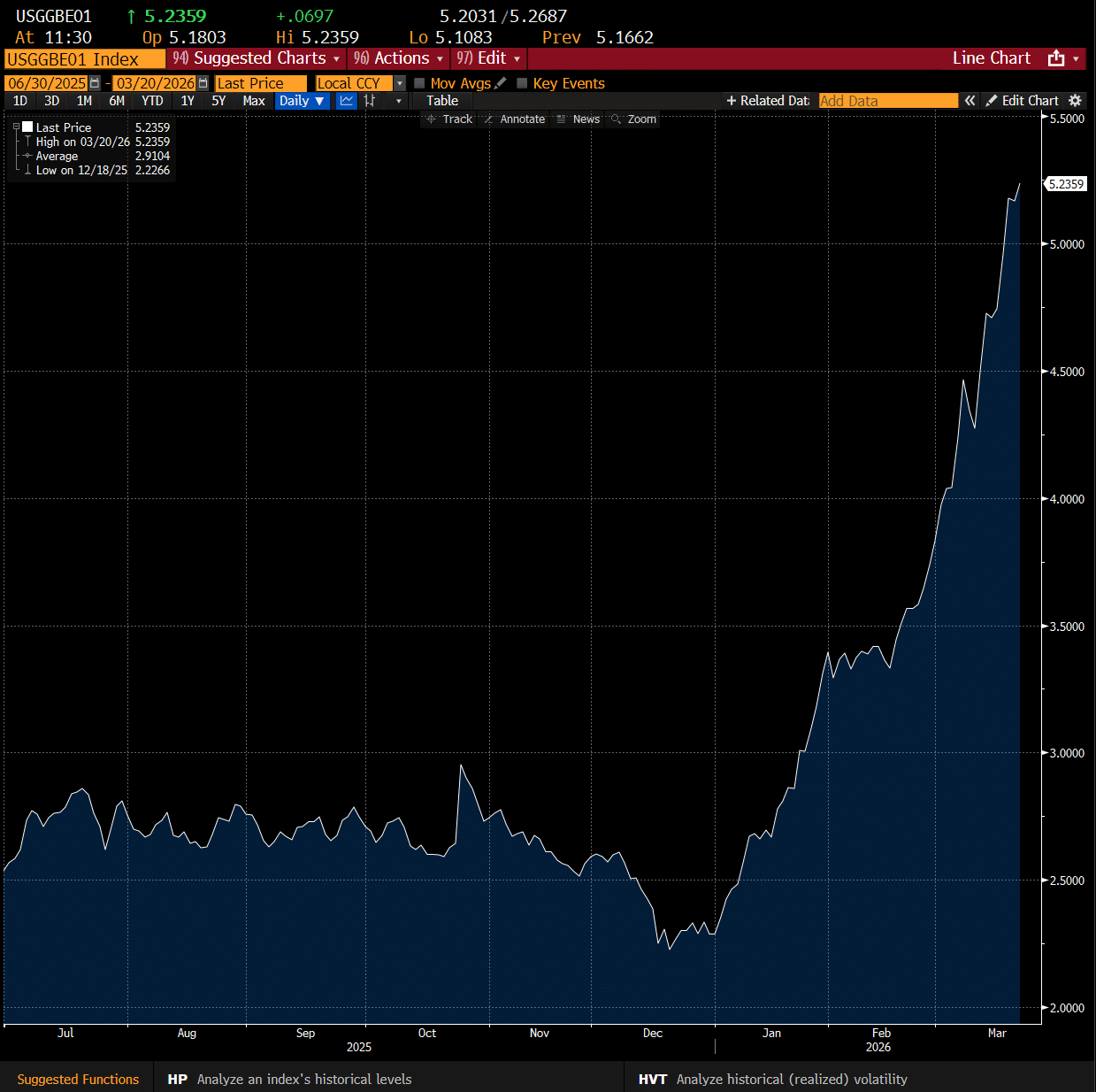
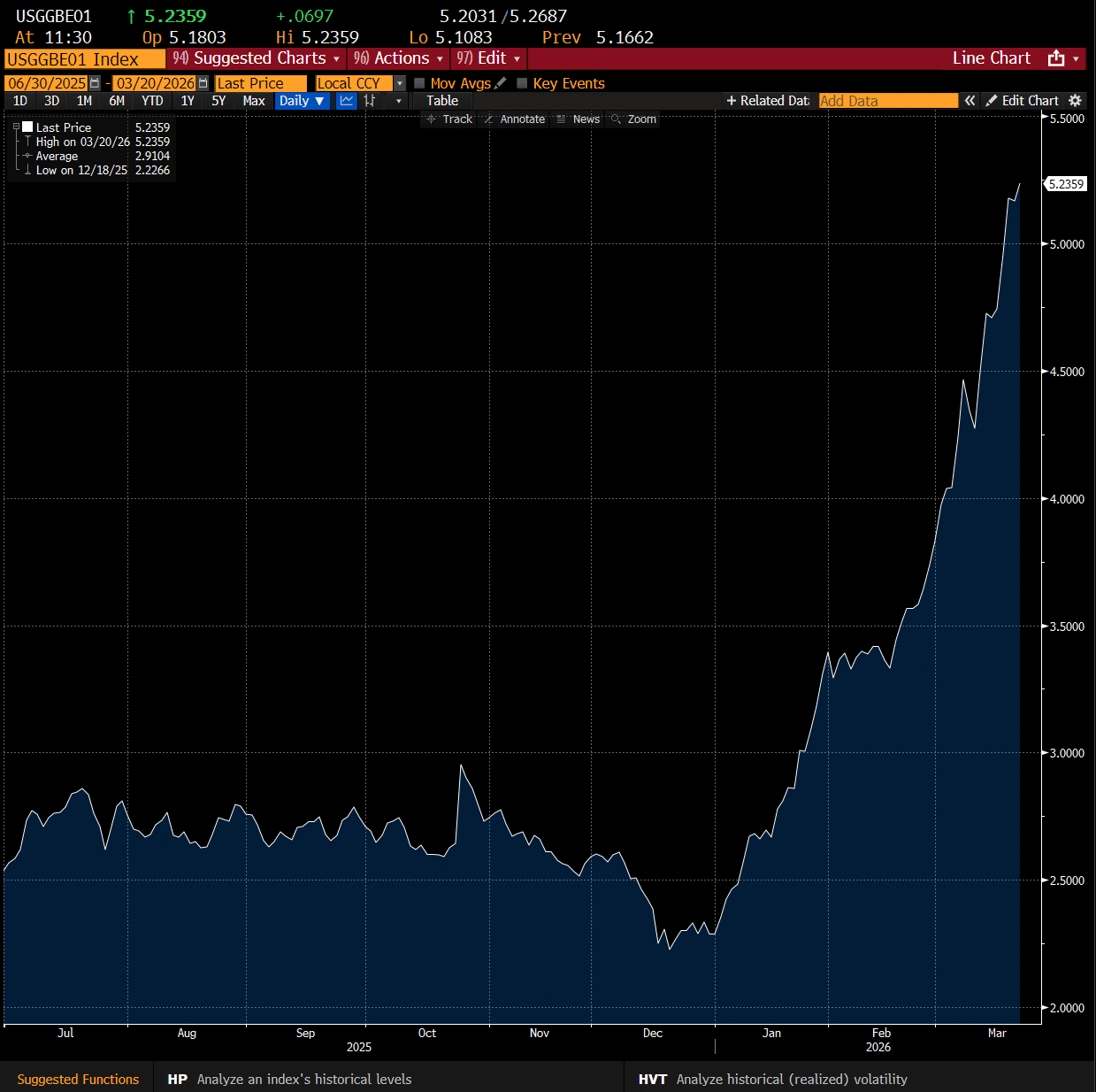
Source: X

So the natural question is, what does this mean for crypto?

Interestingly, some analysts are now flagging the risk of a 2008-style financial crisis. The pressure point here is the U.S. Treasury market, with yields pushing up to 4.37%, the highest level since July 2025. With debt levels already elevated, higher yields raise government borrowing costs, tightening the overall macro setup.

In short, if the Fed holds a zero rate-cut stance through the year, the risk of a crisis can’t be ruled out, especially with the data backing it. For crypto, that naturally shifts the focus toward hedging and capital preservation. So the question is, with macro tightening becoming structural, are stablecoins set to become the “long-term” parking zone for capital?

Defensive capital builds in crypto as macro conditions deteriorate

Zooming out, the long-term impact of the war still doesn’t appear to be fully priced into crypto markets.

Despite bearish macro commentary, total crypto market cap has held steady around the $2.4 trillion level, with no meaningful outflows. Large-cap assets continue to trade near key resistance zones without any significant rejection, indicating that conviction remains intact and risk hasn’t meaningfully unwound.

That said, the underlying data is starting to shift. Stablecoin market cap is up 2.22% this month, recently hitting a new all-time high of $316 billion. This points to liquidity building on the sidelines, with capital staying within crypto rather than rotating out.
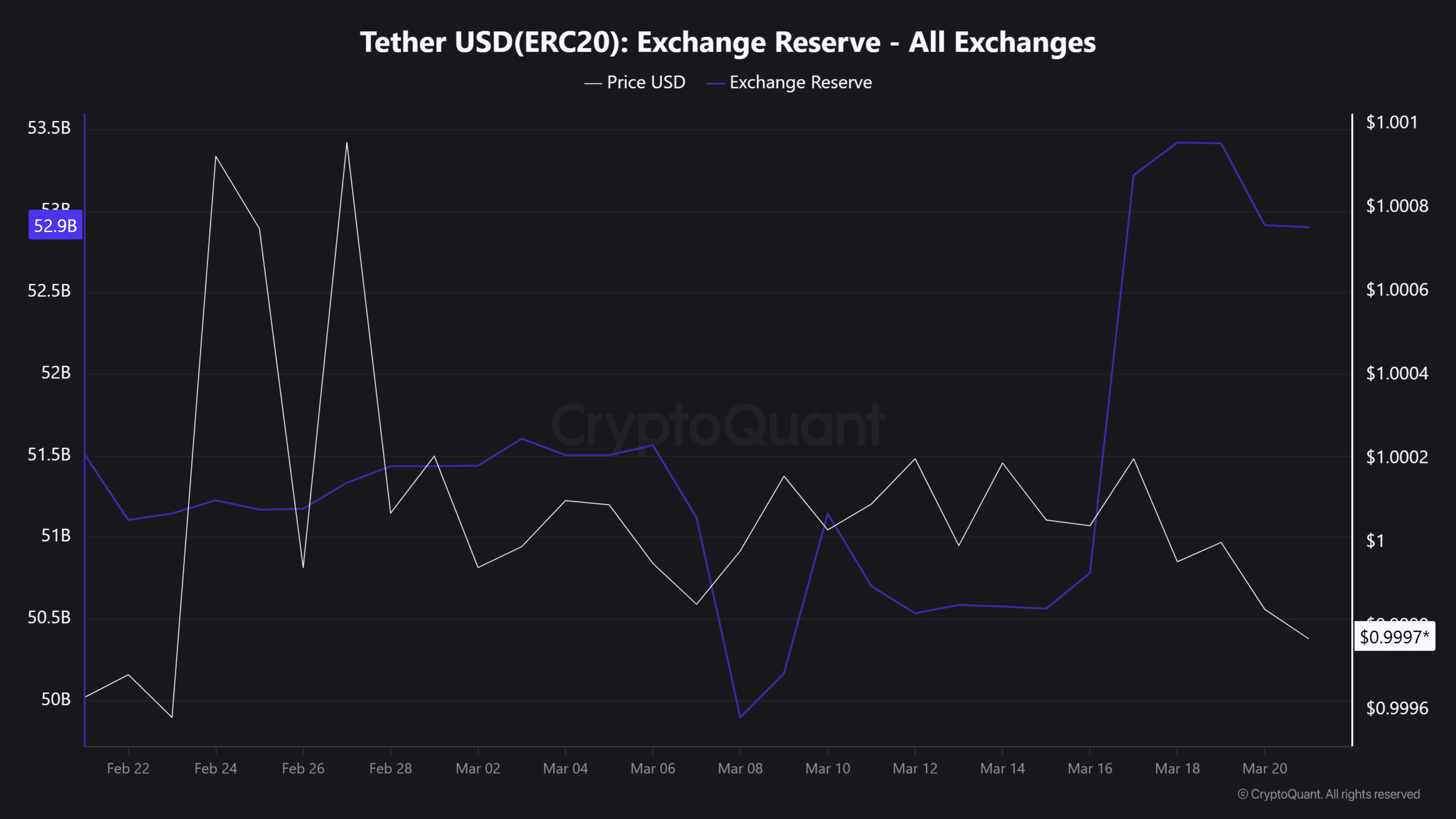
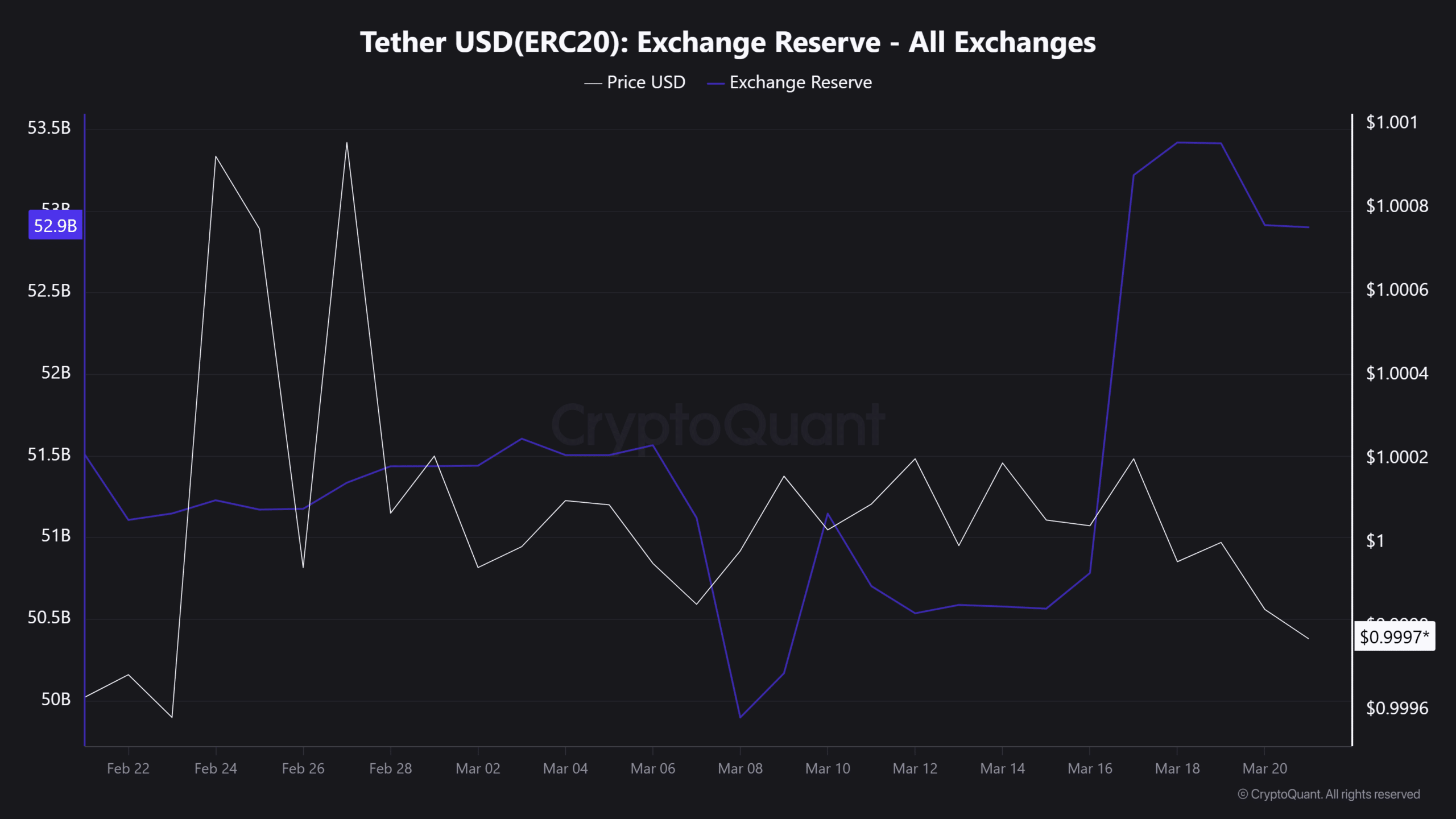
Source: CryptoQuant

Supporting this trend, USDT netflows, according to CryptoQuant, have recorded their first significant outflow of over $500 million in nearly two weeks, pushing exchange reserves down by approximately 0.97% over the past three days.

From a technical perspective, this suggests sideline capital is starting to move off exchanges, with investors rotating into safe positions. Against the backdrop of a bearish macro environment, the market clearly appears to be in a “cautious” positioning phase, with liquidity being preserved on-chain.

For crypto’s long-term outlook, that’s a constructive signal. With the war keeping rate-cut expectations low and U.S. economic risks at historically high levels (supported by analyst forecasts and hard data), investors piling into stablecoins are likely staging capital to deploy once risk appetite returns, making it a trend to watch closely.


Final Summary

  • High inflation, rising U.S. Treasury yields, and zero rate-cut expectations are creating a risk-off environment, prompting crypto investors to preserve capital.
  • Rising stablecoin supply and USDT outflows show investors are staging capital on-chain, ready to deploy once risk appetite returns.


Пов'язані питання

QWhat is the main concern for crypto investors according to the article, and how are they reacting?

AThe main concern is the combination of high inflation, rising U.S. Treasury yields, and expectations of zero interest rate cuts, creating a risk-off environment. Crypto investors are reacting by preserving capital, moving it into stablecoins as a defensive strategy.

QHow does the article link the current macroeconomic situation to a potential 2008-style crisis?

AThe article links it through the pressure on the U.S. Treasury market, with yields reaching a high of 4.37%. With elevated debt levels, higher yields increase government borrowing costs, tightening the overall macroeconomic environment and raising the risk of a financial crisis if the Fed maintains a zero rate-cut stance.

QWhat does the recent growth in stablecoin market capitalization indicate about investor behavior?

AThe stablecoin market cap hitting a new all-time high of $316 billion, along with USDT netflows moving off exchanges, indicates that investors are building liquidity on the sidelines. This shows a shift towards cautious, defensive positioning, with capital being preserved on-chain and staged for future deployment when risk appetite returns.

QDespite bearish macro conditions, what does the steady total crypto market cap around $2.4 trillion suggest?

AIt suggests that conviction among crypto investors remains intact and that risk hasn't meaningfully unwound. Large-cap assets are holding near key resistance levels without significant rejection, indicating that there have been no major capital outflows from the crypto market overall.

QWhat is the 'constructive signal' for crypto's long-term outlook mentioned in the article?

AThe constructive signal is that investors are piling into stablecoins, staging capital on-chain. This indicates that liquidity is being preserved within the crypto ecosystem and is poised to be deployed back into risk assets once macroeconomic conditions improve and risk appetite returns.

Пов'язані матеріали

Торгівля

Спот
Ф'ючерси

Популярні статті

Як купити WAR

Ласкаво просимо до HTX.com! Ми зробили покупку WAR (WAR) простою та зручною. Дотримуйтесь нашої покрокової інструкції, щоб розпочати свою криптовалютну подорож.Крок 1: Створіть обліковий запис на HTXВикористовуйте свою електронну пошту або номер телефону, щоб зареєструвати обліковий запис на HTX безплатно. Пройдіть безпроблемну реєстрацію й отримайте доступ до всіх функцій.ЗареєструватисьКрок 2: Перейдіть до розділу Купити крипту і виберіть спосіб оплатиКредитна/дебетова картка: використовуйте вашу картку Visa або Mastercard, щоб миттєво купити WAR (WAR).Баланс: використовуйте кошти з балансу вашого рахунку HTX для безперешкодної торгівлі.Треті особи: ми додали популярні способи оплати, такі як Google Pay та Apple Pay, щоб підвищити зручність.P2P: Торгуйте безпосередньо з іншими користувачами на HTX.Позабіржова торгівля (OTC): ми пропонуємо індивідуальні послуги та конкурентні обмінні курси для трейдерів.Крок 3: Зберігайте свої WAR (WAR)Після придбання WAR (WAR) збережіть його у своєму обліковому записі на HTX. Крім того, ви можете відправити його в інше місце за допомогою блокчейн-переказу або використовувати його для торгівлі іншими криптовалютами.Крок 4: Торгівля WAR (WAR)Легко торгуйте WAR (WAR) на спотовому ринку HTX. Просто увійдіть до свого облікового запису, виберіть торгову пару, укладайте угоди та спостерігайте за ними в режимі реального часу. Ми пропонуємо зручний досвід як для початківців, так і для досвідчених трейдерів.

183 переглядів усьогоОпубліковано 2024.12.11Оновлено 2026.04.28

Як купити WAR

Обговорення

Ласкаво просимо до спільноти HTX. Тут ви можете бути в курсі останніх подій розвитку платформи та отримати доступ до професійної ринкової інформації. Нижче представлені думки користувачів щодо ціни WAR (WAR).

活动图片










