

SignalPlus宏观分析特别版:势不可挡

Odaily星球日报Опубліковано о 2024-02-29Востаннє оновлено о 2024-02-29

Анотація

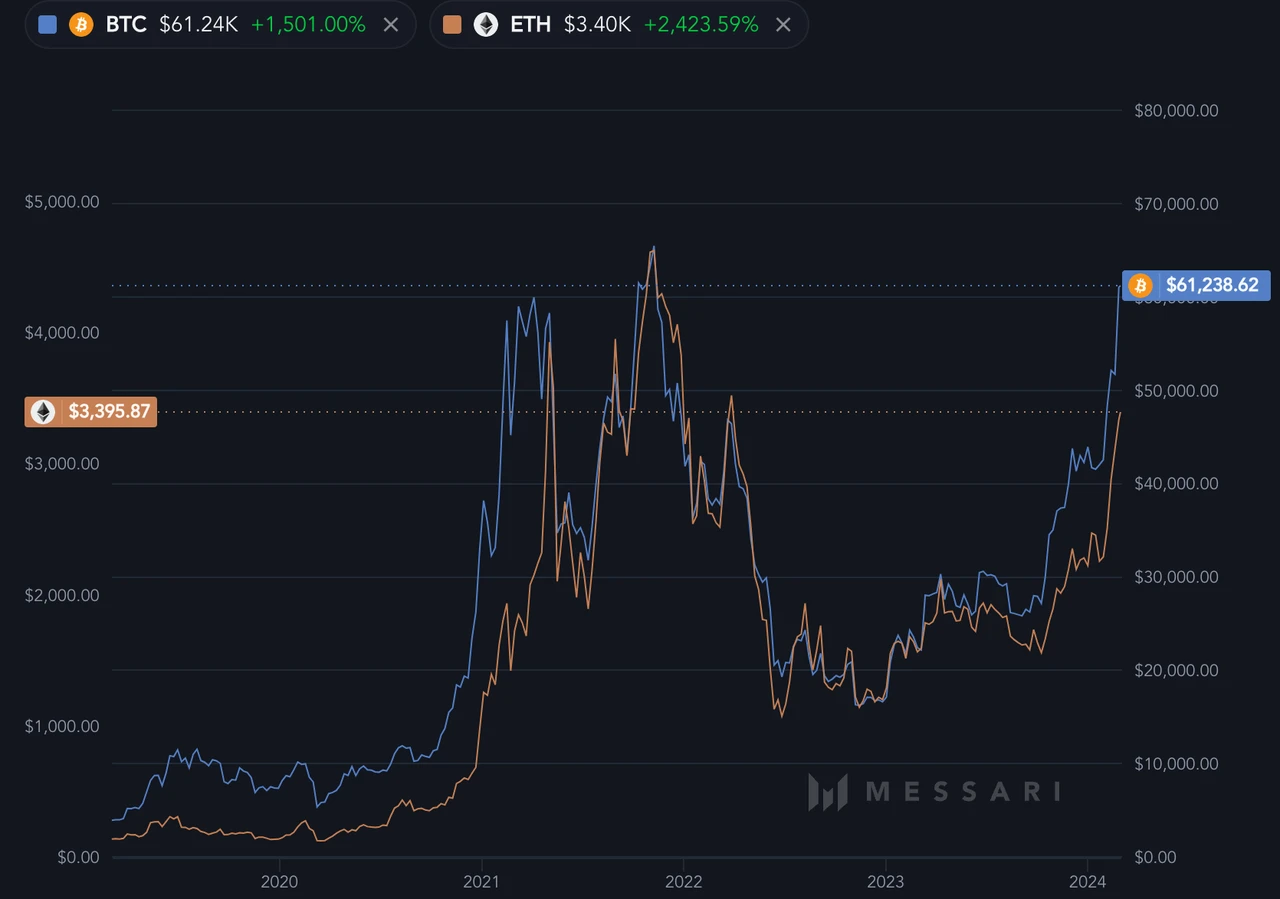
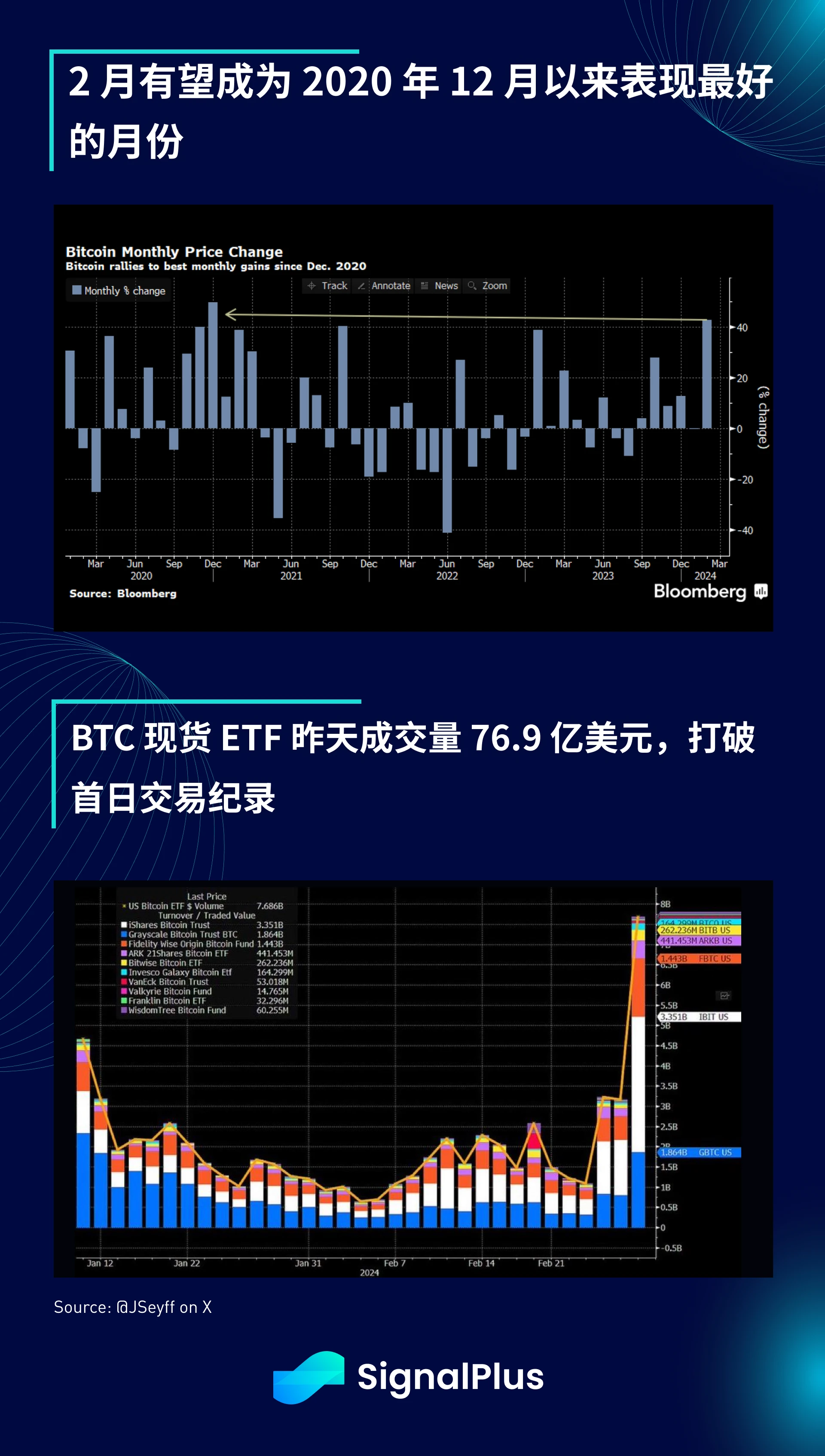
正当人们开始担心当前的风险反弹可能会泡沫化时,Bitcoin 在24小时内从5.7万美元急升至6.4万美元左右,2月预计将成为BTC自2020年12月以来表现最佳的月份,涨幅超过40%。

SignalPlus宏观分析特别版:势不可挡

SignalPlus宏观分析特别版:势不可挡

SignalPlus宏观分析特别版:势不可挡

SignalPlus宏观分析特别版:势不可挡

正当人们开始担心当前的风险反弹可能会泡沫化时,Bitcoin 在 24 小时内从 5.7 万美元急升至 6.4 万美元左右, 2 月预计将成为 BTC 自 2020 年 12 月以来表现最佳的月份,涨幅超过 40% ,而随著 FOMO 热潮蔓延,现货 ETF 的交易量也激增至 76.9 亿美元,远远超过首个交易日 46.6 亿美元的纪录。
SignalPlus宏观分析特别版:势不可挡

美国的散户交易活动非常活跃,以至于 Coinbase 网站一度出现事故,客户余额显示为 0 ,并导致价格在几分钟内从 6.4 万左右突然暴跌 5% + 至约 5.9 万美元。Coinbase CEO Brian Armstrong 在 X 上承认了这次平台事故,并重申投资者余额是安全的,他们还没准备好应对流量突然增加 10 倍以上,导致大范围的交易中断。

SignalPlus宏观分析特别版:势不可挡

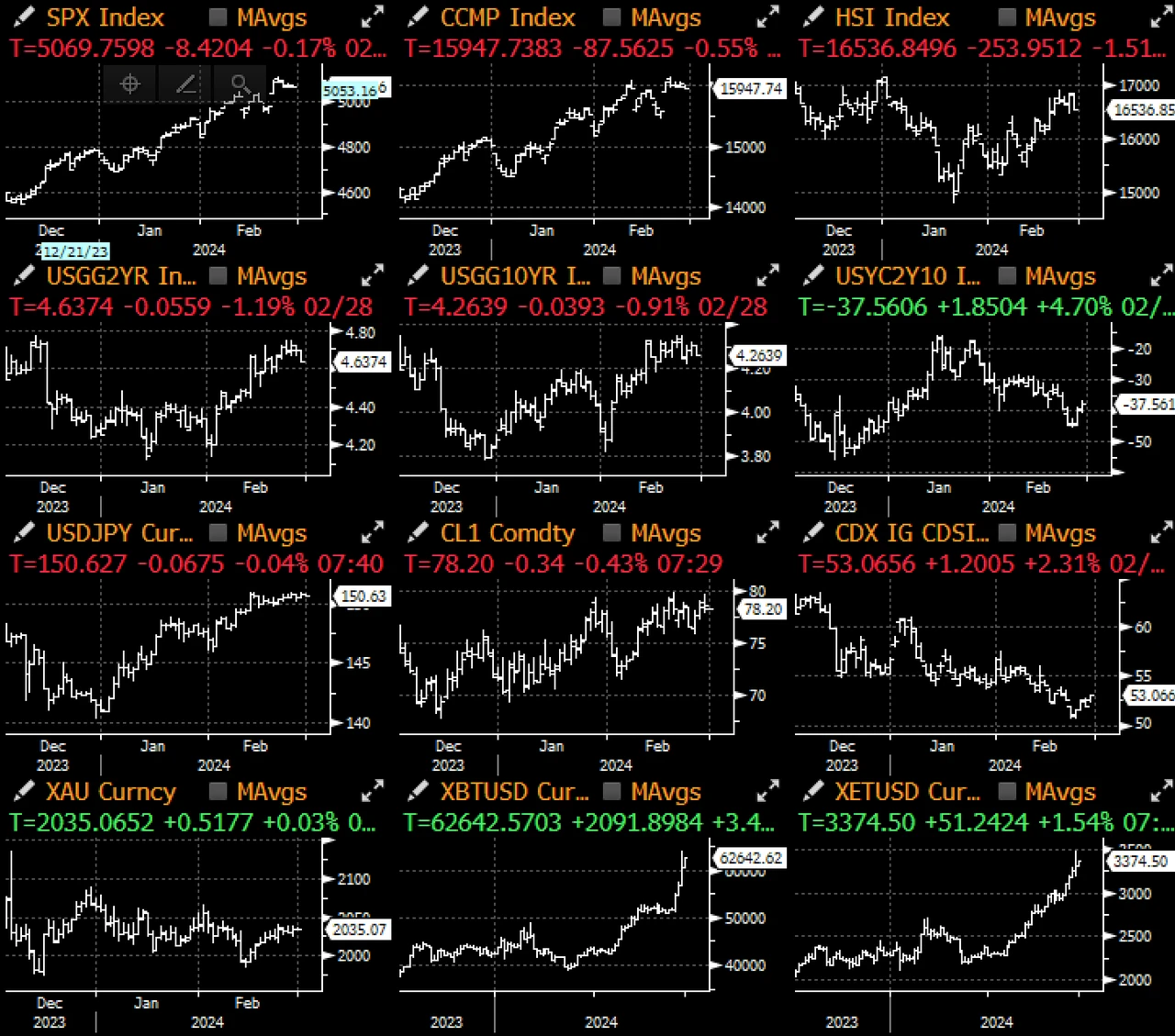
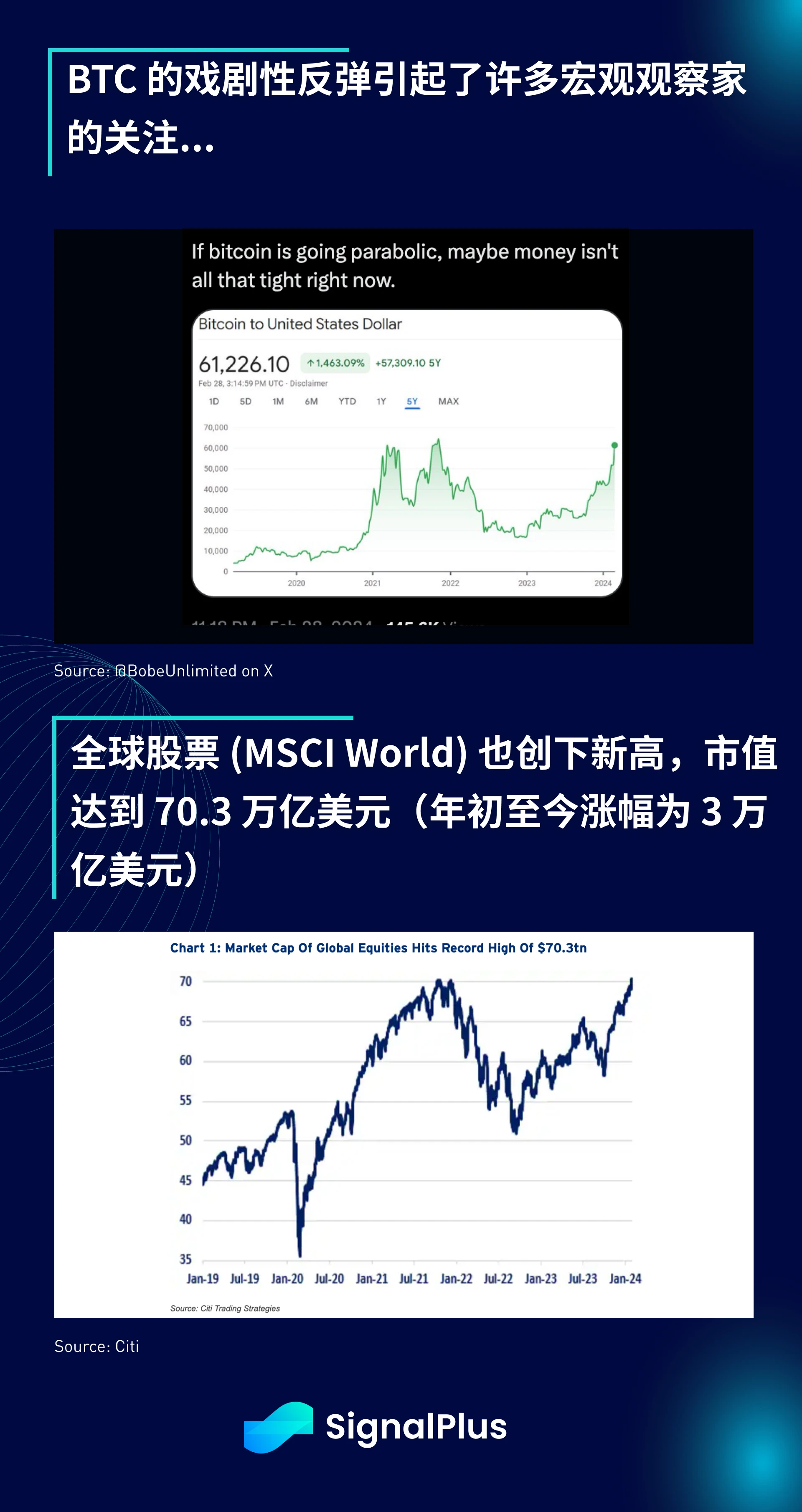
Bitcoin 的抛物线走势促使一些宏观观察家对当前宽松的金融形势发表意见,并质疑美联储当前倾向宽松背后的理由。值得注意的是,许多其他资产类别也都出现了类似的历史新高,因此当前“财富效应”并不仅限于加密货币。
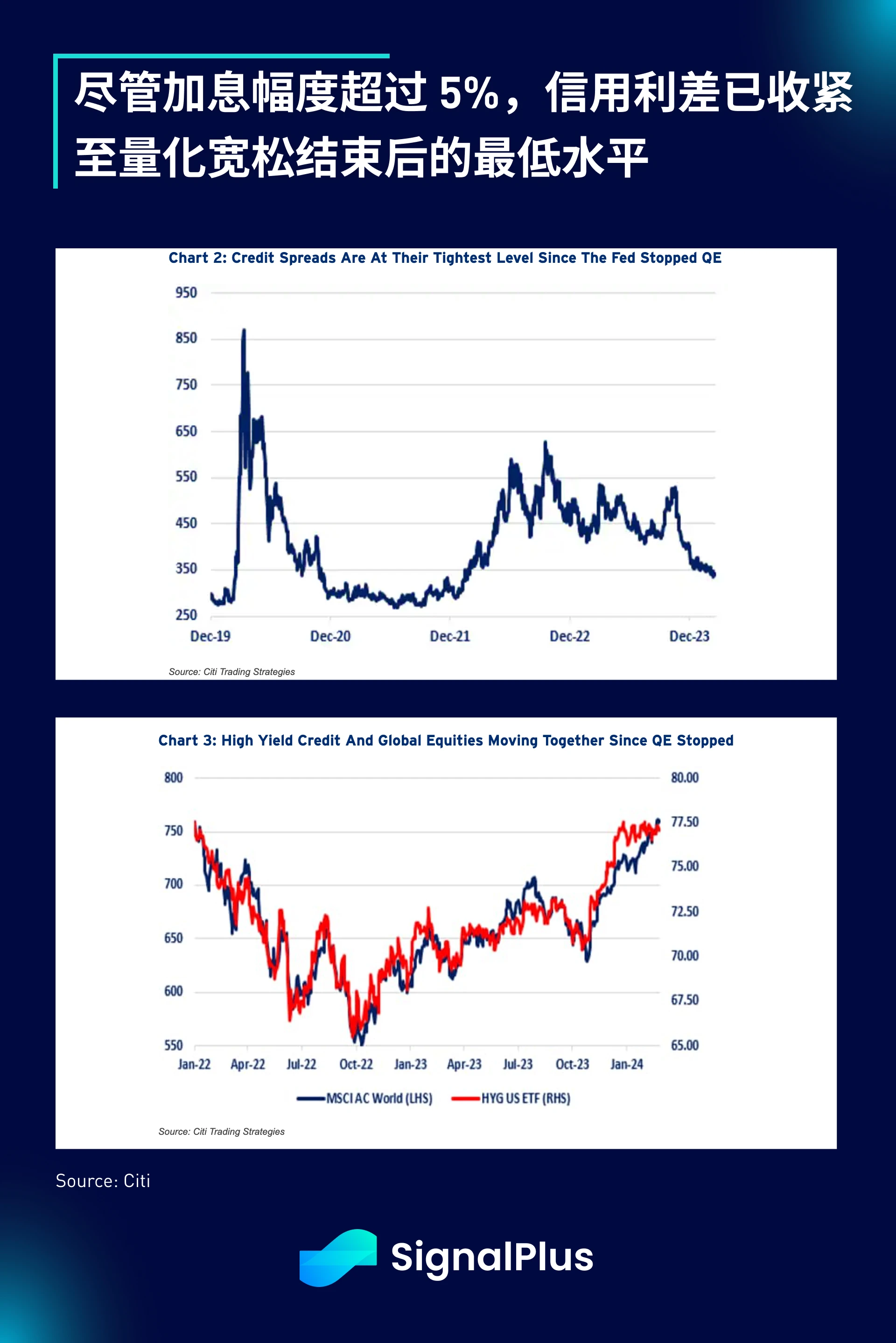
SignalPlus宏观分析特别版:势不可挡

SignalPlus宏观分析特别版:势不可挡

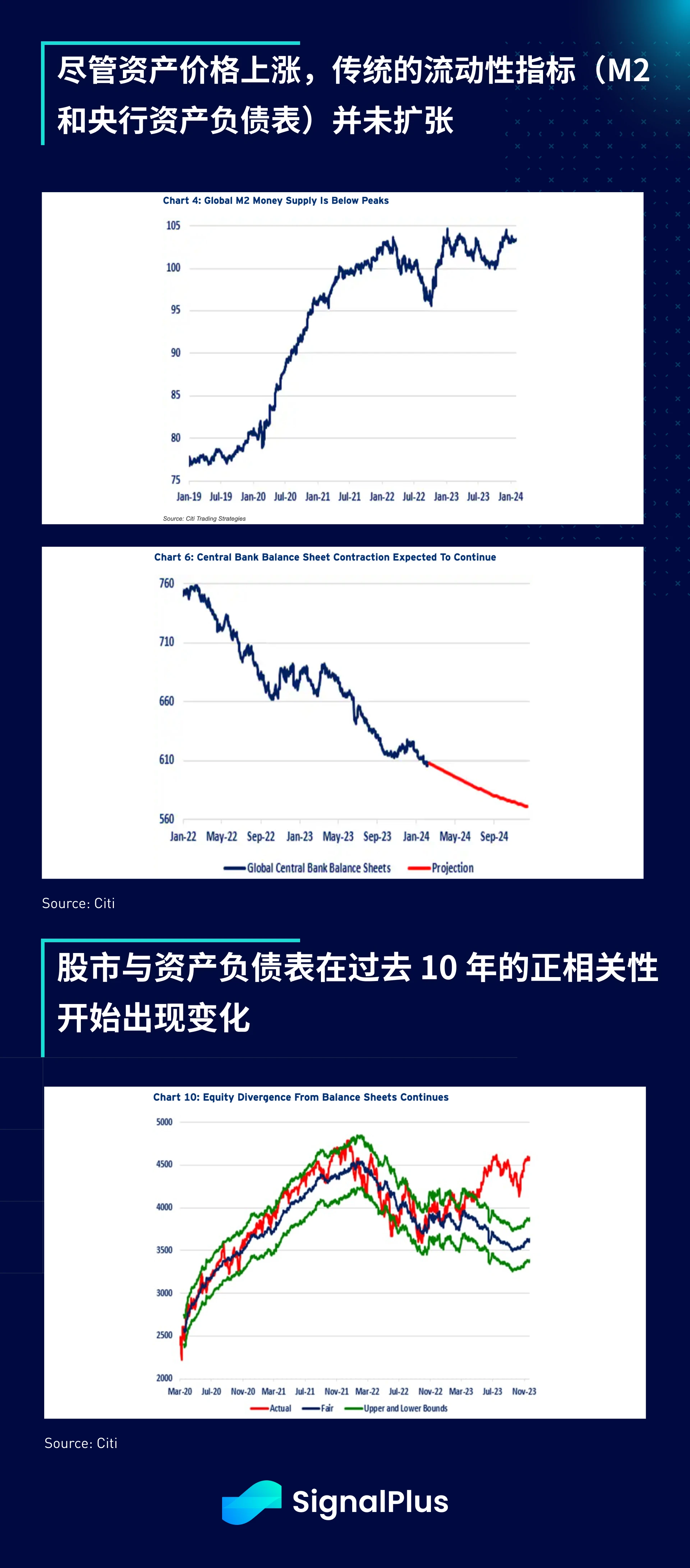
在市场弥漫著风险偏好情绪之际,花旗提出了一个有趣的问题:“钱”是从哪里来的?传统的 M 2 流动性指标仍保持在 2023 年的水平,而全球量化紧缩 (QT) 持续不减,央行资产负债表预计到年底将从 7, 600 亿美元的峰值缩减至约 5, 600 亿美元,因此,与过去十年的零利率政策/量化宽松时代不同,当前资产价格的上涨并不是由宽松的央行货币政策所推动的。
SignalPlus宏观分析特别版:势不可挡

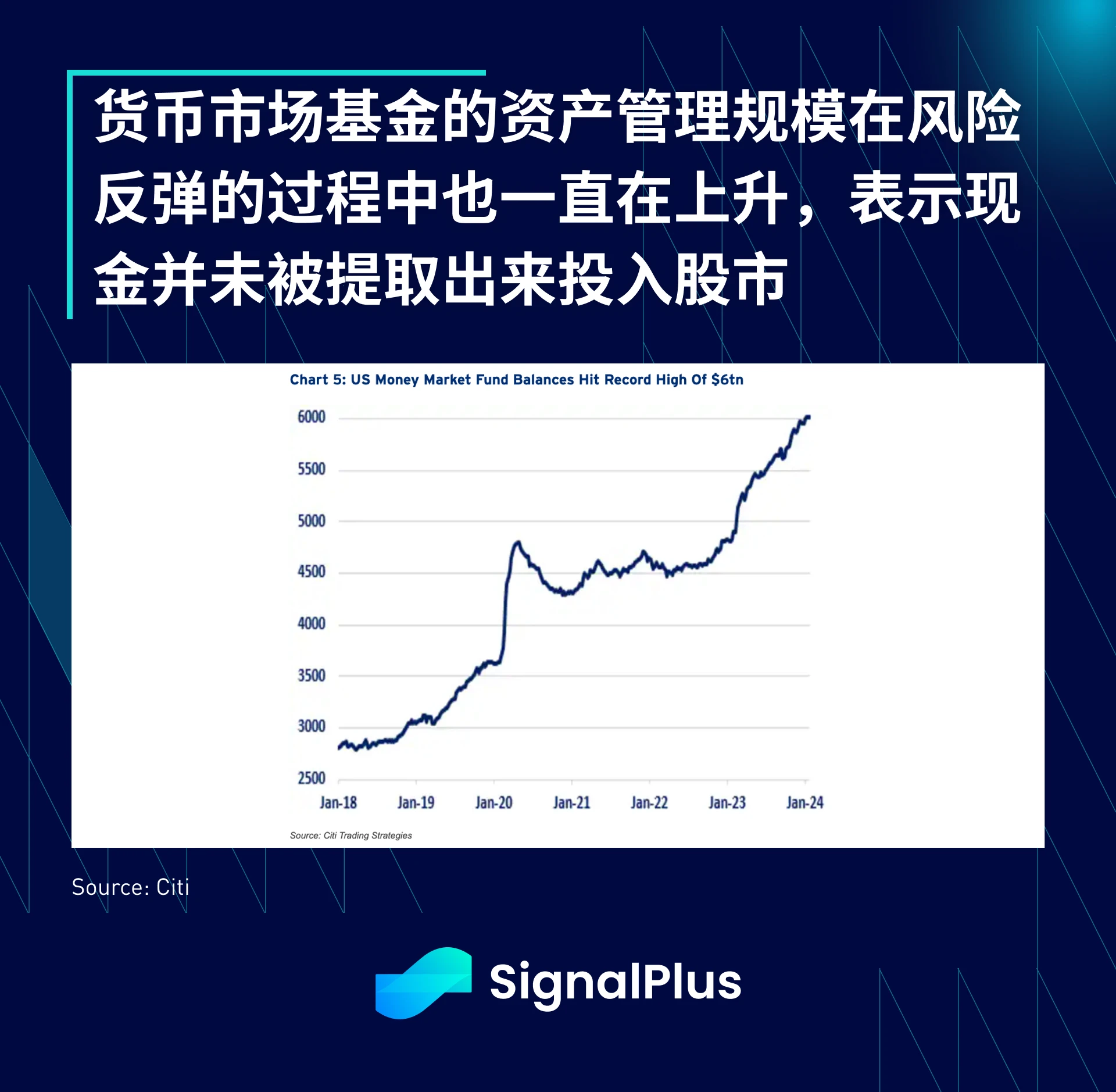
此外,有些令人意外的是,尽管市场风险情绪高涨,货币市场帐户持有的现金量却突破了 6 万亿美元,创下历史新高,且每月的资产管理规模也持续上升。如果所有的一切都在上涨,包括股票、信贷、加密货币甚至是现金,那么新的资金究竟是从哪里来的?
SignalPlus宏观分析特别版:势不可挡

股票市场不是零和游戏,财富效应可以通过 GDP 产出或技术生产力(AI)的扩张来创造,但股票价格以如此快的速度上涨、且几乎没有回撤的情况仍属罕见。自 10 月低点以来,SPX 上涨了超过 20% (年化超过 40% !),且实际波动率 (RV) 处于历史低点,这与 Bitcoin 从 4 万上涨至 6.3 万美元时显著增加的波动率形成了鲜明对比。

SignalPlus宏观分析特别版:势不可挡

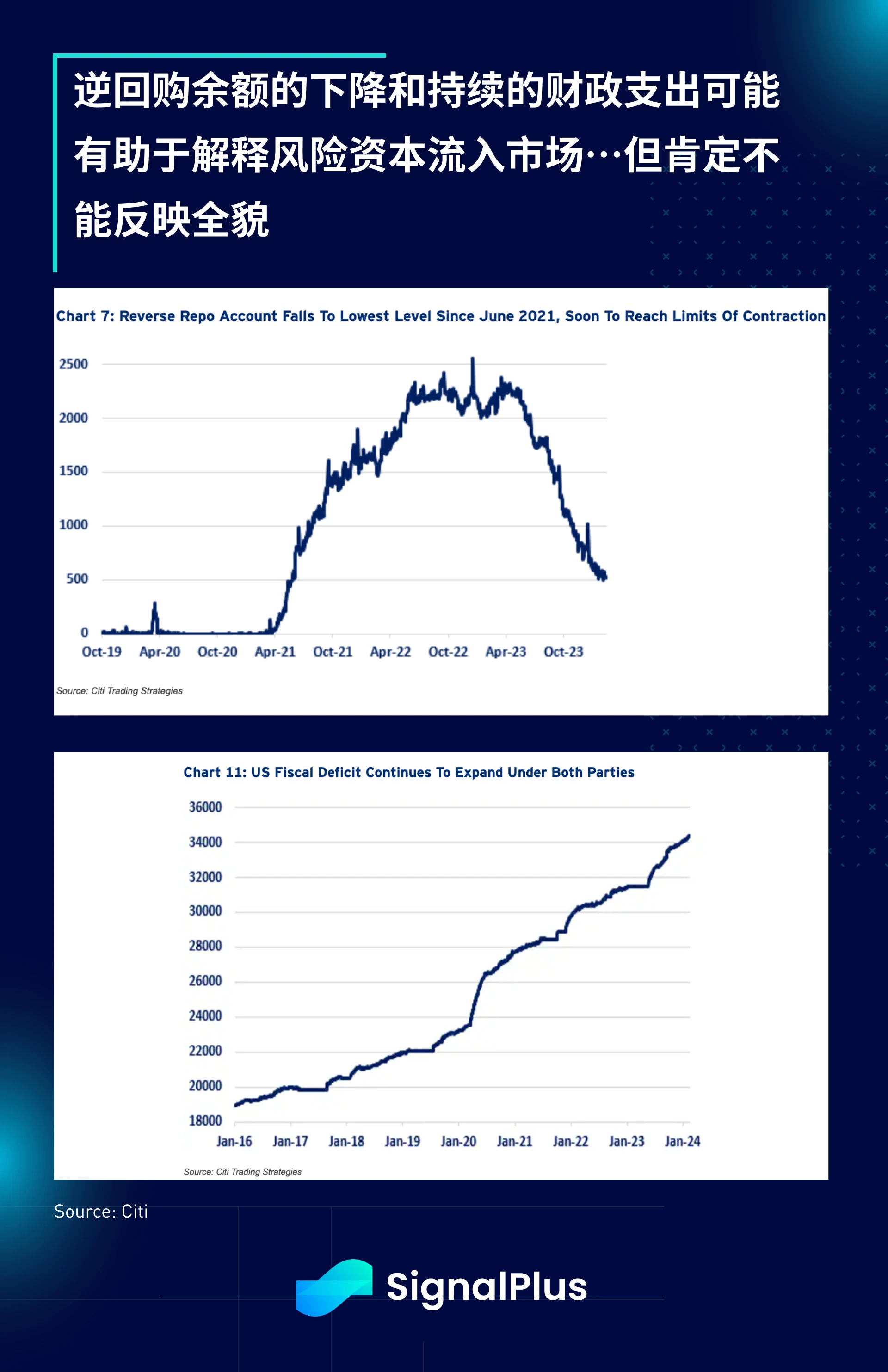
正如花旗在其报告中所得出的结论,唯一可以看到流动性被撤出的地方是逆回购余额的下降(导致美联储开始讨论量化紧缩的放缓),以及美国政府不断扩大的财政赤字。然而,逆回购余额的下降($ 1.5 万亿)和财政赤字的上升($ 1.8 万亿)仍然远远落后于股票市值的上涨($ 5.5 万亿),甚至还没考虑到信贷市场的表现以及加密货币市场戏剧性的增长(+$ 0.7 万亿)。目前,除了 EPS/经济前景/估值倍数扩张等自然增长因素之外,我们还没有满意的答案,无论如何,这确实是一次值得载入史册的历史性反弹,让我们尽情地享受这段时光。
SignalPlus宏观分析特别版:势不可挡

SignalPlus宏观分析特别版:势不可挡

您可在 ChatGPT 4.0 的 Plugin Store 搜索 SignalPlus ,获取实时加密资讯。如果想即时收到我们的更新,欢迎关注我们的推特账号@SignalPlus_Web3 ,或者加入我们的微信群(添加小助手微信:SignalPlus 123)、Telegram 群以及 Discord 社群,和更多朋友一起交流互动。

SignalPlus Official Website:https://www.signalplus.com

Пов'язані матеріали

Idle Macs Can Also Make Money? An Overview of Eigen Labs' Decentralized AI Inference Network Darkbloom

AI inference is becoming a crucial layer of internet infrastructure, yet it remains largely dependent on costly, capacity-limited centralized systems with potential security risks. Meanwhile, millions of powerful computers sit idle globally. Eigen Labs' Darkbloom network aims to utilize this idle capacity by enabling distributed AI inference on Mac computers, specifically those with Apple Silicon chips. Darkbloom's architecture consists of three components: users who send inference requests, a coordinator (operated by Eigen Labs) that routes these requests, and providers (Mac owners) whose machines run the models and return outputs without being able to see the request content. The system prioritizes privacy through a hardened provider process, software integrity checks, and hardware-supported attestation based on Apple's security architecture to ensure verifiable privacy. Economically, Darkbloom differs from traditional models. It leverages existing hardware, with marginal costs primarily driven by electricity, allowing it to offer pricing roughly 50% lower than major API aggregators. Providers keep 100% of the inference revenue, and the project does not rely on token subsidies; earnings come solely from real AI inference demand. However, early-stage earnings are modest, with top providers currently earning under $6 per day, influenced by factors like hardware specs, uptime, and network demand. The network currently supports models like Google's Gemma 4 and OpenAI's GPT-OSS via OpenRouter. To participate as a provider, users need an Apple Silicon Mac running macOS 14 or later, must install the Darkbloom provider software, and keep the machine online with a stable internet connection.

marsbit15 хв тому

Idle Macs Can Also Make Money? An Overview of Eigen Labs' Decentralized AI Inference Network Darkbloom

marsbit15 хв тому

Which Crypto Sectors Have Been "Eaten" by AI Agents?

The article examines which crypto sectors have been increasingly dominated by AI Agents and which remain human-centric. In certain high-speed, efficiency-driven areas, AI Agents have taken clear control. This includes derivatives/perpetuals trading, where bots outperform humans significantly (e.g., a contest showed 0% of AI Agents were liquidated vs. 43% of humans), arbitrage/MEV extraction, and yield optimization (with ~68% of new DeFi protocols in Q1 2026 featuring autonomous AI Agents). Spot trading and portfolio optimization are also seeing heavy Agent adoption. However, the shift is not universal. In "battleground" sectors, both Agents and humans coexist. In prediction markets, Agents dominate short-term arbitrage, but humans still outperform in long-term, nuanced judgment calls. In DeFi lending, while liquidation is automated, core deposit/borrow decisions remain largely human-driven. Sectors still firmly led by human activity include stablecoin payments and card-based spending (driven by real-world economic activity and remittances) and wallets, which serve as the crucial human-verification and approval layer. The rise of Agents increases the need for robust human-Agent verification layers. Projects like World/AgentKit, t54, Self Protocol, and Kite AI are building infrastructure to create trust, security, and accountability by binding Agents to verified human identities. In conclusion, while AI Agents have decisively "eaten" speed and optimization-focused crypto sectors, human judgment, trust, and real-world context remain dominant in areas that create broad economic value, such as payments and identity. The future likely involves a symbiotic relationship where Agents require human verification and oversight to operate effectively.

Foresight News21 хв тому

Which Crypto Sectors Have Been "Eaten" by AI Agents?

Foresight News21 хв тому

After Rising 11 Times in a Year, Micron's Earnings Report Becomes a Stress Test for the AI Memory Market

**Micron's Upcoming Earnings: A Crucial Test for the AI Memory Rally** Investors in AI memory stocks face a critical moment on June 24th, when Micron Technology reports quarterly earnings. The stock, having surged approximately 11-fold from $103 to $1,134 over the past year, carries immense market expectations. Wall Street consensus forecasts a staggering ~932% year-over-year jump in EPS to around $19.72 and ~270% revenue growth to ~$345 billion, largely driven by sold-out HBM (High Bandwidth Memory) capacity through 2026. Analysts have aggressively revised estimates upward over the last 90 days, with EPS expectations rising 68%. This creates a high bar: even strong results risk a sell-off if they fail to meet these elevated projections. Notably, price forecasts from institutions like Citi (predicting ~200% DRAM price increases in 2026) are already among the most bullish on Wall Street, not conservative. The key metric to watch is gross margin, guided to a record ~81%. Such peak profitability raises questions about sustainability in the historically cyclical memory sector. While management has signaled continued strength, the stock's direction post-earnings will likely hinge more on forward guidance for the next quarter and details on HBM capacity expansion for 2027, rather than the already-anticipated stellar past results. The report represents a major pressure test for the high-flying AI memory trade.

marsbit25 хв тому

After Rising 11 Times in a Year, Micron's Earnings Report Becomes a Stress Test for the AI Memory Market

marsbit25 хв тому

Торгівля

Спот
Ф'ючерси
活动图片