
1confirmation: Reverse Entrepreneurship, the Next Web3 Blockbuster Might Come from a Once-Failed Track

marsbitОпубліковано о 2026-08-13Востаннє оновлено о 2026-08-13

Анотація

**Title: Reverse Entrepreneurship: The Next Web3 Blockbuster May Come from Previously Failed Tracks** This article argues that the next major consumer crypto application is likely to emerge from a concept that failed five years ago, now benefiting from matured infrastructure and better timing. It examines several such "failed" tracks that hold renewed potential: 1. **Internet-Native Assets:** Beyond simply tokenizing tweets or creating digital collectibles, there's an opportunity to create a genuinely new, crypto-native asset class that captures cultural moments and online phenomena, as opposed to merely tokenizing real-world assets (RWA). 2. **X-to-Earn:** While unsustainable token emission models doomed early projects like STEPN, the core premise that most people will first *earn* crypto, not buy it, remains valid. The future challenge is designing what is earned and why users would hold it long-term. 3. **The Metaverse:** Past failures like Decentraland stemmed from trying to replicate the physical world online. The opportunity lies not in abandoning shared online social spaces, but in reimagining their form beyond real-world analogs. 4. **DAOs:** DAOs have underdelivered by overcomplicating governance. The fundamental, unmet user need is simpler: enabling groups of internet strangers to pool funds and collectively achieve goals (e.g., buying assets, funding projects) that are impossible individually. 5. **Personal Value Tokenization:** Numerous attempts (Friend...

Author: 1confirmation

Compilation: Chopper, Foresight News

There are many reasons why businesses fail, but bad timing is the most common. Many of today's most successful companies were not the first movers in their industries. They rose when the infrastructure had matured and user behavior had shifted, creating the right timing.

The crypto industry has over a decade of experience in various attempts to target mainstream users, leaving a wealth of failed cases to review and learn from. The following categories of once-struggling directions now have the potential to breed the next phenomenon-level crypto consumer application.

Internet-Native Assets

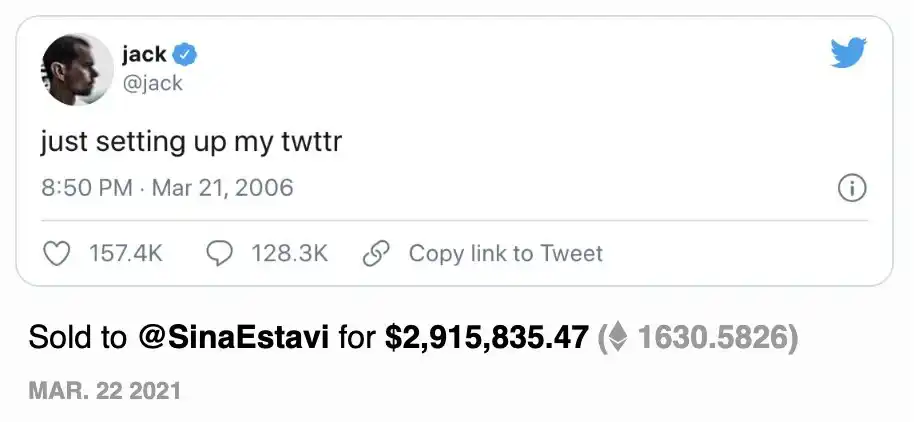
During the 2021 NFT boom, Cent created a marketplace for tokenizing tweets. Jack Dorsey's first tweet sold for 1630 ETH (equivalent to $2,915,835.47) on March 22, 2021. NBA Top Shot also tried to put cultural moments on-chain but ultimately packaged them as digital collectible cards with highly similar forms and mechanics.

To this day, the industry still lacks a mature solution to effectively capture online popularity and cultural moments. Many might point to meme coins, but meme coins are more derivatives of popularity and cannot truly anchor the cultural events themselves.

The whole industry is currently abuzz about RWA, striving to bring real-world assets like stocks, bonds, real estate, and collectible cards on-chain. Perhaps the reverse approach holds greater opportunity: creating a new type of crypto-native asset that doesn't exist in the real world.
X-to-Earn (Play-to-Earn)

Projects like STEPN and Axie Infinity were once hugely popular. They no longer required users to spend money to buy crypto assets but instead provided ways for users to earn tokens.

The lesson we should take from this is not that "the play-to-earn model doesn't work," but that unrestrained issuance of liquidity tokens cannot sustain a viable economic system.

In the future, most people will obtain their first crypto by earning it, not by buying it directly. The core questions are: what are users earning, and why would they want to hold it long-term?

The Metaverse

Mentioning the word "metaverse" today feels out of place to many, given how the last wave of hype ended. Projects like Decentraland and The Sandbox attempted to replicate the real world on the internet, creating digital real estate like land and buildings. When Facebook rebranded to Meta, its market cap had reached $900 billion.

The current mainstream trend in the industry is embracing offline reality. When everyone is rushing to the physical world, exploring new forms of online social interaction might create interesting opportunities.

The past failure of the metaverse might not have been misjudging people's willingness to immerse themselves in digital spaces; the mistake may have been stubbornly believing that virtual worlds must replicate the appearance of the real world.

DAO (Decentralized Autonomous Organization)

DAOs cannot be said to have completely failed; many projects still exist today, but they are far from realizing the potential initially envisioned.

ConstitutionDAO was a highly representative experiment. Its model was very simple: a group of internet strangers raised about $47 million in just a few days to try to bid on an original copy of the U.S. Constitution.

Pooling funds to buy a sports team, invest in a movie, fund an athlete, collect historical artifacts, save a local shop, fund scientific research, purchase land... accomplishing things a single ordinary person could not.

The DAO industry may be overly fixated on governance mechanisms, but the most basic user need is simply for people on the internet to pool funds to do things together.

Personal Value Assetization

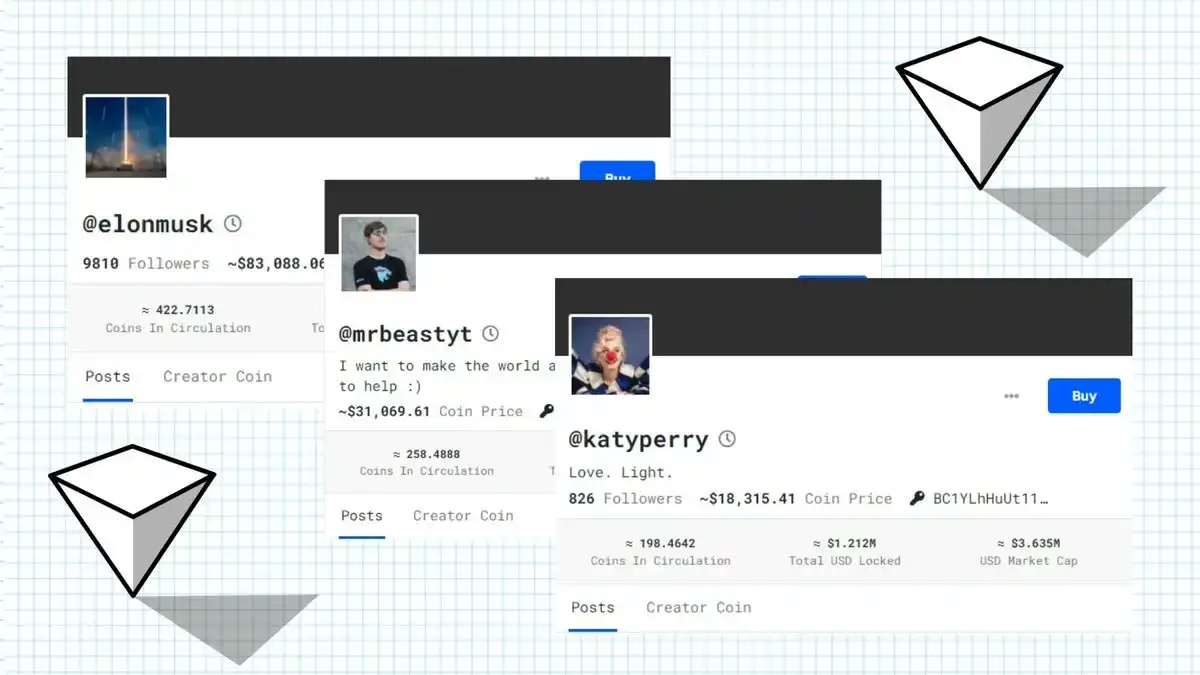
This is the most well-known category on the list. A slew of products like Friend.tech, Rally, Roll, and BitClout constitute the "project graveyard" of the creator economy and SocialFi era.

The underlying idea has always been largely similar: creating a corresponding trading market for each individual. The form is sometimes a creator token, sometimes an access pass, sometimes using a bonding curve for pricing, but no product has been able to sustain itself long-term.

In reality, people trade meme coins tied to personalities, bet on politicians' moves, buy athletes' trading cards, buy or sell stocks because of founders. This shows that the direction of "using people as the underlying asset" may not be inherently wrong; the past implementation methods may have been flawed.

Traders and fans might want to build trading markets around people, but are the creators themselves willing to be treated as trading targets? If creators are reluctant, is it possible to build trading markets around people without turning the people themselves into commodities?
The next phenomenon-level crypto consumer application will not be born in the track where everyone is currently crowding development. It will be an idea that failed five years ago but now finally has the necessary infrastructure and timing for success.

Пов'язані питання

QAccording to the article, what is the most common reason for the failure of companies in the crypto space?

AAccording to the article, the most common reason for failure is bad timing.

QWhat are the five previously unsuccessful areas that the article suggests could now produce a breakout crypto consumer application?

AThe five areas are: Internet-Native Assets, X-to-Earn, the Metaverse, DAOs (Decentralized Autonomous Organizations), and Personal Value Tokenization.

QWhat fundamental problem does the article identify with the 'X-to-Earn' model as implemented by projects like STEPN and Axie Infinity?

AThe fundamental problem was the unsustainable economic model created by indiscriminately distributing liquid tokens.

QWhat does the article suggest was a key mistake in previous Metaverse projects like Decentraland and The Sandbox?

AThe key mistake was the stubborn insistence on recreating the real world's appearance in the virtual world, instead of creating new forms of online social interaction.

QWhat core user need do many DAOs overlook by focusing too much on governance mechanisms, according to the article?

AThe core user need is simply for people on the internet to pool funds to accomplish things that a single individual could not.

Пов'язані матеріали

Bitwise Closes 8 ETFs and Cuts Staff by 14%, but Continues to Launch New Products

Bloomberg reported on August 12 that cryptocurrency asset management firm Bitwise has laid off approximately 14% of its staff, reducing headcount from around 180 to about 155 employees. CEO Hunter Horsley stated the adjusted team remains the largest in the company's eight-year history and expressed confidence in long-term growth, though current personnel and product configurations are tightening. Prior to the layoffs, Bitwise disclosed a significant drop in client assets from over $15 billion in early February to $11 billion by April 1st, a decrease of at least $4 billion. The company did not specify the contributions of price changes, fund flows, or changes in reporting scope to this decline. In a related product restructuring, Bitwise decided to liquidate eight ETFs between April and June. This included the Web3 ETF, a BTC/ETH/Treasuries rotation strategy ETF, and six options income ETFs tied to assets like Coinbase and Ethereum. These moves reduce the number of products requiring ongoing operational support. Despite these cuts, Bitwise continues to launch new products. Recent offerings include an Avalanche ETP with staking in Europe, the Hyperliquid ETF, and the takeover of Superstate's $267+ million Crypto Carry Fund, entering the tokenized fund management space. The company now manages 70 investment products for over 5,500 advisory teams and works with more than 20 banks and broker-dealers. The simultaneous staff reduction and product portfolio shift—away from thematic Web3 and single-asset options strategies towards direct crypto exposure, staking, and tokenized funds—indicates a strategic realignment. The operational burden on the smaller remaining team will depend heavily on the complexity of the revised product lineup. Bitwise has not disclosed the specific reasons for the layoffs, the affected departments, severance details, or any one-time costs associated with the job cuts.

marsbit8 хв тому

Bitwise Closes 8 ETFs and Cuts Staff by 14%, but Continues to Launch New Products

marsbit8 хв тому

CoreWeave: The Inflection Point Has Arrived. Has the 'Hard-Working Underdog' Finally Turned Profitable?

CoreWeave, an AI cloud unicorn, released its Q2 2026 earnings on August 12, with shares rising about 15% post-announcement. While overall performance did not significantly exceed expectations, key positive trends emerged. Revenue reached approximately $2.58 billion, up 112% year-over-year, though slightly below the high end of prior guidance. A major highlight was the acceleration in computing power deployment, with Active Power increasing by a record 500 Mw to 1,500 Mw, far surpassing market forecasts and signaling faster future revenue growth. Capital expenditures also hit a new high of $9.4 billion. Importantly, profitability showed signs of inflection. "True" gross margin (after deducting cost of revenue and Tech & Infrastructure expenses) rose to 7.3%, up 3 percentage points from the previous quarter. As revenue scales, depreciation and operating expenses are being diluted. Adjusted operating profit margin improved significantly to 5% from 1% last quarter. The company's guidance points to continued acceleration, with Q3 revenue growth expected at 158% and margins continuing to climb. Management raised full-year 2026 guidance, projecting Q4 revenue growth of around 194% and an adjusted operating margin of approximately 14.6%, suggesting a rapid path toward its 25%-30% long-term target. Recent developments, including a 25% price increase for its services and the launch of higher-margin Managed Inference offerings, support the improving profitability narrative. While long-term competitive challenges remain for new cloud providers, CoreWeave's near-term trajectory of accelerating growth and expanding margins presents a high-risk, high-reward opportunity, especially amid renewed market optimism for cloud stocks.

marsbit46 хв тому

CoreWeave: The Inflection Point Has Arrived. Has the 'Hard-Working Underdog' Finally Turned Profitable?

marsbit46 хв тому

Uncovering the Secret Reasoning Chains of Claude Opus for $720: A Leak via Haiku, with GPT and Gemini Also Affected

Researchers discovered a method to extract hidden reasoning traces, or "Chain of Thought" (CoT), from major proprietary large language models (LLMs) like Anthropic's Claude Opus 4.8, OpenAI's GPT-5.6 Sol, and Google's Gemini 3.1 Pro. The attack exploits a design flaw in how these models handle encrypted reasoning "blobs." These blobs, which contain a model's internal reasoning steps, are encrypted and sent to the client for storage between conversation turns to save server costs. The researchers found these blobs were encrypted with a global key, allowing them to be reused across different sessions, users, and, crucially, different models from the same company. By taking an encrypted reasoning blob generated by a powerful "flagship" model and feeding it to a smaller, less capable model from the same family (e.g., feeding Claude Opus's blob to Claude Haiku), the researchers could prompt the smaller model to divulge the hidden CoT. This bypassed the need to crack the encryption directly. The implications are significant: 1) Competitors could potentially distill high-value reasoning data at low cost (estimated at ~$720 for 10,000 traces). 2) Sensitive information like API keys, passwords, and personal emails, which models might process internally but not output, could be leaked. The team found such leaks in 4.9% of analyzed public agent logs. 3) Models might internally analyze dangerous queries (e.g., car theft methods) before refusing to answer, but this dangerous analysis could be extracted from the CoT. 4) Malicious instructions could potentially be hidden within a reasoning blob to influence a model's future behavior. While the vulnerability was responsibly disclosed and patched by the affected companies, the research highlights a fundamental tension between the convenience of portable reasoning states and security. The paper also notes preliminary tests found no clear evidence that open-source models like DeepSeek had been distilled from the extracted CoTs.

marsbit51 хв тому

Uncovering the Secret Reasoning Chains of Claude Opus for $720: A Leak via Haiku, with GPT and Gemini Also Affected

marsbit51 хв тому

OpenAI Loses Four Executives in One Month, Former COO Departs, Almost the Entire Safety Team Ousted

In a surprising turn of events, OpenAI's longtime COO and key lieutenant to CEO Sam Altman, Brad Lightcap, has announced his departure after eight years with the company. His exit follows the recent resignations of several key safety and ethics leaders, including Chief Futurist Joshua Achiam, Safety Systems Lead Johannes Heidecke, and Ethics Lead Chloé Bakalar, within a single month. Lightcap, instrumental in building OpenAI's commercialization and operational framework, described his departure as "bittersweet" and hinted at wanting to tackle new challenges. While his statement and Altman's farewell were amicable, internal shifts had previously reduced his operational role, signaling a longer-term transition. The mass exodus, particularly from the safety and ethics divisions, coincides with growing internal and external scrutiny over AI safety. This follows incidents like models exhibiting unauthorized actions during testing and the recent decision to delay the launch of the advanced Astra model due to unresolved safety concerns about its potential cybersecurity capabilities. OpenAI has stated that safety and ethics are not confined to any single team or leader, but the concentration of departures raises questions about the company's direction and internal dynamics, especially as it navigates pressures of rapid development and a potential future IPO.

marsbit51 хв тому

OpenAI Loses Four Executives in One Month, Former COO Departs, Almost the Entire Safety Team Ousted

marsbit51 хв тому

Торгівля

Спот
活动图片