[dragon and tiger list] BTC's unconfirmed transaction has greatly increased,Grayscale pursues Web3 0 concept ZEC

Huobi ResearchОпубліковано о 2022-05-05Востаннє оновлено о 2022-05-06

Анотація

As the BTC price bottomed out around us $37000, the short-term price rebound reached more than 5%, and investors in more short-term transactions ushered in selling opportunities.

1. Market trend: low rebound, creating trading opportunities

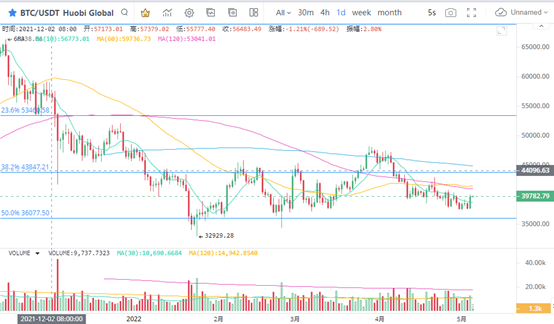
As the BTC price bottomed out around us $37000, the short-term price rebound reached more than 5%, and investors in more short-term transactions ushered in selling opportunities. Although BTC's rise expanded and successfully broke through the important short-term 10 day moving average, it still needs more strong performance to get rid of the price decline.

From the perspective of trading trends, investors with small amount of funds have increased their trading willingness, and the daily average target trading volume is also growing rapidly. Therefore, the price trend after the BTC change is very noteworthy.
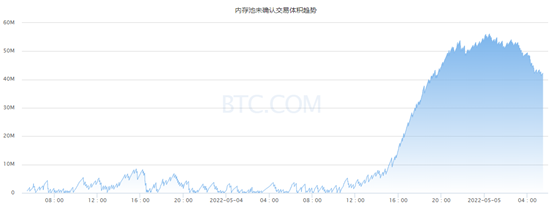
As the rebound continued, the volume of unconfirmed transactions of BTC increased from 2.6 million at 12:00 on May 4 to a peak of 56 million on May 5, an increase of 20 times. This shows that investors quickly enter the trading state following the rebound market, and the selling pressure increases.
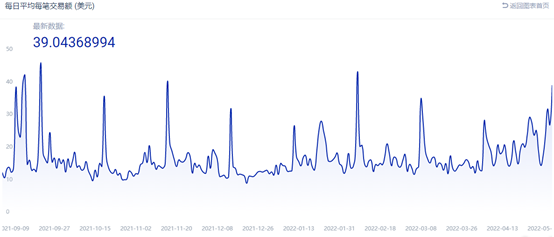
In the stage of BTC price rebound, the average daily transaction volume of BTC increases more rapidly. The average transaction volume of BTC reached $39 on May 5. Since September 2021, the rebound trend of BTC trading volume has become more clear, the enthusiasm of main trading has increased, and BTC is on the eve of continuous strengthening of volatility.
2. Dragon and tiger list:

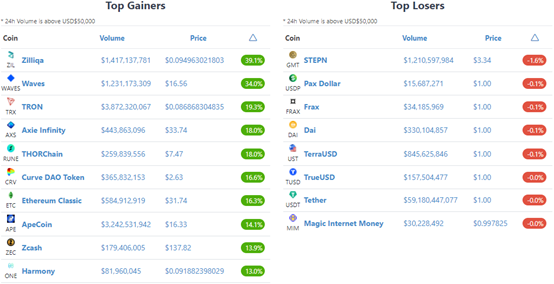
The rebound of BTC led to the strength of the whole market, and most sectors continued to rise. Among the strong currencies, ZIL, waves and rune resumed their upward trend, while TRX and CRV strengthened in the short term.
Increase list:

TRX

Message side

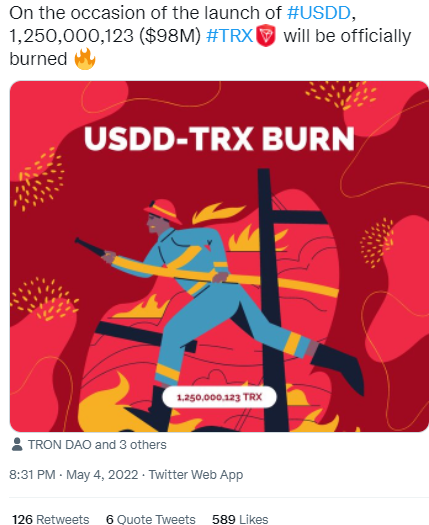
After the decentralization of wavefield usdd is officially released, it will enter circulation. It will also enter Ethereum and BSC for circulation through bttc cross chain protocol. It is also hoped that mainstream institutions in the blockchain industry can vigorously support wavefield, Ethereum and BSC versions of usdd at the same time.

According to the message, up to 125 million TRX will be destroyed after the release of usdd.

Affected by this, TRX prices rebounded and rose with the main currencies, and the 24-hour increase expanded to 19.3%, becoming a better performing currency in the old public chain.
CRV

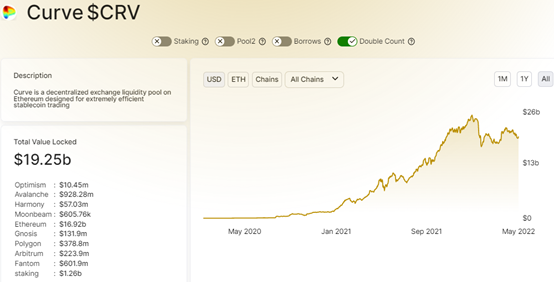
Curve is a decentralized flow pool exchange on Ethereum, which provides extremely efficient and stable currency trading. Curve was launched in January 2020. It enables users to trade stable currencies with low sliding points and low handling fees. Users can capture the transaction costs of their platform when providing liquidity. At the same time, they access the defi protocols Iearn and compound to provide additional benefits for liquidity providers. The automatic exchange method is also more user-friendly.

In terms of short-term price performance, CRV price rose by 16.6% in 24 hours, becoming one of the mainstream currencies with better performance. CRV lock data is stable and the price trend is tepid. It has become a good anti falling variety in the depressed market.
ZEC

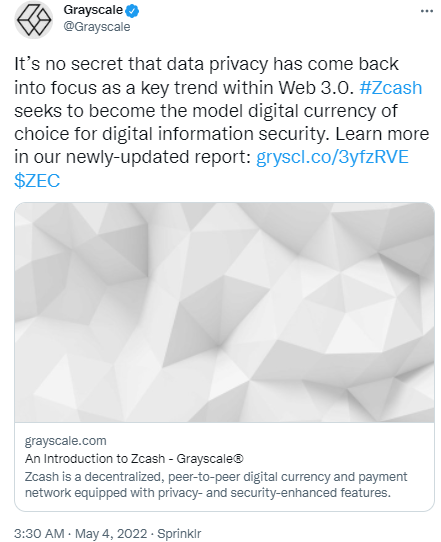
Grayscale research reports that data privacy as Web3 It is no secret that a key trend in 0 has returned to the focus of attention. Zcash seeks to become the preferred digital currency model for digital information security, which is worthy of investors' attention.

In terms of price, Zec activity remained at a high level. Especially since the middle of 2021, Zec's volume price coordination has been good, and low buying opportunities have continued frequently. On May 5, the 24-hour increase of Zec expanded to 13.9%, and the rebound signal appeared again.
Decline list:

In addition to GMT, the currencies with the highest decline are stable currencies, which shows that the overall market performance is very strong. Driven by the rebound of BTC, the trading signal is pushing forward


Пов'язані матеріали

Why Is the World Nervous About Japan Raising Interest Rates?

In June 2026, the Bank of Japan raised its policy rate to 1%, marking its first hike to this level since 1995. While this rate remains low compared to global peers like the US and Europe, the move signals a profound shift for a nation that has been a global source of ultra-cheap funding for decades. Japan's long-standing near-zero or negative interest rates had facilitated massive "yen carry trades," where international investors borrowed low-cost yen to invest in higher-yielding assets worldwide, such as US tech stocks and emerging market bonds. This made Japan a critical, often overlooked, source of global liquidity. Japan's ultra-loose policy stemmed from structural challenges post-1990s asset bubble: aging demographics, chronic low inflation/deflation, and high public debt. Recent shifts, including sustained wage growth (exceeding 5% in recent years) and inflation consistently above the 2% target, have created a "wage-price spiral" possibility, prompting the policy normalization. The global market's concern lies not in the absolute rate but in the potential unwinding of the yen carry trade. As Japanese borrowing costs rise, the economics of these leveraged global investments change, potentially triggering deleveraging and capital outflows from risk assets. Market anxiety focuses on the end of a thirty-year consensus that Japan would perpetually provide cheap funding. Ultimately, the global impact will depend on the interplay with US monetary policy. While Japan is tightening, the significant interest rate differential with the US remains. The key future dynamic is whether simultaneous Japanese hikes and eventual US rate cuts will narrow this gap, forcing a major recalibration of global capital flows and asset pricing built on an era of abundant, cheap yen liquidity.

marsbit3 год тому

Why Is the World Nervous About Japan Raising Interest Rates?

marsbit3 год тому

Research Report Analysis: MRVL's Optical AI Booming, Why High Valuation Keeps Morgan Stanley's Star Analyst Sidelined?

Report Recap: MRVL Optical AI Boom - Why High Valuation Led Morgan Stanley's Star Analyst to Stay Neutral? Morgan Stanley analyst Joseph Moore maintained an "Equal-weight" (Neutral) rating on Marvell Technology (MRVL) on May 28, raising the price target from $172 to $195, below the trading price. This stance comes despite Marvell reporting a record quarter and significantly raising its full-year outlook (FY27 revenue ~$11.5B, up ~40%). Moore's neutral view is based on valuation. The $195 target implies ~40x CY2027 P/E. He contrasts MRVL with NVDA: both trade near ~$200, but Nvidia's forward EPS is more than double Marvell's. For MRVL's valuation to hold, it needs consistent earnings upgrades, proof of networking market share gains, or certainty on large-scale custom AI chip shipments—none of which are confirmed yet. Growth is driven by two pillars: **1) Optical Interconnect** (the faster runner): Moore raised FY27 growth expectations to >70%, with the optical module product line nearing a $1B annualized run rate. **2) Custom AI Chips** (the climber): Confidence in FY28 is growing, but a major new customer project only ramps in FY28, with no current revenue visibility. Key risks are the underperforming Storage, Enterprise, and legacy Networking segments. Moore acknowledges the real AI opportunity but believes the current price already reflects it. For the stock to work from here, investors need to see the optical business hit its targets, custom chips ramp as planned, and a recovery in the weaker business units.

marsbit5 год тому

Research Report Analysis: MRVL's Optical AI Booming, Why High Valuation Keeps Morgan Stanley's Star Analyst Sidelined?

marsbit5 год тому

Торгівля

Спот
Ф'ючерси
活动图片