项目扶持与代币空投,Blast「BIG BANG」大赛规则解析

Odaily星球日报Опубліковано о 2024-01-17Востаннє оновлено о 2024-01-17

Анотація

建议用户积极参与项目交互与投票。

原创 | Odaily星球日报

作者 | 南枳
项目扶持与代币空投,Blast「BIG BANG」大赛规则解析

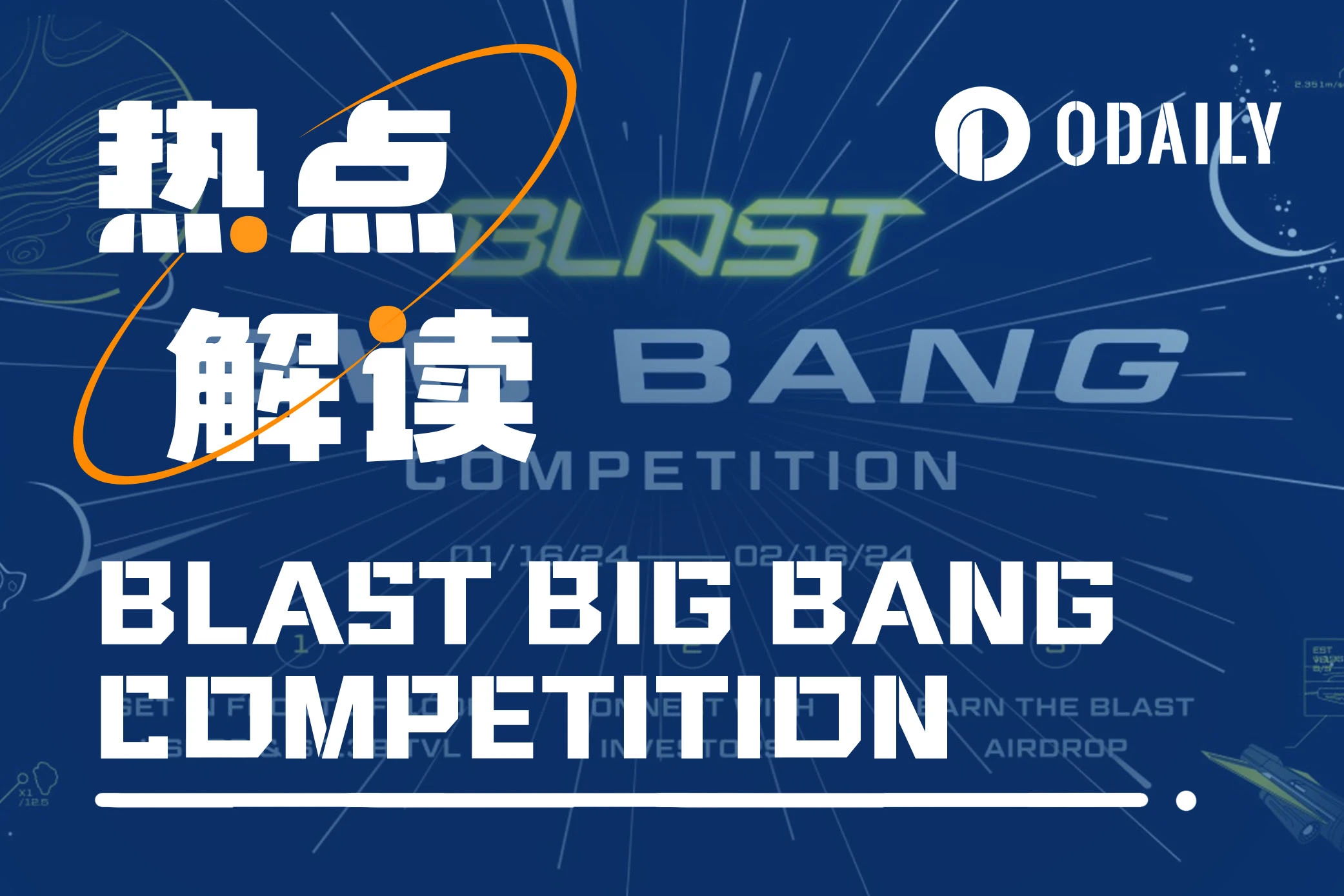
根据官方消息,Layer 2 网络 Blast 宣布其测试网已正式上线,并将从 1 月 17 日开启 BIG BANG 大赛,参与的项目方将获得生态扶持和推广、Blast 项目代币空投和 Blast 投资者关系建立,大赛将持续至 2 月 17 日。

项目数据

DefiLlama 显示,Blast 上线第二天 TVL 就突破了 1 亿美元, 34 天后 TVL 突破 10 亿美元,目前的 TVL 已达到 13.6 亿美元。根据 L2BEAT 数据,该 TVL 在 L2 中排名第三,仅次于 Arbitrum 和 OP Mainnet,已超过 zkSync、Starknet 等老牌 L2。

用户方面,上线首日参与地址数就达到了 24587 个,截止发文时已有超 10 万个地址参与了 Blast。

Blast 表示,在 BIG BANG 大赛中获奖的项目将在主网上线时向所有的 Blast 用户推广,无论是一个后期阶段的项目还是刚刚萌生的想法,BIG BANG 大赛都是与 Blast 社区互动的最佳方式。(Odaily星球日报注:根据 Blast 刚上线时的项目计划,将于 24 年 2 月 24 日上线主网。)

Blast 空投

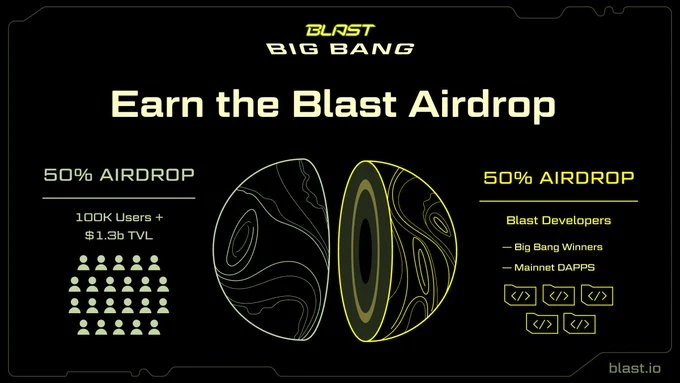
Blast 表示,空投数量的 50% 将面向 BIG BANG 大赛获奖者发放,另 50% 面向交互用户。Blast 进一步表示:“利用 Blast 空投激励你的 DApp 在 Blast 主网上的增长,从而在比赛中取得优势”。(原文:Use the Blast Airdrop to incentivize growth for your dapp on the Blast Mainnet and gain an edge over competitors.)。
项目扶持与代币空投,Blast「BIG BANG」大赛规则解析

这是 Blast 首次提及空投相关的具体数据,从其宣发文案可以得出,评选的部分决定权或将由交互用户进行,而参赛项目可以在参赛中承诺对用户的激励方式,并在主网上线后实施(但是否强制要求按承诺实施未知)。

此前 Arbitrum 进行了大量的项目发展激励代币空投,对协议和生态数据的有着显著的促进作用,用户也从中获得了代币收益。因此用户可在后续活动中持续关注参赛项目并保持交互,因获奖项目预期不会过多,或将有超额收益。

例如杠杆交易协议 Particle 承诺,将向社区用户发放 100% 的开发者空投;交易 Bot Tornado Blast 宣布将选择测试网用户,并向 X 平台互动用户发放主网上线时的奖励。

项目扶持与代币空投,Blast「BIG BANG」大赛规则解析

参赛项目组别

本此 BIG BANG 将设置八个组别,将区分早期或成熟项目,组别分别为:

  • 永续合约 DEX(Perp DEX)

  • 现货交易所:例如 AMM 或订单簿式 DEX

  • 借贷协议

  • NFT 和游戏:NFT 藏品、NFTfi、基础设施和区块链游戏

  • SocialFi:下一代社交产品

  • GambleFi:链上的随机性博彩游戏

  • 基础设施:TG 机器人、预言机、RPC、多签钱包、账户抽象、分析工具

  • 其他:尤其是以独特方式利用 Blast 原生收益,或 Gas Fees 收入分享的项目

评审将通过概念价值、设计和开发情况、Blast 原生性(具备无法在其他链上实现的 Blast 特性),但并未透露每个组别下设置多少获奖项目。

X 平台账户@Blastdapps发布了部分生态早期项目,用户可保持关注并择优挑选交互。
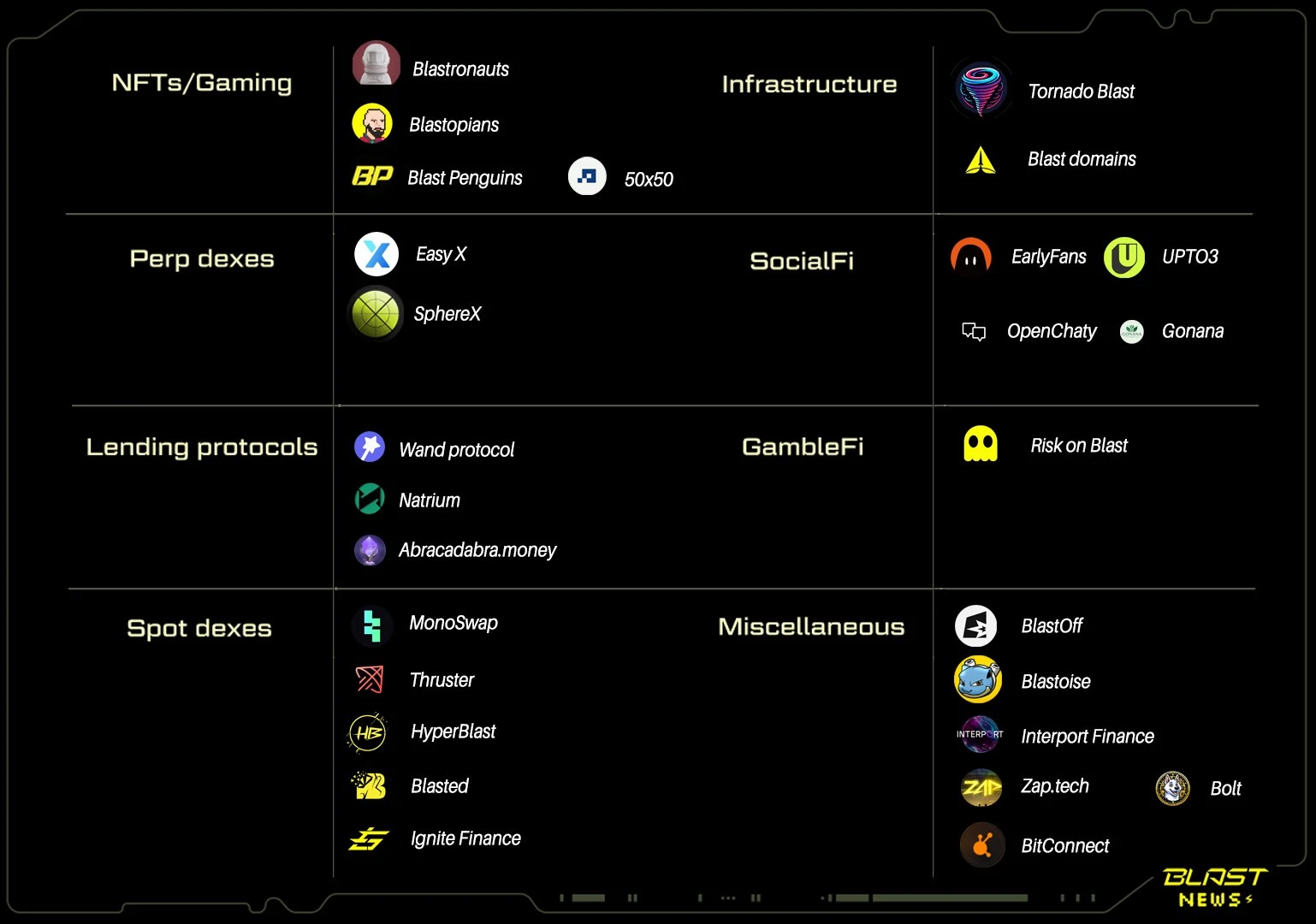
项目扶持与代币空投,Blast「BIG BANG」大赛规则解析

Пов'язані матеріали

NVIDIA CPU Advances, China's RISC-V Responds: Semiconductor Deep Dive - Part Four

NVIDIA is set to launch its new Vera AI data center CPU in China as early as August, with high pricing. While this move offers a new option, it highlights China's continued dependence on foreign-controlled Arm architecture. In response, the Chinese semiconductor industry is increasingly turning to RISC-V as a strategic alternative for achieving high-performance computing autonomy. The article explores the concept of the "impossible triangle" in CPU development—balancing prosperity, control, and autonomy—and posits that RISC-V's open-source, modular nature offers a unique path to achieving all three. While RISC-V is already dominant in embedded systems, the focus is now shifting to data centers and AI workloads. China has become a global hotspot for RISC-V development, driven by AI-driven compute demand, supply chain concerns from export controls, cost benefits of open-source, and strong policy support. Multiple Chinese companies have reportedly crossed the key performance threshold of 15 SPECint per GHz, a benchmark for entering the high-performance CPU club. Progress extends beyond single-core benchmarks. Companies are developing complete computing subsystems, including commercial-grade coherent network-on-chip (NoC) technology and server processors with up to 40 cores that strictly adhere to the RVA23 standard to ensure software compatibility. Real-world applications are emerging in areas like video transcoding and edge AI. However, significant challenges remain. The RISC-V ecosystem faces fragmentation, immature toolchains and verification processes, and gaps in single-core performance and energy efficiency compared to mature x86 and Arm architectures. The formidable software moat, epitomized by NVIDIA's CUDA, is a long-term hurdle. In conclusion, while RISC-V cannot immediately replace offerings like NVIDIA's Vera, it represents a viable long-term path for China to develop a self-sufficient, high-performance CPU ecosystem. The journey is acknowledged to be long and arduous, requiring sustained effort to overcome technical and ecosystem challenges.

marsbit4 год тому

NVIDIA CPU Advances, China's RISC-V Responds: Semiconductor Deep Dive - Part Four

marsbit4 год тому

My Coding Betting Dashboard is Profiting, but Polymarket is Truly Not a Good Place for 'Arbitrage'

The author built a custom monitoring dashboard for Polymarket, a prediction market platform, and tested it with $1,600, achieving over 30% returns. However, the core argument is that Polymarket is not a good venue for traditional arbitrage. The dashboard has two main sections: a "Portfolio Dashboard" for tracking active positions with key metrics like total capital, P&L, and a risk-control module using a tier system (T1, T2, T3), and an "Opportunity Watchlist" for monitoring markets. The article details a critical structural trap in binary markets: a bet with a high perceived probability of success still carries a 100% loss risk if wrong. The author's T1/T2/T3 system is designed to manage this by limiting position sizes based on conviction and time horizon, emphasizing that high confidence should not equal high concentration. A key insight is the danger of "pseudo-diversification"—betting on different markets driven by the same underlying variable. The author concludes that Polymarket offers few true low-risk, arbitrage opportunities. It is instead a high-risk environment where wins can create a false sense of mastery, leading to large losses. The platform is better viewed as a training ground for honing judgment through disciplined, framework-driven betting rather than a reliable income source. The tools help transform intuition into structured, rule-based decisions to mitigate the risk of catastrophic errors.

marsbit7 год тому

My Coding Betting Dashboard is Profiting, but Polymarket is Truly Not a Good Place for 'Arbitrage'

marsbit7 год тому

WeChat AI Card Hands-On Guide: Has the AI Shopping Era Arrived?

**"WeChat AI Card" Practical Test Guide: Has the Era of AI Shopping Arrived?** WeChat has officially launched the "AI Exclusive Card," a feature integrated into its Workbuddy AI assistant. This card is designed to handle payments for AI-initiated purchases. Our hands-on test reveals it's not yet a tool for fully autonomous AI shopping, but rather a controlled payment layer for AI agents. The AI Card functions as an isolated sub-wallet within WeChat Pay. Users must bind the card and transfer funds into it from their main wallet. Crucially, every transaction requires explicit user confirmation via smartphone scan; AI cannot spend autonomously. Currently accessible through the Workbuddy agent, the card targets specific digital consumption scenarios: purchasing paid content (reports, data), calling paid APIs/tools, and subscribing to services. Its design prioritizes security and control by separating funds and mandating approval for each payment. We tested a real-world scenario: ordering bubble tea via Workbuddy using a "Meituan Life Assistant" skill. The process encountered multiple hurdles: high "skill" usage costs (exceeding daily free credits), and most importantly, while a payment was successfully initiated, the AI purchased an incorrect product (a mismatched group-buy coupon instead of the desired drink). This highlights the current limitation: the **AI Card only solves the payment step**. The broader challenge lies in the **AI agent's execution chain**—accurately understanding intent, navigating third-party platforms, selecting the right product, and ensuring proper fulfillment. The payment succeeded, but the purchase failed to meet the user's need. In conclusion, the WeChat AI Exclusive Card is a cautious, early-step experiment in AI commerce. It provides a secure, user-controlled payment method for agent interactions but is not yet capable of reliable, end-to-end complex purchases. For now, it's best used for low-value, low-risk digital services with careful user verification at each step. The vision of AI handling complete shopping tasks remains a work in progress.

marsbit9 год тому

WeChat AI Card Hands-On Guide: Has the AI Shopping Era Arrived?

marsbit9 год тому

Торгівля

Спот
Ф'ючерси
活动图片