加密市场情绪研究报告(12.15 – 12.22):牛市中的小市值与板块轮动

Odaily星球日报Опубліковано о 2023-12-23Востаннє оновлено о 2023-12-23

Анотація

牛市中的小市值与板块轮动是什么?本周涨幅较大的有哪些项目?

牛市中的小市值与板块轮动

加密市场情绪研究报告(12.15 – 12.22):牛市中的小市值与板块轮动

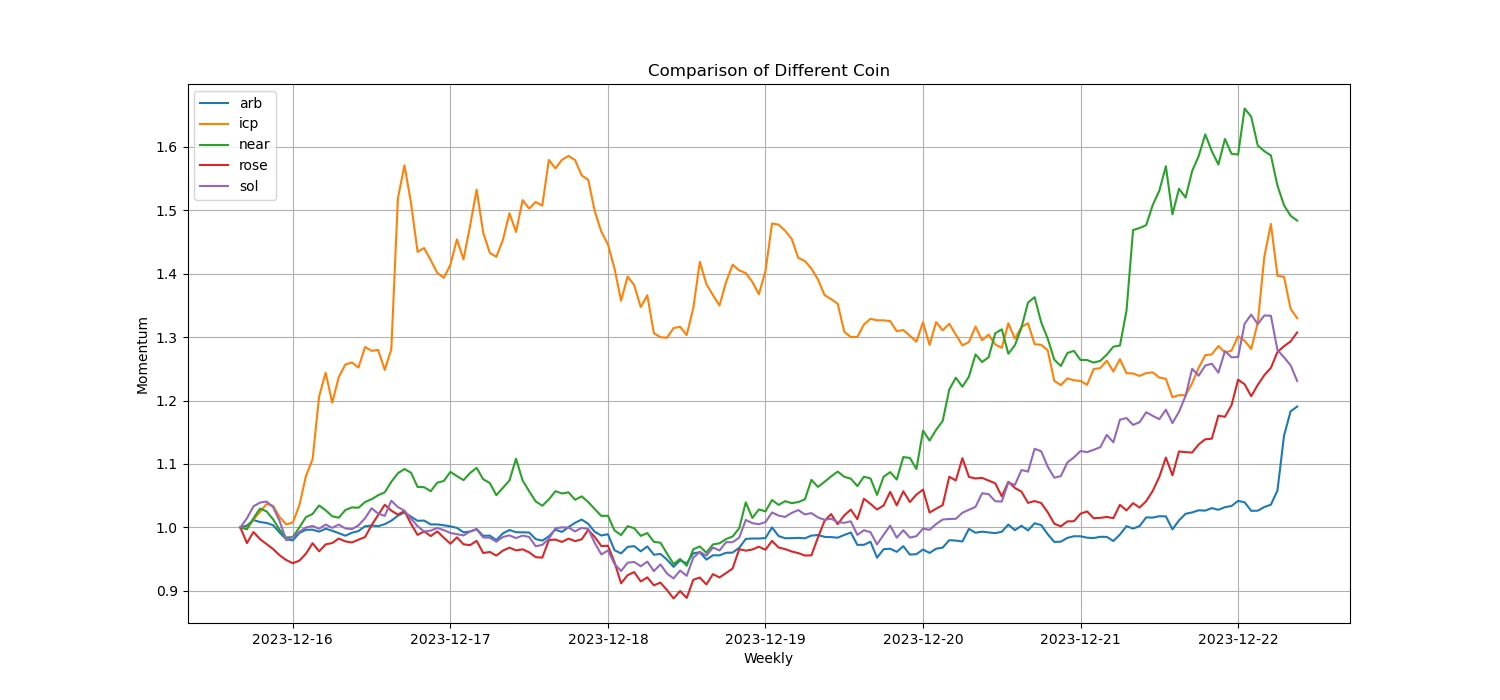
本周涨幅较大的热点币

情绪带动低相关小市值币轮动拉涨,周六先是 ICP,周三开始换 SOL/NEAR,周四 ROSE 启动,周五轮动 ARB。

什么是牛市中的小市值与板块轮动效应?

牛市中,小市值的币往往表现出更高的增长潜力和回报率,使其更容易受到市场资金的关注和追捧。投资者通常认为小市值的币具有更大的成长空间,可能在较短的时间内实现更高的增长。

其次,板块轮动是指在牛市中,不同行业或板块之间的轮番热度变化。不同板块的币在不同时间段内会表现出不同的增长趋势。这是由于不同板块受到情绪因素、板块景气度等因素的影响,引起了投资者对不同板块的关注度和投资热情的变化。

板块轮动的逻辑在于寻找市场中的热点领域,并在其上涨之前进行买入,然后在其达到高点之后进行卖出,再寻找下一个潜在的热点板块。这种策略旨在追求较高的回报率。投资者可以通过观察市场的热点板块、追踪舆情数据、了解资金流向等因素,来预测下一个可能的板块轮动方向,并做出相应的投资调整与风险管理。

需要注意的是,牛市中的小市值币和板块轮动都存在一定的风险。小市值币种可能具有较高的波动性和流动性风险,投资者需要谨慎评估和管理风险。同时,板块轮动需要准确的市场判断和时机把握,因此策略开发者需要具备一定的市场分析和投资经验。

比特币减半距离今天(2023.12.22)还有约 116 天

减半倒计时:https://www.nicehash.com/countdown/btc-halving-2024-05-10-12-00?_360safeparam=1289146171

市场技术与情绪环境分析
加密市场情绪研究报告(12.15 – 12.22):牛市中的小市值与板块轮动

加密市场情绪研究报告(12.15 – 12.22):牛市中的小市值与板块轮动

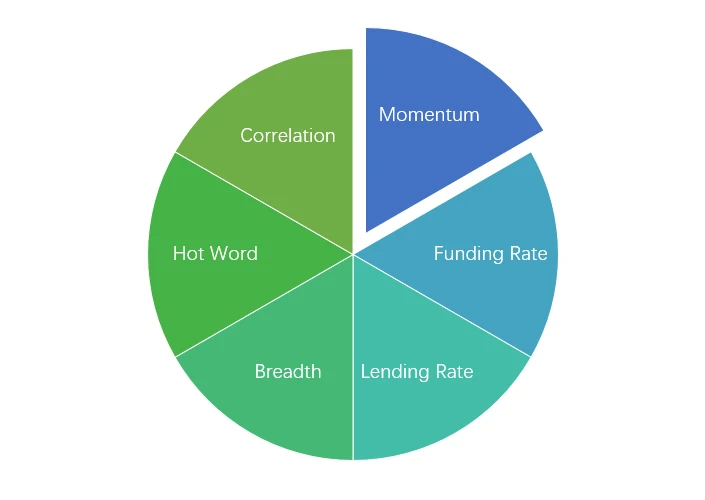
情绪分析组成

技术指标

价格走势

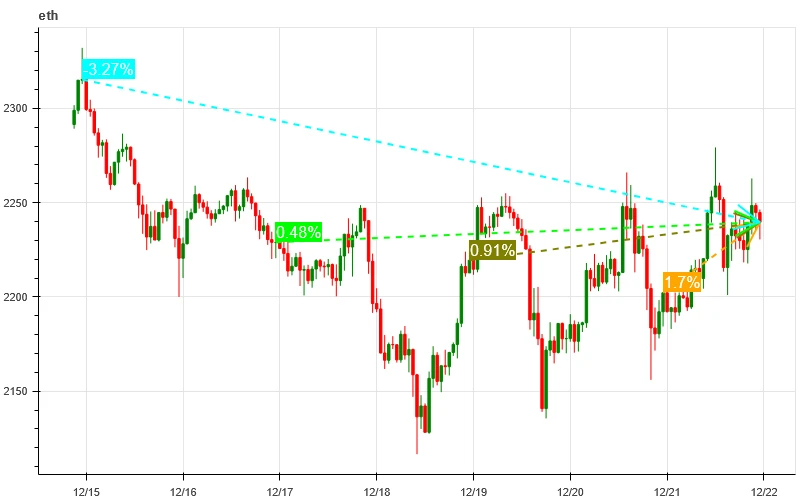
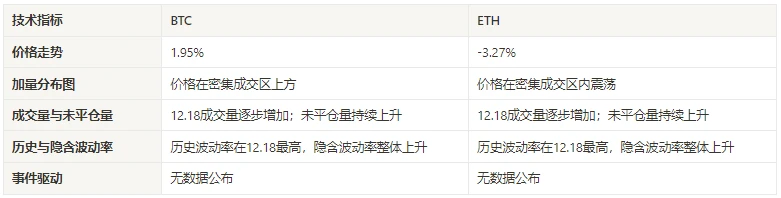
过去一周 BTC 价格上升 1.95% ,ETH 价格下跌-3.27% 。
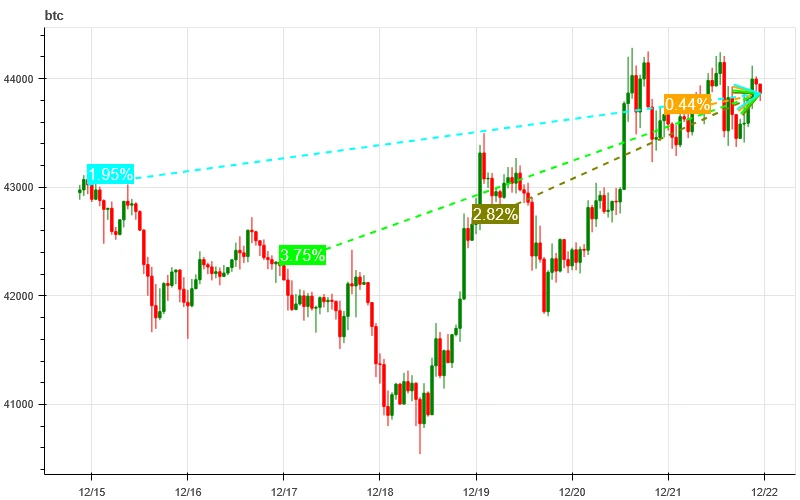
加密市场情绪研究报告(12.15 – 12.22):牛市中的小市值与板块轮动

上图是 BTC 过去一周的价格图

加密市场情绪研究报告(12.15 – 12.22):牛市中的小市值与板块轮动

上图是 ETH 过去一周的价格图

加密市场情绪研究报告(12.15 – 12.22):牛市中的小市值与板块轮动

表格显示过去一个周的价格变化率

价量分布图(支撑阻力)

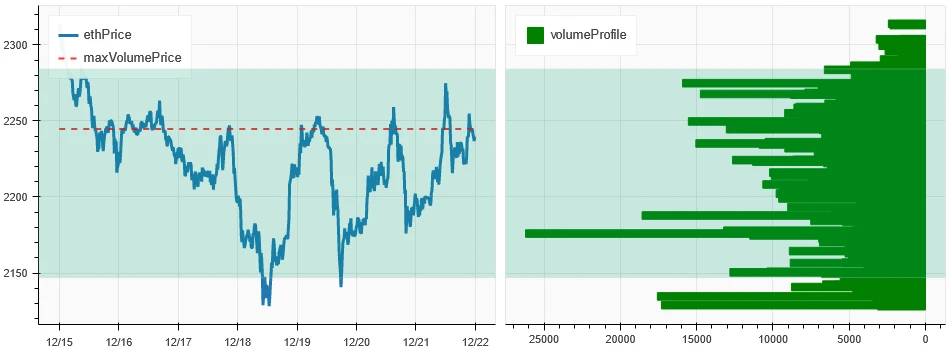
过去一周 BTC 价格在密集成交区上方,ETH 价格在密集成交区内。
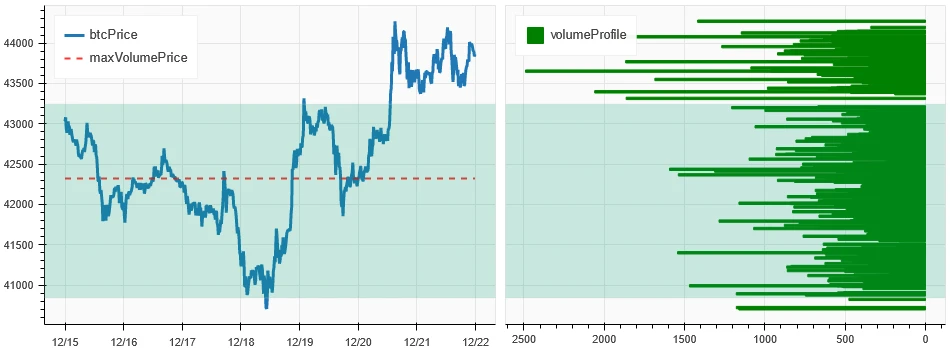
加密市场情绪研究报告(12.15 – 12.22):牛市中的小市值与板块轮动

上图是 BTC 过去一周的密集成交区分布图

加密市场情绪研究报告(12.15 – 12.22):牛市中的小市值与板块轮动

上图是 ETH 过去一周的密集成交区分布

加密市场情绪研究报告(12.15 – 12.22):牛市中的小市值与板块轮动

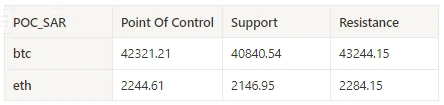
表格显示 BTC 与 ETH 过去一周中每周的密集成交区间

成交量与未平仓量

过去一周 BTC 与 ETH 都在 12.18 后开始上升;未平仓量持续上升。
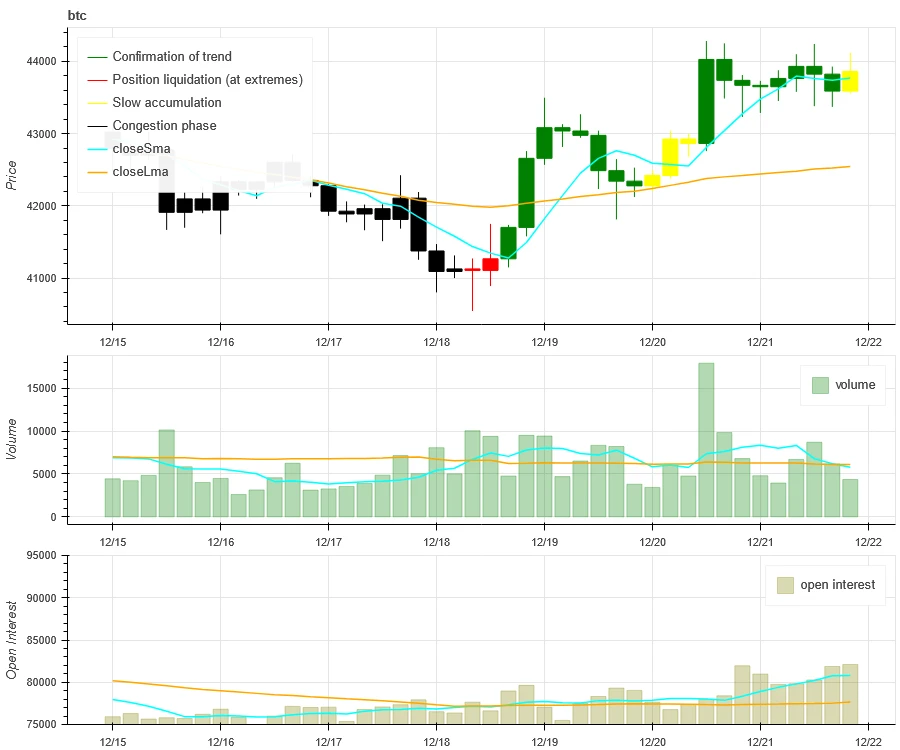
加密市场情绪研究报告(12.15 – 12.22):牛市中的小市值与板块轮动

上图最上方 BTC 的价格走势,中间是成交量、最下方是未平仓量、浅蓝色是 1 天均值,橘色是 7 天均值。其中 K 线的颜色代表当前的状态,绿色是价格上升有成交量支持,红色是在平仓,黄色是在缓慢累积仓位,黑色是拥挤状态。
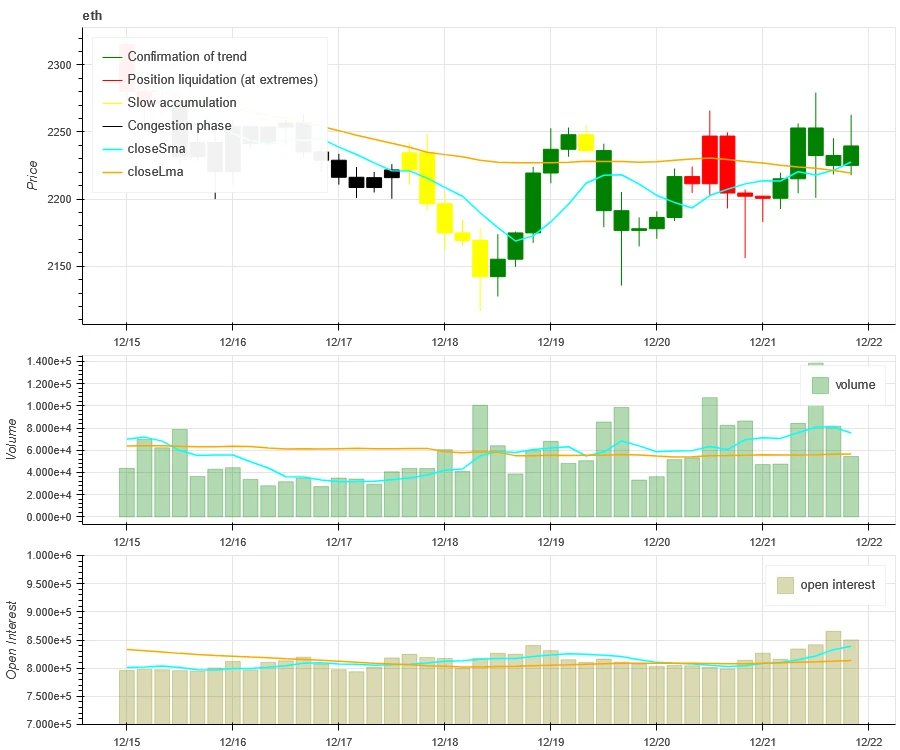
加密市场情绪研究报告(12.15 – 12.22):牛市中的小市值与板块轮动

上图最上方 ETH 的价格走势,中间是成交量、最下方是未平仓量、浅蓝色是 1 天均值,橘色是 7 天均值。其中 K 线的颜色代表当前的状态,绿色是价格上升有成交量支持,红色是在平仓,黄色是在缓慢累积仓位,黑色是拥挤状态。

历史波动率与隐含波动率

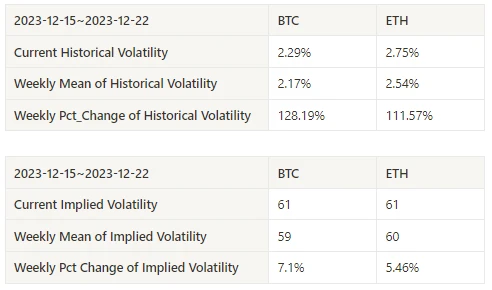
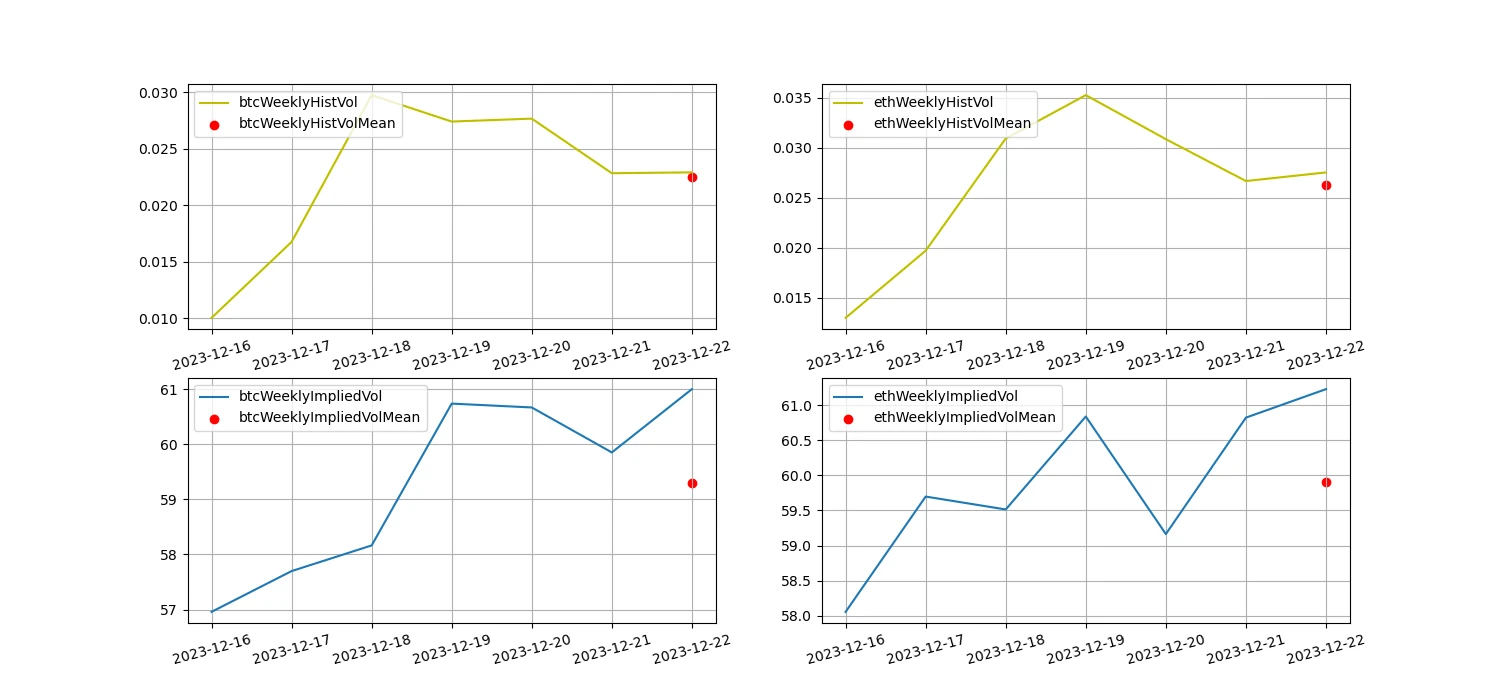
过去一周 BTC 与 ETH 历史波动率在 12.18 最高,隐含波动率整体上升。
加密市场情绪研究报告(12.15 – 12.22):牛市中的小市值与板块轮动

黄色线为历史波动率,蓝色线为隐含波动率,红点是其 7 日平均

加密市场情绪研究报告(12.15 – 12.22):牛市中的小市值与板块轮动

事件驱动

本周无数据公布。

情绪指标

动量情绪

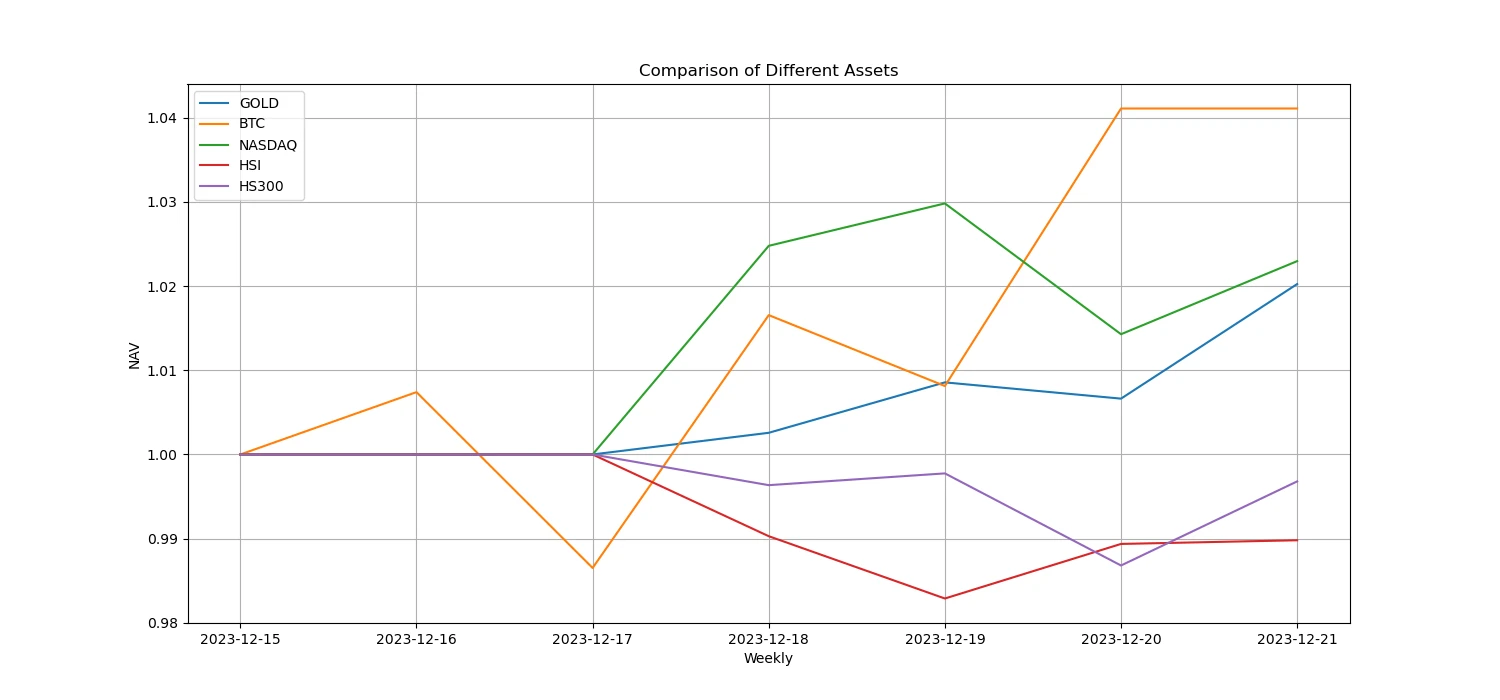
过去一周比特币/黄金/纳指/恒指/沪深 300 中,比特币最强势,而表现最差的恒指。
加密市场情绪研究报告(12.15 – 12.22):牛市中的小市值与板块轮动

上图为不同资产过去一周的走势

放贷利率_借贷情绪

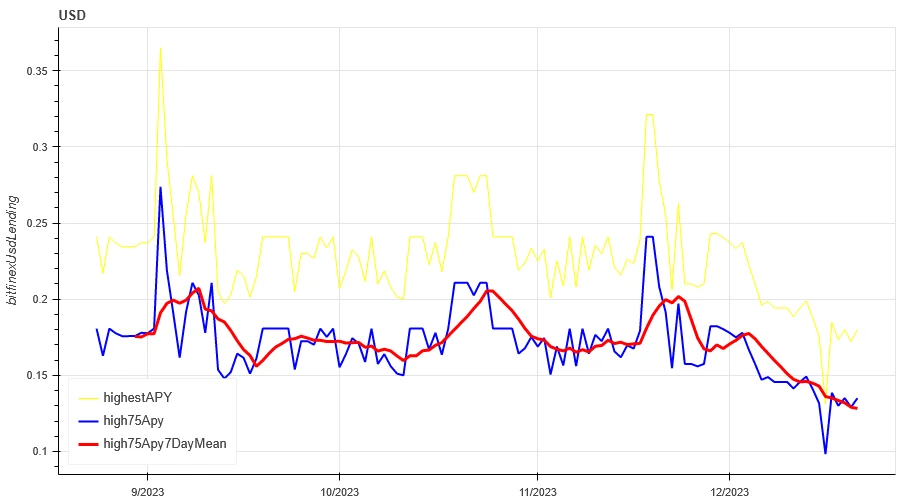
过去一周 USD 放贷年化收益平均为 13% ,利率持续下跌。
加密市场情绪研究报告(12.15 – 12.22):牛市中的小市值与板块轮动

黄色线为 USD 利率的最高价,蓝色线为最高价的 75% ,红色线为最高价的 75% 的 7 天平均值

加密市场情绪研究报告(12.15 – 12.22):牛市中的小市值与板块轮动

表格显示 USD 利率过去不同持有天数的平均收益

资金费率_合约杠杆情绪

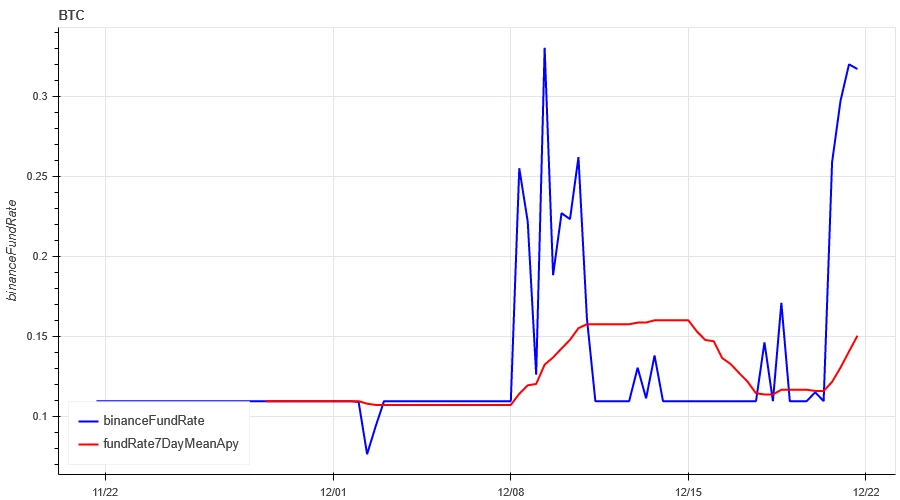
过去一周 BTC 资费平均年化收益为 14.9% ,最近一天合约杠杆情绪高涨。
加密市场情绪研究报告(12.15 – 12.22):牛市中的小市值与板块轮动

蓝色线为币安上 BTC 的资金费率,红色线为其 7 日平均表格显示 BTC 的资费过去不同持有天数的平均收益

市场宽度_整体情绪

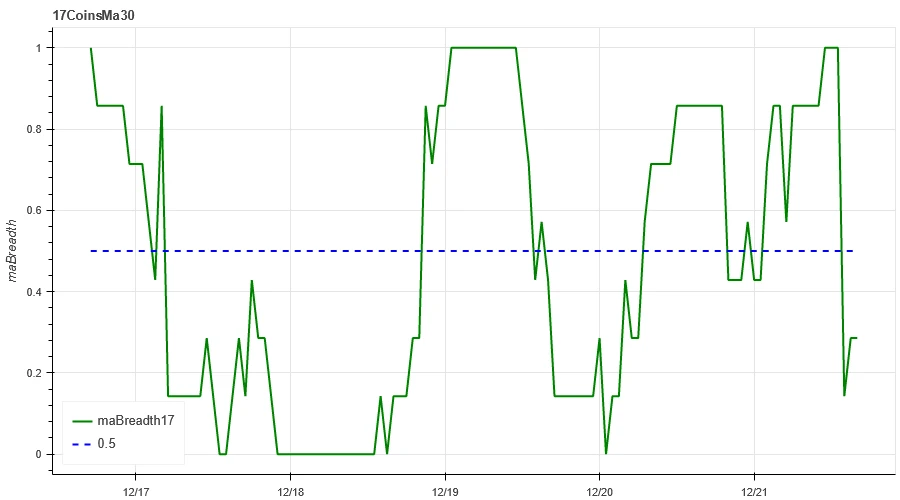
过去一周选中的 129 个在币有 30% 的币在 30 日均线上方,新增币种为所有跟单可交易的合约,上周大量币跌至 30 日均线下方。
加密市场情绪研究报告(12.15 – 12.22):牛市中的小市值与板块轮动

上图为[‘ 1000 floki’, ‘ 1000 lunc’, ‘ 1000 pepe’, ‘ 1000 shib’, ‘ 100 0x ec’, ‘1inch’, ‘aave’, ‘ada’, ‘agix’, ‘algo’, ‘ankr’, ‘ant’, ‘ape’, ‘apt’, ‘arb’, ‘ar’, ‘astr’, ‘atom’, ‘audio’, ‘avax’, ‘axs’, ‘bal’, ‘band’, ‘bat’, ‘bch’, ‘bigtime’, ‘blur’, ‘bnb’, ‘btc’, ‘celo’, ‘cfx’, ‘chz’, ‘ckb’, ‘comp’, ‘crv’, ‘cvx’, ‘cyber’, ‘dash’, ‘dgb’, ‘doge’, ‘dot’, ‘dydx’, ‘egld’, ‘enj’, ‘ens’, ‘eos’,’etc’, ‘eth’, ‘fet’, ‘fil’, ‘flow’, ‘ftm’, ‘fxs’, ‘gala’, ‘gmt’, ‘gmx’, ‘grt’, ‘hbar’, ‘hot’, ‘icp’, ‘icx’, ‘imx’, ‘inj’, ‘iost’, ‘iotx’, ‘jasmy’, ‘kava’, ‘klay’, ‘ksm’, ‘ldo’, ‘link’, ‘loom’, ‘lpt’, ‘lqty’, ‘lrc’, ‘ltc’, ‘luna 2 ’, ‘magic’, ‘mana’, ‘matic’, ‘meme’, ‘mina’, ‘mkr’, ‘near’, ‘neo’, ‘ocean’, ‘one’, ‘ont’, ‘op’, ‘pendle’, ‘qnt’, ‘qtum’, ‘rndr’, ‘rose’, ‘rune’, ‘rvn’, ‘sand’, ‘sei’, ‘sfp’, ‘skl’, ‘snx’, ‘sol’, ‘ssv’, ‘stg’, ‘storj’, ‘stx’, ‘sui’, ‘sushi’, ‘sxp’, ‘theta’, ‘tia’, ‘trx’, ‘t’, ‘uma’, ‘uni’, ‘vet’, ‘waves’, ‘wld’, ‘woo’, ‘xem’, ‘xlm’, ‘xmr’, ‘xrp’, ‘xtz’, ‘yfi’, ‘zec’, ‘zen’, ‘zil’, ‘zrx’]在 30 日均线上方的占比

市场相关性_一致性情绪

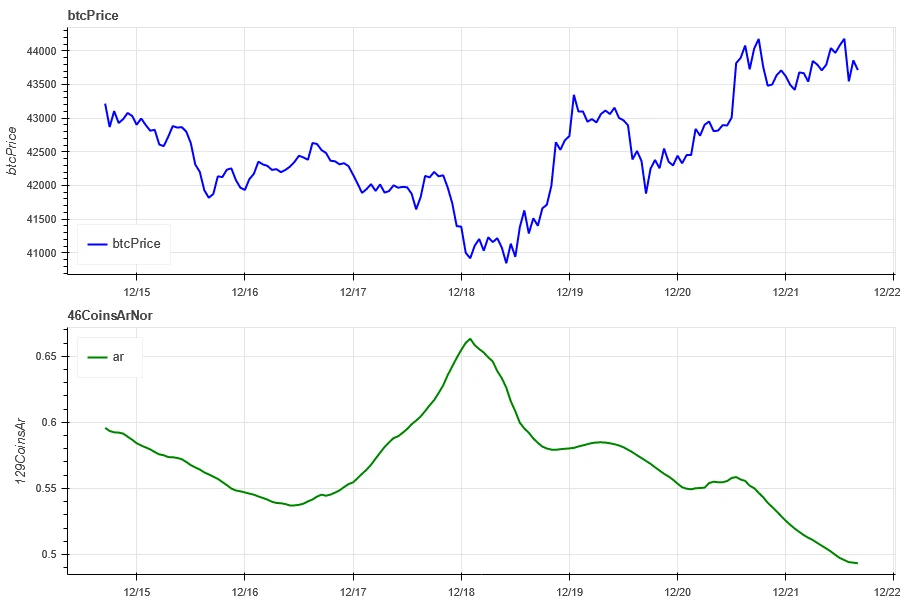
过去一周选中的 126 个币中相关性下降至 0.47 左右,不同品种间产生分歧的行情。
加密市场情绪研究报告(12.15 – 12.22):牛市中的小市值与板块轮动

上图蓝色先为比特币价格,绿色线为[‘ 1000 floki’, ‘ 1000 lunc’, ‘ 1000 pepe’, ‘ 1000 shib’, ‘ 100 0x ec’, ‘1inch’, ‘aave’, ‘ada’, ‘agix’, ‘algo’, ‘ankr’, ‘ant’, ‘ape’, ‘apt’, ‘arb’, ‘ar’, ‘astr’, ‘atom’, ‘audio’, ‘avax’, ‘axs’, ‘bal’, ‘band’, ‘bat’, ‘bch’, ‘bigtime’, ‘blur’, ‘bnb’, ‘btc’, ‘celo’, ‘cfx’, ‘chz’, ‘ckb’, ‘comp’, ‘crv’, ‘cvx’, ‘cyber’, ‘dash’, ‘dgb’, ‘doge’, ‘dot’, ‘dydx’, ‘egld’, ‘enj’, ‘ens’, ‘eos’,’etc’, ‘eth’, ‘fet’, ‘fil’, ‘flow’, ‘ftm’, ‘fxs’, ‘gala’, ‘gmt’, ‘gmx’, ‘grt’, ‘hbar’, ‘hot’, ‘icp’, ‘icx’, ‘imx’, ‘inj’, ‘iost’, ‘iotx’, ‘jasmy’, ‘kava’, ‘klay’, ‘ksm’, ‘ldo’, ‘link’, ‘loom’, ‘lpt’, ‘lqty’, ‘lrc’, ‘ltc’, ‘luna 2 ’, ‘magic’, ‘mana’, ‘matic’, ‘meme’, ‘mina’, ‘mkr’, ‘near’, ‘neo’, ‘ocean’, ‘one’, ‘ont’, ‘op’, ‘pendle’, ‘qnt’, ‘qtum’, ‘rndr’, ‘rose’, ‘rune’, ‘rvn’, ‘sand’, ‘sei’, ‘sfp’, ‘skl’, ‘snx’, ‘sol’, ‘ssv’, ‘stg’, ‘storj’, ‘stx’, ‘sui’, ‘sushi’, ‘sxp’, ‘theta’, ‘tia’, ‘trx’, ‘t’, ‘uma’, ‘uni’, ‘vet’, ‘waves’, ‘wld’, ‘woo’, ‘xem’, ‘xlm’, ‘xmr’, ‘xrp’, ‘xtz’, ‘yfi’, ‘zec’, ‘zen’, ‘zil’, ‘zrx’]整体的相关性

市场热点_社交媒体情绪

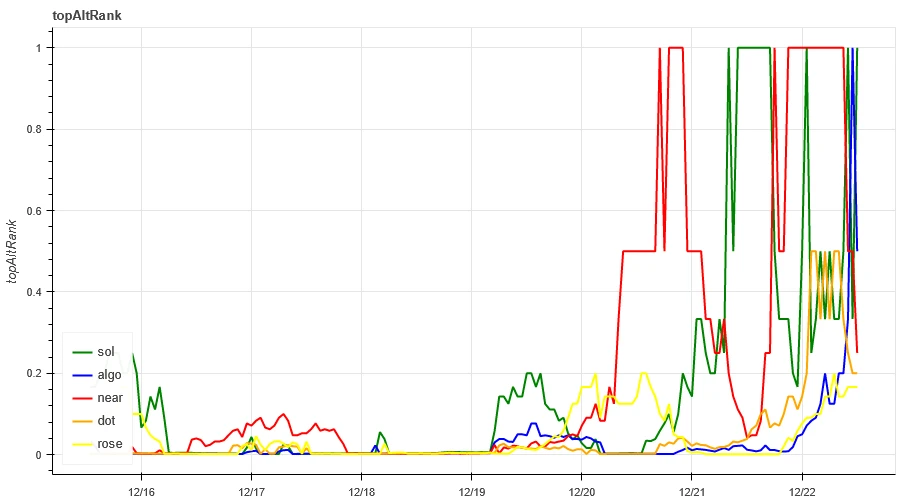
过去一周热度最高分别的是 sol/algo/near/dot/rose,情绪的上升也伴随较大的涨幅。
加密市场情绪研究报告(12.15 – 12.22):牛市中的小市值与板块轮动

数据来源: https://lunarcrush.com/categories/cryptocurrencies

总结

本周行情 BTC 有小幅上升,而 ETH 震荡下跌,隐含波动率较上周上升,宽度指标加入了 129 个币安跟单可交易的合约品种,数据显示本周有较多小市值币跌至 30 日均线下方;热点方面 sol/algo/near/dot/rose 近期较高,价格大幅上升;事件方面,等待下个月的美联储议息会议。得益于小币热点跟踪策略,跟单策略过去 7 天收益为 11.5% ,过去 30 天收益为 14% 。

Binance CopyTrading: CTA_ChannelCMT

Twitter: @DerivativesCN

Website: https://dcbot.ai/

Medium:https://medium.com/@DerivativesCN

Пов'язані матеріали

If the AI Bubble Is Already Bursting, Who Will Truly Survive?

If the AI Bubble is Bursting, Who Will Remain? The debate over an AI bubble is intensifying, with figures like Ray Dalio warning of high levels and Jensen Huang seeing immense, early-stage opportunity. Both views hold truth: a speculative bubble in capital markets likely exists, mirroring the dot-com era, but the underlying technological shift is real and transformative. History shows that while bubbles burst—wiping out overvalued companies and speculative capital—they often leave behind critical physical and digital infrastructure. The dot-com bust, for instance, eliminated many firms but left the global fiber optic networks and data centers that enabled the rise of Amazon, Netflix, and cloud computing. Today's massive AI infrastructure investments (projected at trillions by 2030) in data centers, power, cooling, and GPUs may follow a similar path, creating the foundation for future applications. A key divergence from past bubbles is the "Jevons Paradox" effect in AI. As the cost of AI inference has plummeted by over 99.7% since 2023, enterprise spending on AI has skyrocketed. Cheap "tokens" have unlocked vast, previously uneconomical use cases, moving AI from simple chatbots into core business workflows—code generation, legal document review, scientific simulation, and financial analysis. The market is now in a phase of self-correction, weeding out superficial "API-wrapper" startups, but this cleansing process strengthens the ecosystem. The long-term trajectory is clear. The value is gradually shifting from capital expenditure (CapEx) on hardware to operational expenditure (OpEx) on transformative applications. As AI becomes a utility, the winners will be firms that deeply integrate it to solve vertical industry problems in law, healthcare, finance, and manufacturing. The泡沫 will recede, but the foundational shift towards an AI-powered era across all sectors is irreversible. The underlying productive force of AI contains no bubble.

marsbit6 хв тому

If the AI Bubble Is Already Bursting, Who Will Truly Survive?

marsbit6 хв тому

If the AI Bubble Is Already Bursting, Who Will Truly Remain?

**Summary: If the AI Bubble is Bursting, What Will Remain?** The debate around an AI bubble is intensifying, with figures like Ray Dalio warning of high valuations while Jensen Huang sees immense opportunity. This echoes the dot-com bubble, which saw massive wealth destruction but ultimately left behind critical infrastructure like undersea cables and broadband, enabling future giants like Amazon and Netflix. Similarly, today's AI boom involves trillions invested in data centers, power, cooling, and GPUs, while application-layer revenue remains comparatively modest. This investment-disparity signals a bubble. However, the core technological progress is real and accelerating. AI inference costs have plummeted by over 99.7% since 2023, making intelligence increasingly cheap and accessible. This cost collapse is unlocking vast new demand. Instead of reducing spending, enterprises are tripling their AI cloud expenditure. Cheap "tokens" enable AI to move beyond simple chatbots into complex workflows—automating code writing, legal document review, financial analysis, and scientific research. This follows "Jevons's paradox": improved efficiency leads to greater total consumption. The market is now undergoing a necessary purification, weeding out "API-wrapper" startups with no real moat. The deeper evolution involves a shift from capital expenditure (CapEx) on infrastructure to operational expenditure (OpEx) on value-creation in applications. While hardware vendors currently profit most, long-term value will migrate to AI-native firms solving vertical industry problems. Ultimately, a market correction will cleanse speculative excess but will not reverse the AI+ trend. The massive physical and algorithmic infrastructure being built will endure, becoming a cheap, utility-like foundation. Just as the internet became indispensable to all industries post-2000, AI is poised to empower and redefine every sector, moving society irreversibly toward an intelligence-augmented era. The bubble may burst, but the underlying productive momentum is solid.

链捕手13 хв тому

If the AI Bubble Is Already Bursting, Who Will Truly Remain?

链捕手13 хв тому

Microsoft CEO: In the AI Era, How Do You Define a Company's Moat?

Microsoft CEO Satya Nadella argues that in the AI era, a company's true competitive edge, or "moat," is not determined by choosing the single most powerful model, but by its ability to build a continuous "learning loop." This system integrates and evolves by connecting human workflows, domain expertise, organizational judgment, and employee experience. He posits that future companies will accumulate two types of capital: Human Capital (employee knowledge, judgment, creativity) and "Token Capital" (a firm's own built and owned AI capabilities). Importantly, AI amplifies rather than devalues human capital. Human direction is essential to guide progress, as computational power alone is aimless. The core opportunity lies in creating a closed-loop system where human and token capital reinforce each other in a compound, self-improving cycle. A company must be able to preserve its unique institutional knowledge—its "company veteran" expertise—even if it switches underlying general-purpose AI models. This requires private evaluation benchmarks, reinforcement learning environments based on internal data, and queryable knowledge bases. Nadella warns against a future where economic value is concentrated by a few dominant models that commoditize entire industries' knowledge. Instead, the priority should be building a broad "frontier ecosystem" where every company, industry, and nation can own its learning loop. This allows organizations to retain control of their intellectual property, amplify employee capabilities, and ensure the economic value created by AI is captured within their own businesses and communities. True corporate sovereignty in the AI age comes from turning organizational knowledge into a compounding system that creates enduring, defensible value.

marsbit48 хв тому

Microsoft CEO: In the AI Era, How Do You Define a Company's Moat?

marsbit48 хв тому

ETFs Are Just the Ticket: The True Institutionalization of Bitcoin Is Happening Where You Can't See It

Beyond the Bitcoin ETF spotlight, a deeper institutionalization is underway, leveraging Bitcoin as a foundational financial primitive. Institutions are using Bitcoin for purposes long reserved for assets like U.S. Treasuries and gold: as collateral for loans, insurance reserves, and the backbone of rated bonds. Examples include a Barbados-based insurer capitalizing with $40M in Bitcoin reserves and Ledn's $188M securitization of Bitcoin-backed loans, which received the first-ever investment-grade rating (BBB-) from S&P for a digital asset-backed security. This structure was stress-tested during a 27% price drop in early 2026, triggering automatic liquidations that functioned as designed but revealed the systemic risk of synchronized selling across leveraged positions. Infrastructure is evolving to support this, with platforms like Anchorage Digital's Atlas network enabling secure, institutional-grade settlement and collateral management. Strategies like basis trades and corporate treasuries (exemplified by companies like MicroStrategy issuing billions in equity and debt to fund Bitcoin acquisitions) further integrate Bitcoin into financial mechanics. While ETFs solved "how to own" Bitcoin, these developments answer "what to do with it," embedding the asset into the working machinery of finance—as collateral upon which loans, derivatives, and structured products are built. The real, enduring institutional shift is happening in these largely invisible plumbing and financing systems.

marsbit54 хв тому

ETFs Are Just the Ticket: The True Institutionalization of Bitcoin Is Happening Where You Can't See It

marsbit54 хв тому

ZEC Co-Founder Responds to Orchard Vulnerability: No Signs of Theft, Orchard Pool to Be Sealed

ZEC Co-Founder Addresses Orchard Vulnerability: No Signs of Theft, Plans to Sunset Orchard Pool A security vulnerability was recently discovered in Zcash's Orchard shielded pool, raising key concerns. The primary questions are whether the flaw was exploited, if user funds are safe, whether users can verify the total ZEC supply, and if other similar vulnerabilities exist. Analysis suggests the vulnerability was likely not exploited prior to its discovery. It was found proactively by a researcher using specialized tools, not due to an active breach. The development team and mining pools acted quickly to contain the issue. Typical financially-motivated attacks would likely have left visible on-chain evidence, which has not been observed. User funds in Orchard are considered safe and should be recoverable, assuming no prior exploitation. If the flaw was never used, all legitimate funds can be withdrawn. The article outlines risks associated with moving funds to transparent addresses or other pools, but concludes that leaving assets in place is a reasonable option. Currently, users cannot independently verify that the total ZEC supply hasn't been inflated due to this bug. However, the planned Ironwood network upgrade is designed to resolve this. It will permanently close the Orchard pool to new deposits and internal transfers, allowing only withdrawals. This mechanism will cap total withdrawals at the amount of legitimately deposited funds, enabling anyone to cryptographically verify the supply post-upgrade. Multiple teams, including Shielded Labs, have conducted extensive audits focused on counterfeiting vulnerabilities, assisted by advanced AI tools. No additional flaws of this type have been found so far, increasing confidence that no other similar undisclosed vulnerabilities exist. In summary, evidence indicates the Orchard bug was probably not used, user funds are secure, and no other counterfeiting flaws are currently known. The upcoming Ironwood upgrade will restore users' ability to independently verify the total ZEC supply, closing this chapter.

Foresight News59 хв тому

ZEC Co-Founder Responds to Orchard Vulnerability: No Signs of Theft, Orchard Pool to Be Sealed

Foresight News59 хв тому

Торгівля

Спот
Ф'ючерси
活动图片