zkSync生态稳定币协议Syncus将推出全新范式DeFi借贷平台

Odaily星球日报Опубліковано о 2023-12-19Востаннє оновлено о 2023-12-19

Анотація

质押 Syncus DAO 治理代币 $SYNC 即可获取流动性。

12 月 19 日,zkSync 生态项目 Syncus 宣布即将推出全新范式的 DeFi 借贷平台,用户质押$SYNC 后,即可以 85% 的比率借入 USDC 或 ETH,重新获得流动性。

Syncus (https://twitter.com/Syncus_Fi)是一个去中心化、通过交易税收入分红给质押用户的稳定币生态协议,旨在修复和改进 Olumpus 的可持续性问题,通过正向激励建立一个自我增长的国库系统,

区别于传统 MakerDAO、AAVE 等平台质押主流币借稳定币出来的借贷模式,Syncus 实现了质押其 DAO 治理代币 $SYNC 即可获取流动性,这源于 Syncus 采用了类似于 Olympus(OHM)的(3 , 3)增长飞轮模型,经济模型机制会驱使其治理代币$SYNC 处于正螺旋向上增长。

若用户不质押直接选择出售,则需要向 Treasury 国库缴纳 15% 的税,只能获得 85% 的流动性;若用户参与质押借贷,只有$SYNC 价格回落到借出资产金额以下,质押品会被清算,和卖出获得的流动性一样; Syncus 倾向于让用户优先考虑质押,越来越多的用户选择质押,国库资金池体量也越来越大,APY 收益相应增高,会带动用户进一步质押,进而刺激$SYNC 价值增长,而若用户选择卖出则会被收取 15% 的税也一定程度上限制了用户退出的意愿。

因此这套运转机制会最终产生一个增长飞轮 Flywheel:高收益率 - 更多需求 - 更多交易量 - 国库增长 - 收益率更高 - 不断重复。

相比之下,Olympus 则采用了一套债券设计,意味着随着 OHM 代币增长,用户会始终获得打折代币,相当于打折销售。这个机制过分依赖 OHM 代币的持续增长,只有 OHM 价格增长,用户才有动力买打折期货债券。但问题是如果 OHM 价格增长到一定程度,始终能有人获得打折 Token,无疑于让代币价值被第三方暴力提取。

Syncus 认识到 Bonds 债券机制的潜在风险,移除了 remove 债券打折销售机制,转而采用了一个双向收税+国库持续分红的更稳健可持续的机制。

再加上 Syncsu 借贷平台的质押$SYNC,即可获得 85% 的流动性主流代币模式,用户会无压力的选择将持有的 Token 质押,进而大大减少了代币抛压,为其增长提供持续动能。相较 Syncus 的打折销售债券模式,质押 Token 打折‘套现“的模式会更有吸引力,也减弱了累加的正螺旋崩盘风险。

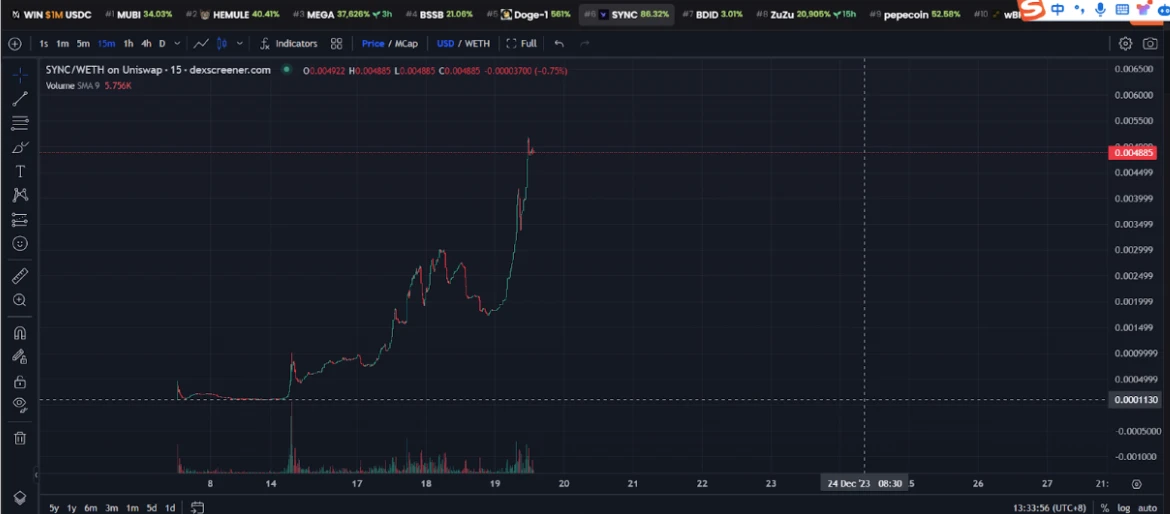
据了解,zkSycus IDO 5 分钟募集了 187 个 ETH,目前市值 2000 万美元,Treasury 资产 160 万美元,APY 116.4% (动态浮动),已分红资产 123 万美金。近一周$SYNC 市场表现也尤为良好,市值已经增长超 7 倍。
zkSync生态稳定币协议Syncus将推出全新范式DeFi借贷平台


Пов'язані матеріали

Microsoft Announces Commercial-Grade Quantum Computer to be Completed in Three Years: Will the Boots Land?

Microsoft announces plans to build a commercially viable quantum computer by 2029, a significant acceleration from the previous industry consensus of a decade. The breakthrough is fueled by their new Majorana 2 quantum chip, which boasts a record-breaking average qubit lifetime of 20 seconds—a 1,000-fold reliability improvement over its predecessor. This leap was achieved by leveraging topological qubits, a theoretically more stable technology using Majorana zero modes, and switching the core superconducting material from aluminum to lead. Crucially, Microsoft's "Discovery" agentic AI platform accelerated the R&D process. AI agents autonomously analyzed vast experimental data, optimized manufacturing parameters (like the lead alloy composition), and solved issues like "ghost noise," dramatically speeding up experimentation. While the 20-second coherence time is a landmark, challenges remain: scaling from 12 qubits to the millions needed for practical applications, managing compilation costs, and verifying quantum results. Skeptics call for peer-reviewed data, and questions persist about whether even 20 seconds is sufficient for complex algorithms like breaking RSA encryption. The race is on with other approaches (superconducting, trapped ions), but Microsoft's confidence in its topological roadmap signals a potential shortcut to a scalable quantum future.

marsbit15 хв тому

Microsoft Announces Commercial-Grade Quantum Computer to be Completed in Three Years: Will the Boots Land?

marsbit15 хв тому

Is There Really a "World Cup Curse" in the Market?

Is there really a "World Cup Curse" affecting markets? Historical data shows global equity markets often underperform during the tournament. The S&P 500 has averaged negative returns of -1.5% to -2.11% across 19 World Cups since 1950, with declines in 58% of events. China's Shanghai Composite fell in 71% of tournaments since 1994. Studies confirm reduced trading activity during matches, with volumes dropping significantly, especially when a home nation plays. A team's loss can also lead to negative sentiment and selling pressure in its domestic market the next day. However, the "curse" may be partly attributed to seasonal weakness. Many tournaments are held in June-July, a historically weaker period for stocks ("Sell in May and go away"). The 2022 Qatar World Cup, held in November-December, saw a smaller drop in trading volume compared to summer events, suggesting timing plays a role. The cryptocurrency market's performance during World Cups has been mixed and largely driven by its own major catalysts (e.g., Mt. Gox hack, FTX collapse, halving cycles) rather than the tournament. Investment opportunities have shifted over time. Traditional beneficiaries like TV manufacturers have seen fading returns as streaming platforms become the core viewing channel. Classic consumer plays like beer and sportswear face challenges from changing consumption trends. Newer digital assets, like fractionalized collectible player cards on blockchain, have seen explosive growth. While gambling is a traditional sector, prediction markets are emerging. In conclusion, while a statistical correlation exists, the World Cup's direct impact on markets is likely limited and intertwined with seasonal patterns. With lower liquidity during the event, the simplest strategy for many might be to step back from trading and enjoy the games.

marsbit22 хв тому

Is There Really a "World Cup Curse" in the Market?

marsbit22 хв тому

Why 'AI Service Subscription' Is Destined to Die Out?

"Why 'AI Service Subscription Models' Are Doomed to Disappear" The article argues that the flat-rate subscription model for AI services is fundamentally unsustainable. It points to recent industry shifts, such as Anthropic limiting access to its flagship Claude Fable 5 model for subscribers after just 14 days, and GitHub and OpenAI moving towards credit-based or usage-based billing. The core problem is that subscription models rely on a capped human consumption limit—like watching videos or listening to music—which keeps costs predictable. However, the rise of autonomous AI agents shatters this premise. Agents can consume 5 to 30 times more computing resources (tokens) than a human chatting, and they operate continuously without user presence. This removes the natural usage cap, making fixed-price plans financially unviable as heavy users incur massive costs. Attempts to patch the model with higher tiers or usage caps have failed, often leading to "adverse selection" where only the heaviest users subscribe. The industry's solution is to hollow out subscriptions, replacing "unlimited" access with prepaid credits charged per token, akin to a utility meter. While chat-based subscriptions may linger, the real value and revenue are shifting to pay-as-you-go models. The current period represents a final, heavily subsidized phase for users. The conclusion is that the soul of subscription—a fixed price for worry-free use—is dying, soon to be replaced by pure usage-based pricing where everyone pays for their own "electricity meter."

marsbit23 хв тому

Why 'AI Service Subscription' Is Destined to Die Out?

marsbit23 хв тому

Торгівля

Спот
Ф'ючерси
活动图片