Taiwanese Authorities Investigating Blockchain Betters over Polymarket Election Contract: Report

CoinDeskPolicyОпубліковано о 2023-12-14Востаннє оновлено о 2023-12-15

Анотація

The Presidential and Vice Presidential Election and Recall Act specifically prohibits gambling on elections.

Those looking to make a quick buck betting on Taiwan's upcoming election may want to think twice, as local law enforcement is currently investigating online influencers and community members promoting a Polymarket contract about the nation's upcoming election.

Taiwan-based BlockTempo reported that multiple influencers and individuals in the crypto community have been subpoenaed for their participation in Polymarket contracts that let users bet on the outcome of the January election.

16.3K

There's currently over $300,000 bet on a contract regarding the outcome of the election, with the market giving the Democratic Progressive Party's Lai Ching-te, also known as William Lai, a 78% chance of winning.

Advertisement
Advertisement
(Polymarket)
(Polymarket)

Betting on the outcome of an election is specifically prohibited under Article 88-1 of Taiwan's Presidential and Vice Presidential Election and Recall Act.

"A person who gambles in a public place or a place open to the public on the outcome of an election or recall shall be sentenced to fixed-term imprisonment of not more than six months, short-term detention or a fine of not more than NT$100,000 ($3,196.85)," the law reads.

"Law enforcement agencies in Taiwan are vigilant in investigating any gambling activities related to presidential elections," Sherman Lin, an attorney at Taipei-based Lin & Partners told CoinDesk in an interview. "Broad legal interpretations have been applied to gambling crimes under the Presidential Election and Recall Act, leading to investigations and convictions of gambling website operators in Taiwan targeting Taiwanese gamblers."

In the U.S., gambling on the outcomes of elections is illegal in most states, including Nevada. However, most of the enforcement is done by the Commodity Futures Trading Commission (CFTC).

Polymarket's Terms of Use prohibit it from being used by U.S. persons.

Prediction market KalshiEX has sued the CFTC over its decision to ban its proposed derivatives contracts for betting on congressional control, arguing that these contracts are lawful and beneficial for public interest by enabling risk hedging and providing predictive data.

Advertisement
Advertisement

In Taiwan, while gambling activities, including participation in, promotion of, and platform hosting for betting pools like Polymarket, face legal consequences, enforcing actions against overseas entities presents jurisdictional challenges, limiting Taiwan's legal reach primarily to domestic actors, Lin explained.

"Given Polymarket’s decentralized nature and lack of physical presence in Taiwan, the Taiwanese judicial system's reach over Polymarket might be limited," he said, explaining that law enforcement would likely target online influencers that promoted the contract.

"There have been recent cases where Taiwanese prosecutors pursued online influencers involved in promoting trading platforms, suggesting that even promotional activities could lead to legal implications," he continued.

When the unlicensed crypto exchange JPEX collapsed in Hong Kong, local law enforcement arrested a number of online influencers who promoted the platform.

Lin also said that while there is plenty of legal precedent to go after centralized entities organizing election gambling, there's "no established legal precedent in Taiwan for decentralized platforms organizing election betting."

Polymarket CEO Shayne Coplan did not respond to Twitter DMs by press time.

Edited by Nikhilesh De.

Пов'язані матеріали

Solana Proposals Could Lead to Reduction in Staking Yields to 2.25% and Cut Emissions by $1.5 Billion

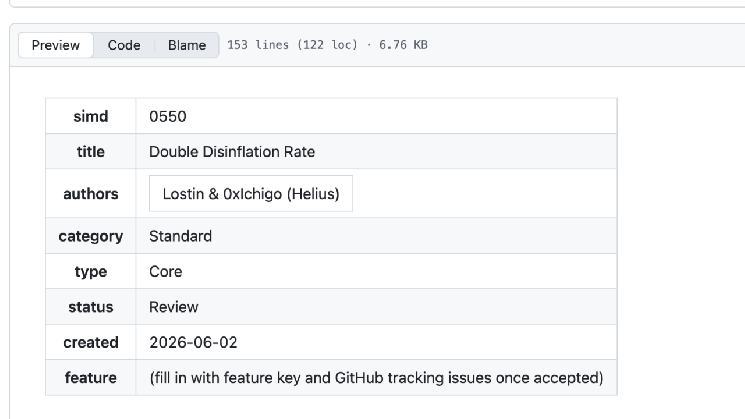
Solana is moving towards a stricter monetary model that could lead to a SOL deficit and significantly reduce staking rewards for holders. Two governance proposals drive these changes. SIMD-550, currently under vote, would double Solana's annual disinflation rate from 15% to 30%, accelerating the timeline to reach a final inflation rate of ~1.5% to the first half of 2029. The second, SIMD-553 (already approved), introduces additional token burning tied to computational units used on the network. Together, these measures could reduce SOL emission by an estimated $1.4-$1.5 billion over six years. The immediate impact would be lower staking yields, potentially falling from the current ~5.25% to approximately 4.34% in year one, 3% in year two, and 2.25% by year three. Analyst Matt Mena from 21Shares suggests inflation should be tied to economic metrics to help offset this decline. The changes also raise concerns for validator economics, with some potentially becoming unprofitable as inflation rewards decrease and voting costs may rise. However, the lower passive yield might push a significant portion of the 67.9% staked SOL into Solana's DeFi ecosystem for activities like lending and trading. This shift could boost network fee revenue to compensate for lower inflation rewards. The proposals aim to trade lower yield today for less dilution tomorrow, betting that network growth and usage will make this a worthwhile trade-off for SOL holders.

cryptonews.ru2 год тому

Solana Proposals Could Lead to Reduction in Staking Yields to 2.25% and Cut Emissions by $1.5 Billion

cryptonews.ru2 год тому

Chairman of Olympic Committee detained in Poland over crypto scandal

The Chairman of the Polish Olympic Committee, Radosław Piesiewicz, was detained in Warsaw in connection with a case involving the cryptocurrency exchange Zondacrypto. The detention was carried out on the order of the Katowice National Prosecutor's Office and the Central Bureau for Combating Cybercrime. Piesiewicz denies the allegations, claiming he never had accounts on the exchange or dealt in cryptocurrency, and links the detention to political persecution. He has led the Olympic Committee since 2023 and is also a parliamentarian for the Law and Justice party. The prosecutor's office initiated the case in April 2026 on grounds of fraud and money laundering amounting to approximately 350 million PLN (around €80 million). The investigation found the exchange was used to transfer funds abroad and cash out criminal proceeds, with clients unable to withdraw their assets. A total of 13 people are implicated, including the exchange's founder. Zondacrypto became the general sponsor of the Polish Olympic Committee and team in October 2025, with a contract lasting until 2028. In April 2026, Piesiewicz stated the committee could not terminate the agreement without incurring unaffordable penalties. The investigation revealed Piesiewicz received expensive gifts from exchange representatives, including a €40,000 watch, as well as paid trips to Monaco and Bergamo.

cryptonews.ru2 год тому

Chairman of Olympic Committee detained in Poland over crypto scandal

cryptonews.ru2 год тому

Торгівля

Спот
活动图片