GMT and APE Carrying Cryptocurrency Market as Total Volume Reaches $6.2 Billion

u.todayОпубліковано о 2022-04-29Востаннє оновлено о 2022-04-29

Анотація

GMT and APE are two of the most volatile assets on the cryptocurrency market, as tokens gained from 100% to 444% in less than a month.

Contents

GMT price performance

APE is not aiming for a reversal
GMT and APE are two of the most volatile assets on the cryptocurrency market, as tokens gained from 100% to 444% in less than a month, making the two positions the most profitable assets from the top 100 of assets by capitalization.
GMT price performance
Stepn is probably one of the most unexpected and surprising assets on the market that brings early investors over 400% of profit, making it the most profitable asset on the cryptocurrency market in April.
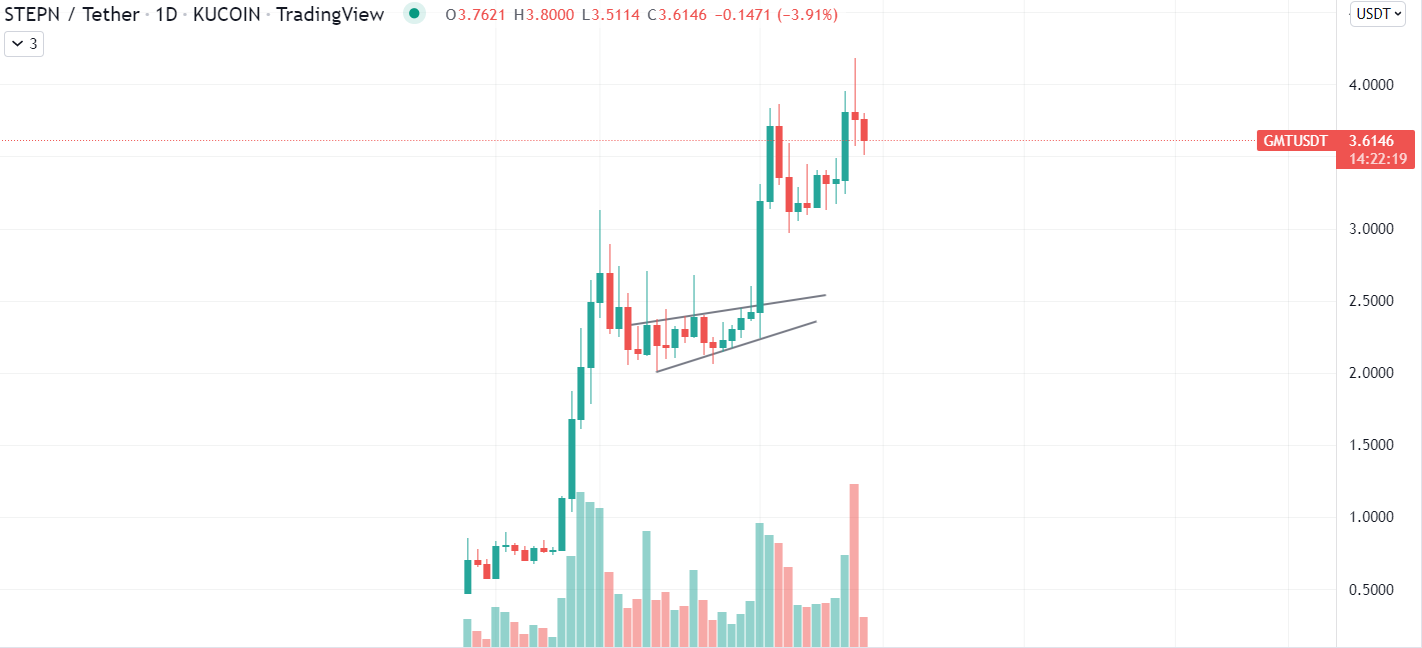
GMT Market Performance

Source: TradingView As for the technical side of the question, STEPN is showing a strong and relatively stable performance despite the speculative nature of the rally. Usually, traders expect a full reversal of the asset after a price increase of more than two times. But GMT has not reversed to enter the consolidation channel that it has successfully broken.
The most recent price performance of GMT also does not signal a reversal as the asset is down by only 13% and is yet to face the first support levels, which may act as a foundation for a further rally.
APE is not aiming for a reversal
According to the daily chart of the asset, APE is moving in a sharp uptrend and not showing any weaknesses despite the most recent 18% reversal, which some traders and industry experts mark as the top.
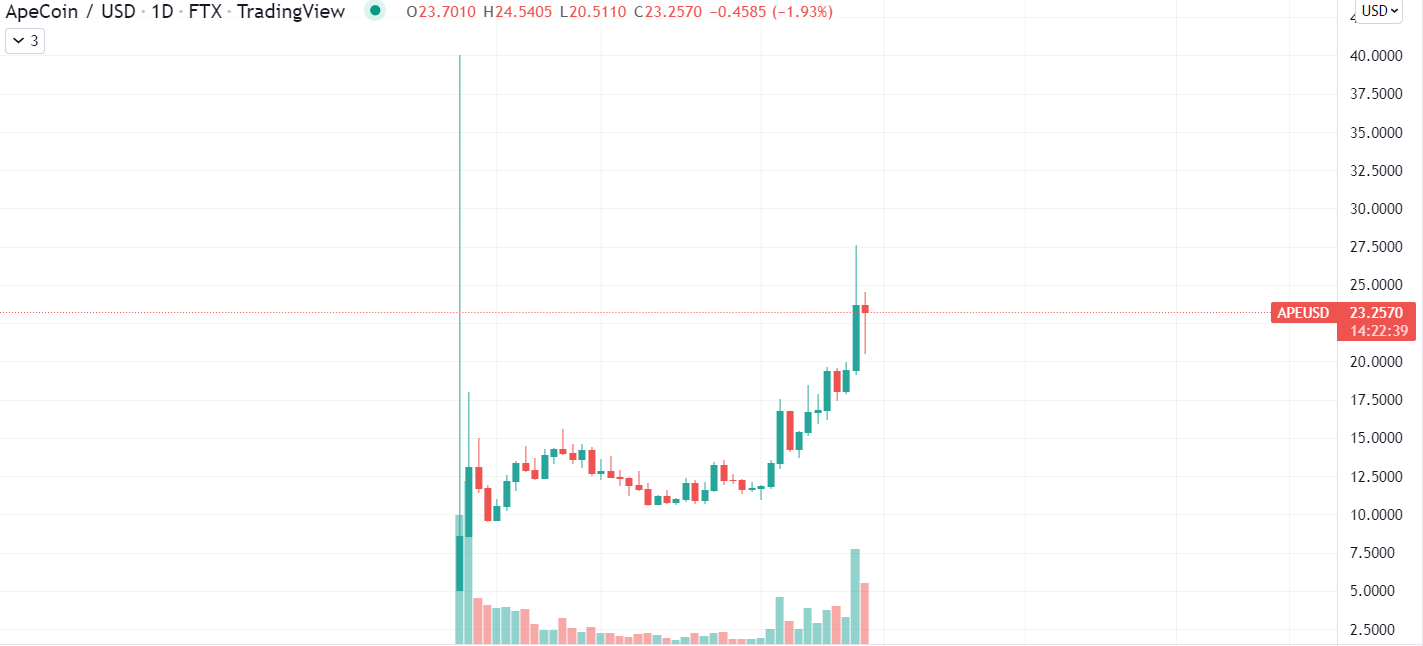
Apecoin Chart

Source: TradingView Since the listing, APE lost 78% of its value in one candle and has not yet recovered to the same value. Currently, APE needs to gain at least 71% to the local high, which will put it back at the ATH.
APE is strongly tied to performing the BAYC NFT collection, which is gaining more attention from users after the Metaverse release.


Пов'язані матеріали

Why Is the World Nervous About Japan Raising Interest Rates?

In June 2026, the Bank of Japan raised its policy rate to 1%, marking its first hike to this level since 1995. While this rate remains low compared to global peers like the US and Europe, the move signals a profound shift for a nation that has been a global source of ultra-cheap funding for decades. Japan's long-standing near-zero or negative interest rates had facilitated massive "yen carry trades," where international investors borrowed low-cost yen to invest in higher-yielding assets worldwide, such as US tech stocks and emerging market bonds. This made Japan a critical, often overlooked, source of global liquidity. Japan's ultra-loose policy stemmed from structural challenges post-1990s asset bubble: aging demographics, chronic low inflation/deflation, and high public debt. Recent shifts, including sustained wage growth (exceeding 5% in recent years) and inflation consistently above the 2% target, have created a "wage-price spiral" possibility, prompting the policy normalization. The global market's concern lies not in the absolute rate but in the potential unwinding of the yen carry trade. As Japanese borrowing costs rise, the economics of these leveraged global investments change, potentially triggering deleveraging and capital outflows from risk assets. Market anxiety focuses on the end of a thirty-year consensus that Japan would perpetually provide cheap funding. Ultimately, the global impact will depend on the interplay with US monetary policy. While Japan is tightening, the significant interest rate differential with the US remains. The key future dynamic is whether simultaneous Japanese hikes and eventual US rate cuts will narrow this gap, forcing a major recalibration of global capital flows and asset pricing built on an era of abundant, cheap yen liquidity.

marsbit2 год тому

Why Is the World Nervous About Japan Raising Interest Rates?

marsbit2 год тому

Research Report Analysis: MRVL's Optical AI Booming, Why High Valuation Keeps Morgan Stanley's Star Analyst Sidelined?

Report Recap: MRVL Optical AI Boom - Why High Valuation Led Morgan Stanley's Star Analyst to Stay Neutral? Morgan Stanley analyst Joseph Moore maintained an "Equal-weight" (Neutral) rating on Marvell Technology (MRVL) on May 28, raising the price target from $172 to $195, below the trading price. This stance comes despite Marvell reporting a record quarter and significantly raising its full-year outlook (FY27 revenue ~$11.5B, up ~40%). Moore's neutral view is based on valuation. The $195 target implies ~40x CY2027 P/E. He contrasts MRVL with NVDA: both trade near ~$200, but Nvidia's forward EPS is more than double Marvell's. For MRVL's valuation to hold, it needs consistent earnings upgrades, proof of networking market share gains, or certainty on large-scale custom AI chip shipments—none of which are confirmed yet. Growth is driven by two pillars: **1) Optical Interconnect** (the faster runner): Moore raised FY27 growth expectations to >70%, with the optical module product line nearing a $1B annualized run rate. **2) Custom AI Chips** (the climber): Confidence in FY28 is growing, but a major new customer project only ramps in FY28, with no current revenue visibility. Key risks are the underperforming Storage, Enterprise, and legacy Networking segments. Moore acknowledges the real AI opportunity but believes the current price already reflects it. For the stock to work from here, investors need to see the optical business hit its targets, custom chips ramp as planned, and a recovery in the weaker business units.

marsbit3 год тому

Research Report Analysis: MRVL's Optical AI Booming, Why High Valuation Keeps Morgan Stanley's Star Analyst Sidelined?

marsbit3 год тому

Торгівля

Спот
Ф'ючерси
活动图片