头部Trader入驻,解析T2T2产品和经济模型

Odaily星球日报Опубліковано о 2023-11-07Востаннє оновлено о 2023-11-07

Анотація

从T2T2发布的v1白皮书理解其背后的社交逻辑。

近日,SocialFi 项目 T2T2 宣布正式开启去中心化跟单产品内测,目前已有不少头部交易员(Trader)入驻,包括:机构交易员、币安合约胜率榜 Top 玩家、Telegram Bot 团队以及一些有流量的交易员。

T2T2 的带单房间与 Twitter 强绑定,因此用户在选择是否付费跟单前,可以在 Twitter 或者其他公开渠道上查看已入驻的 Trader 交易水平。

下面再从 T2T2 发布的v1白皮书公式理解其背后的社交逻辑:

头部Trader入驻,解析T2T2产品和经济模型

T 2 T 2 v1 Whitepaper

这个公式很简单:

  • S 表示 KEY 的数量,源于 Friend Tech 的社交模式,参与的人越多越早,越有赚钱的机遇。

  • ROI 是带单炒币的基金净值,市场热度高时,ROI 反馈越好。

  • fee 表示手续费, 给到房主的分润。

  • 0.01 的常数项为了防止 bot。

该产品简单但直指用户的本质需求,大家想通过投资获得收益,或者与其他玩家 pvp 博弈,而不总是是向上社交的聊天。
头部Trader入驻,解析T2T2产品和经济模型

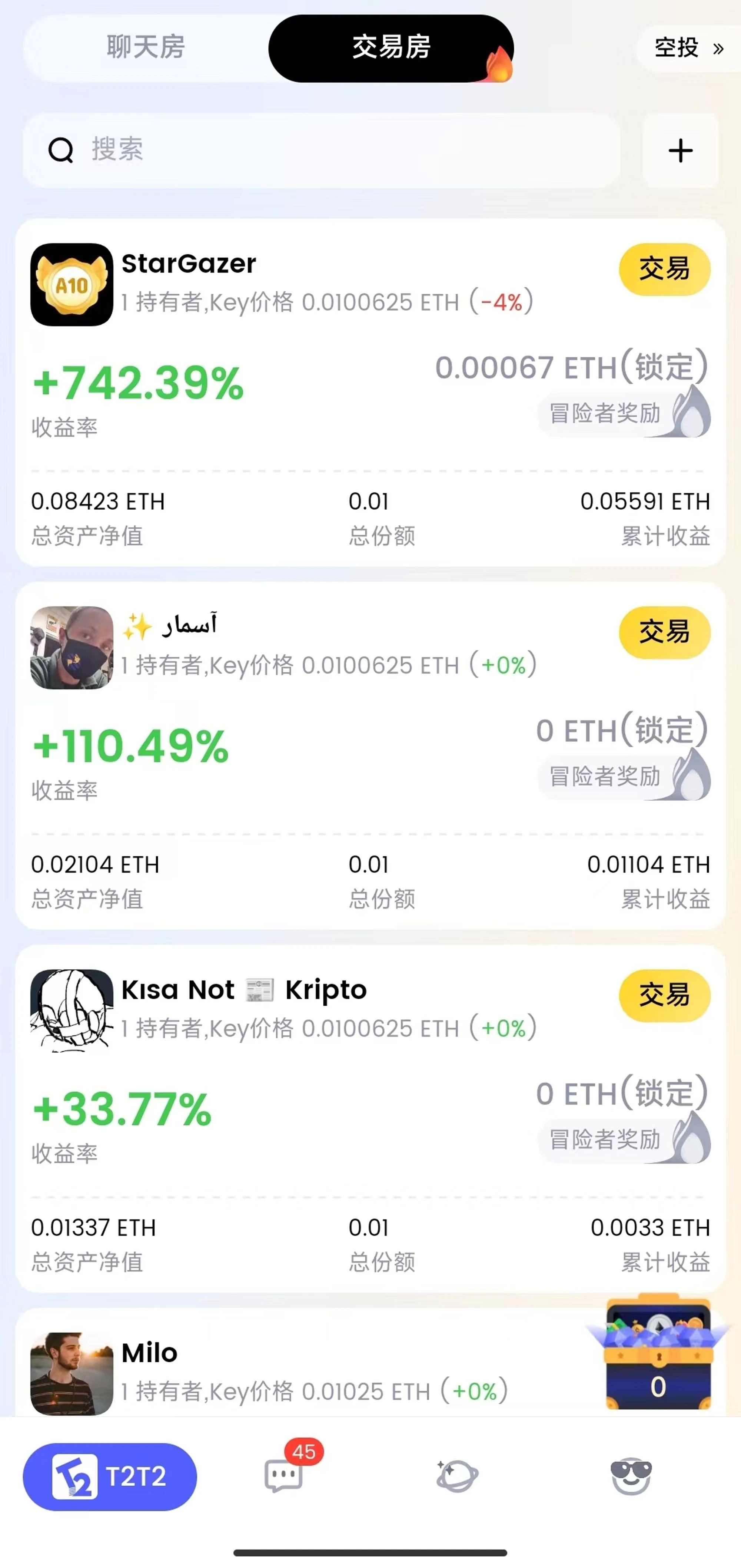
T 2 T 2 上的链上 ROI 排名

到这一步,T2T2 在社交模式上已经开始了新的探索,放弃了满足用户向上社交的需求,转而指向更根本的资产端:带用户跟单交易,从 DEX 开始,未来也会拓展到合约 DEX,一切都在链上。其实无论 Friend Tech 是否发币,都不会影响到 T2T2 本身积累的先发优势、带单壁垒、用户网络。

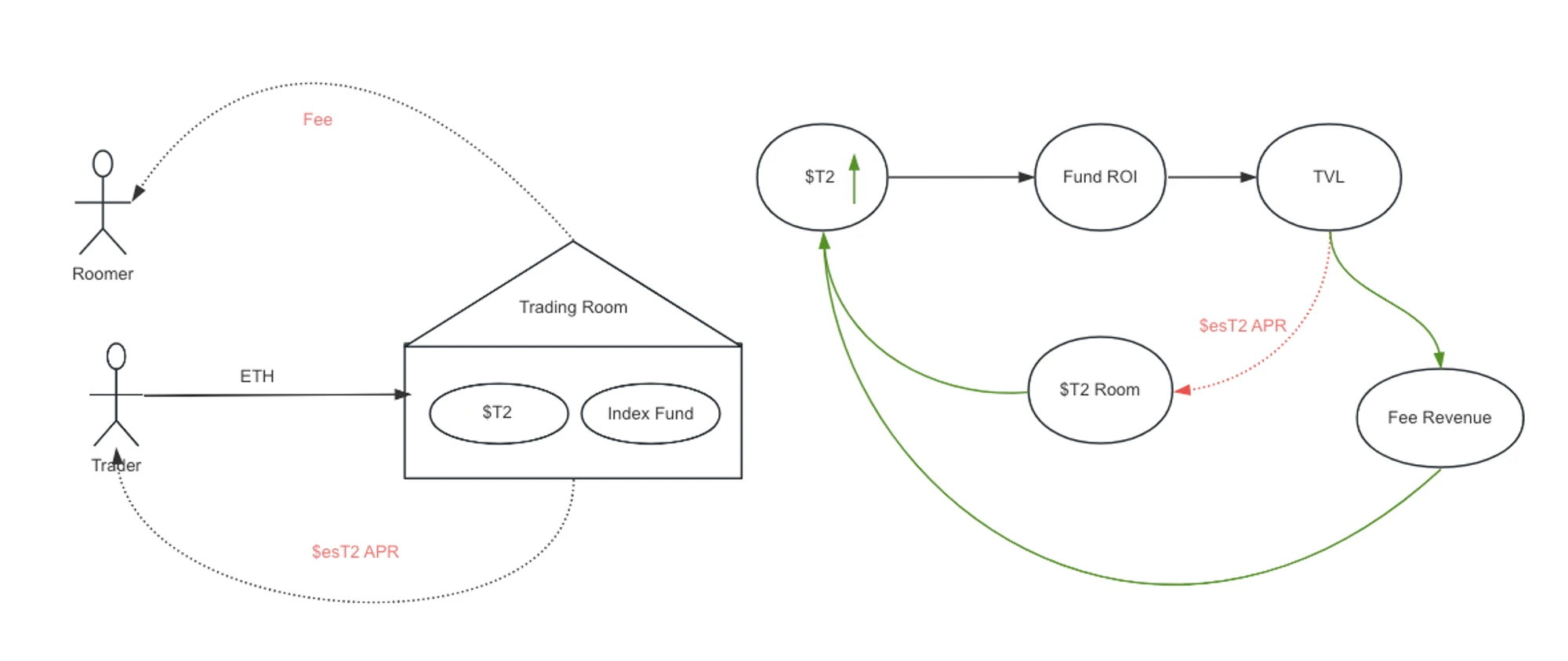
同时 T2T2 也发布了 Tokenomic 模型,其在最新的跟单模式上,又引入了新的 token 飞轮,非常的 degen: 让普通用户除了能跟单外,有额外的套利补贴和分享整个系统的通胀收益。
头部Trader入驻,解析T2T2产品和经济模型

左边是用户正常跟房主单的逻辑,房主可以配置一个指数基金,也可以配置部分$T 2,甚至可以完全配置$T2 。那么这个飞轮的运转逻辑就非常清晰了:

  • T2 价格上涨,跟单的 ROI 会非常高,会进一步吸引用户来跟单,贡献 TVL 交易额,然后交易手续费会返佣给房主和平台。那么这构成了第一次飞轮,通过价格上涨,让房主和平台的收入增加,从而为 T2 的涨幅提供价值支撑。

  • 当平台手续费和房主收益扩大时,那么房主会更配置更多的 T2 仓位,因为这能帮助他房间的 ROI 和 TVL 上涨,而且配置的比例越大,T2 价格会涨的越猛,参与的跟单用户瓜分的通胀激励也越高,所以这构成了第二次飞轮。

这两个飞轮刺激下,早期用户参与持有的 KEY 也能获得快速的上涨,早期挖掘优质 trader 的用户同样可以挣后面带单用户的 KEY 涨幅。

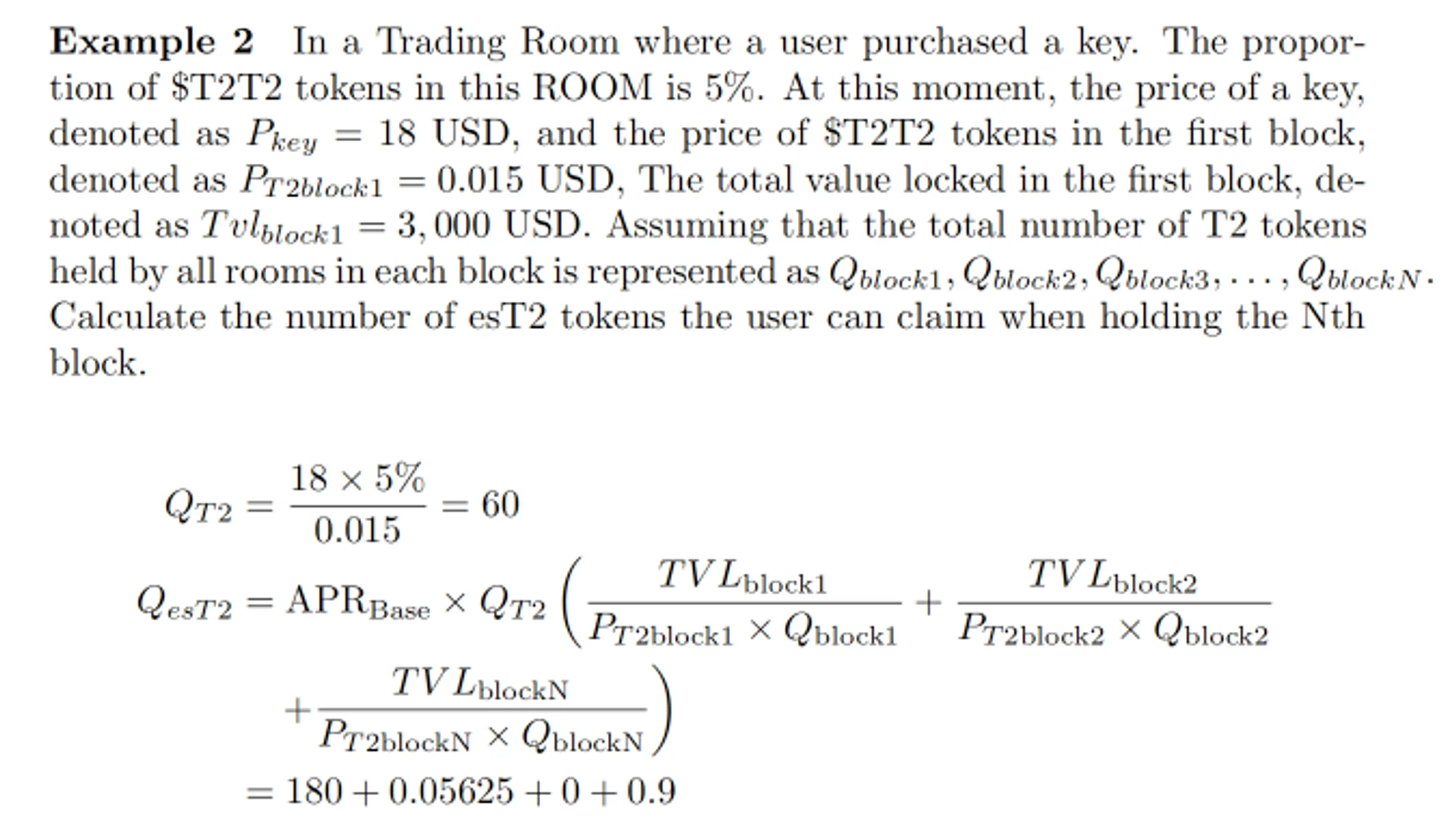
关于第二个飞轮,白皮书上的通胀激励和例子更清晰:
头部Trader入驻,解析T2T2产品和经济模型

这部分内容翻译一下就是,通胀激励与系统的手续费(TVL)挂钩,系统手续费越高,瓜分的通胀激励越多。更重要的是与房间 T2 持仓占比强相关,T2 持仓越多,房间跟单时间越长(累积的区块奖励越多),获得的通胀激励越大。更极端一些,当房间系数为 100% 时,所有通胀激励都是均分给 T2 的持仓房间。也就是基于这个再分配机制,将整个系统的收益转到 T2 房间,而没有配置 T2 的房间,则通胀激励为 0 。
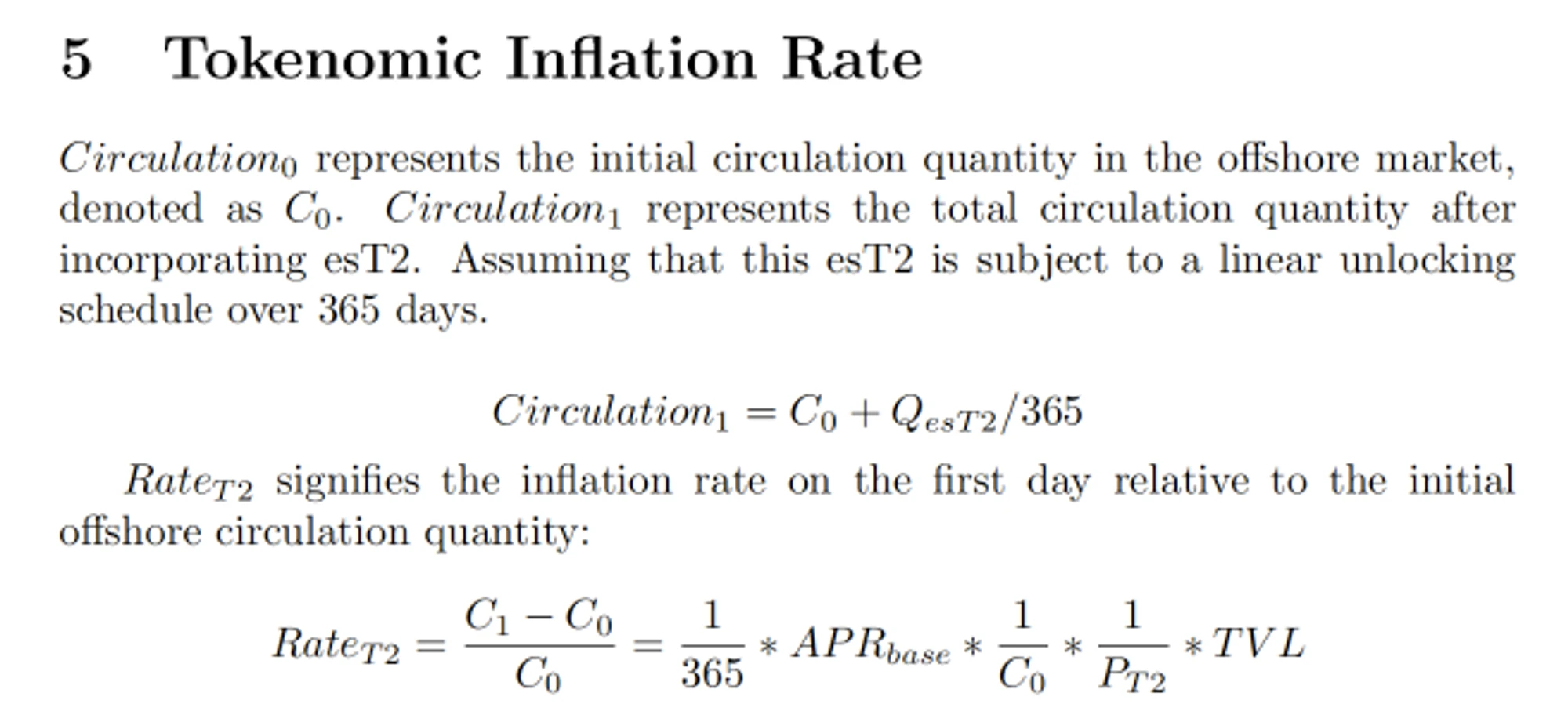
头部Trader入驻,解析T2T2产品和经济模型

在白皮书的第五章节,平台对通胀激励进行了测算,其发放是 365 天线性解锁,所以从通胀模型来看,在前期 3-6 个月,基本是一个通缩的水平,将会刺激早期的飞轮运转。

总的来说,无论对于房主还是散户,参与 T2T2,等与变相同时参与了 Friend Tech + TG bot + ve( 3, 3) + 合约带单。

参考:

[ 1 ] T2T2 v1:A Bonding Curve For Index Fund. 

https://docs.t2t2.com/protocol-design/t2t2-v1-bonding-curve-for-index-investment-white-paper

[ 2 ] 产品内测申请

https://twitter.com/T2T2_official/status/1721067379109896378

[3] T2T2 docs
https://docs.t2t2.com/

Пов'язані матеріали

Near Returns to the AI Stage: Transformation into a Public Chain Due to 'Payroll Difficulties,' Agent and Privacy Emerge as New Growth Narratives

NEAR Returns to AI Origins: From Payroll Struggles to Blockchain, Now Focusing on AI Agents and Privacy NEAR Protocol's journey began not with grand blockchain ambitions, but from a practical hurdle: its AI startup founders, including Transformer paper co-author Illia Polosukhin, couldn't efficiently pay international developers in 2017. This led them to pivot and build a high-performance, scalable blockchain. After years navigating various crypto narratives like sharding and cross-chain interoperability, NEAR is now leveraging its AI roots to re-enter the AI arena. A key driver is its "NEAR Intents" layer, which abstracts complex cross-chain transactions. Users simply state their goal (e.g., swap BTC for ETH), and a solver network finds the optimal route. This system has processed over $20B in cross-chain volume, generating significant fee revenue. A major growth area is private transactions via "Confidential Intents/Swaps," which hide trade details until settlement to protect against MEV and front-running. Remarkably, private swaps recently accounted for over 40% of NEAR's transaction volume, highlighting strong demand but also potential regulatory scrutiny. With its AI-founder pedigree, NEAR is positioning itself at the intersection of blockchain, AI agents, and privacy, aiming to become infrastructure for the emerging agent economy while navigating the challenges of its rapid adoption.

marsbit1 год тому

Near Returns to the AI Stage: Transformation into a Public Chain Due to 'Payroll Difficulties,' Agent and Privacy Emerge as New Growth Narratives

marsbit1 год тому

From Ethereum to AI's 'CROPS': What Exactly is This Set of 'Slow Variables' That Vitalik Repeatedly Emphasizes?

In recent discussions, Vitalik Buterin has frequently emphasized the concept of "CROPS," a framework defining core values for Ethereum's development. CROPS stands for Censorship Resistance, Capture Resistance, Open Source, Privacy, and Security. Initially outlined in the Ethereum Foundation's "EF Mandate," it represents a commitment to user sovereignty, ensuring that the network resists external control, remains open, protects privacy, and prioritizes security. The relevance of CROPS extends beyond Ethereum's foundational principles, becoming crucial in the context of AI integration. As AI agents begin handling wallet operations and automated transactions, the risk increases that users may cede control over their digital assets, privacy, and intentions to centralized AI service providers. A "CROPS AI" would therefore emphasize local execution where possible, privacy-preserving remote model calls (e.g., using zero-knowledge proofs), and transparent, verifiable processes to maintain user agency. Vitalik highlights a significant convergence between "CROPS Ethereum access layer" and "CROPS AI." Both address the same fundamental challenge: how users can access powerful services—be it blockchain data via RPCs or AI models—without exposing sensitive information or relinquishing ultimate control. This intersection points toward a future digital entry point that is more private, secure, and user-controlled. Ultimately, CROPS is not merely an abstract ideal but a practical guidepost. It steers development—from protocol resilience and wallet design to AI agent safety—towards a future where users retain self-sovereignty even as digital systems grow more complex and powerful. In an era of accelerating AI adoption, these "slow variables" of censorship resistance, openness, privacy, and security may define Ethereum's enduring value.

marsbit1 год тому

From Ethereum to AI's 'CROPS': What Exactly is This Set of 'Slow Variables' That Vitalik Repeatedly Emphasizes?

marsbit1 год тому

Silicon Valley 'Startup Guru' Steve Hoffman: Web3 + AI Could Be a Trap

Silicon Valley investor and "Godfather of Startups" Steve Hoffman warns that combining Web3 with AI is likely a trap, not a promising venture. In an interview, Hoffman argues that while AI is a foundational technology touching all industries, Web3 adds complexity, friction, and regulatory risk without solving mainstream consumer or business needs. He advises founders to focus on deep, specialized applications where startups can out-iterate giants, rather than on generic features easily replicated by large tech companies. Hoffman observes that Silicon Valley will lead foundational AI research, while China excels at rapid, large-scale application and commercialization, particularly in robotics. He stresses that AI-driven autonomous agents capable of collaborative, multi-step tasks are 2-4 years away, which will cause significant job displacement. The solution is not to slow AI but to redesign business models around human-AI collaboration and reform social systems like education and retraining. For startups, Hoffman recommends focusing on vertical, expertise-heavy domains to build defensibility. He sees major opportunities in AI fraud detection and cybersecurity. Key founder mindsets include systemic thinking over feature-focus, relentless customer centricity, building adaptive teams, and deeply understanding AI's capabilities and limits. Hoffman is also leading a non-profit initiative to establish university centers aimed at training future leaders in responsible, human-value-aligned AI innovation.

marsbit3 год тому

Silicon Valley 'Startup Guru' Steve Hoffman: Web3 + AI Could Be a Trap

marsbit3 год тому

Token Inefficient, Economy Tokenless

The article "Tokens Aren't Economical, Economics Aren't Tokenized" analyzes a pivotal shift in the AI industry from a technology-driven narrative to one dominated by capital efficiency. It highlights two concurrent trends: a severe capital shortage due to the exorbitant and recurring costs of compute (e.g., OpenAI's high burn rate) and a wave of corporate spin-offs where major tech companies are separating their AI units (like Kuaishou's Kling and Baidu's Kunlunxin). The core argument is that AI's "anti-internet" business model, where user growth increases costs rather than profits, has created a disconnect between high valuations and actual cash flow. Spin-offs address this by allowing AI assets to be valued independently. Within a parent company, they are seen as cost centers, but as standalone entities, they are priced based on their growth potential and scarcity in the primary market, leading to massive valuation premiums (e.g., Kling's estimated value tripling post-spin-off). The industry is at an inflection point, moving from "model worship" to "value realization." The competition is evolving from a pure compute (GPU) race to a broader focus on systemic efficiency and full-stack engineering (involving CPUs and orchestration) to achieve viable commercialization. The year 2026 is framed as a critical moment where the industry must definitively answer how to economically translate AI capability into tangible business value, reshaping the sector's future power structure.

marsbit3 год тому

Token Inefficient, Economy Tokenless

marsbit3 год тому

Торгівля

Спот
Ф'ючерси
活动图片