Coin Price Today 12/07: Bitcoin Holds Around $30,500, Altcoins and US Stocks Rise as Markets Await Key CPI Data

Tap Chi BitcoinОпубліковано о 2023-07-12Востаннє оновлено о 2023-07-12

Анотація

Bitcoin maintains its price around $30,500 as the market awaits important CPI data from the United States.
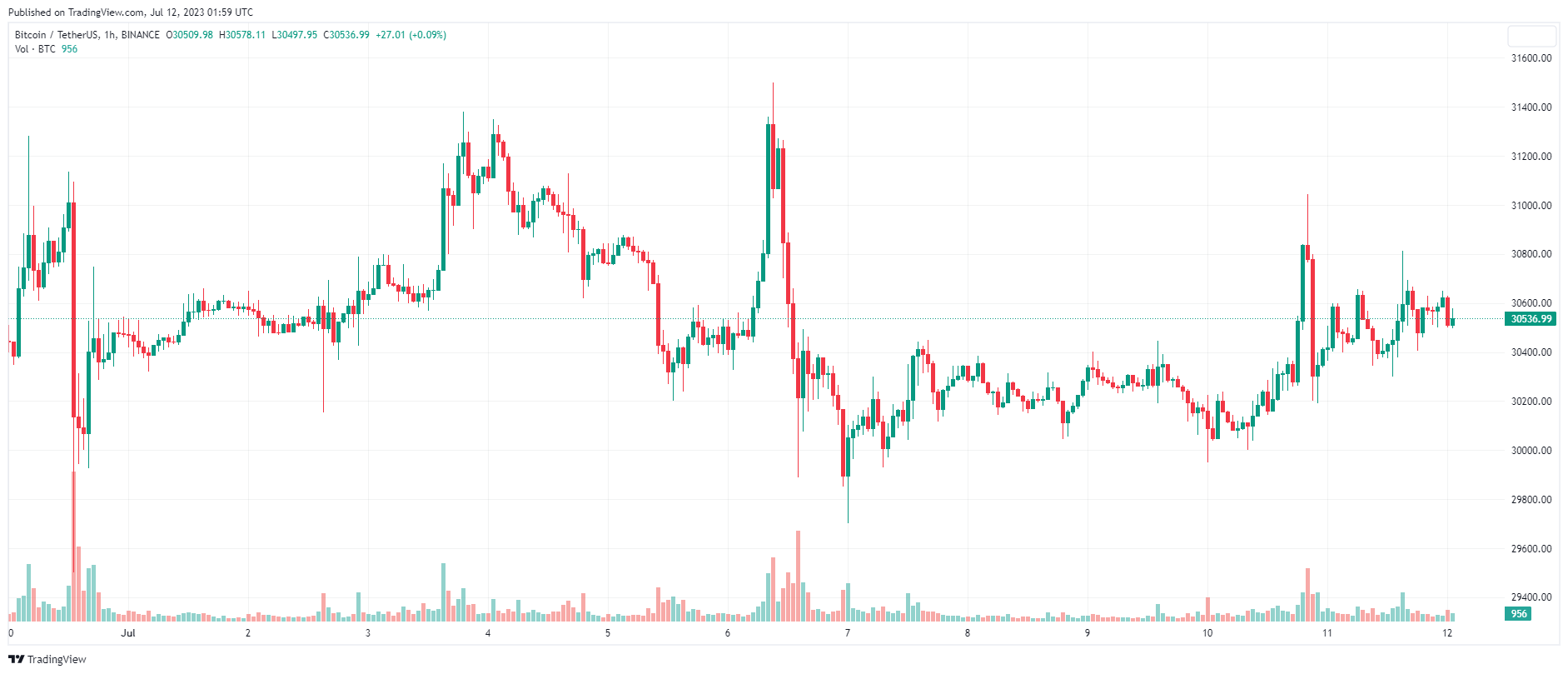
Bitcoin maintains its price around $30,500 as the market awaits important CPI data from the United States.

BTC Price Chart – 1 hour | Source: TradingView

US Stocks

US stocks continued to gain on Tuesday (July 11), as investors awaited important US inflation data due to be released this week.

At the end of the session, the Dow Jones index rose 317.02 points (or 0.93%) to 34,261.42 points. The S&P 500 gained 0.67% to 4,439..26 and the Nasdaq Composite added 0.55% to 13,760.7.

Salesforce shares jumped nearly 4% after the company announced it would increase its share price in August. Activision Blizzard shares climbed 10% after a federal judge denied the Federal Trade Commission's request for an order. preliminary request to prevent Microsoft's acquisition of the video game company. The decision means the two companies are closer to finalizing the deal.

The US Consumer Price Index (CPI) report for June is scheduled to be released on Wednesday (July 12), as well as the June PPI report for June is due on Thursday (July 13). , will shed light on whether inflation will continue to fall and set the scene for the future direction of interest rates. Economists polled by Dow Jones forecast the index to grow 3.1% last month compared with the same period last year.

US CPI in May was at 4%, while core CPI fell to 5.3%. This month, experts are estimating both will record sharper declines. Expectations from CPI will drop to 3.1%, with many banks, including those like HSBC and Citi, forecasting 3%.

Investors have forecast that the US Federal Reserve (Fed) will raise interest rates by 25 basis points at its meeting on July 25-26. However, they are still undecided on what the central bank will do at the meeting, after continued strong employment data last week stoked fears that policymakers will return to lifting. interest rates after a pause in June.

Q2 earnings season kicks off later this week with results from key financial institutions like JPMorgan Chase, Wells Fargo and Citigroup, along with BlackRock, PepsiCo and Delta Air.

Meanwhile, gold prices rose on Tuesday (July 11), thanks to a drop in the dollar and US bond yields ahead of the release of US inflation data that could provide more information on the roadmap for the US interest rate hike. US Federal Reserve (Fed).

At the end of the session, the spot gold contract gained 0.4% to $1,932.03 an ounce, up for the third consecutive session. Gold futures added 0.3% to $1,937.1 an ounce.

Oil prices rose 2% on Tuesday, helped by a weaker dollar, hopes of higher demand in developing countries and supply cuts by major oil exporters. In the world.

At the end of the session, the Brent oil contract increased by 1.71 USD (equivalent to 2.2%) to 79.4 USD/barrel. The WTI oil contract added $1.84 (or 2.5%) to $74.83 a barrel.

Bitcoin and Altcoins

Bitcoin price and crypto market are expected to increase due to consumer price index (CPI), which is predicted by experts to “slow down”.

The top crypto asset is currently trading around $30,500 after failing to cross the $31,000 mark twice in the last month.

However, inflation at 3% will likely help BTC resume its upward momentum.
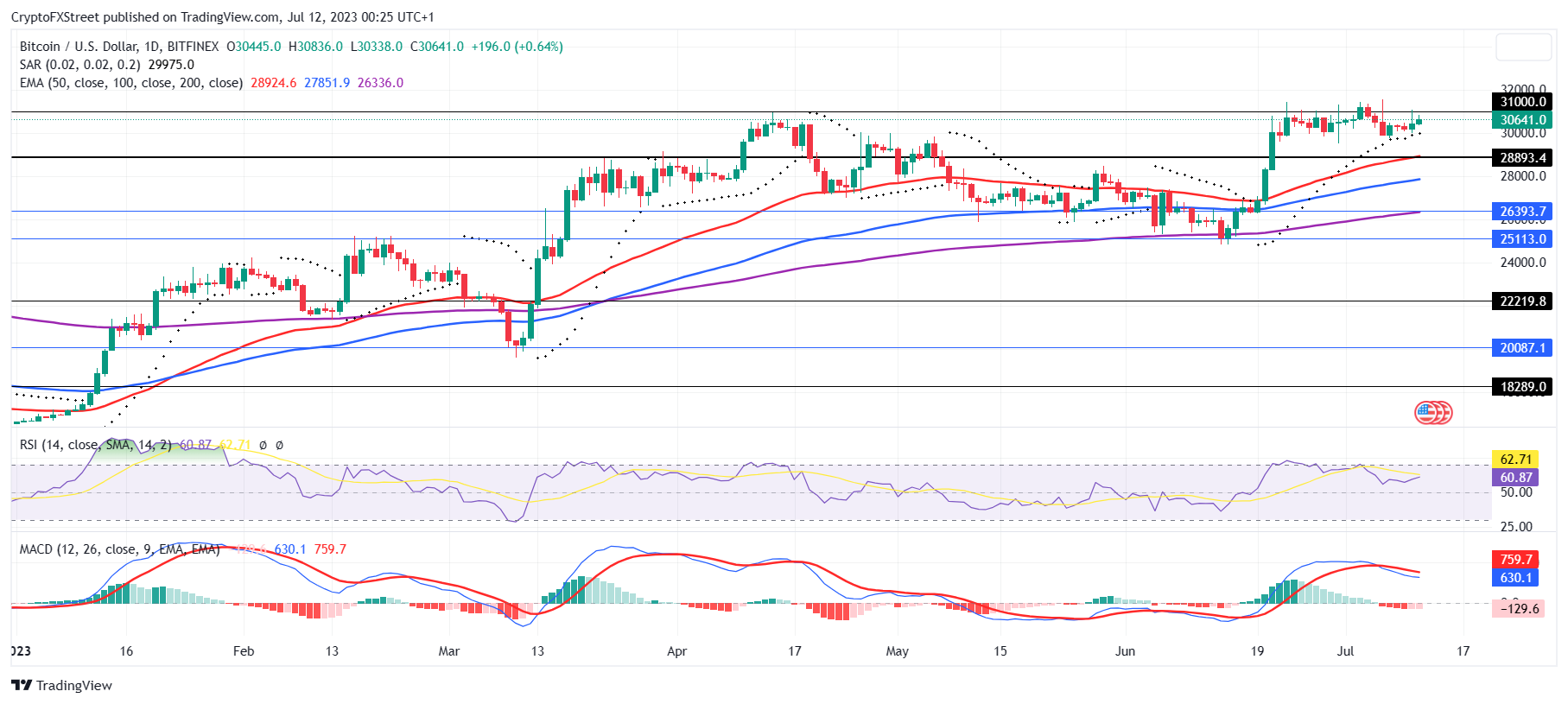
BTC/USD Chart – 1 Day | Source: TradingView

If the CPI data matches the forecast and BTC successfully surpasses $31,000, this will be a bullish signal for the rest of the crypto market.

The altcoin market is slightly bullish as Bitcoin continues to hover above the $30,500 region ahead of key US CPI data.

Compound (COMP) was the best performing project of the day as it bounced up more than 13%, erasing all losses in the past 7 days.

Other altcoins in the top 100 such as Aave (AAVE), Theta Network (THETA), Render Token (RNDR), Enjin Coin (ENJ), Kava (KAVA), Coinflux (CFX), Zilliqa (ZIL), Stacks (STX), Hedera (HBAR), Axie Infinity (AXS)… all increased slightly from 3-6% during the day.
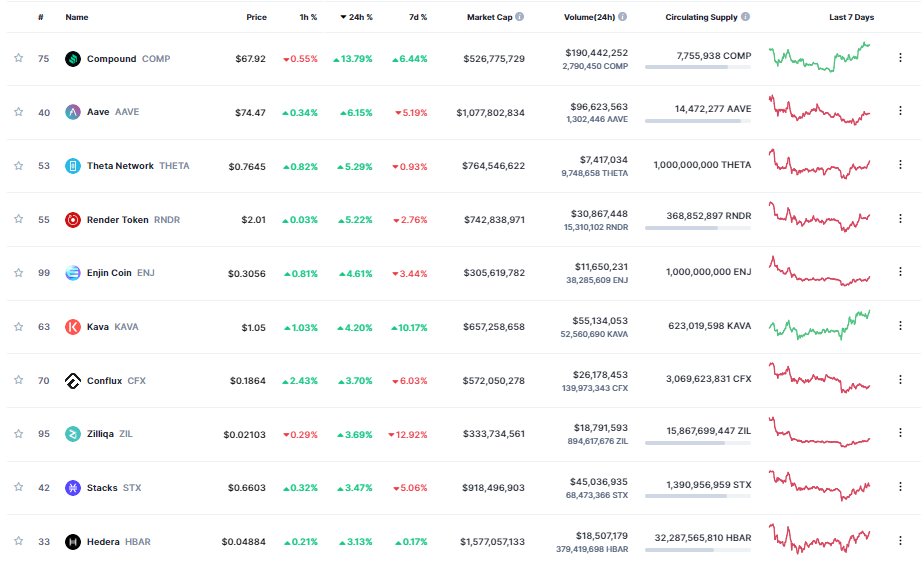
Source: Coinmarketcap

After being rejected at $1,900 on July 10, Ethereum (ETH) is still struggling to break through this area. Currently, the asset with the second largest market capitalization is trading around $1,882, almost flat compared to 24 hours ago.
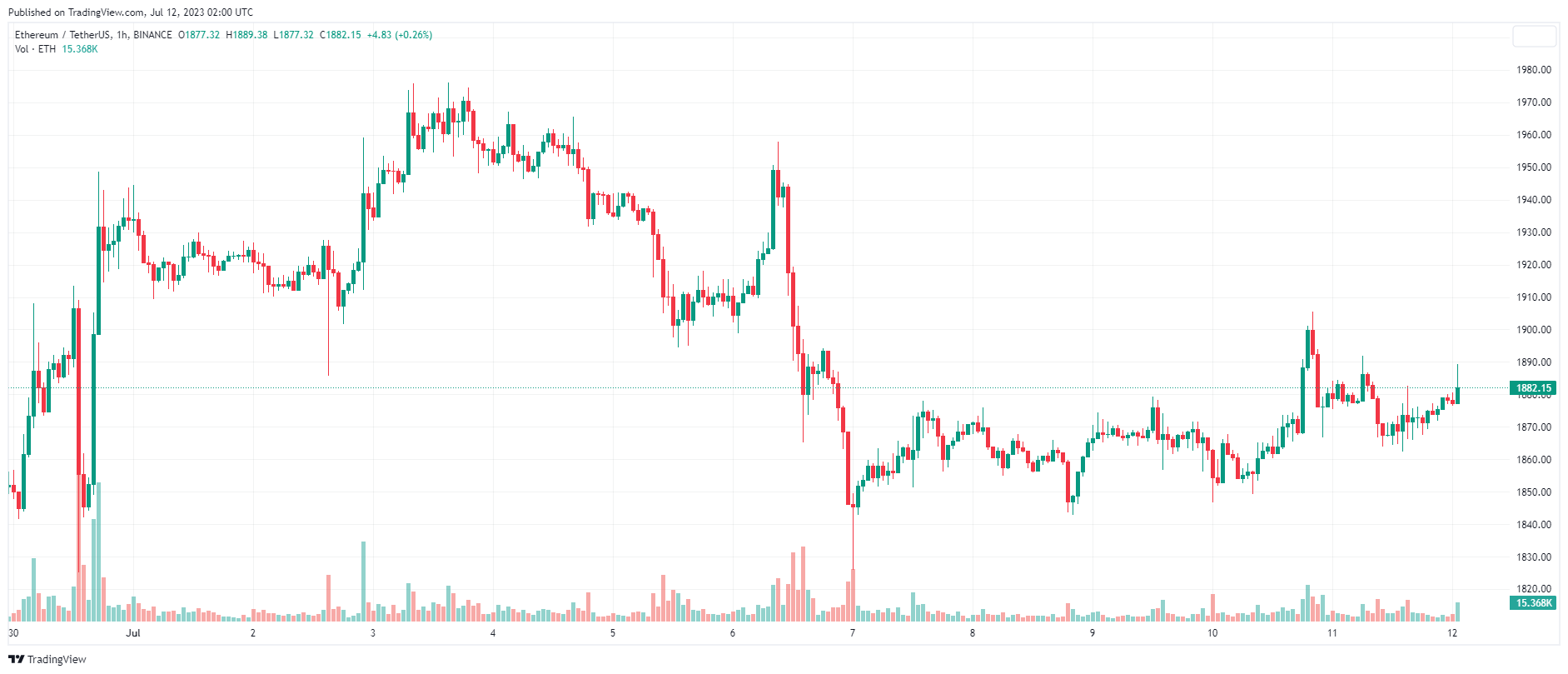
ETH price chart – 1 hour | Source: TradingView

The column “Coin Price today” will be updated at 9:00 daily with general market news, readers are welcome to follow.


Пов'язані матеріали

When Real Estate Ownership Goes Digital: What Happens to Your Rights, Risks, and Liquidity?

"Tokenizing Real Estate: Rights, Risks, and the Path to Liquidity" While tokenizing real-world assets (RWA) gains traction, real estate presents unique complexities. Beyond technical token issuance, critical challenges remain: enforcing legal rights, managing the underlying physical asset, and creating genuine secondary market liquidity. This article explores these issues through OneAsset, a Dubai-based commercial real estate (CRE) tokenization platform. OneAsset moves away from simply offering asset fragmentation. Instead, it focuses on institutional-grade infrastructure, prioritizing asset quality, legal enforceability, and operational fundamentals. Each property is held in an independent, single-asset vault, backed by a legally separate Special Purpose Vehicle (SPV) for bankruptcy remoteness. Investors acquire tokens representing the economic rights to a specific property, with precise legal claims defined by the underlying SPV structure. OneAsset emphasizes that tokenization cannot transform a poor-quality asset. Its initial focus is on institutional investors and quality Dubai-based CRE, selected for stable tenant cash flows and a clear regulatory environment. The platform integrates compliance by design, aiming to embed investor qualification and transfer rules directly into the token architecture. A core insight is that asset fragmentation does not automatically create liquidity. True liquidity depends on the asset's inherent quality—its location, cash flow, and valuation—as well as sufficient buyer demand. The goal is not just tradability, but making real estate rights more easily priced, verified, and reallocated. Looking ahead, the article discusses the potential for "AiFi" (AI-powered finance). For AI agents to autonomously allocate capital, investment assets like real estate tokens must become truly "machine-readable." This requires a high degree of standardization in legal rights, valuations, cash flows, and compliance data—a direction OneAsset is pursuing through its structured data reporting. In conclusion, real estate tokenization is shifting from a technology narrative to a focus on asset fundamentals. Blockchain can enhance efficiency and programmability, but it cannot replace sound underwriting, property management, or legal execution. The real work begins after the asset is on-chain.

marsbit25 хв тому

When Real Estate Ownership Goes Digital: What Happens to Your Rights, Risks, and Liquidity?

marsbit25 хв тому

After Affecting Two Generations, Meta Ordered to Pay $18 Billion in Damages

After more than two decades, a legal parallel has emerged. In 1998, major U.S. tobacco companies settled for $206 billion, leading to strict advertising bans and warning labels that significantly reduced smoking rates. On August 26, 2026, Meta reached a landmark settlement with U.S. attorneys general, agreeing to pay up to approximately $18 billion and implement mandatory changes to Facebook and Instagram. This historic settlement, one of the largest against a tech company, stems from allegations that Meta deliberately designed addictive features like infinite scroll and push notifications, harming youth mental health and violating child privacy laws. Facing a potential $1.4 trillion lawsuit and a series of unfavorable jury verdicts, Meta chose to settle on the eighth day of trial to avoid a catastrophic ruling. The core of the agreement is not just the financial penalty, which Meta will pay over 10 years, but a series of strict, 10-year product mandates for young users. These include a hard two-hour daily time limit (combined across apps), a default "nighttime block" from midnight to 6 AM, restricted notifications during school hours, hidden "like" counts, an optional non-algorithmic feed, and stronger age verification. An independent auditor will monitor compliance. Crucially, roughly 30% ($5.3 billion) of Meta's payment is contingent on YouTube and TikTok adopting similar measures and paying around $5 billion each. This move aims to create an industry-wide standard and prevent Meta from being competitively disadvantaged. The settlement is being likened to Big Tobacco's "tobacco moment." By legally framing addictive algorithm design as a "public nuisance," it sets a powerful precedent. Nearly 3,000 similar cases are pending against other social media giants, signaling a fundamental shift in regulatory pressure. The era where platforms could deny the addictive impact of their designs on children is effectively over.

marsbit30 хв тому

After Affecting Two Generations, Meta Ordered to Pay $18 Billion in Damages

marsbit30 хв тому

Торгівля

Спот
活动图片