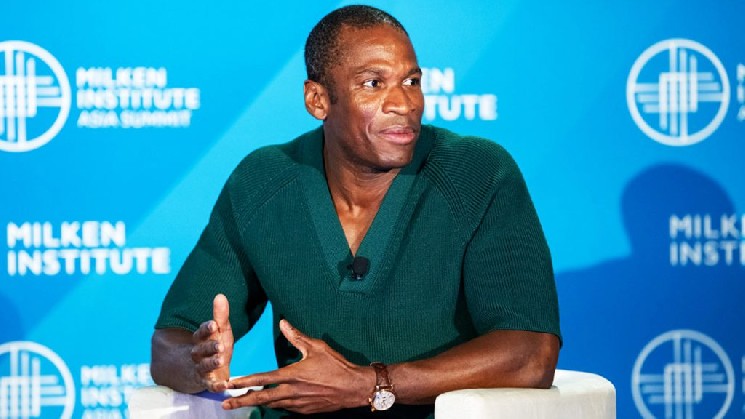
The advent of Bitcoin Ordinals signals the “organic return of builder culture” to the network, according to Ethereum co-founder Vitalik Buterin.
Buterin made the comments in a July 7 Twitter space where he spoke at length with Bitcoin proponents Eric Wall and Udi Wertheimer about what Bitcoin developers could learn from Ethereum devs.
Buterin praised Ordinals and the BRC-20 token standard which he sees as a rejection of “stagnant” politics in the Bitcoin ecosystem.
“Ordinals are starting to bring back a culture of actually doing things. It feels like there's real pushback to the laser-eye movement, which is good,” Buterin said.

The nearly two-hour-long conversation centered around the issue of scalability. Wall claimed Bitcoin’s Lightning Network can’t scale for future users and it fails “frequently” when processing “even medium-sized payments.”
In response, Buterin suggested the best approach would be to focus on implementing different types of layer-2 solutions along with looking for ways to make the Bitcoin base layer more efficient.
“I think focusing on rollups is good and so is being open to ZK-snark-based scaling solutions.”
Wertheimer believed the introduction of rollups could create an interesting side effect.
“If we adopted rollups for Bitcoin, we actually get an execution environment too […] We can do smart contracts,” Wertheimer said.
Wall and Wertheimer — two key figures behind the Ordinals project Taproot Wizards — are outspoken exponents of Ordinals and routinely advocate for building increased functionality on top of the Bitcoin network.
Related: Bitcoin miners raked $184M in fees in Q2, surpassing all of 2022
Their stance has drawn criticism from more fundamentalist Bitcoiners who claim NFTs and smart contracts on Bitcoin dilute its supposed primary function as a peer-to-peer cash network.
Such critics include Jan3 CEO Samson Mow, who believes Ordinals waste block space that could otherwise be dedicated to Bitcoin payments.
Wall noted these criticisms and explained that Bitcoin could be used as a “proof system” for zero-knowledge proofs which wouldn’t congest the network.
“My perspective is that we [Bitcoiners] always wanted to do DeFi adjacent things but we just wanted the Bitcoin base layer to just act as sort of a judge or an arbiter of that computation and not have to run the computation on-chain,” Wall said.
“We shouldn't necessarily just be thinking about second layers as a way to make payments, but I think we could also think about them [as a way of doing] expressive things.”
The discussion yielded fresh controversy in the Bitcoin community, with Wertheimer slamming Mow and Blockstream CEO Adam Beck for being dismissive of the conversation with Buterin.